We’ve all been there — nothing to do as you wait alone in a public place like a laundromat for the spin cycle to finish or for a friend who’s late meeting you at a bar.
Five years ago, two film enthusiasts, Giacun Caduff and Ryan Reichenfeld, created a solution with their idea to make a network of movie jukeboxes that incorporate short films into viewers’ everyday experience. The idea turned out to have merit and has evolved into a full-fledged international festival — box[ur]shorts. The festival will celebrate its fourth annual awards night this Saturday.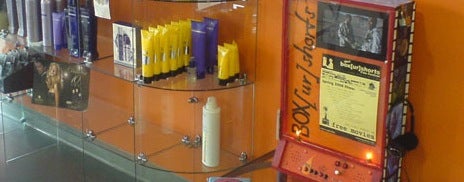
box[ur]shorts festival director Caduff — a Switzerland native and graduate of the UCLA School of Theater, Film and Television’s MFA Producers Program — was inspired as a producer to establish a direct connection between filmmakers and their viewers by screening at places where people have a chance to watch a quick five- or 10-minute film.
“When we first started brainstorming this in 2005, the main ways viewers could watch shorts at that time were to tune into the Sundance Channel on cable or attend film festivals. But as busy professionals ourselves, we knew there were other pockets of time in viewers’ days that could be filled with watching short films if we could make it fit to their on-demand lifestyles,” says Caduff.
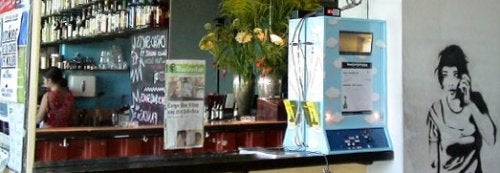
The resulting platform was the box[ur]shorts movie jukebox, which screens short films in physical locations where the audience has time to watch — be that a coffee shop, laundromat, bar or even hair salon. As Caduff puts it, “We ‘box your shorts’ by literally putting short films in a box.”
The inspiration for the project has its roots in a 1970s art project where Caduff’s uncle, Silvio Caduff, hung paintings in a menu box outside a restaurant in Basel, Switzerland. Combining the boxed still art concept with multimedia, the box[ur]shorts festival team added LCD screens and interactive panels, which officially gave birth to their movie jukebox model.
Building and designing the first movie jukebox was done by Caduff and Reichenfeld guerilla-style, and featured a 7-inch screen, speakers, headphone jacks and even a radio transmitter. Later, an interactive panel, start and restart button were added to the design. The owners of the locations where the boxes screened films could choose how they wanted their movie jukeboxes designed and painted.