

A flurry of corporate earnings from entertainment and media companies capped off by the Federal Communications Commission removing a 22-year-old limit on how many local TV stations could own meant investors had their hands full digesting all the data.
Whether it’s the state of the on-going Paramount-Warner Bros. Discovery saga or Nexstar’s acquisition of Tegna — both held up in legal limbo — or how media companies are managing the declines in linear TV, where is the smart money headed?
I talked with top analysts to get the word on the street and offer a cheat sheet on an extremely busy earnings week.
Thanks for reading.
Jon Lafayette
P.S.: Send your tips and pitches to jon.lafayette@thewrap.com

THE DEEP DIVE

Wall Street’s Take on FCC’s Removal of Broadcast Ownership Cap
The Federal Communication Commission removing the cap on television station ownership will unleash a flurry of deal activity, analysts say. But investors can hit pause before making any moves, with immediate deals unlikely to pop up.
“I don’t think there would necessarily be a rush, but I think over time TV stations owners will look to sell,” Craig Huber, media analyst at Huber Research Partners, told The Ledger.
That’s because there’s still ongoing legal challenges — including the states taking matters into their own hands — that may temper that urge to merge.
- The FCC eliminated the rule that kept companies from owning TV stations that reach more than 39% of the country.
- More industry consolidation is likely once legal appeals of the ownership cap vote are settled
- Big deals, like Sinclair’s rejected bid to buy Scripps, might be back on the table, and big broadcasters are also likely to try pick off more stations on a market-by-market basis.
“I think it’s likely to get tied up in court,” Huber said. “Someone is going to argue that Congress is the only one who can change the 39% ownership cap.”

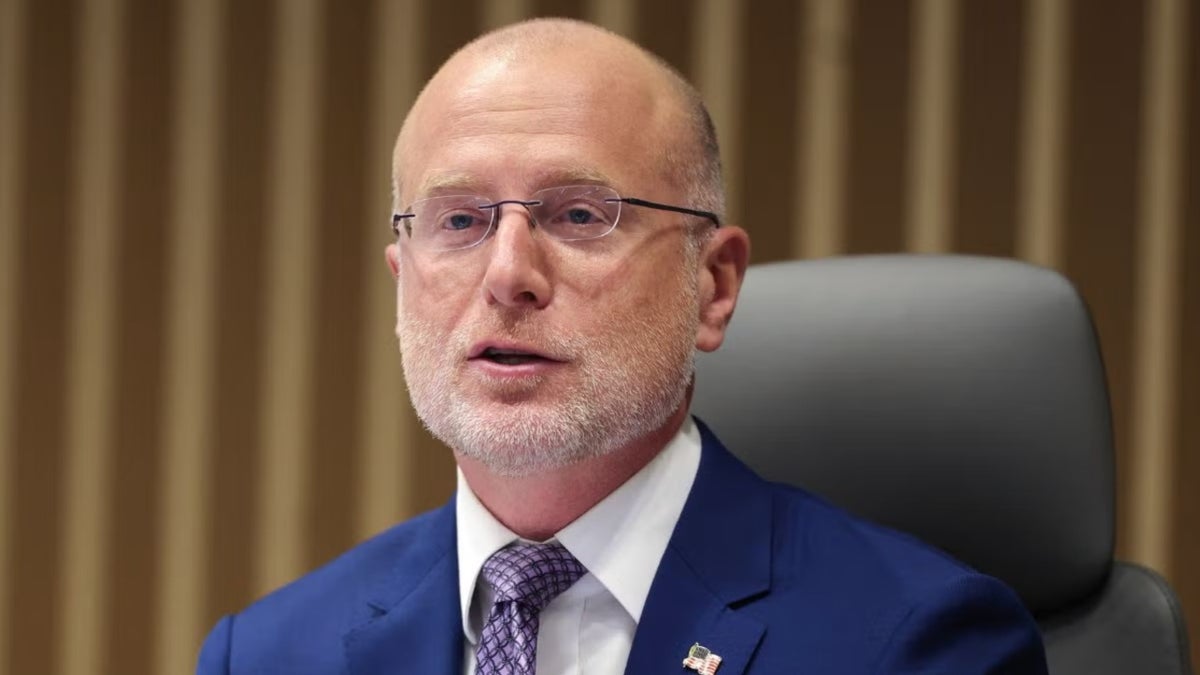
Analysts Blair Levin, of Newstreet Research, (left) and Craig Huber of Huber Research Partners
Still, the change will likely have companies at least eyeing each other. It’s not just Nexstar and Tegna, with other larger players like Sinclair having made noise about dealmaking.
“In the short term, it is mildly good for investors in Sinclair and broadcasters wanting to sell to Sinclair, but everyone knows Carr would approve those deals anyway through the same process he used for Nexstar, so there isn’t any significant change. And as Nexstar shows, states can still raise antitrust issues,” said Blair Levin, policy advisor to New Street Research.
Broadcast executives cheered the removal of the ownership limits nonetheless.
Uncertainty Removed
Once it clears legal challenges, “I think it will remove a certain level of uncertainty in future M&A,” said Nexstar CEO Perry Sook on the company’s earnings call Thursday. Sook said he will look at additional stations deals after it is cleared to integrate with Tegna.
“I think Nexstar would love to do more deals down the road after they get Tegna fully integrated. It’s part of their DNA to do acquisitions,” said Huber.
Sinclair CEO Chris Ripley applauded the FCC’s move during Sinclair’s earnings call Wednesday.
“I do think the elimination of the cap will make large-scale M&A much easier and less risky, and we’re going to be redoubling our efforts in that area,” Ripley said.
Sinclair last year offered $622 million to buy E.W. Scripps, but Scripps rejected the bid. Huber said he wouldn’t be surprised if Sinclair went after Scripps again. On the earnings call, Ripley said Sinclair was also looking at smaller market-by-market station acquisitions.

The other big station group is Gray Media, but Huber said that it appears to be content as a standalone public company for now.
There are still a number of smaller station owners. For example, Allen Media Group has put some of its holdings on the block to reduce its debt. Its CEO, Byron Allen, acquired Buzzfeed through his family office just two months ago.
Huber said that station valuations rose when the FCC started talking about removing the ownership caps, so some of the upside is baked in. The publicly owned broadcasters’ share prices have been flat to down over the past 12 months.
“Valuations have been impacted by uncertainty about the economy and high oil prices, etc. TV broadcasting stock valuations are not cheap currently, nor should they be, because you would think over time there will be more consolidation,” he said. “There’s going to be proposals between these companies to merge, maybe stock for stock. There’s no extra debt if done stock for stock, and they’ll try to get all the cost synergies.”

Shares of Nexstar, Gray Media, E.W. Scripps and Sinclair have been largely flat over the past 12 months.
DEAL SHEET
- Nielsen agreed to buy DoubleVerify for $13.60 per share in cash in a deal worth $2.15 billion. The acquisition is designed to help Nielsen move from counting TV viewers to providing intelligence about advertising effectiveness as everything goes digital.
- Disney confirmed it will sell its 50% stake in A+E Global Media to Hearst for $1.2 billion. Hearst already owns half of the programmer. Paul Buccieri will continue as A+E president and chairman after the transaction closes. The closing is expected in September. A+E owns cable channels including A&E Network, History and Lifetime.
- The $55 billion transaction to take video game maker Electronic Arts private closed on Tuesday. The buyers were Saudi Arabia’s Public Investment Fund, private Equity firm Silver Lake and Jared Kushner’s Affinity Partners. The deal is the largest leveraged buyout ever.
- Yakira Capital Management, which describes itself as a long-term shareholder in Barry Diller’s People Inc., issued an open letter urging People Inc. to withdraw its proposed acquisition of the 74% of MGM Resorts it doesn’t own. Bruce Callins, president of Yakira, said he wrote the letter because Diller wouldn’t see him. “Recent investments in Meredith, Care.com and Vimeo have generated mixed results, consumed substantial capital, and have yet to demonstrate returns commensurate with the risks undertaken,” he said, advocating for share buybacks instead.
WRAP 20 INDEX
Here’s how the companies in our Wrap 20 Index performed this week.

THE PARAMOUNT-WBD SAGA
- Paramount Skydance CEO David Ellison addressed the delay in completing Paramount’s acquisition of Warner Bros. Discovery during Paramount’s earnings call and in an op-ed essay in the New York Times. In the Times, Ellison said that while the deal has been enjoined by antitrust suits, the more important issue “is whether I can be trusted as a steward of Warner’s CNN.” He said, “I do not aspire to lead these companies to bend their newsrooms to my views.” Critics, including our own Sharon Waxman, noted his failure to mention Bari Weiss, the columnist-turned-editor in chief of CBS News, who has so far fallen flat in her attempt to shake up the storied news organization.
- On Paramount’s call, Ellison touted the 65 jurisdictions that have cleared the deal, with U.K.’s Competition and Markets Authority giving its green light on Thursday.
- The judge overseeing the U.S. antitrust suit said the trial would start March 2, 2027, later than the November date Paramount had proposed. The comapny must pay a “ticking fee” of about $7 million for every day after Sept. 30 that the deal has not closed.
- For the second quarter, Paramount reported slightly higher-than-expected earnings and revenue. It also raised its guidance for full-year earnings before interest, taxes, depreciation and amortization to $3.9 billion from $3.8 billion. Profits from streaming jumped 44% to $366 million as revenue rose 9%. The streaming gains offset linear declines.
- On WBDs earning call, CEO David Zaslav said he was confident the deal would close. Despite the distractions caused by the merger delay, “we’ve been trying to drive the value of the company to deliver to PSky and to David the best company possible,” he said.
- For the quarter, WBD profits fell 91% to $149 million as revenue dropped 11%. The company’s streaming profits soared 75% to $512 million as revenue rose 10% to $3.08 billion, but overall results were weighed by declines in its linear and studio businesses.
EARNINGS HIGHLIGHTS
Disney reported higher-than-expected adjusted earnings per share for its fiscal third quarter, but revenue was below Wall Street forecasts.
- Disney+ and Hulu’s combined profit more than doubled to $712 million and entertainment streaming revenue grew 11% to $5.5 billion.
- Disney also announced that it sold out all of the advertising inventory in Super Bowl LXI, which will appear on ABC and ESPN in February.
- Barclays analyst Kannan Venkateshwar: “Disney’s valuation premium historically has followed from its content performance and therefore, is contingent on execution improvement in content. Despite one of the biggest slates in years, the company’s box office performance has lagged expectations and unless this improves, with corresponding benefits to other parts of the company, Disney’s valuation may struggle to get back its historical premium.”
Fox reported higher-than-expected earnings per share of $1.61 for the quarter as revenues rose 28% to $4.21 billion.
- The revenue gains were driven by ad sales during the World Cup, cable news and Tubi.
Fubo said its net loss shrank to $25.7 million in its fiscal third quarter from $38 million a year ago, as revenue rose to $1.48 billion from $1.07 billion a year ago, driven primarily by the NBA Finals and World Cup.
- Its North American paid subscriber base grew 2% to 5.8 million from a year ago, exceeding expectations and the company added 7,000 subscribers in its Rest of World segment for a total of 356,000.
- On her first earnings call as CEO of Fubo, former Disney exec Alisa Bowen was asked if Fubo and Hulu + Live TV would eventually merge into one offering, she answered that they have “very distinct and valuable subscriber bases” in sports and entertainment, respectively.
Spotify reported a profit of €545 million, as revenue grew 14% to €4.8 billion as it topped the 300 million global subscriber mark.
- Shares of the streaming company dropped 5% because it said it expected slower growth in the third quarter.
The New York Times Co. shares slid when it said it expected third-quarter subscription revenue to slow to 9% to 11%, after growing 11.2% in the second quarter.
- Second-quarter net income fell 10% to $96.3 million, despite an 11.2% increase in revenues to $762.5 million. Net income and revenue exceeded Wall Street forecasts.
Versant reported second-quarter net income of $211 million, down 30% from $302 million a year earlier, as revenue fell 3.8% to $1.64 billion.
- The company’s shares rose as the company increased its full-year outlook, saying it expects revenue of $6.2 billion to $6.4 billion and adjusted EBITDA of $1.9 billion to $2.05 billion.
FROM THEWRAP
Unlocking Family Offices: Hollywood’s $22 Billion Under-the-Radar Pipeline
Why ‘Spider-Man: Brand New Day’ Shattered Box Office Records
How Late Night Is Bringing Satire to Microseries
HEARD AROUND
The NFL’s Previous Push Into Europe Lost $400 million—So Why is it Trying Again?
Fans Are Angry About High Prices, so Artists Rolled Out $20 Concert Tickets