
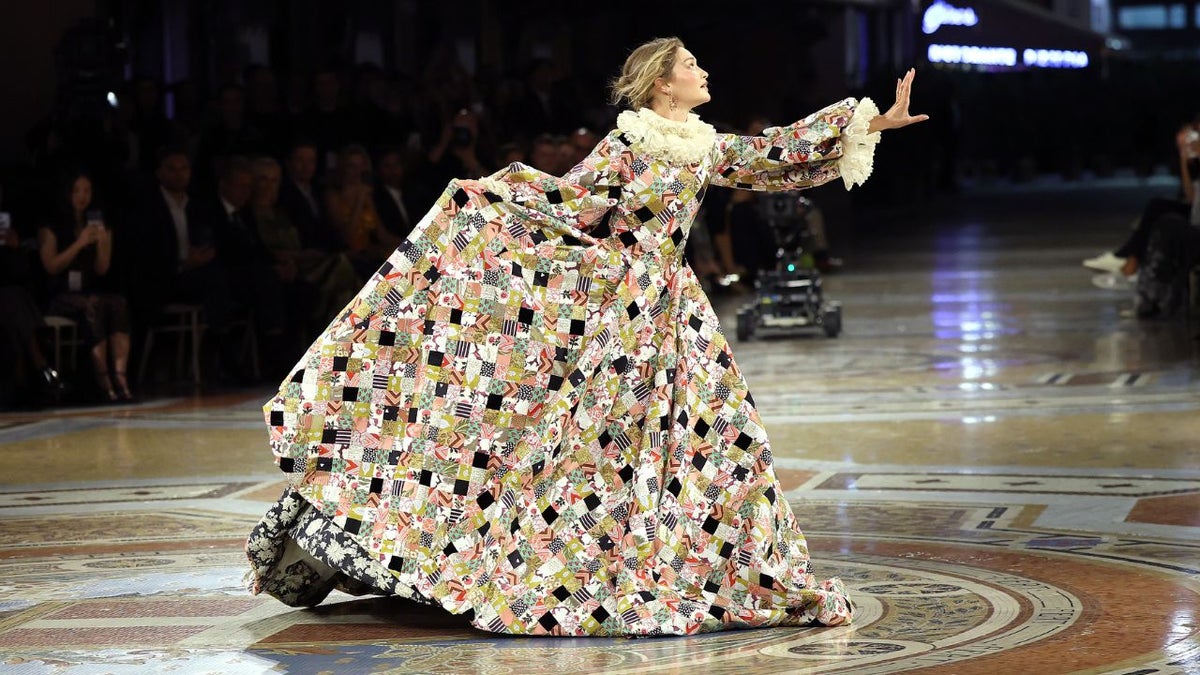
Milan Fashion Week opens with another edition of Vogue World starring Jennifer Lopez, Cardi B and runway robots. Prada makes a compelling case for skirts for Spring 2027. Artificial director Luca Guadagnino and his go-to film production designer Stefano Baisi launch a wide-ranging collection for Zara and Zara Home. David Lynch’s photographs showcase noir L.A. at Pace Gallery, while Reiko Sudō’s textiles are a must-see (and shop) at LACMA.
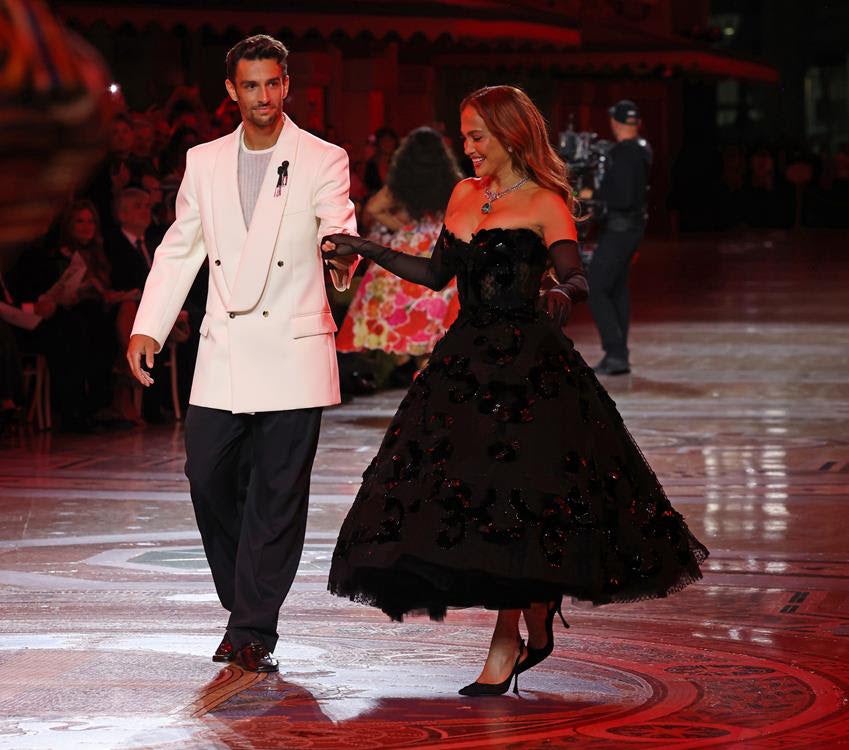

Milan’s Fashion Flurry
Milan Fashion Week opened Tuesday with a celebration of the skirt, a Vogue World extravaganza set at the Galleria Vittorio Emanuele II and a flurry of industry news suggesting that Italian fashion is not done with its period of reinvention just yet.
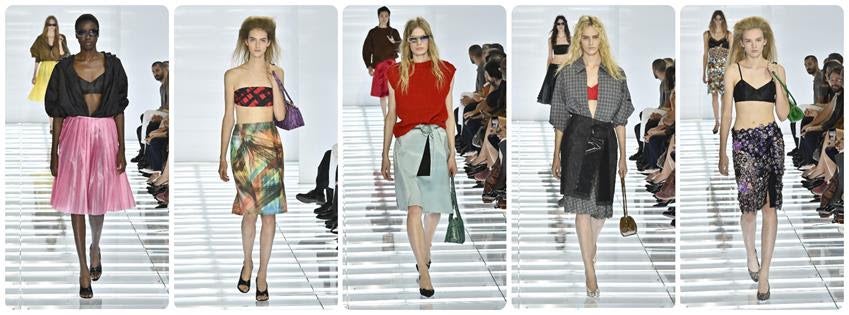
Setting the tone for the week at Prada, Miuccia Prada and Raf Simons put the skirt front and center — literally — every one of the collection’s 63 looks had one. It was fitting for Mrs. Prada, as she’s always called, who has long worn the traditional garment as a personal uniform and reinvented it dozens of times through the years of her collections, with surrealist lipstick prints, painterly postcard prints, dip-dye ombrés, crystal and mirror embellishments, and much more.
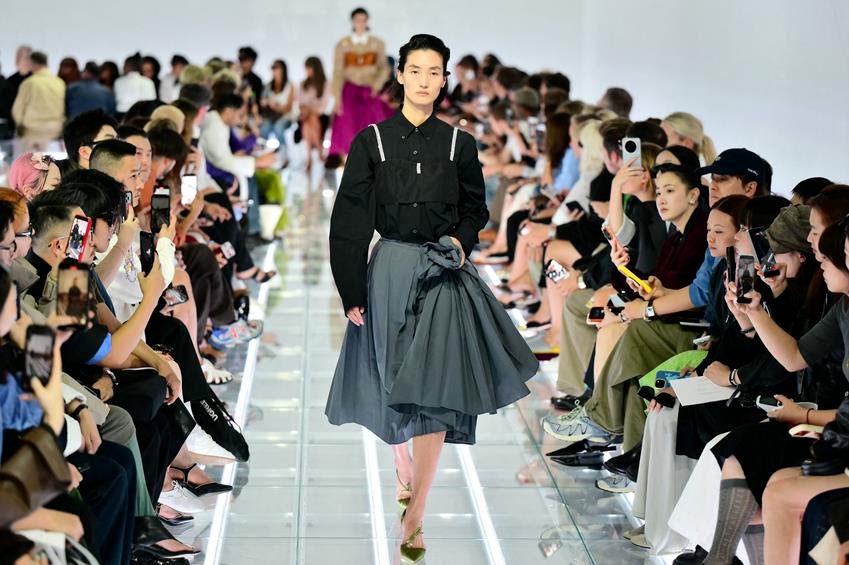
This time, the brand didn’t suggest a single skirt look so much as an argument for the skirt as a canvas — and perhaps a battleground, with some models clenching their skirts in their hands as they walked.
The skirts came in a multitude of styles — knee-length, pleated and A-line; straight sheer plissé, masquerading as leather and latex; wrap skirts secured with crystal-embroidered Velcro or with translucent layers revealing florals and plaids underneath. The skirts were worn all kinds of ways — lots with bralettes, some with sweaters and shirts, others with leather jackets. In other words, something for everyone.
While there was much to like and wear, I miss the days when Prada shows didn’t look back so much as look forward, giving us something more meaty to think about.
Front row guests included Uma Thurman, Naomi Watts, Michelle Williams and Emilia Clarke, along with Hunter Schafer, who carried the skirt story into the evening, wearing a Prada bra top and embellished skirt to Vogue World: Milano, which took over the Galleria Vittorio Emanuele II on fashion week’s opening night, setting the runway amid the famous shopping arcade’s boutiques and cafes.
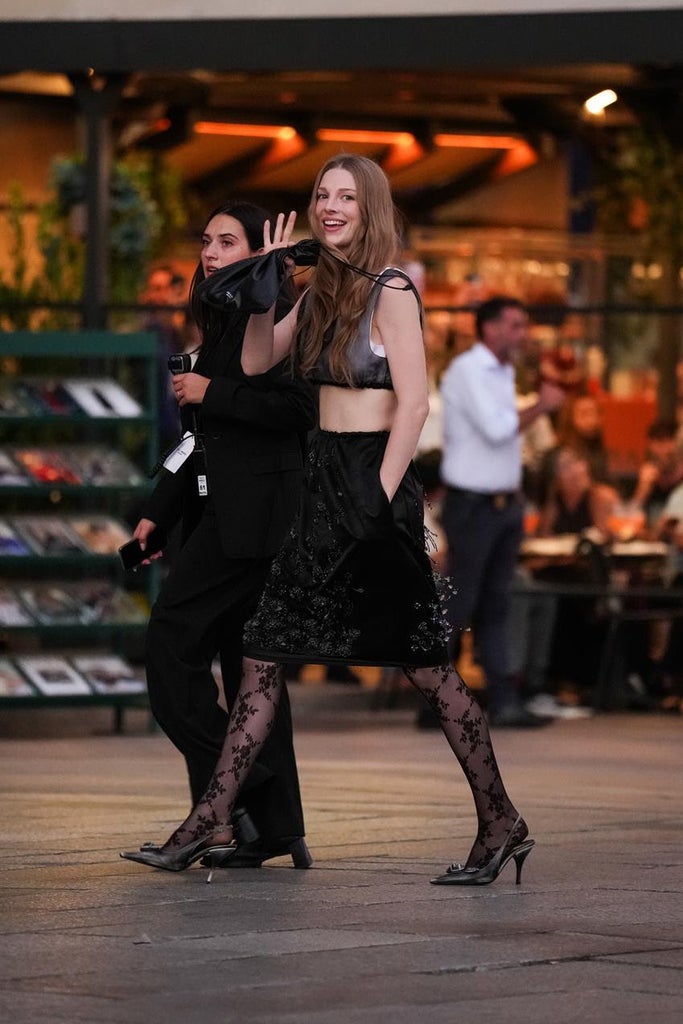
The fifth Vogue World, following editions in New York, London, Paris and Hollywood, was a tribute to Italian fashion’s creativity and craftsmanship.
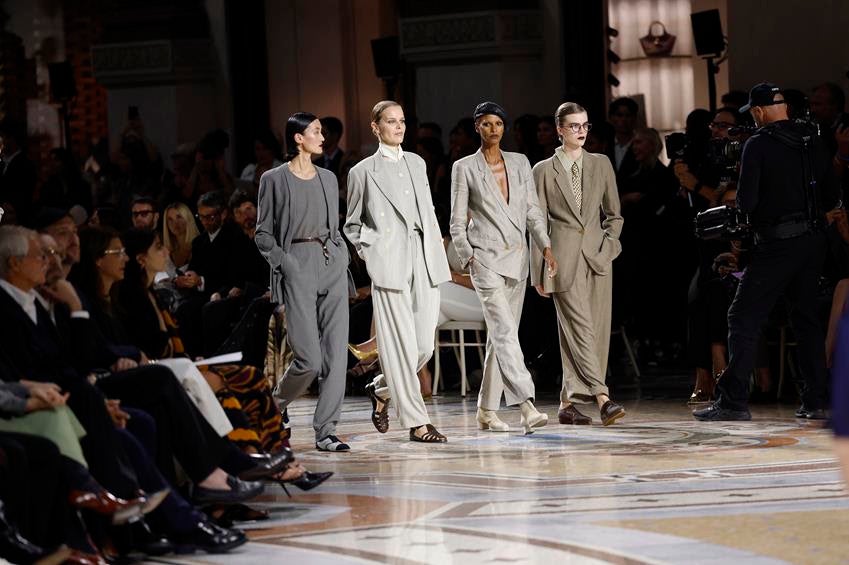
The clothes referenced everything from Renaissance artistry to La Dolce Vita to Italy’s tailoring heritage, and looked toward the digital fashion future with a gimmicky scene that had robots walking the runway. (Guessing we’ll see more of that when Vogue World: San Francisco happens next year.)
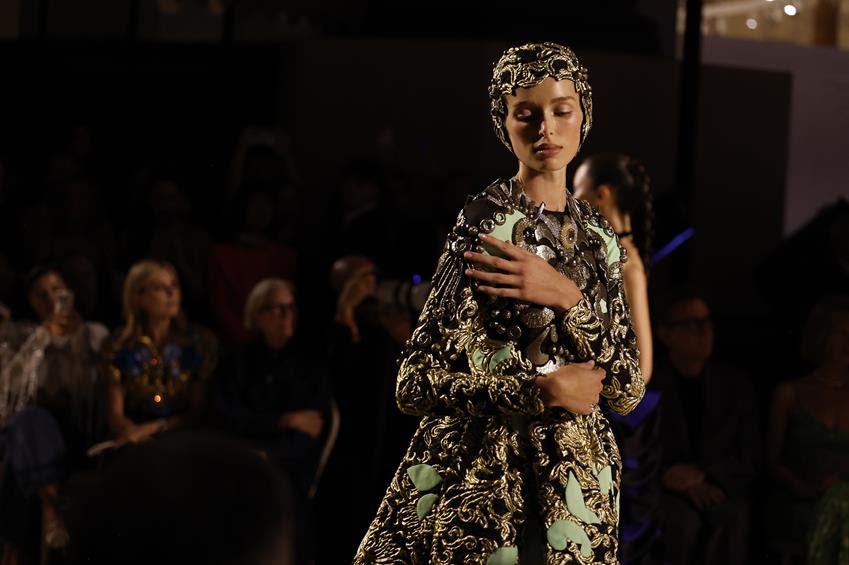
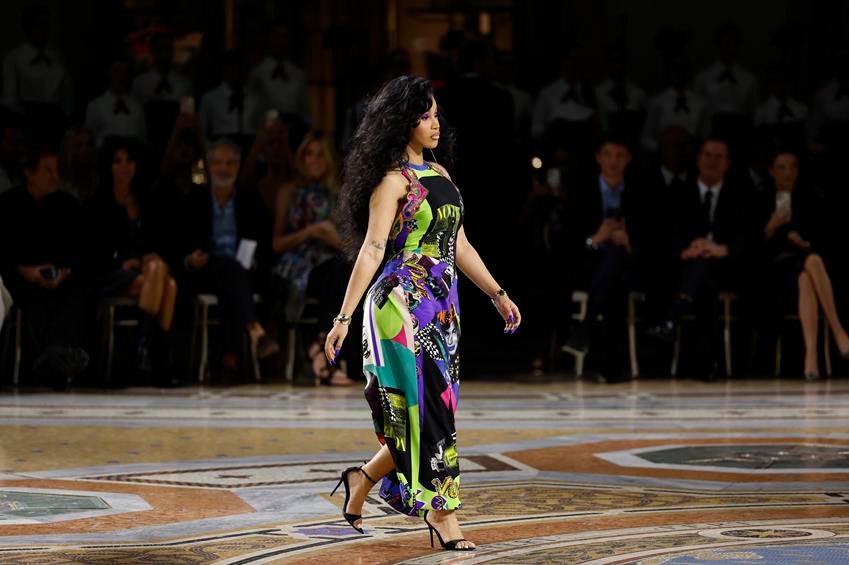
True to form, the event had star and star-athlete power (though perhaps not as much as in other years). Jennifer Lopez walked the runway in Dolce & Gabbana with tennis champ Lorenzo Musetti; Cardi B wore Versace; Alicia Keys, who also gave a surprise performance, appeared in Francesco Risso’s Bureau of Imagination; and Ejae made her modeling debut in a sculptural archival Roberto Capucci gown, while Pamela Anderson, Dakota Johnson, Monica Bellucci, Taraji P. Henson, Jason Momoa and Naomi Campbell were among the guests in the seats.
Meanwhile, at the Diesel Spring 2027 show, Glenn Martens staged a rave-like runway farewell after six years as creative director, turning his final show into a celebration of sexy, subversive club culture à la Berlin’s Berghain. Performers from the Marseille collective (LA)HORDE, planted among the audience, began kissing, writhing and head-banging as the show descended into controlled chaos.
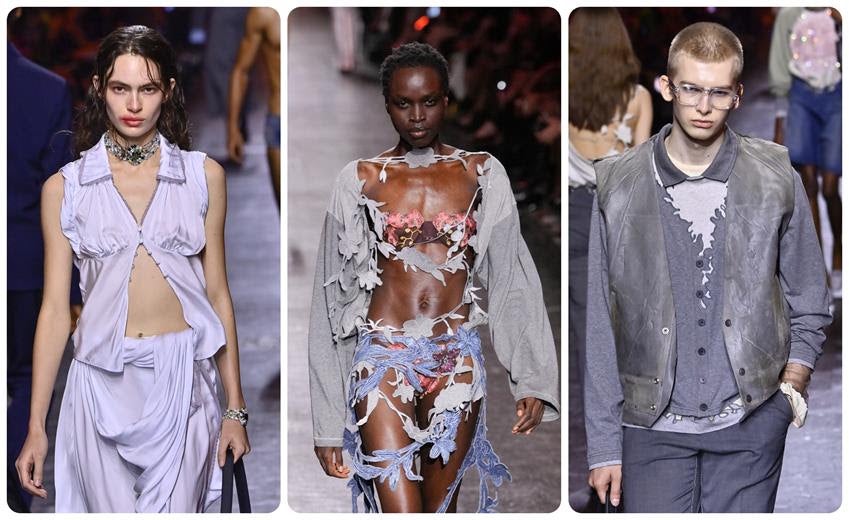
The clothes followed suit, with Diesel’s signature denim subjected to the trompe-l’oeil treatments, laser cutting and distressed finishes that have been Martens’ signatures, while skirts and shorts grew progressively more brief and models adopted a morning-after look with smeared lipstick and makeup.
Talk about going out with a bang.
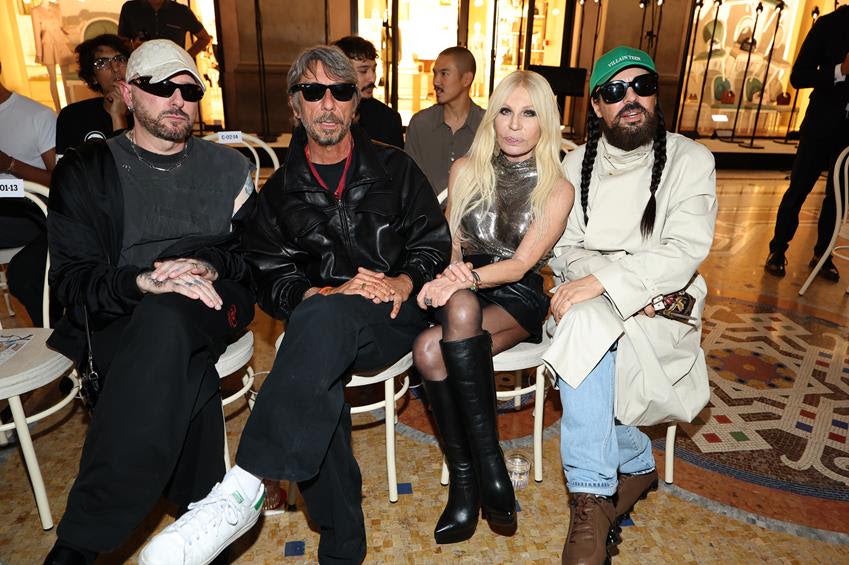
There was big Milan fashion news happening off the runway, too. Donatella Versace, who stepped down as chief creative officer of her family’s company in 2025, used the beginning of fashion week to announce her surprising next act: a joint venture with L.A.-based Revolve Group to create a new independent beauty and fashion brand. And Dario Vitale—the designer who briefly and spectacularly succeeded her at Versace before departing following Prada Group’s acquisition of the house—joined another Italian sartorial stalwart, Emporio Armani, as creative director.

Italian Film Director Luca Guadagnino Designs For Zara
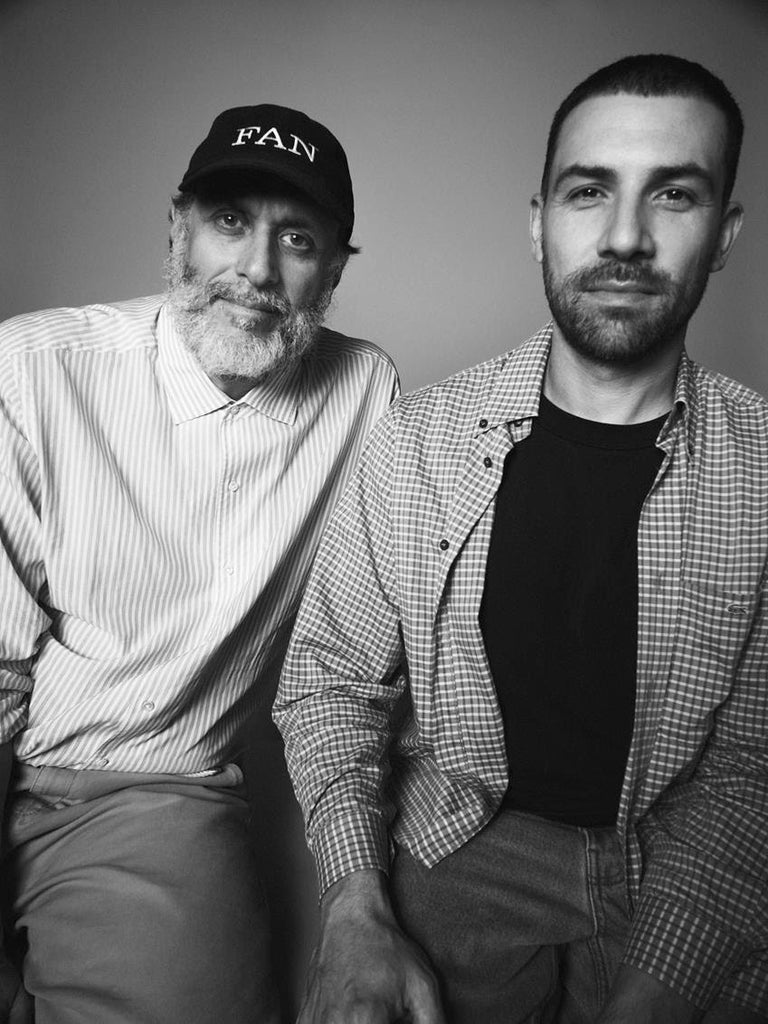
Luca Guadagnino may be fashion’s favorite film director at the moment, but he’s as likely to be designing a room (or a runway set) as directing a movie.
The director of Call Me by Your Name, Challengers, Queer, After the Hunt and the upcoming Artificial has spent nearly a decade working in interiors through Studio Luca Guadagnino, the Milan design practice he founded in 2017, creating residences, hotels and retail spaces with the same attention to color, texture and environment that characterizes his films.
Of course, he has overlapped with fashion, too. Guadagnino’s creative relationship with Jonathan Anderson is particularly close. Anderson designed the costumes for Challengers, Queer and the upcoming Artificial, while Guadagnino and his go-to film production designer Stefano Baisi designed the runway set for Anderson’s first Dior women’s ready-to-wear show in October 2025, with a monumental inverted Louvre pyramid.
Now Guadagnino and Baisi are bringing their passions somewhere even more accessible with Baisi Guadagnino for Zara Home, launching worldwide Sept. 26.
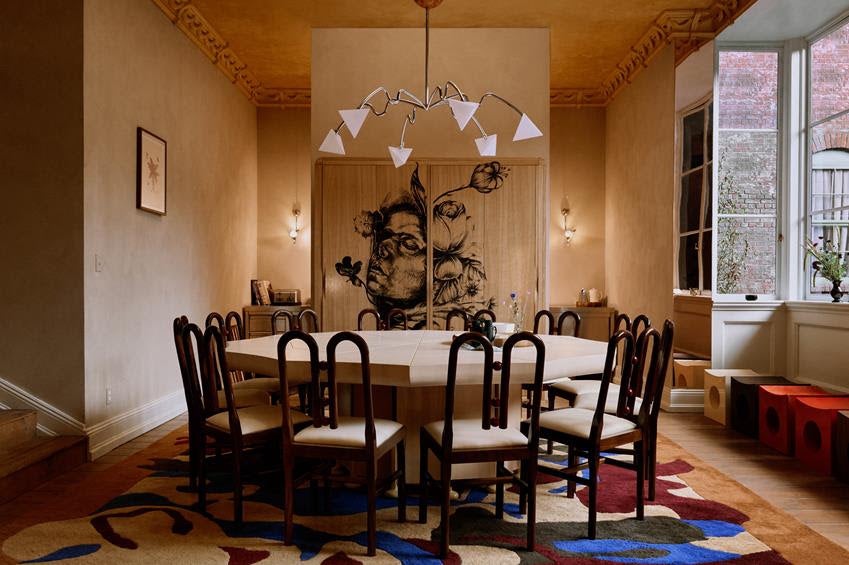
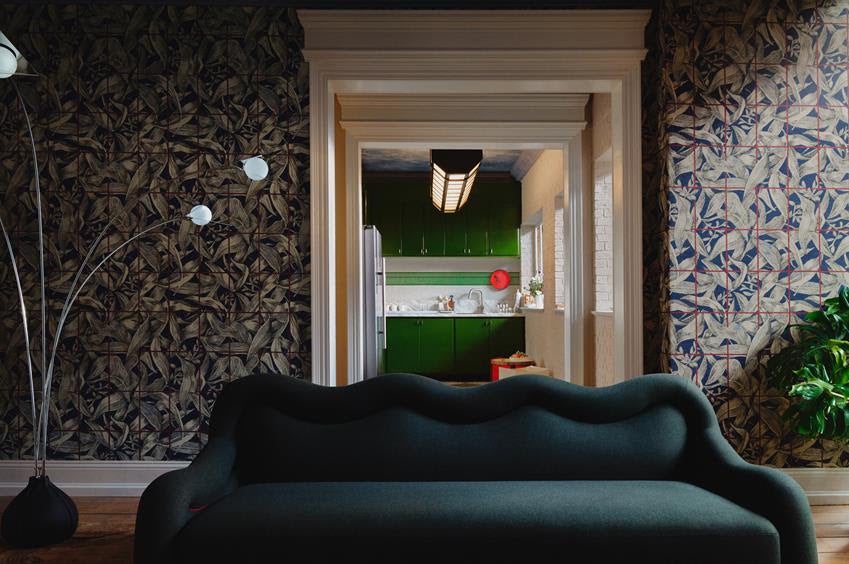
The collection encompasses more than 200 designs including furniture, lighting, tableware, rugs, decorative objects and fragrance, alongside Zara ready-to-wear, effectively allowing customers to inhabit, and dress for, a Guadagnino film. (And let’s be real, it’s accessible to a point; prices range from $40 to $460 for clothing and up to $18,000 for furniture.)
Conceived as an “Atlas of Desire,” the collection pulls from a number of sources, including Viennese Secessionism, French Art Deco and Brazilian Modernism, and many of the pieces (both for the home and the closet) are quite chic, from plush sofas to colorful gowns, glittery brooches to botanical print sneakers.
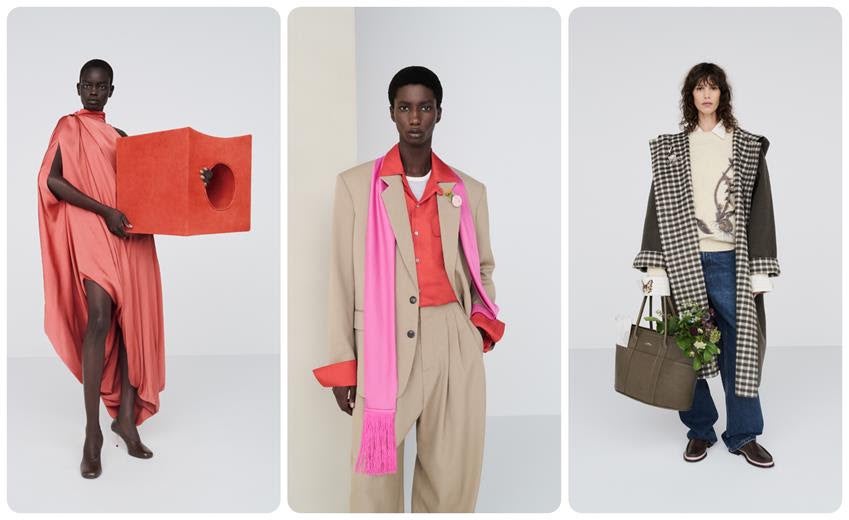
The collaboration is accompanied by a short film directed by Guadagnino, starring Jamie Bell, Chase Sui Wonders, Michael Stuhlbarg and Patricia Arquette. The collection will also come to life during a two-day installation at Milan Fashion Week.
Baisi was working in interiors when he joined Studio Luca Guadagnino in 2017, and Guadagnino eventually brought him into film, asking him to make the leap into production design starting with Queer.
It’s a very cool collab, and yet another indicator of Zara’s ambitions to go upmarket, following collections with Bad Bunny, Willy Chavarria and the upcoming one planned with John Galliano, if it goes forward.
Though I can’t recall seeing a project fusing fashion, interior design and Hollywood at this scale before, the crossover is not unprecedented. L.A.’s Tony Duquette was the ultimate creative multi-hyphenate, moving from film sets and costumes, to fantastical interiors, fine jewelry, furniture and decorative arts. One of my favorite high-low fashion collaborations of all time was with Duquette’s estate and Coach back in 2012, which yielded some fabulous costume jewelry I still wear today.
It’s all about world-building.

David Lynch’s Moody, Ominous L.A. on Display at Pace Gallery
There’s something about the work of the late filmmaker David Lynch — dark, moody and ominous — that always seems even more powerful when it’s served up as a counterweight to the eternally sunny disposition of Los Angeles.
And that’s just what’s happening at Pace Gallery, where David Lynch: L.A. showcases photos (and one very bizarre-looking lamp) created between 1979 and 2008 that riff on “the myth and mystery of Los Angeles and its emotional landscape … the dream of the city and its archetypes: the ingénue, the shapeshifter, the beauty and darkness.”
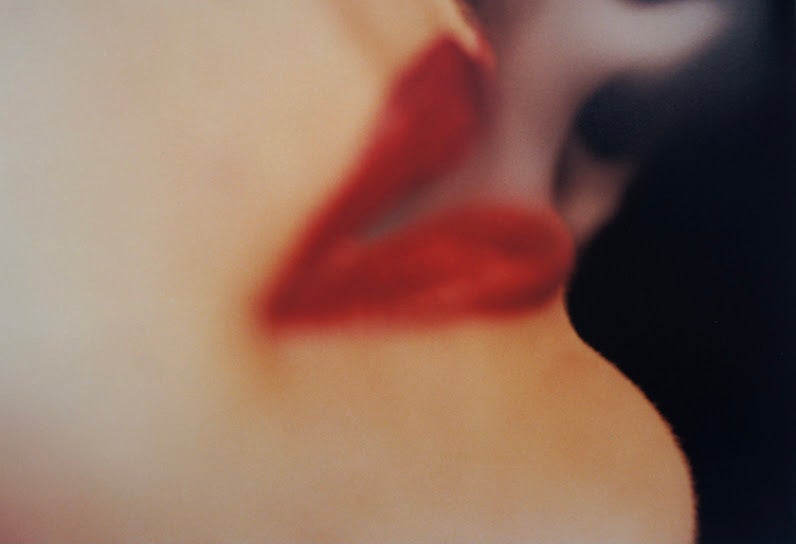
It’s the first presentation of Lynch’s work in his adopted hometown (born in Missoula, Montana, he moved to L.A. in 1972) since his 2025 passing. Anchoring the three-room exhibition are five large-scale photographs from a series called Figures and Smoke. Featuring tightly cropped images of women’s mouths framed in vivid red lipstick, slightly agape as they exhale smoke, they’re as captivating as any moving pictures to his credit.
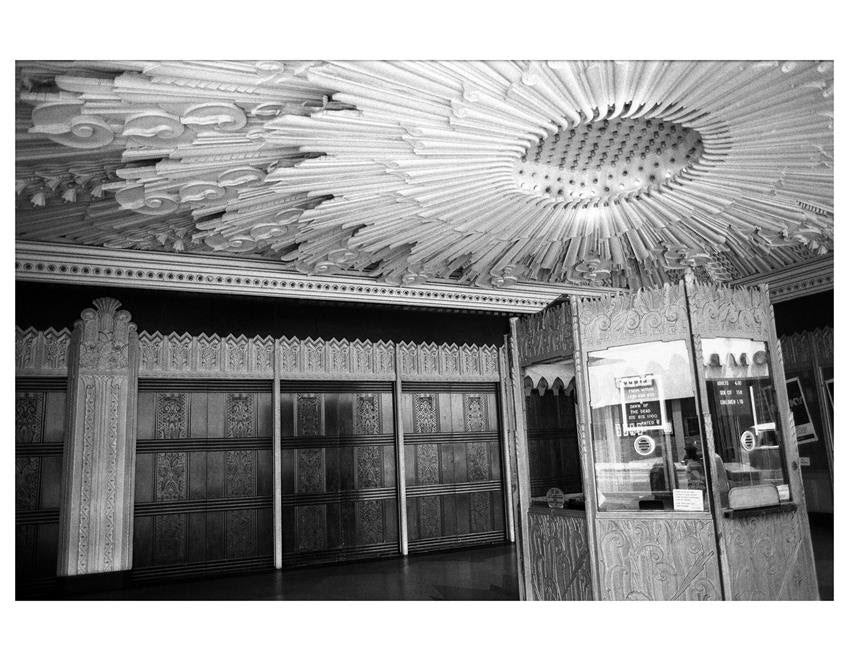
This room is also home to the most overtly L.A. of all the photos, depicting decaying city architecture from decrepit pool halls to a charred Thrifty drugstore facade, all of them devoid of people but, thanks to the director’s peculiar talent, full of emotion.
The standout, especially given the oeuvre Lynch is famous for, is a silver gelatin print (untitled, 1979) that depicts the ticket booth of an Art Deco-style movie house, a swirl of details from the starburst-patterned ceiling to the small sign in the ticket window that, if you squint, you’ll see has the showtimes for the horror films They Came From Within and Dawn of the Dead.
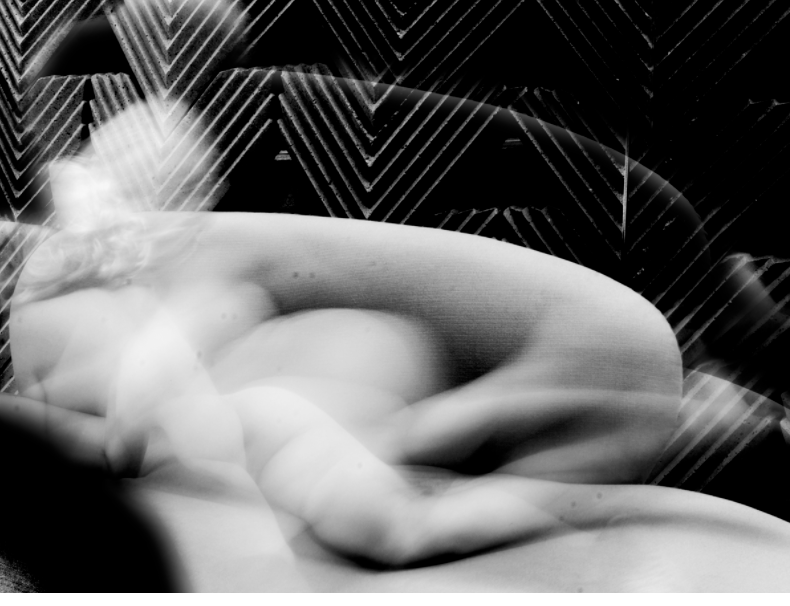
Also in the mix are black-and-white images that explore a more intimate topography: that of the female form; shadow-shrouded close-ups of hips, lips and faces. Prints from his “Couch Series” feature a reclining nude and wisps of smoke, but with the female form multiplied, manipulated, layered and blurred to the point where she all but disappears. In one work titled “Smoke on a Couch” (1992), she does, leaving behind just the telltale tendrils of what looks like exhaled cigarette smoke.
If you’re not familiar with Lynch beyond his film and TV work (Blue Velvet, Twin Peaks, Mulholland Drive), consider this a good, 35-work starter pack in advance of future exhibitions since, as the press materials note, the Los Angeles County Museum of Art is in the early stages of preparing a David Lynch retrospective.
“David Lynch: LA,” through Dec. 23 at Pace Gallery, 1201 S. La Brea Ave., Los Angeles.

Meet the Artist Behind the (LACMA) Curtain
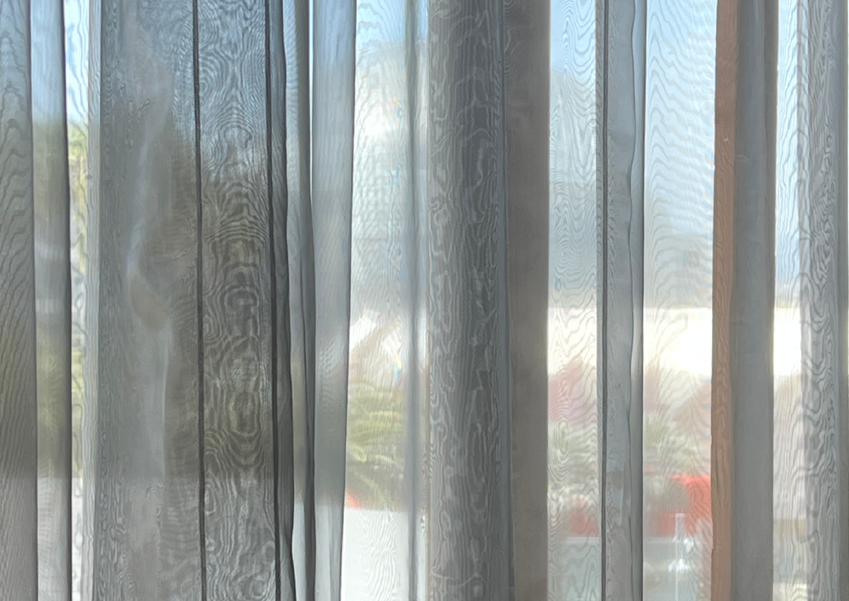
If you’ve been to the Los Angeles County Museum of Art’s new David Geffen Galleries, you’ve already seen the handiwork of Japanese designer Reiko Sudō — in the form of the floor-to-ceiling chrome-sputtered curtains that pull off the nifty trick of letting in the SoCal sunlight while protecting the priceless works of art at the same time.
Now, with the opening of Textile Alchemy: The Art of Reiko Sudō & NUNO (ironically, not in the Peter Zumthor-designed building where her custom creation hangs, but in the Resnick Pavilion across the plaza), you’ll get a chance to take a deep dive into the world and extraordinary work of the artist behind the curtain.
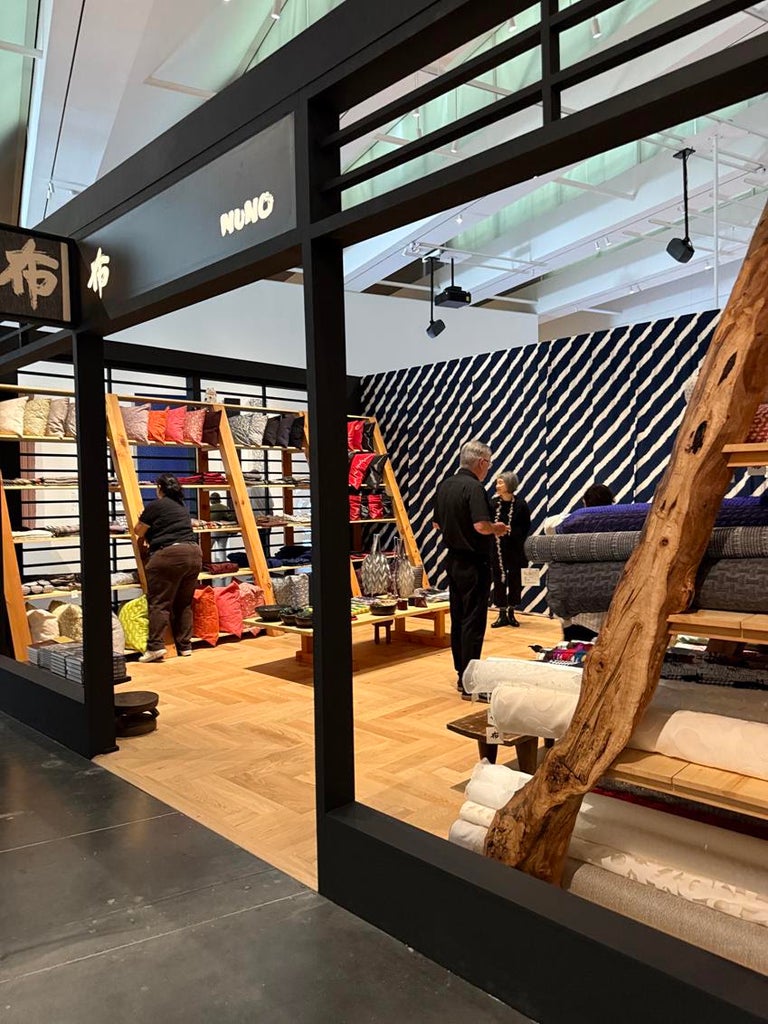
NUNO is the Japanese textile collective led by Sudō (the word nuno translates as cloth, fabric or material), and a recreation of the original NUNO store that opened in Tokyo in 1984 serves as a central hub for the exhibition, displaying shelved bolts of fabric with dangling price tags on one side (not for sale) and an assortment of gorgeous bags, scarves and pieces of clothing (very much for sale) on the other.
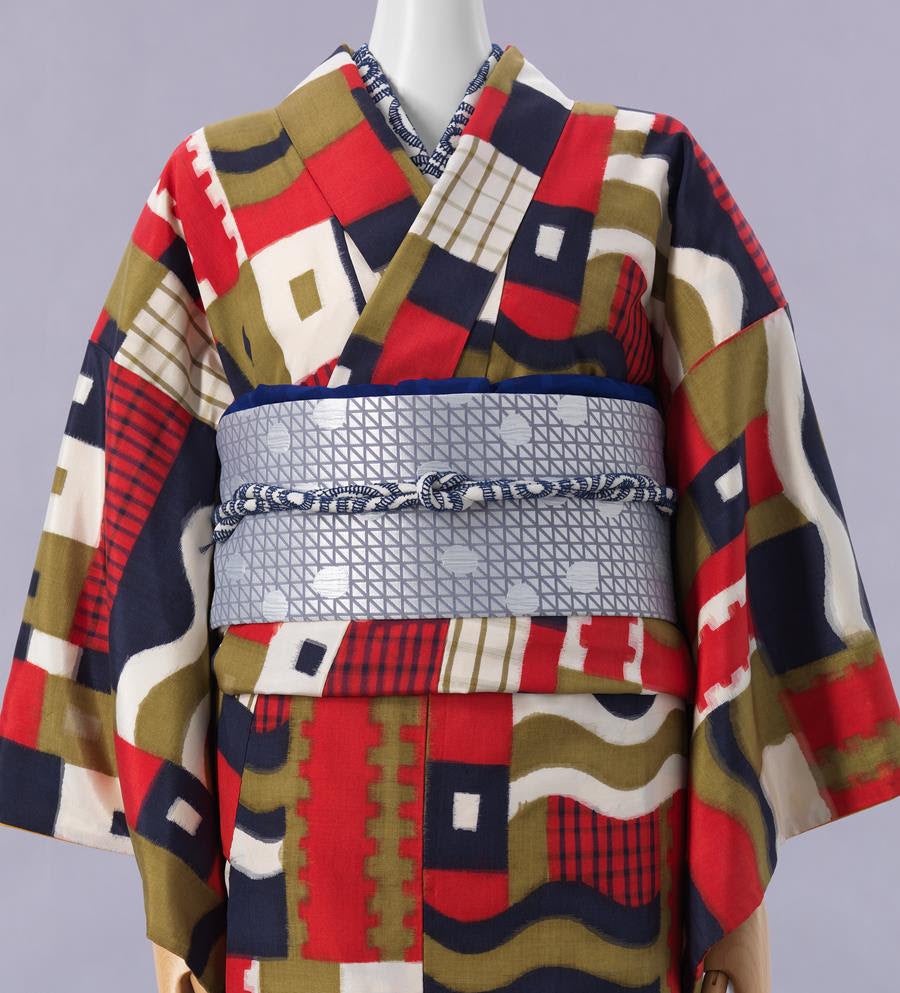
Arranged thematically around that hub are more than 100 limited-edition textiles, as well as garments, drawings, sketches, tools, raw materials and videos of textile weaving in progress projected against the gallery walls. The word “alchemy” in the exhibition’s title feels apt, since the yardage of fabric hanging tapestry-like on the walls feels almost magically transformed through the use of some seriously mind-boggling experimental materials and manufacturing techniques that go beyond simple variations of warp and weft.
Think textiles made from slices of abalone shell, resin-coated newsprint or copper telephone wire that are baked, burned out using acetic acid, stencil-dyed or sputtered with chrome molecules in a technique borrowed from auto parts.
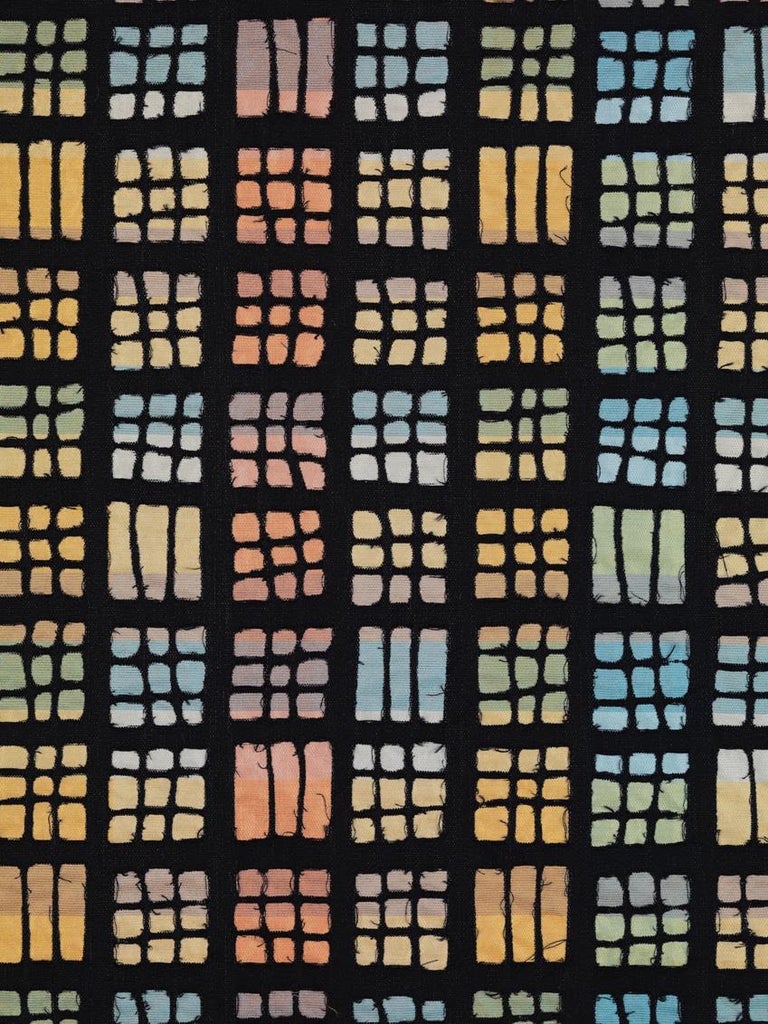
The Sustainability and Reuse section has textiles made using thread made from kibiso, the traditionally discarded coarse outer surface of the silkworm cocoon, and others using fabric remnants that were essentially disassembled — their threads unraveled, respun and rewoven to incredible effect.
The Experimentation section features pieces that truly push the limits of what’s possible (and what’s fabric, actually), including Sudō’s Metal series, which uses industrial coatings from the auto industry to create glittery, metallic but pliable fabric.
This includes Stainless Steel Gloss (aka Sputter Gloss and Sputtering Gloss), 1994, the textile that originally inspired those LACMA curtains. The original is a polyester plain weave sputter-plated with iron, nickel and chrome. Nearby is the version that hangs in the Geffen Galleries, formally known as LACMA × NUNO Sputtered Chrome Matte, 2025, the result of a yearslong development process to find a version that wasn’t flammable. (You can buy a $135 origami-folded bag made of the same fabric in the NUNO shop and online at LACMA.)
The entire exhibition is filled with “how did they do that?” exercises in experimentation. Some of the most memorable include Hane Organza (1993, in collaboration with Tsuguo), a double-layer organza with hand-inserted guinea fowl feathers that appear to float ephemerally, and Circle Bricks (2024, in collaboration with Hyōdō Orimono), a merino wool jacquard that leaves the loom as a fabric patterned with multicolored ovals but, once finished in a hot-water bath, shrinks into something more akin to springy crepe — with the ovals transformed into circles.
“Textile Alchemy: The Art of Reiko Sudō & NUNO” through March 7, 2027, at LACMA, 5905 Wilshire Blvd., Los Angeles.

Forwarded this newsletter?
Subscribe here to get WrapStyle directly every week!
Have a news story for our readers? Please email booth.moore@thewrap.com
Interested in partnership opportunities? Please email Alex.vonBargen@thewrap.com