HOLDING THE LINE
Antiheroes are out. TV has handed the lead to exhausted professionals patching institutions too broken to fix.
By Lili Loofbourow
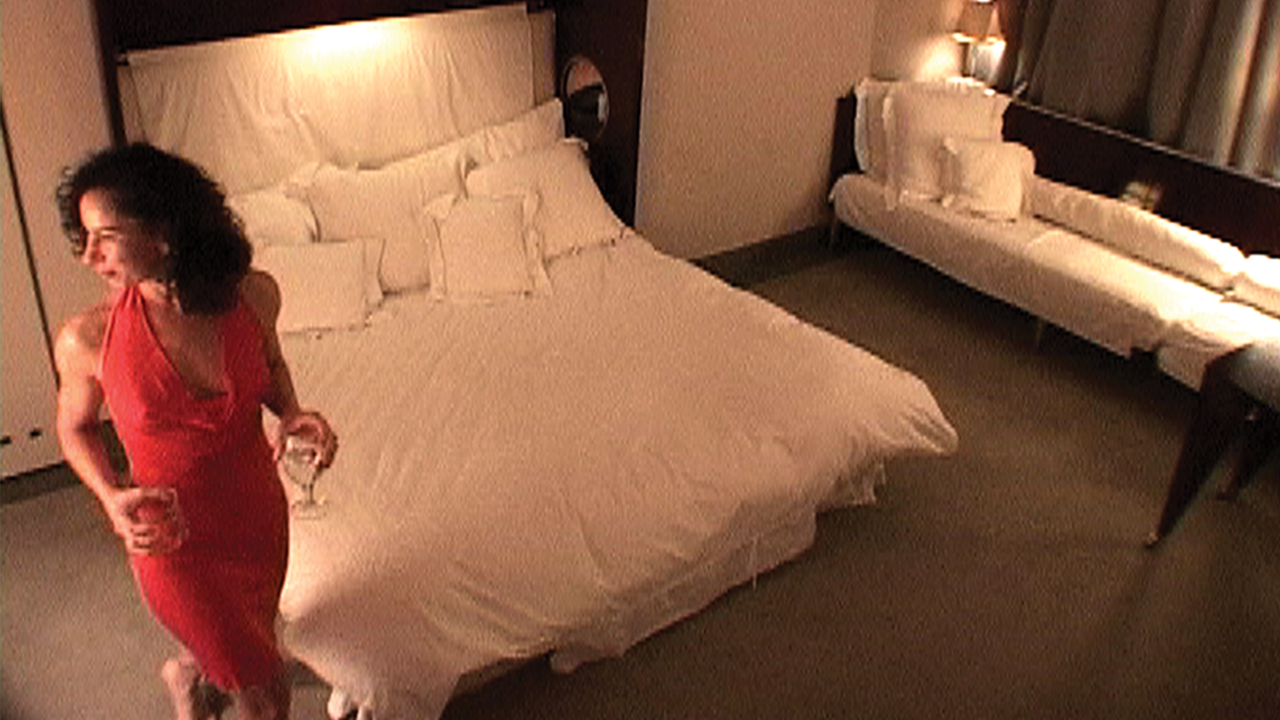
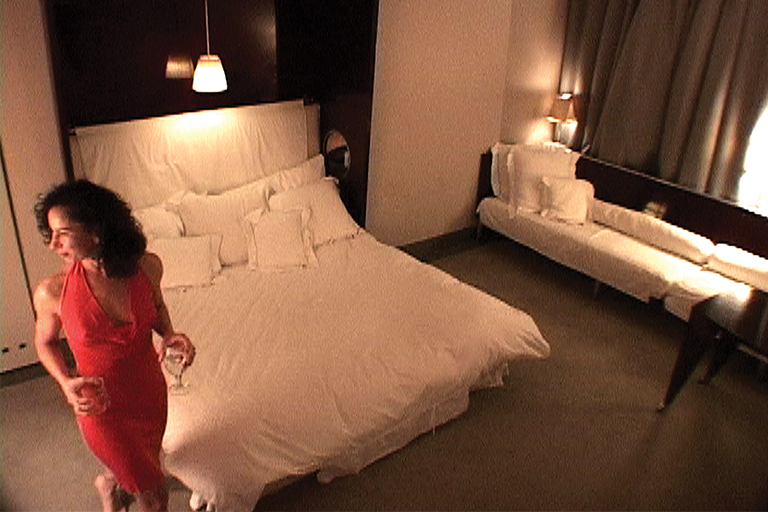
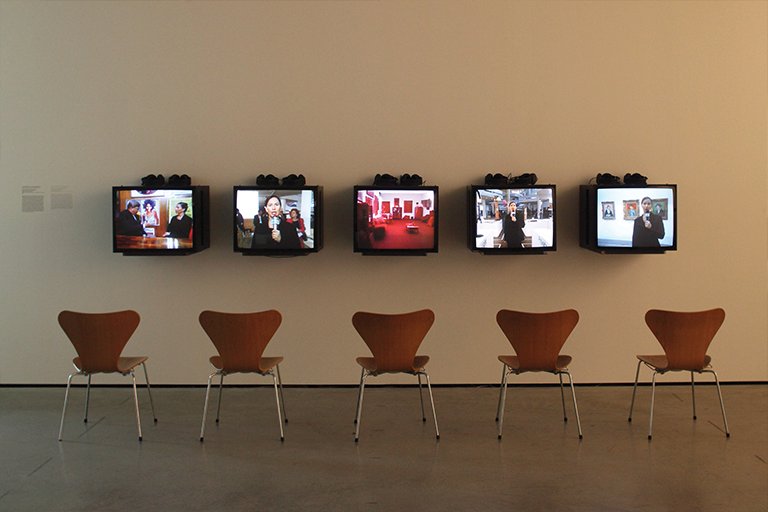
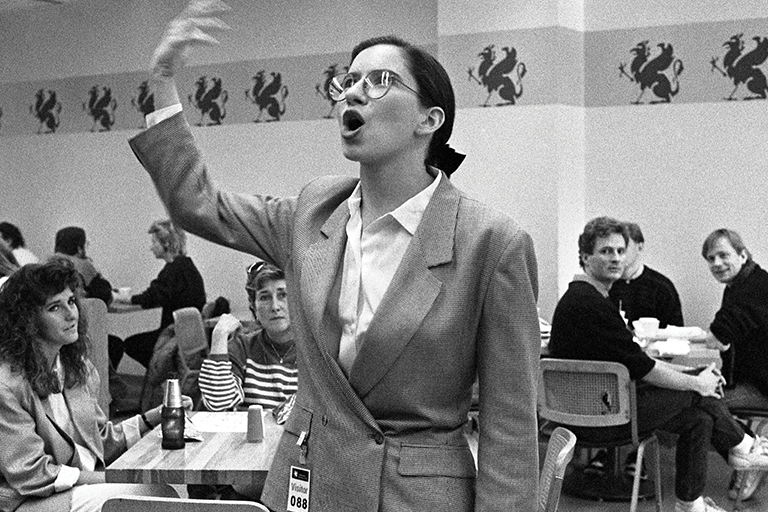
Artwork by Andrea Fraser
That the Lincoln Memorial reflecting pool bloomed green with algae, its fresh paint already peeling, immediately after a White House–ordered renovation seemed both underwritten and overwrought. It felt like a plot point in a preachy but witless political drama you drift away from, even if you’re in basic agreement, because nothing that obvious can possibly be interesting. (Imagine, if you will, an episode featuring the literal demolition of the East Wing.) For viewers (or citizens) hungry for something worthy of their attention, Trumpian spectacle, which once felt so urgent, appears analytically empty. Not even the president seems capable of mustering much interest; his explanation for the algae (“vandals”) was feebly unimaginative compared to the viral hits of yore (“they’re eating the cats and dogs!”).
And so, while enduring an oil crisis and a war, American audiences are flocking to shows about beleaguered but well-meaning problem-solvers. And yes, some of it feels a little, well, old-fashioned—like network television. HBO’s The Pitt isn’t ER, but there are reasons (beyond Noah Wyle’s presence) the comparison keeps being made. Prestige TV spent two decades telegraphing sophistication by presenting the “good guy” as formulaic and clichéd. Conscientious, conflicted protagonists never left the small screen entirely, but they were mostly relegated to broadcast television. No longer. Antiheroes, take a knee. Marvel franchises, step aside. On streaming TV, at least, heroes—not superheroes, but overworked, well-meaning humans trying to navigate crumbling systems—are back.
Antiheroes are out. TV has handed the lead to exhausted professionals patching institutions too broken to fix.
And “competence porn,” as the recent iteration of this trend is sometimes called, hits differently now. If this is a return to an old, familiar genre comprising classics like NCIS, The West Wing and Law & Order, it’s a bedraggled one. The protagonists might mask their talent and dedication with misanthropy, as in Apple TV’s Slow Horses, where Gary Oldman’s MI5 agent, Jackson Lamb, feigns inattention while malodorously presiding over disgraced joes. They might shut down or decompensate, as in The Pitt, where burned-out attending physician Dr. Robby (Wyle)—scarred by COVID-era losses and the impossibility of his job in an underfunded Pittsburgh emergency room—starts lashing out at the subordinates he’s supposed to mentor. They might make indefensible compromises, as in Netflix’s The Diplomat, where Keri Russell’s no-nonsense civil servant, Kate Wyler, brokers thorny truces between the United States and the United Kingdom while occupying an ambassadorial post she once regarded as offensively frivolous. Or they might, as in FX’s The Bear, simply import abusive practices common in fine-dining establishments—and some personal trauma—into their management of a family sandwich shop.
But in each case, the protagonists are driven by an exhausting but exacting sense of vocation. Their goals aren’t personal profit or professional advancement. Nor, given the constraints, do they expect to do “good” in any meaningful sense: Their respective systems are usually too broken for that. Their mission is, rather, to mitigate a few of the many ongoing disasters to which they daily bear witness. The ER crew in The Pitt certainly saves lives, but it’s telling that the genial, alcoholic “frequent flyer” they save admits he’s grabbing a drink later. The triumphs are so fleeting they barely register. This isn’t idealistic television, despite its familiar contours. In tone and content, these are ongoing and desperate salvage operations.
It satisfies, nevertheless. On the surface, the plots deal with the absorbing details of those emergencies (mercury toxicity in The Pitt, a lost Russian submarine in The Diplomat). But the meatier conflict in all these shows arises from the gap between what the protagonists wish they could do and the extremely limited range of action the system in question permits. The drama comes from watching idealists (which is what folks cursed with a sense of vocation tend to be) struggle against organizational paralysis and decay while charged with work that is urgent, non-negotiable and mostly futile.
While Gilroy initially conceived the show to unfold over five seasons, Gilroy and Luna (who’s an executive producer on the show) decided to condense a planned four-season arc into a single season, with three episodes for each year leading up the start of Rogue One. As Luna recalls, the decision came as the two met up in Seen that way, the stakes become almost, well, spiritual. When there is no fixing an institution, only strategically plugging its worst leaks, the result isn’t merely frustration; frequently, it intensifies into something closer to moral injury. How do experts handle the mounting conflict between their ethics and the reactive stopgaps forced on them by the never-ending state of emergency their work condemns them to? How sustainable is it to subordinate their own needs and wants to an undeserving system? Even if they’re doing so in the name of trying to serve their fellow humans, who are trapped in it too? (Dr. Robby must, at some point, be allowed a moment to pee.)
That’s a heady and highly relatable set of questions for many Americans in 2026. No wonder audiences are drawn to this kind of show. Put differently: It’s fun to watch people do things they’re good at. Competence might even have a little countercultural frisson at a moment when the party in power not only rejects expertise but treats it as a political (and politicized) enemy. History tends to spark morally responsive —and reactive—television. History changes how we receive that television, too.
Take The Sopranos, David Chase’s show about a mobster getting psychotherapy, which arguably launched the so-called “Golden Age” of television. It sprang onto the world stage in 1999 with a startling and prescient thesis. Although the dot-com bubble was still in the ascendant (it would peak 14 months later, in March 2000), the show posited, in the pilot, that the good times were in the past. “Lately, I’m getting the feeling that I came in at the end,” mafioso Tony Soprano (James Gandolfini) tells his psychiatrist. “The best is over.” Technically, Soprano is describing the slow decline of La Cosa Nostra: specifically, how internal hierarchies and strict codes of conduct were eroding under external pressure, private incentives and dwindling loyalties. But it’s obviously a broader indictment, the suggestion being that American cultural rot is so extensive that even extralegal organizations have been contaminated and weakened by the nation’s ambient spiritual malaise.
It’s a memorable but odd speech, in context, for a guy who in a very literal sense has not peaked; when Tony delivers that eulogy, he’s about to become the boss of a crime family. Nor has the America he’s describing experienced some of the major freefalls we now associate with that time period; 9/11 and the dot-com crash lay in the future. Those events would retroactively influence how the show was discussed and evaluated, but at the point when it began, Tony’s speech was more prophetic than descriptive.
And just as Andor mirrors certain social revolutions, the show has also inspired some real-world acts of defiance. On June 14, when protesters rallied against Trump under the “No Kings Day” banner, Andor was quoted liberally, as in signs reading “Remember: I have friends everywhere,” with the Rebellion logo. Others quoted the manifesto of Karis Nemik, a character from the first season: “Freedom is a pure idea. It occurs spontaneously and without instruction. Remember that fear is the mask of oppression. Remember this: Try.”
Luna is not surprised how viewers have found real-world parallels in the show’s fictional storylines. “It becomes a gigantic mirror, and it obviously speaks so much about what we’re going through about the present,” the actor says. “Tony wasn’t trying to predict anything, but he was being very meticulously rooted in our past. Therefore it becomes pertinent.” No matter when the show had come out, Luna believes it would have reflected some part of the larger world going through turmoil. “We were not trying to do something that committed to in a specific time or a specific moment or a specific expression of authoritarianism—Tony was very, very clear about that. I think that is the strength of science fiction.”
Simply being a part of the Star Wars universe will resonate with viewers for years, Luna knows. “New generations will be introduced to this, the way this was introduced to me,” says the actor, who recalls seeing the original trilogy in the late 1980s when he was a boy. “With these stories, with these characters, you know that it would last in time differently, because there’s a fandom, because there is a structure, because you’re now part of something bigger than just your participation in it.”
Andor might take place in a galaxy far, far away, but in many ways it feels like it’s happening right now, much closer to home. And Luna is particularly fascinated by the possibility that the show might endure—and how future viewers might draw entirely different lessons from the saga. “What is it going to mean to a generation that doesn’t even know about today?” he wonders. “How is it going to talk to them?”
It’s noteworthy, in other words, that prestige TV began with anxious outlaws processing private (rather than systemic) dread at a historical moment characterized by comparative prosperity. Even Walter White’s ranch-style house in Breaking Bad—to take another Golden Age classic—reads differently in 2026. When the series about a high school teacher–turned–meth-manufacturing kingpin premiered in January 2008, creator Vince Gilligan meant for the protagonist’s modest Albuquerque “starter home” to show how cataclysmically White’s career had stalled. It was shot as dingy and claustrophobic, a kind of suburban nightmare worth escaping. But the 2008 crash—and subsequent events—have transformed how newer viewers receive it. These days, confused younger fans pop up in forums to ask why the Whites’ house is so surprisingly nice. He could afford it on $40,000 a year? It even has a pool!
Those shows had another thesis: namely, that mere competence—and the grit and self-abnegation required to serve within a broken system—is boring. Walter would have been nuts to remain merely a high school teacher. Vito, in The Sopranos, could hardly make it through a single day of honest work. Staying in an institution is dull; it’s easier to skirt it and cheat it and call that the smarter thing. Prestige TV overlapped with the rise of streamers and social media, after all, in an era characterized by that Mark Zuckerberg catchphrase: “Move fast and break things.”
The streaming wars are (mostly) over. Things are, indeed, broken. And sure, the popularity of The Pitt and its ilk suggests that the appetite for antihero shenanigans has waned; it’s the sort of reactive contraction one expects in periods of crisis. When institutions are crumbling (and populated almost exclusively by Tony Sopranos and Paulie Walnuts), people start belatedly valuing the duller but less corruptible functionaries all systems need in order to work. It makes sense that, when even broadcast television is imperiled (and it is), nostalgia and appreciation arise for old standards we might have dismissed as formulaic or forgettable. Your Late Show with Stephen Colbert; your 60 Minutes; your NCIS.
“This isn’t idealistic television…these are ongoing and desperate salvage operations.”
Maybe that means this new appreciation for competence extends to the rigors of network television, the medium in which these shows first arose. The streaming wars were a wild west of unregulated newness. Some of it was great. A lot of it wasn’t. Of the more promising series, a surprising number turned out to be baggy or unfocused. Shows with huge stars and budgets didn’t know how to end, or what they were trying to say. Episodes ballooned in length. Eons went by between one season and another.
Broadcast television has usually, by contrast, been tight as a drum. Its one-hour dramas may hew to formulas prestige TV subverted, but there are compensating virtues. Maybe, after so many stylish but empty puzzle-box shows, epics that built to nothing and satires with no real critique—we’ve come to appreciate the undeniable technical virtuosity that went into producing the comparatively “lowbrow” series we once derided for feeling factory-made.
Breaking things is a formula too. The rise of competence porn suggests that maybe, after two decades deconstructing tropes, systems and institutions, audiences are ready to see a little glamor in the maddening, technical, thankless work of keeping everything from falling apart. It’s great fun to quote Yeats’s poem “The Second Coming,” which is why every prestige show does it, but if the center really cannot hold—and maybe it shouldn’t—the boldest fictional premise left is: What if it did?
Andrea Fraser
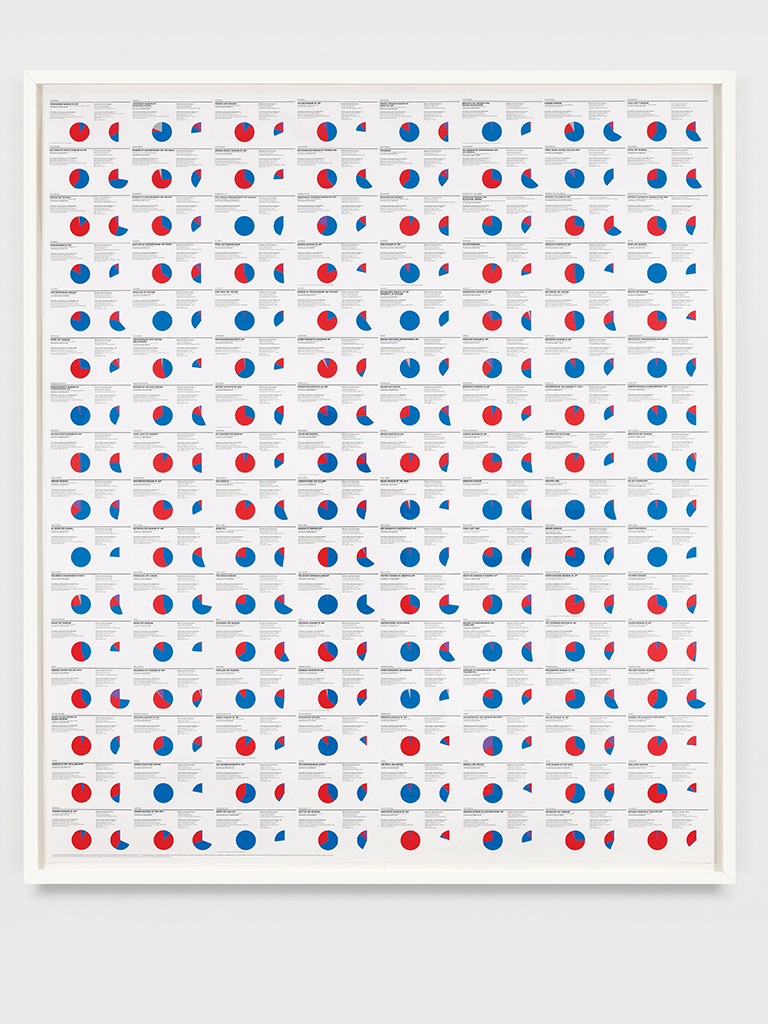
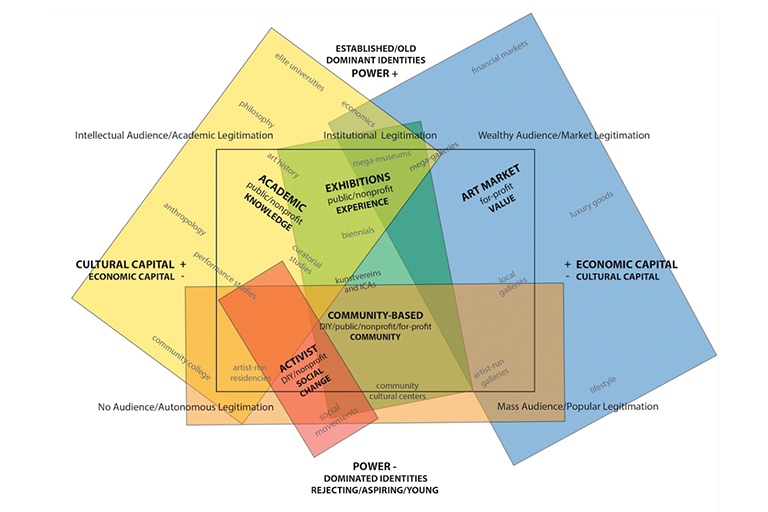
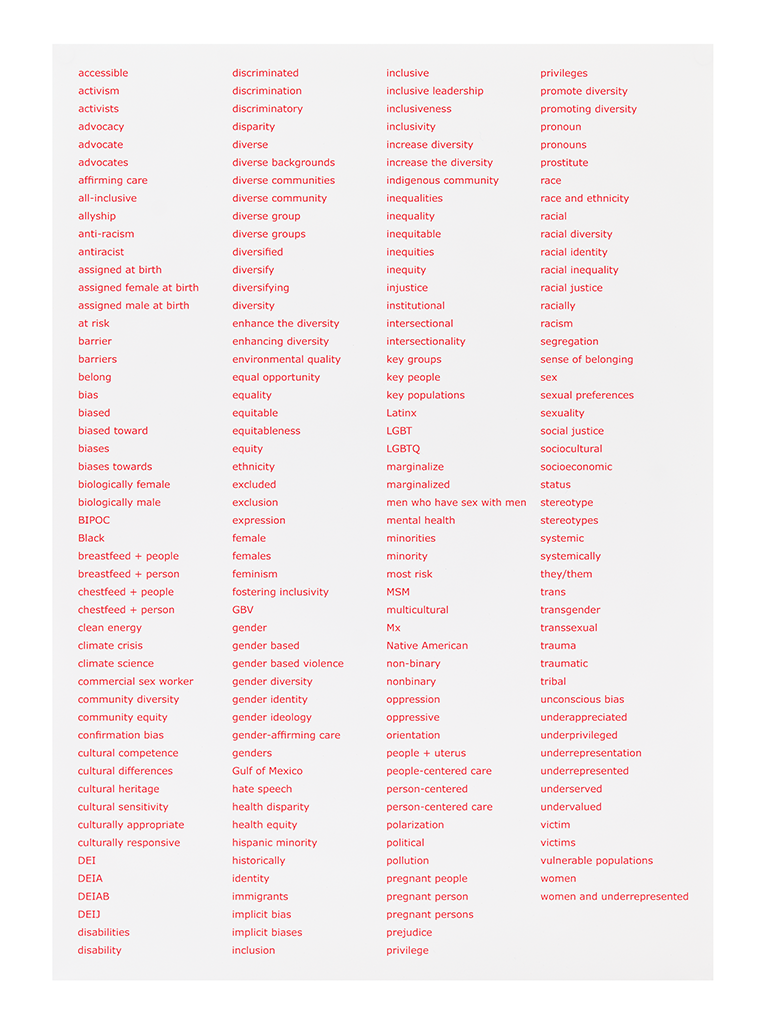
A leading figure of institutional critique, Andrea Fraser has spent four decades working inside the museums she indicts, never pretending to be exempt from them. She has impersonated a docent, tallied nine hundred–odd pages of trustee political donations and charted the art world’s splintering into rival economies. Last year’s Lexicon reproduces words reportedly purged from federal websites. There is no outside to retreat to, she has argued: We are the institution, and the only question is what kind we choose to be.
by Lara Apponyi
Lili Loofbourow
is a writer based in Oakland. She has previously been on staff writing about culture and TV at The Washington Post, Slate, and The Week.