
For the first time since the pandemic, the box office is heading into June after a May where domestic grosses cleared $1 billion. And while there isn’t another “Backrooms”-sized opening expected to come from any of the three wide releases hitting theaters this weekend, they could combine to provide a similar boost to theaters.
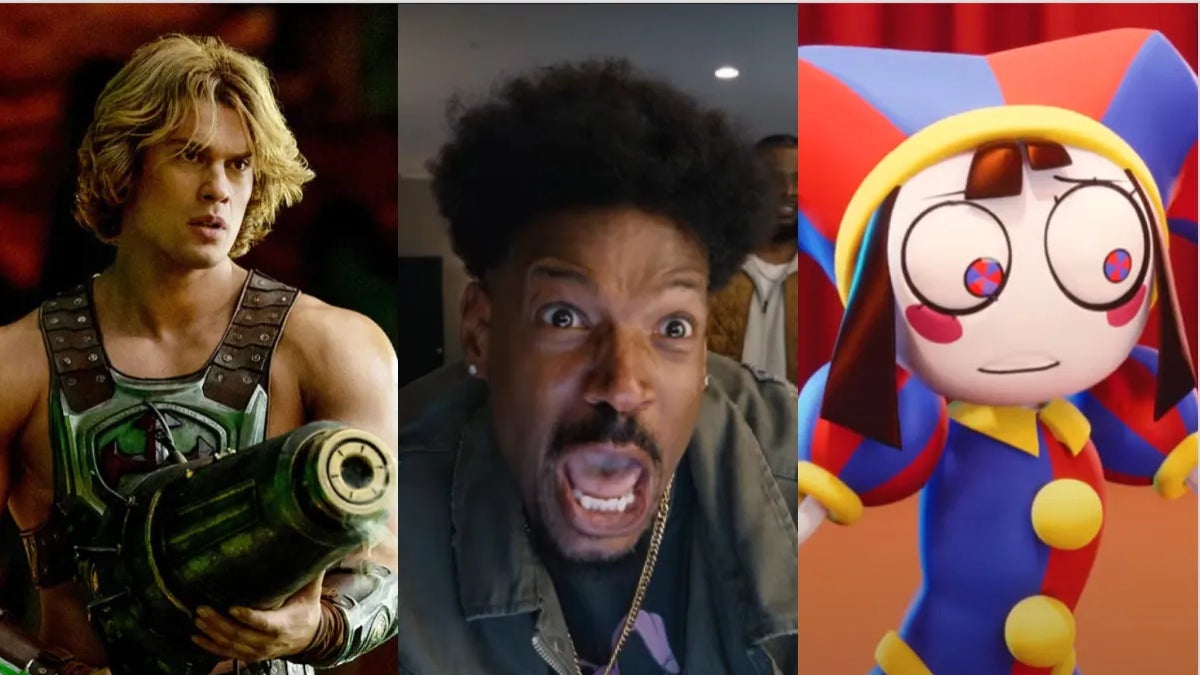
The three films in question are Paramount/Miramax’s “Scary Movie,” the sixth installment and revival of the 2000s horror parody series from Damon and Marlon Wayans, Amazon MGM’s big-budget “Masters of the Universe,” and a late indie addition with YouTube roots, Fathom/Glitch’s “The Amazing Digital Circus: The Last Act.”
Of these three films, “Scary Movie” is projected to take the No. 1 spot barring an insanely strong second weekend hold by A24/Chernin’s “Backrooms” after its $81 million opening. That’s not out of the realm of possibility as “Backrooms” just posted a $7.7 million Monday, the highest ever recorded for an R-rated horror film.
But “Scary Movie” will do just fine whether it is No. 1 or No. 2, with independent projections predicting a $50 million-plus opening while Paramount is keeping its estimates at $40 million.
“Masters of the Universe,” based on an animated series and franchise that was last on the big screen in 1987, is estimated for a $35-40 million opening while posting by far the biggest production budget at a reported $170 million. “The Amazing Digital Circus,” which was added to the summer slate just two months ago, is looking for a more modest $11-12 million weekend.
Wazzup, Wayans?
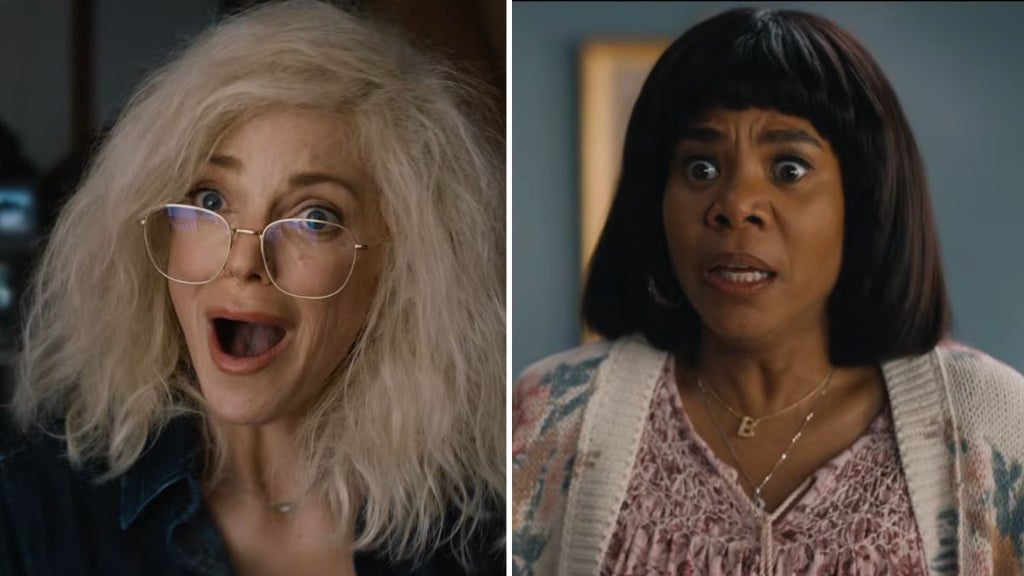
Paramount couldn’t have asked for a better pop culture environment for “Scary Movie.” At a time when two horror films — one original and the other based on a whole new kind of online-originated IP — are dominating the box office and the zeitgeist, here comes the return of a series that lampooned the biggest horror films of the 90s and 2000s like “Scream,” “The Ring,” and “Saw.”
And this time, it comes from the Wayans Brothers, who directed the first two films in the series before the “Naked Gun” duo of David Zucker and Pat Proft took over for the next three installments. The Wayans and Paramount have put all their chips on a marketing campaign that flaunts the new film’s edgy, politically incorrect humor, with posters featuring QR codes that link to digital marketing and include the warning “Don’t Scan if You’re Easily Offended.”

The obvious core audience for “Scary Movie” will be millennials with fond memories of seeing the original series back in middle or high school, but Paramount is hoping that younger moviegoers will also be interested in the film’s sendups of today’s big horror hits like “Sinners,” “Smile” and “Terrifier.” Paramount also set the stage for this franchise’s return by reviving one of the original film’s most memorable targets, “Scream,” allowing the Wayans to mine that nostalgia for the famous scene where Ghostface reenacts the Bud Light “Wazzup?” commercial.
And with no other mainstream adult comedies on the horizon, “Scary Movie” will remain a unique offering in theaters for weeks to come. The film’s review embargo hasn’t dropped at time of writing, but the critics are irrelevant for this one, as “Scary Movie” has always been a franchise met with tepid at-best critical reception even for its highest grossing releases.
It’s all on whether the audience laughs at what the Wayans have in store.
Does He-Man still have any power?
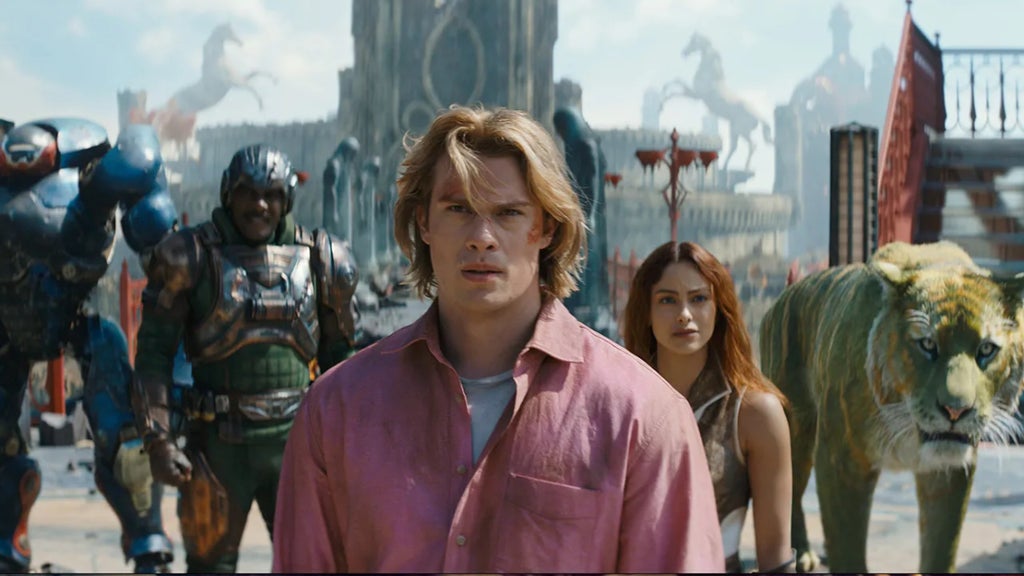
Conversely, the “Backrooms”/”Obsession” phenomenon could not have come at a worse time for “Masters of the Universe.” As “The Mandalorian and Grogu,” a film from a franchise that has had far more cultural relevance in the 21st century than the world of Adam, Skeletor and Eternia, collapses fast at the box office, much of the conversation in Hollywood has been about how the under-30 crowd is clearly choosing two films with fresh new takes on horror over a franchise sci-fi film.
And that under-30 crowd is who “Masters of the Universe” needs to be a success against its tentpole budget. Directed by “Bumblebee” filmmaker Travis Knight and starring Nicholas Galitzine, “Masters of the Universe” is pure escapist fantasy with Marvel-esque self-aware humor, as Adam Glenn leaves behind his dreary life on Earth to reclaim his place as Prince of Eternia and as the mighty protector He-Man.
Knight’s film has gotten generally good reviews, holding a 75% Rotten Tomatoes score at time of writing. But is that going to be enough? “The Mandalorian and Grogu” got positive audience marks with an A- on CinemaScore and an 88% Rotten Tomatoes score, and the wider audience still largely said “no thanks,” serving “Mando” with the worst second weekend drop for any Memorial Day weekend No. 1 release.

“Masters of the Universe” could very well end up as a higher budget version of another Amazon MGM release this year: “Crime 101,” a well-reviewed heist film clearly inspired by Michael Mann’s “Heat” that brought in nostalgic Gen X men but could never turn that buzz into turnout from a wider audience — especially the under-30 crowd.
Perhaps some teens, coaxed by their nostalgic parents, will capture their dads’ love for He-Man. Amazon MGM is certainly hoping that with “Mandalorian” fading fast and the preponderance of R-Rated offerings in theaters, including “Scary Movie,” that “Masters of the Universe” can find some traction among families that can help build the film’s audience. But with “Backrooms” drawing an opening weekend crowd that is 44% under the age of 21, how many Gen Z and Gen A moviegoers out there are going to watch their parents’ stories, characters and worlds in theaters when they have stories, characters and worlds of their own?
Goodbye to the ‘Circus’
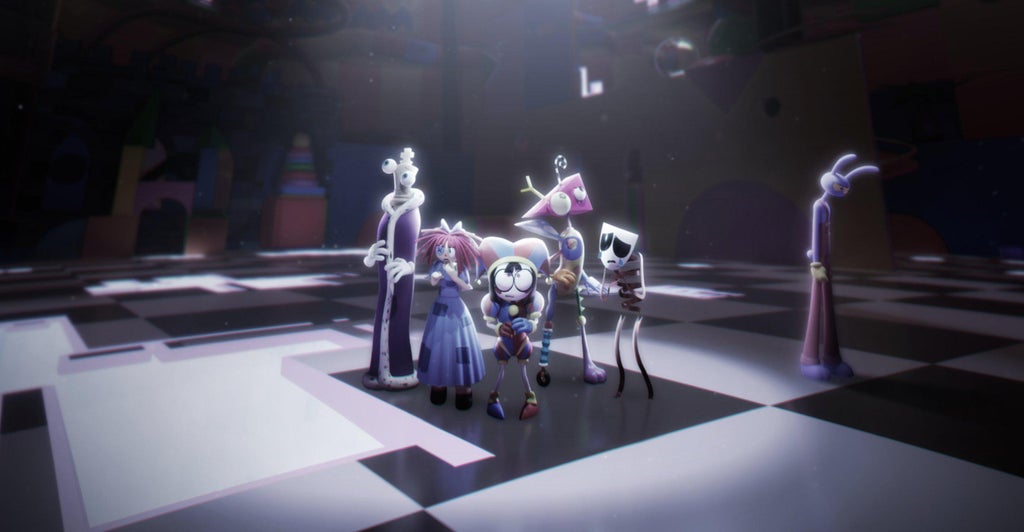
Over the past three years, an independently made animated psychological drama called “The Amazing Digital Circus” has built a feverish fanbase for itself in much the same way Kane Parsons did with “Backrooms.” Its success has become a calling card for its production company, Glitch, which is trying to build a new way for animators to get their stories out into the world outside of the mainstream Hollywood system.
And now, Glitch is going to give theatrical a try. Partnering with Fathom in the U.S. and indie distributors in other parts of the world like European outlet Piece of Magic Entertainment, the ninth and final episode of “The Amazing Digital Circus” will screen in theaters two weeks ahead of its YouTube release on June 19. It’s a path that Fathom has carved with series like the indie Christian Gospel adaptation “The Chosen,” and which Hollywood has pursued with offerings like Netflix’s “Stranger Things” finale and Crunchyroll’s releases of anime films based off of hit TV series like “Demon Slayer: Infinity Castle.”
As TheWrap first reported back in April, “Digital Circus” drew $5 million in presales in its first 72 hours, and similar to Markiplier’s “Iron Lung,” hundreds of theaters reached out to Fathom asking to add the film to their screens. As of Tuesday, “Digital Circus” has reached $9 million in presales as it hits domestic theaters with a screen count of approximately 2,200.
To be clear, “The Amazing Digital Circus” won’t have the explosion of Gen Z and Gen A turnout that “Backrooms” got. This is the final episode of an online miniseries that will be on YouTube for free in two weeks, meaning that continuity lockout will keep interest in the film almost entirely confined to pre-existing fans and will surely keep walk-up ticket sales to a minimum.
But the similarity to “Backrooms” and “Iron Lung” is this film’s place in a larger experiment of bringing indie, web-based IP to theaters in the hopes of attracting fans interested in experiencing those franchises in an auditorium full of fellow fans instead of at home on a computer. If this works for Glitch, we may see future episodes of its next wave of animated series like “Gameoverse” get similar advance releases in theaters.
