
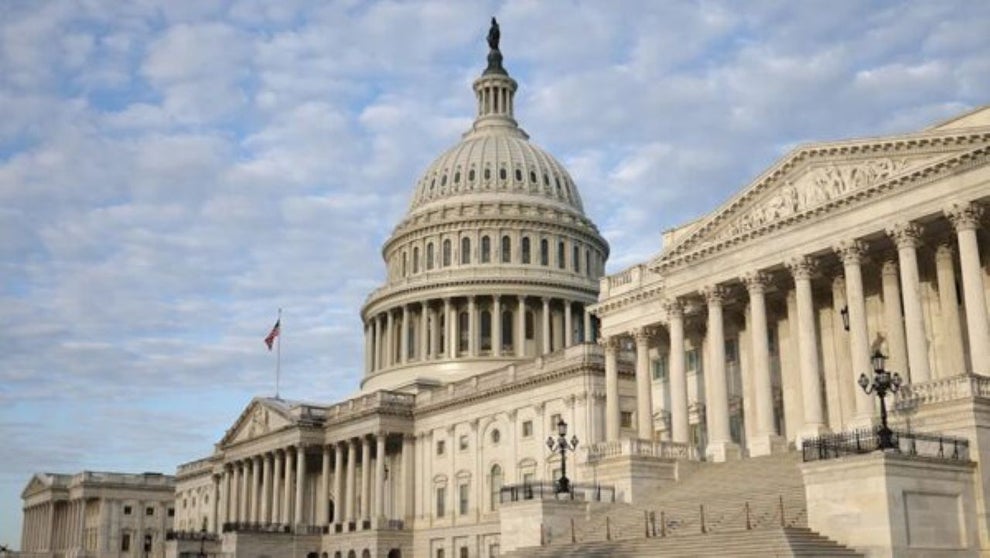
The legislative process has finally begun on a federal film tax incentive as members of the House on Ways and Means Committee have introduced it as a bill to Congress on Thursday.
The bill, titled the Motion Picture, Television, and Entertainment Revitalization Act has many, albeit not all, of the asks that Hollywood studios, unions and producers have asked for in an incentive seen as vital to stopping the slow but steady exodus of film and television productions from the United States.
The biggest gain in the bill is the inclusion of above-the-line talent salaries in the labor costs that count towards the 20% base rate incentive, a clause that is included in the incentives offered by countries like the United Kingdom and Canada that have led to blockbusters like “Barbie” and “Deadpool & Wolverine” being primarily filmed in those countries. Like those countries, the U.S. incentive would stack on top of any incentives offered by the 31 states that currently have them on the books.

Along with the base rate, productions can receive additional 5% uplifts up to a maximum of 30% if they met some of the following bonus criteria:
— At least 30% of principal photography days occur in a rural qualified opportunity zone or a federally declared disaster area
— The production is an independent project
–A project shoots at least 50% of a production’s principal photography and spend at least $10,000,000 in qualified compensation in 10 or more States
— The production comes from a studio that increases its number of domestic productions relative to a historical foreign base amount.
It’s worthy to note that any film or television production that shoots in Los Angeles over the next several years will qualify for a 5% uplift based on this criteria, as L.A. County was named a federal disaster area in 2025 following the Palisades and Altadena wildfires. Los Angeles will retain that designation until 2030.
Along with film and television shoots, other approved applicants include animated projects and standalone VFX and post-production work. At least $1 million must be spent on a project to qualify with 75% of the work done in the United States.
Lawmakers and entertainment lobbyists spent weeks ironing out the details of the bill and months prior to that rallying support on Capitol Hill. The trigger moment for this bill came last month after actor and Hollywood ambassador Jon Voight, alongside production partners Steven Paul and Scott Karol, convinced President Trump to publicly support a federal incentive.
According to one source with knowledge of the talks over the bill, one of the debates over the contract language was the $1 million minimum spending threshold placed in the bill. While that threshold was placed to prioritize productions that can hire significant levels of cast and crew, microbudget movies like “Obsession,” which became the first original American film of this decade to gross more than $500 million at the global box office against a reported $750,000 budget, would not qualify for this incentive.

Still, Congressional insiders tell TheWrap they are extremely confident the bill can be passed through Congress and signed by President Trump by the end of this year, and the language reflects that as the bill would take immediate effect and be available to all qualifying productions at the start of 2027.
“For over a year, I’ve worked to build a coalition of unions, studios, Republicans & Democrats, and the White House, because we knew that a national film tax credit would bring hundreds of thousands of jobs back to our country,” said Democratic Rep. Laura Friedman (CA-30). “This bill is a result of that coalition. It tells every country that has been outbidding us for American work that we are done losing.”
“If we want to keep American storytelling in America, we have to level the playing field, and that’s exactly what this bill does. This isn’t about subsidizing Hollywood—it’s about supporting the American worker, one story and one production at a time. I’m proud to work with Senator Scott and our bipartisan group in both chambers to get this done, and I’m grateful to Ambassador Jon Voight and [SAG-AFTRA President] Sean Astin for the work they’ve put into pushing this forward,” said Republican Rep. Nathaniel Moran (TX-01).
The Motion Picture, Television, and Entertainment Revitalization Act immediately got the endorsement of the Motion Picture Association and various unions, including IATSE and the Directors Guild of America.
“There’s a reason everyone from President Trump to a bipartisan group of members in Congress to studios, unions, guilds, and more want to get this done. Passing this legislation could inject $250 billion into the country’s economy and deliver nearly 145,000 new jobs every year across all 50 states. That’s a story we can write together by enacting this bill, to ensure that more stories are crafted, created, and made here in America,” the MPA said in a statement.
