
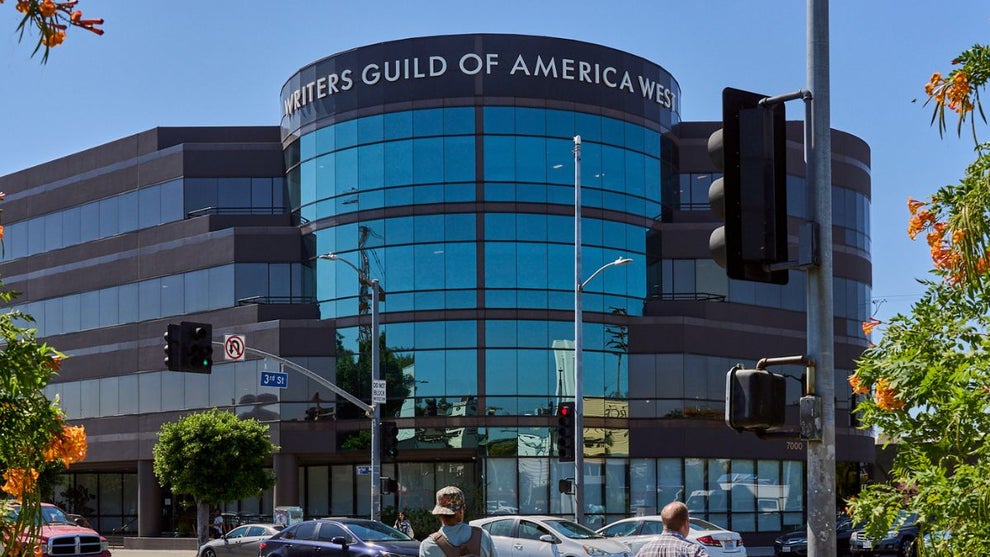
The Writers Guild of America settled its lawsuit against Paramount Skydance opposing the Warner Bros. merger shortly following the settlement between the studio and the 12 state attorneys general that filed their own lawsuit in July.
As part of the settlement, Paramount Skydance will pay $17.5 million to the WGA health plan along with the guild’s legal fees and has signed an agreement prohibiting layoffs at CBS News’ broadcast division.
“We continue to believe the merger will cause damage to writers and the industry at large. Now that the Attorneys General have settled with Paramount, however, as a nonprofit, the WGA must contend with the reality of forging ahead alone, with no backing from government enforcers, with a complex antitrust lawsuit that would cost millions of dollars to pursue through trial,” the WGA said in a statement.

“Though we were not successful in blocking the merger, our advocacy brought more attention to the harms that this merger—and others like it—will cause. We will continue to fight the harms of industry consolidation,” the guild’s statement continued. “As the number of outlets to sell our work to and the corresponding diversity of programming shrinks, we need industry-wide structural separation between streamers and studios in order to promote competition in programming, like the Financial Interest and Syndication Rules once required in broadcast television. We will continue to fight for these goals.”
The Writers Guild of America has repeatedly voiced its opposition to media mergers, warning that they will lead to fewer entertainment jobs and fewer film and television projects from the writers in its union being greenlit by major studios. The guild had previously vocally opposed the mergers of AT&T and Time Warner as well as Disney and 20th Century Fox, the latter of which has led to fewer theatrical releases from the since-renamed 20th Century Studios.
Though California Attorney General Rob Bonta stressed for weeks after filing the lawsuit against Paramount Skydance that only structural remedies would be considered in any settlement with the studio and that the case was focused on antitrust, not on editorial control of CNN.

The settlement reached by the AGs and Paramount Skydance has few, if any, structural remedies, save for a penalty that would require the studio to divest its 49% stake in the production company Miramax if it does not fulfill its pledge to release 30 theatrical films per year and a requirement that Paramount and Warner’s television divisions negotiate their pay-TV deals as separate companies.
The majority of the deal consists of behavioral remedies, including the establishment of an editorial board of journalists appointed by Paramount Skydance’s board of directors to oversee CNN, a pledge to increase production spending in the United States by at least $1.5 billion — with further increases if a federal film tax incentive and uncapped California and New York state incentives are passed — and a pledge not to move the studio’s headquarters out of California as CEO David Ellison had previously threatened.
The consent decree that led to the settlement also has a force majeure clause that would allow Paramount Skydance to abandon the pledge in the event of extreme circumstances, including “economic recessions.”
“I’d rather resolve the case in the boardroom rather than the courtroom, and that’s what happened here,” Bonta told reporters.
When asked for comment about the WGA settlement, Bonta said that settlement was made separately from that of the attorneys general.
“There was some opportunities for information sharing between the Writers Guild and and the states, but they brought their own case. They decided whether or not they wanted to resolve their case and on what terms. And they decided in the end that they would resolve their case,” he said. “We’re grateful that they sued alongside us and stood up for their principles and their convictions, and they had their own pathway to a resolution. But it’s resolved as well.”
