
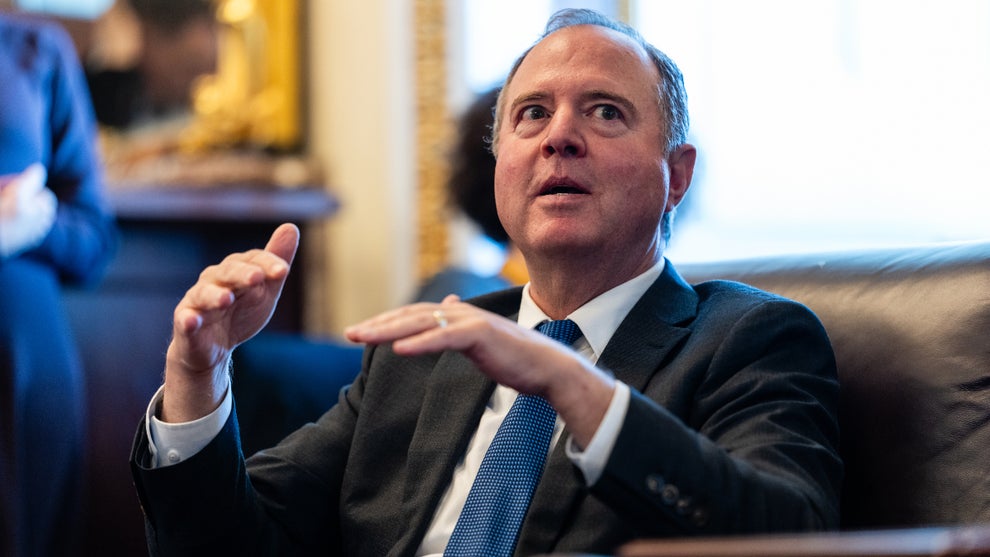
California Senator Adam Schiff and Utah Senator John Curtis have unveiled the Copyright Labeling and Ethical AI Reporting Act, a new proposed bill that would require tech companies to be more transparent about the copyrighted works used to train their AI systems.
The bill, if passed, would force tech companies to formally file a notice with the Register of Copyrights outlining the copyrighted works used to train their AI models. The bill would not only require that the notices be filed before the public releases of new AI systems, but would also require retroactive notices be filed for AI models that are already available to the general public.
Additionally, the U.S. Copyright Office would be entrusted with creating an open and accessible database of the notices, ensuring greater transparency about what works have been used for each publicly available AI model. Failure to comply with these demands would result in civil penalties.

“While AI has the potential to improve our lives and change the way we work and innovate, we need a unified approach to implementing guardrails that protect the work and livelihoods of all workers, including artists and creators,” Sen. Schiff said in a Tuesday statement. “Human creativity is the foundation of our cultural and creative economy, and it plays a vital role in shaping our society, our stories and our shared experiences.”
“Congress must help encourage AI innovation, but not without transparency and accountability,” Sen. Curtis added. “The CLEAR Act strikes the right balance by protecting creators’ intellectual property while providing clear expectations for companies. By shedding light on how generative AI models are trained, our bipartisan legislation will help build public trust for emerging technologies and foster the best of American creativity.”
Between Schiff, a Democrat, and Curtis, a Republican, the CLEAR Act already has a base of bipartisan support. The bill has also earned endorsements from a number of prominent Hollywood institutions — including SAG-AFTRA, the WGA West and East, the DGA, IATSE, the American Federation of Musicians, the National Association of Voice Actors, the National Music Publishers Association, the Authors Guild, SoundExchange, the Artists Rights Alliance, the Television Academy and the Recording Industry Association of America.
If passed, the CLEAR Act will take a step toward addressing one of the biggest ongoing debates in the entertainment industry about AI’s future and the use of copyrighted movies, shows, songs, books and other pieces of art to train it. That issue has been at the root of a number of recent lawsuits between studios like Warner Bros., Disney and Universal and AI companies like Midjourney.
Some believe that the solution to the problem is for AI companies to pay to license the copyrighted works used for their training models. However, the CLEAR Act does not go that far and President Trump, notably, suggested last year that such a plan would be too difficult to actually implement.
“You can’t be expected to have a successful AI program when every single article, book or anything else that you’ve read or studied you’re supposed to pay for,” he said while speaking at the ‘Winning the AI Race’ summit in Washington, D.C., last July. “You just can’t do it, because it’s not doable.”
