
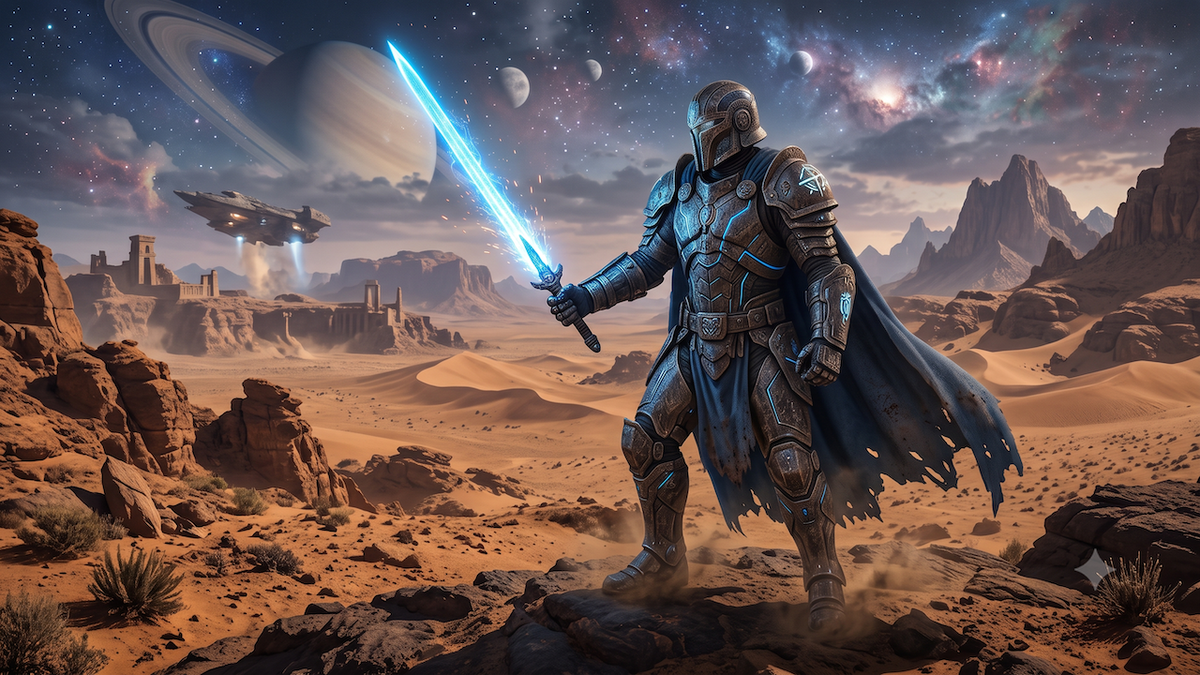
As Hollywood studios more readily embrace AI-generated media, a question emerges: How can they ensure that the video or photos created are free of copy-protected imagery?
It’s not a trivial issue. While most AI tools, from Google’s Gemini to Midjourney, forbid you from explicitly generating The Mandalorian from “Star Wars,” you can get close with a carefully tailored prompt (see what I did above). And even if you’re not intentionally seeking to copy a specific intellectual property, accidents can happen.
Enter CopySight. The startup has developed a tool that scans images and videos for faces, logos and more, giving them a “Copy Score” that allows studios and AI artists to see if the work they’re producing inadvertently touches on unauthorized IP. It’s an attempt to give studios peace of mind with the AI content they’re producing, while also giving the original artist credit — and potentially licensing revenue — if the studio decides to use the work.
The startup on Wednesday said it had raised $3 million in its seed round led by Mucker Capital, with additional investment from Taisu VC, Flint Capital and Yellow Rocks! It also announced the launch of CopyScore V2, which added the ability to scan AI-generated video and provide more specific scans.
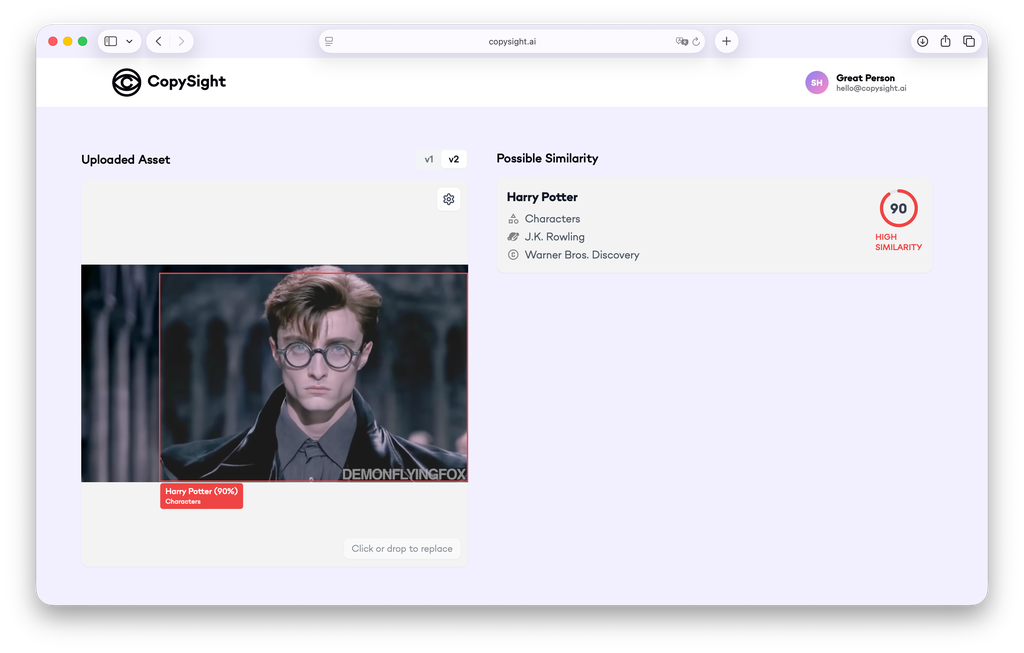
CopySight’s emergence comes amid a broader debate (and legal battle) over the value of IP and creative work as they’re fed into AI models. But much of the attention centers on the copyrighted works going into those models, with less focus on output and what’s being generated.
“If you’re a studio and you create content, you want to own it,” Artem Petrov, CEO of CopySight, told TheWrap. “But AI-generated content is legally homeless.”
His company’s goal is to make his Copy Score system an industry standard, including working to convince insurance companies to take it as a form of verification when offering indemnification on studio projects, or having the system work in court if a studio or artist needs to defend themselves against copyright lawsuits.
It’s a tool that some studios are already using, Petrov said, although he wouldn’t name specific customers. It’s coming at a time when Hollywood has become less shy about its of the technology. Netflix co-CEO Ted Sarandos said during the company’s earnings conference call earlier this month that GenAI workflows had been used in roughly 300 of its titles.
In May, Amazon touted three animated series that would use AI productions.
“Increasingly, we’re getting to the point where AI is embedded and nobody’s going to know what is AI and what isn’t AI,” Doug Shapiro, former chief strategy officer of Turner Broadcasting System and senior advisor at Boston Consulting Group, told TheWrap. Shapiro is an advisor and investor in CopySight. “How do you prevent inadvertent infringement?”

How does it work?
CopySight offers a web-based tool for individual creators and smaller clients, while it provides custom apps for larger customers like studios who have more tailored needs. The process is roughly the same: You upload a photo or video that you generated onto the site, and it will pick up obvious elements like faces and logos, but also memes and even specific decal designs on digital items, and flag them in its Copy Score.
Here’s how the results break down:
- 0-49: Low similarity detected, which means you’re good to go.
- 50-74: Moderate similarity detected, which means you should perform a human spot check.
- 75-100: High similarity detected, in which the system strongly advises a review.
As a test, I used Gemini to create the lead image of this story using the prompt: “Create an image of a space knight holding a laser sword on the backdrop of a desert planet.”
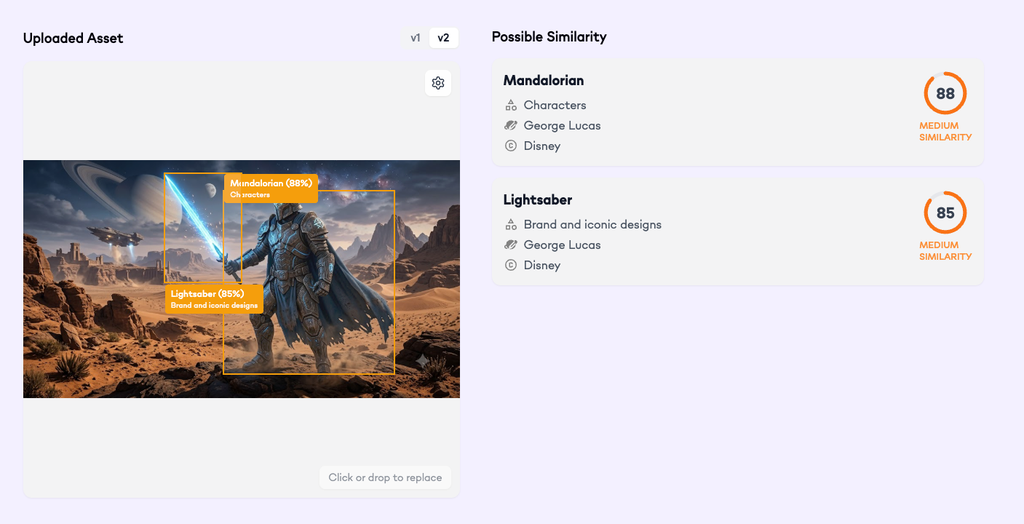
I then ran it through CopySight, which flagged two elements that were problematic: the character itself, which had an 88% probability of being too similar to the Mandalorian, and energy sword, which had an 85% match to a lightsaber. Alongside the score was the description (character and brand and iconic design), creator (George Lucas) and company (Disney).
Rest assured, I will not be using the image in any films or books.
David Berman, an AI artist who does freelance creative work for major corporate clients, said CopySight is baked into his workflow. He uses it to flag his own AI-generated commercial videos at multiple stages of the process.
While he uses other work for reference, he runs his early ideation work through CopySight to ensure it’s his own, and does additional checks when he creates faces, character models and even settings. He runs a final check before delivering the final work to his clients.
The scan gets rigorous. Berman recalled an image of a band he had created only for CopySight to flag what looked like a Hartke 410XL amp in the background. “It will flag things constantly,” he told TheWrap.
“My clients are very concerned about IP and copyright materials,” Berman added. “I need to be able to show them characters I created were mine and don’t resemble anything out there.”

An industry standard
While there are a number of startups pitching a system to flag copyright violations in AI-generated content on the web, CopySight is one of the few trying to build this into the system through both the insurance and legal routes.
Establishing relationships with the insurance companies could go a long way, Shapiro said, noting that winning that race is important because it’s unlikely that insurance providers will want to set up an accreditation process with every company with an AI copyright detection tool.
In that sense, it’s important that CopySight get in front of all the major players in the industry now.
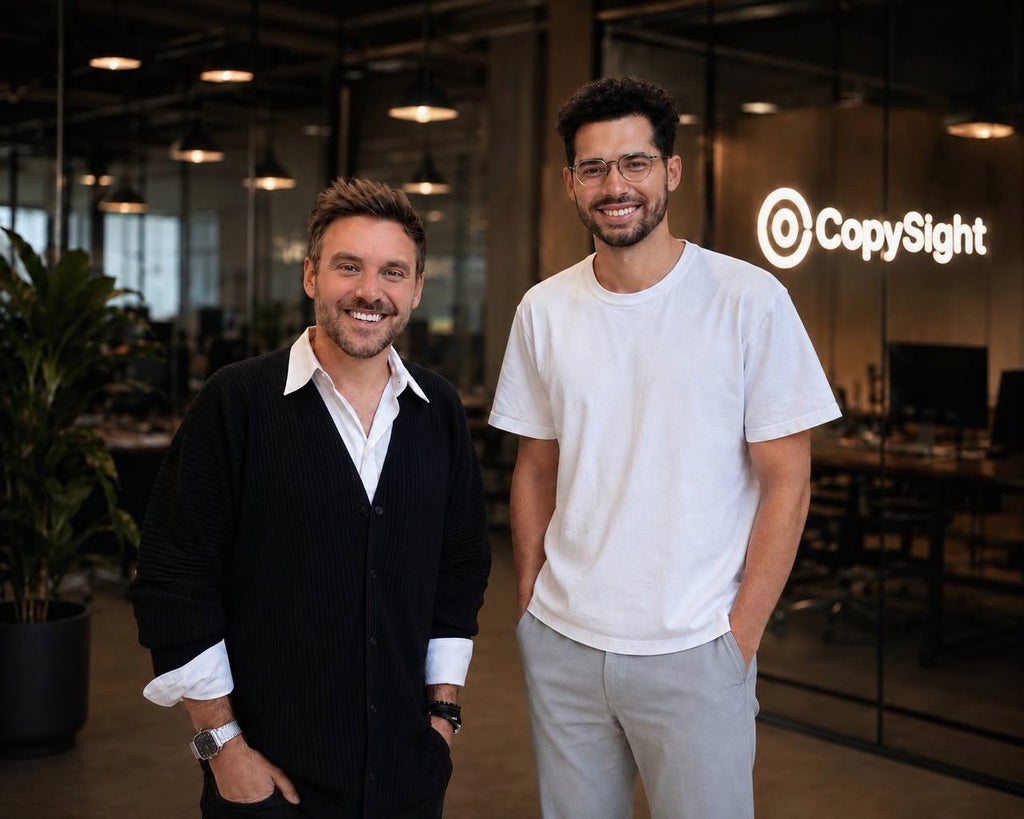
“We’re building an industry standard,” Petrov said, arguing that Hollywood doesn’t need multiple players running around, and will gravitate towards a scoring system they can all trust.
Since it launched in January, the number of checks performed on the platform has totaled 100,000 as studios and creatives have tested CopySight’s capabilities, according to Petrov. He added that more than half the market of big studios are testing it, and there are about 350 smaller studios and AI creators on the platform.
He said the company is “building a culture of checking things before publishing.”
Looking ahead, CopySight is also working on a tool that tracks the different steps that go into an AI-generated photo or video, with the log of human involvement key to helping studios justify copyright protections on future projects. But it’s that process that Petrov hopes will offer more visibility on the creators involved and to ensure they also get fairly compensated.
“We’re building a model to incentivize creators,” he said.
