Before Linda Lovelace, There Was 'The Telephone Book'

Before Linda Lovelace, There Was 'The Telephone Book'

Published: October 16, 2009 @ 9:14 am
Print this page
By Merv Bloch

 In 1971, I produced an independent feature film in New York, written and directed by Nelson Lyon, called “The Telephone Book.” It is a dark comedy about a girl who falls in love with the world’s greatest obscene phone call. In her quest to find the irresistible and mysterious caller, she encounters an array of strange characters and humorous sexual situations.

The subject matter of the film was uniquely ahead of its time, since it dealt with “telephone sex,” which has since become a staple of modern sexual expression. The film enjoyed the eroticism of the porno genre yet embodied a sense of style and purpose way beyond the standard porn offerings of the time.

But as with most hybrid films, it failed to find an audience and eventually disappeared into a tragically undeserved obscurity.

The film stars an unknown beauty named Sarah Kennedy (a distant relative of the Kennedy family) and features Jill Clayburgh in one of her early screen roles. Also appearing in the movie are an eclectic cast of actors, including Barry Morse (Inspector Gerard in the TV series “The Fugitive”), William Hickey (Academy Award nominee for “Prizzi’s Honor”), Roger C. Carmel (who achieved television immortality by appearing as Harry Mudd in the original “Star Trek” TV series) and Norman Rose, a veteran actor best known for his voiceover work in radio and television commercials.
 
Andy Warhol film regulars Ultra Violet, Ondine and Geri Miller are also in the cast. Warhol actually appeared in the film, but his scene was later cut and lost. I’m offering a substantial reward for any information leading to the recovery of this lost Warhol footage.
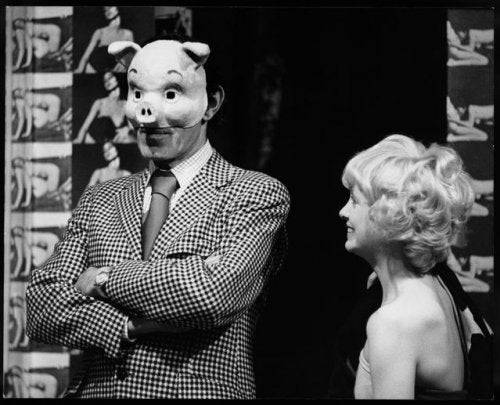
 
The film opened in New York at the Astor Theater in 1971 -- a year before “Deep Throat” earned mainstream attention and launched the “porn chic” trend despite the film being banned in certain parts of the country. 
 
In New York I recall, on a number of occasions, seeing people in the audience for “The Telephone Book” just bolt out of the theater during some unbridled, racy moments in the film. By the time the movie was over, hardly anyone was left in attendance.
Most of the mainstream film critics found “The Telephone Book” offensive and dismissed it as a vulgar attempt at humor.
 
The New York critics gave it scathing reviews because it was such an assault on middle-class morality at the time.
 
Only in Los Angeles was the film well received. Both the Los Angeles Times and the Herald Examiner gave it favorable notices.
 
The L.A. Times called it “Brilliant. Hilarious. Savage. Daring. Bizarre.” The Herald said it was “a crazy 90 minutes of fun. Wildly, uproariously funny -- its humor starkly original, its style marvelously nonsensical and lots of nudity.”
 
The film opened at the Vogue Theater on Hollywood Boulevard and became a must-see film for several months.
Tags: Andy Warhol, Barry Morse, Jill Clayburgh, Star Trek, The Telephone Book, William Hickey
Sign Up For First Take

Get Our Daily Email, and Receive Invitations to Our Screenings Series

Start your day with all of the news worth knowing

What's First Take?

Transformer Sound

Description

For over 25-years, Merv Bloch has been a dominant, creative force in the field of motion picture advertising and has been acclaimed for many of his award-winning ad campaigns, posters and trailers. In addition to running his own company, Rosebud Studio, Bloch was active in New York's underground film movement in the '70's. He produced the seminal, x-rated, sex-comedy, "The Telephone Book" (1971) that has emerged from obscurity, after almost 40-years, and become a DVD cult-film sensation in a number of European capitals.

Subscribe to Merv Bloch
Most Popular
Wrap Tweets