
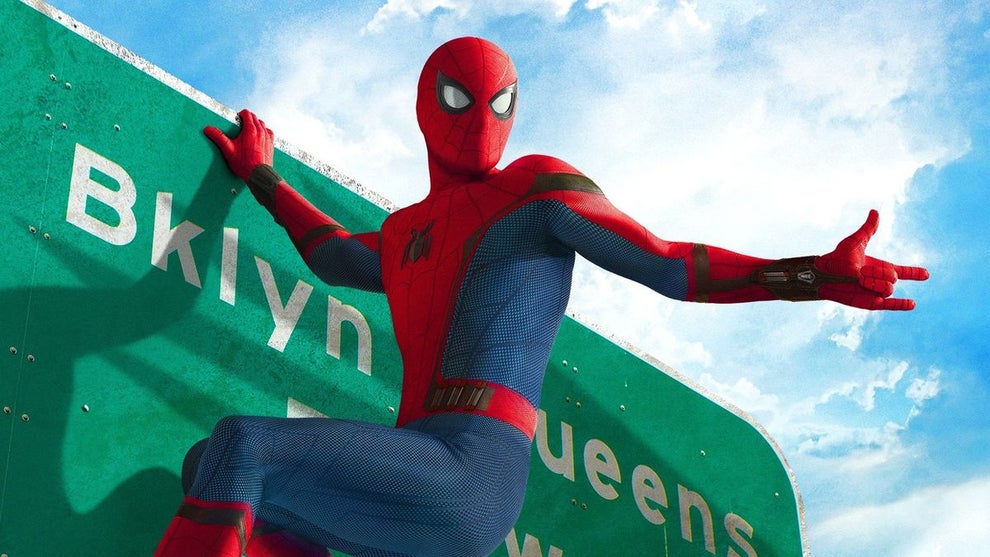
With the latest Spider-Man movie swinging into theaters and racking up an impressive box office haul, the industry’s eyes are once again on Marvel’s most iconic webslinger. But while box office grosses often dominate the conversation, a true measure of a modern franchise’s power must factor in its long-term streaming value as well. When we analyze the complete ecosystem of these sprawling superhero universes, a clear victor emerges: Spider-Man isn’t just winning; he’s in an entirely different league.
Parrot Analytics’ Streaming Economics model calculates that from 2020 through 2025, Spider-Man movies and series generated over $940 million in global streaming revenue. To put that into perspective, his closest DC rival, Batman, brought in over $580 million during the same period, while Superman generated more than $370 million.
Even outside the superhero genre, fantasy heavyweights like the Harry Potter franchise pulled in a comparatively modest $340 million on streaming. It is worth noting that these are conservative estimates, only attributing revenue specifically from Spider-Man-titled properties and excluding, for example, crossover behemoths like The Avengers. The floor for Peter Parker’s value is already sky-high.
A key driver of this financial dominance is distribution strategy. While Batman and Superman have largely been siloed to HBO Max to drive subscriptions for Warner Bros. Discovery, Sony’s arms-dealer approach has placed Spider-Man titles across a multitude of global platforms. This broad availability has enabled many platforms to profit from the franchise’s massive global demand.
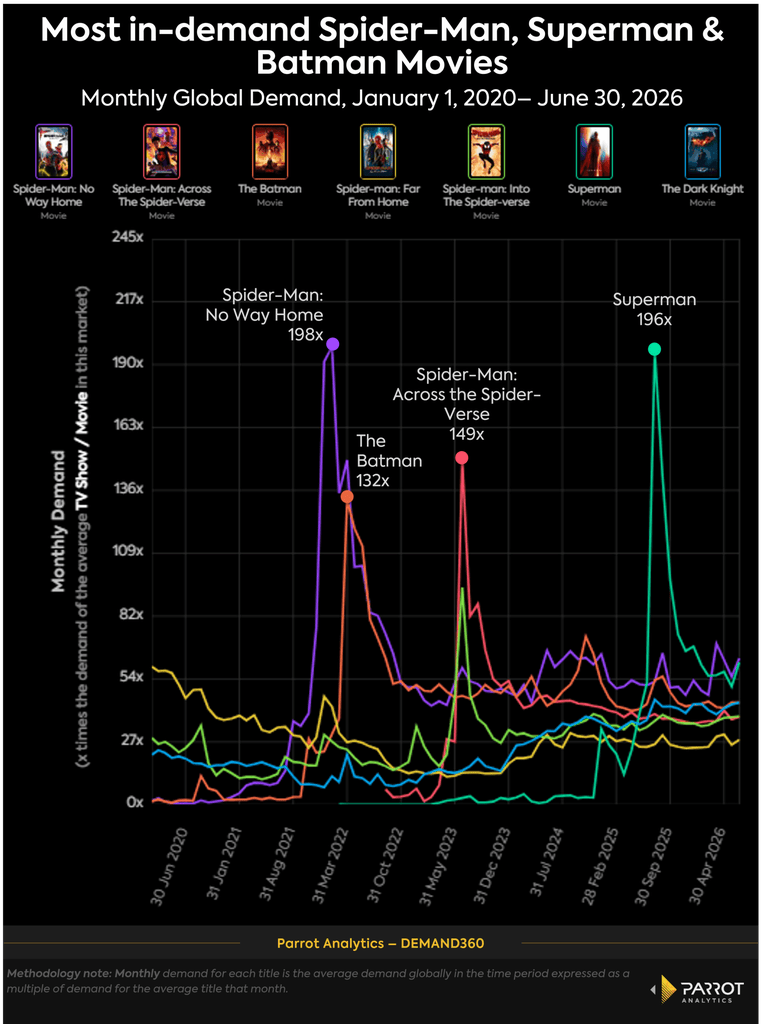
Looking at peak monthly demand since 2020, top-tier entries like “Spider-Man: No Way Home” and the recent “Superman” peaked at nearly 200 times the demand of the average movie globally. In contrast, “The Batman” peaked at 132x, a strong showing but well below Spider-Man’s peak demand.
One key feature underpinning Spider-Man’s franchise valuation is the audience’s demographic makeup. Spider-Man boasts the youngest audience among the big three superheroes, with a commanding 44.9% of its engagement coming from Gen Z. Batman and Superman skew noticeably older, relying heavily on older Millennials and Gen X+.
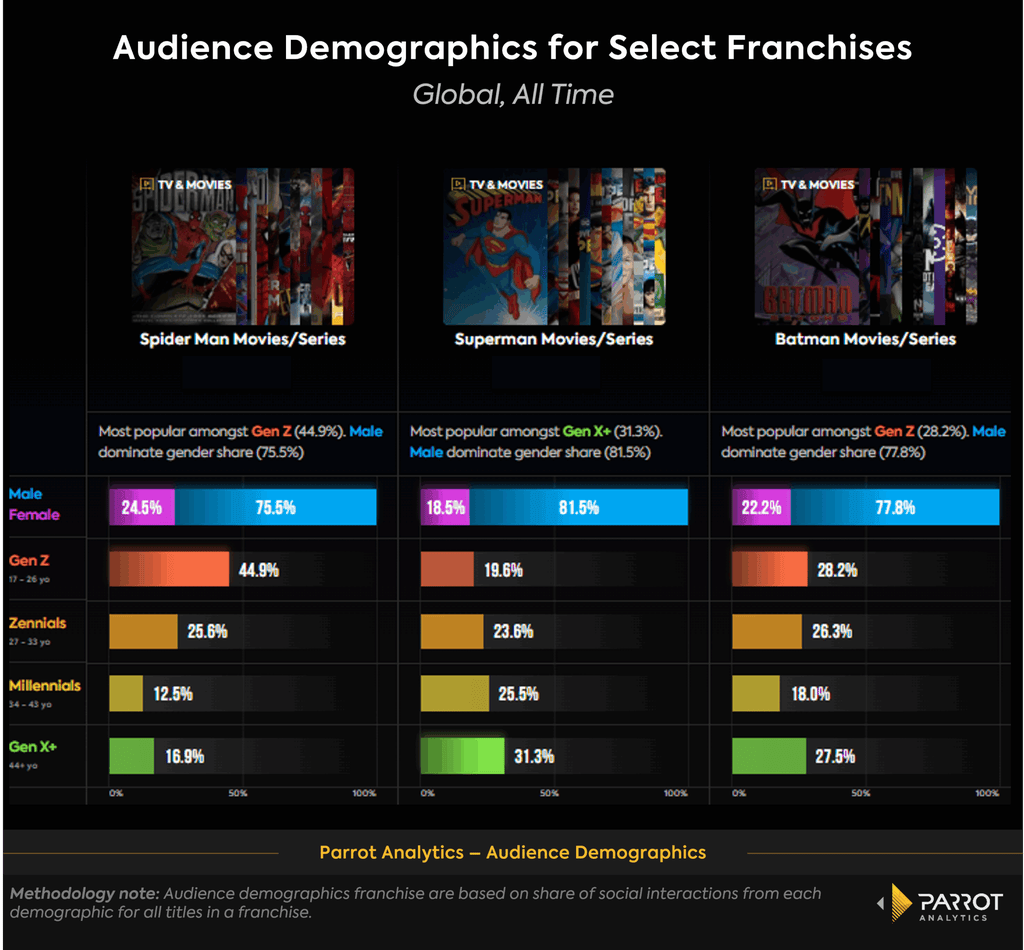
This youth advantage is critical for franchise longevity. Consider James Bond, a similarly long-running, character-centric, and heavily recast property. Bond’s audience skews much older (42.4% are Gen X or older). Legendary, aging fanbases present long-term challenges for IP sustainability, a fact that is certainly informing the casting decisions for the next 007.
In contrast, Spider-Man has firmly secured the next generation of young male viewers. Ultimately, Spider-Man’s blueprint of a broad global distribution paired with an innate, character-driven appeal to younger audiences has forged an unassailable streaming titan. As Hollywood continues to recalibrate its franchise strategies, the friendly neighborhood Spider-Man serves as a masterclass in creating long term franchise value.