

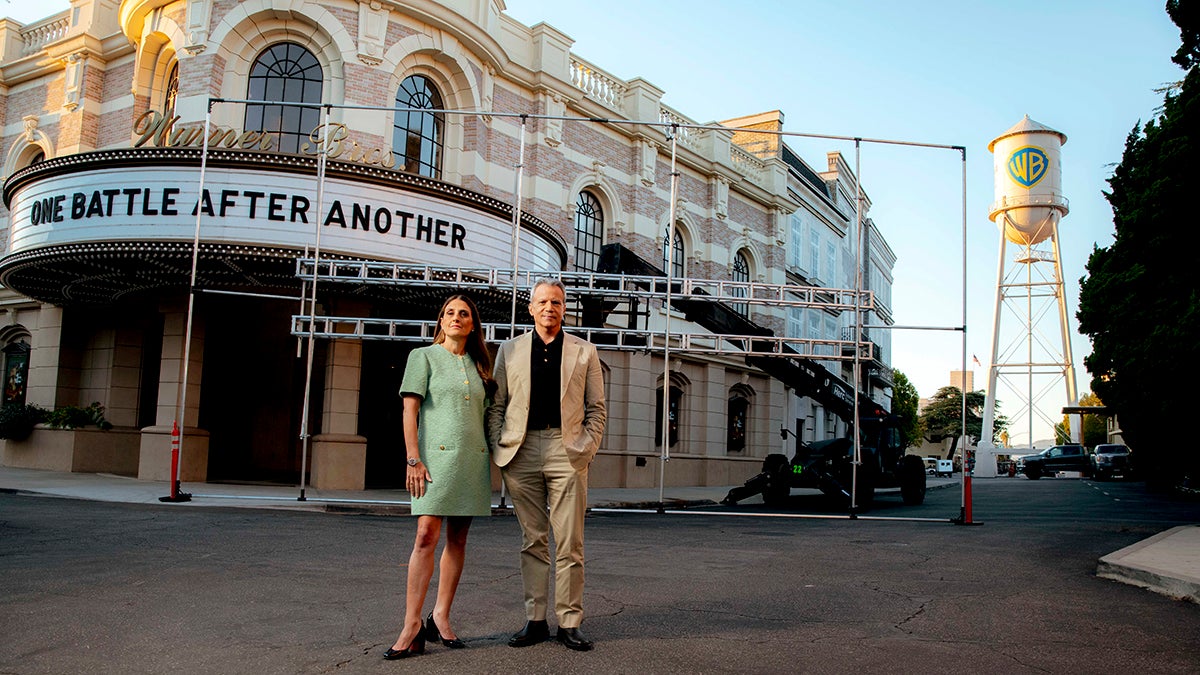
BURBANK – It’s a good day for hanging out with the heads of Warner Bros.’ film studio, Pam Abdy and Michael De Luca, fresh from collecting awards at the American Film Institute luncheon, and hard on the heels of one of the most successful years for any movie mogul in recent years.
In 2025, Abdy and De Luca, co-chairs and CEOs of Warner Bros. Motion Picture Group, pulled off an astonishing hat trick that made them the envy of all their movie business peers: not only did they survive rumors early in the year that they could lose their jobs over the poor showing of big-budget movies like “Joker: Folie a Deux,” they came back from that stumble to crush one expectation after another with the nearly $1 billion grosser “A Minecraft Movie,” then critical and commercial smash “Sinners,” then successful DC reset “Superman” and surprise horror sensation “Weapons.” All the studios’ divisions — including DC Studios and New Line — overperformed.
In total, the studio will clear a stunning $4 billion of the industry’s domestic box office total of $8.8 billion, which includes setting a record with seven consecutive films opening with over $40 million at the domestic box office.
But that’s not all. In the fall, the studio’s original slate of movies led by Paul Thomas Anderson’s “One Battle After Another” also became the front-runner in awards season, followed closely by Ryan Coogler’s “Sinners,” with surprise attention for Amy Madigan from Zach Cregger’s original horror movie, “Weapons.” PTA’s movie is widely expected to take Best Picture at the Academy Awards.
All this, while their corporate parent Warner Bros. Discovery, led by CEO David Zaslav, was put up for sale, and a wild and woolly bidding war between Netflix and Paramount, who are both vying to own the studio, raged in the headlines.
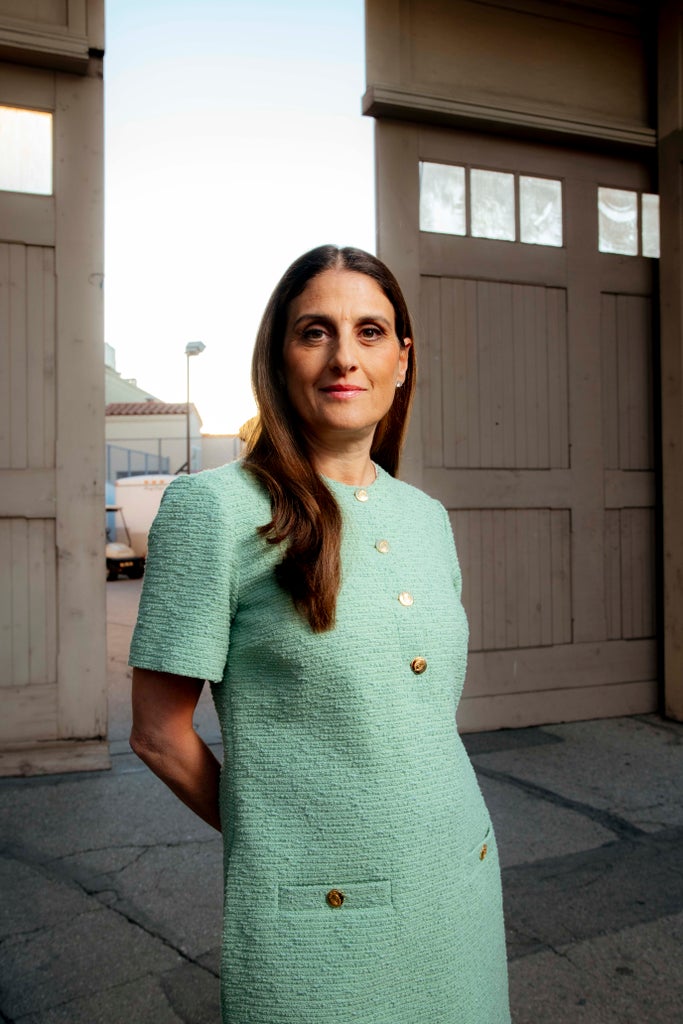
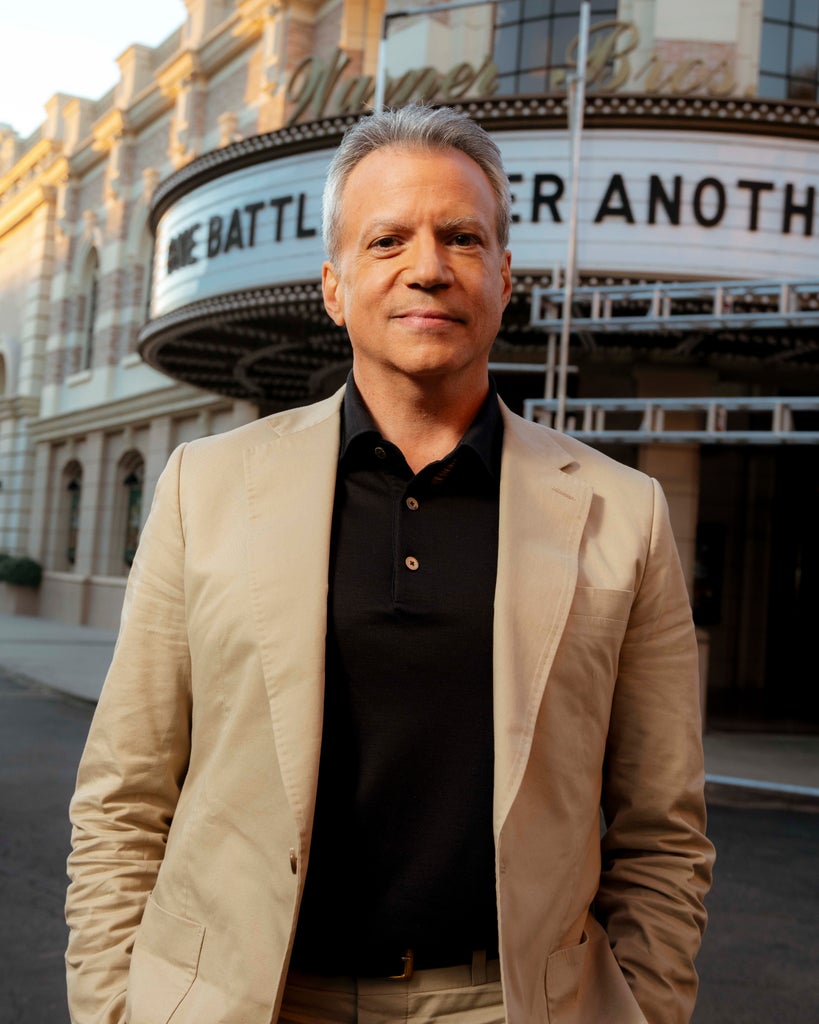
So it’s no surprise to see the two executives cheery — if tired — on a quiet Friday in their building on the historic Warner lot. De Luca, still boyish at 60, wears a tan suit that sets off his graying salt and pepper hair and bushy eyebrows, while Abdy, 52, has scurried to change into a new Gucci green dress for a WrapBook portrait out in front of the famed “WB” water tower as the sun begins to set.
Settled in their shared office back in their executive building, full of warm colors and cozy furnishings, the two shared their candid thoughts about the uniquely successful year they’ve had, their perspective on the future of the theatrical business and the challenges of the year ahead as their company teeters on the selling block.
This interview has been edited for clarity.

It’s so much fun to sit down with you guys – how are you feeling about this year that you just had?
Mike De Luca: We’re overjoyed. It’s validating on so many levels, but mostly validating for how we felt when we read those scripts, and how we felt about our people, like Jesse Ehrman at Warner Bros., Richard Brener at New Line. New Line, of course, had a billion-dollar year on its own. Jesse, champion of “Minecraft,” our highest-grossing movie of the year. WB Animation Studios president Bill Damaschke, his first movie is in November restarting animation, and then putting James (Gunn) and Peter (Safran) in charge of DC, and coming out with “Superman.” Everything that seemed to be theory a couple of years ago came to fruition in practice in 2025, and I think that’s why we’re so happy. It validated the slate strategy. It validated the personnel choices. So we’re just overjoyed. And you know what it says about our filmmakers, Ryan, Paul, Zach and Zach (Lipovsky) and Adam (Stein), who did “Final Destination.” Michael Chaves did “Conjuring.” Everybody just knocked it out of the park. Jared Hess with “Minecraft.” No notes.
Pam Abdy: We’re also so grateful to the audiences too — the audience has really showed up for these movies. We were betting on filmmakers all day, every day. You cannot go wrong betting on the best storytellers.
Well, that’s not true. You can go wrong.
Abdy: We’ve seen things go wrong, but I do still believe in my heart you have to bet on filmmakers.
De Luca: Yeah, because we’re long-term thinkers. You can’t judge your strategy based on a quarter or movie. You can’t clutch your pearls over a bad quarter or a bad movie. You really have to think about: how’s it going to look at the end of the year? Are you going to be in the black or the red? What was your net revenue?
You get extra points for living through a year in which everybody said you were on the brink of losing your jobs. When you bet on the filmmaker, sometimes it doesn’t work. With “Joker: Folie à Deux,” did you know that it was going to go that way?
Abdy: I really liked the movie. I still do …
De Luca: It was really revisionist. And it may be that it was too revisionist for a global mainstream audience, but I thought that Todd (Phillips, the director) and his screenwriting partner Scott (Silver) did the thing that most people making sequels don’t do, which is they decided to not repeat themselves. I do give them immense props for not repeating themselves, but it just turned out to not connect with the audience.
Because we’re veterans, you get a veteran’s thick skin. I’ve certainly had flops in my history. I have been lucky enough to have hits in my history. But I try to remember something someone told me once: Everyone has flops, but not everyone has hits. You just try not to torture the ones that don’t work.
So what was the big flop you had before this job?
De Luca: The one that got me fired from New Line in the first place, “Town and Country,” and that’s not even a hard question to answer (laughs). What I learned as a young executive on that movie is it’s better to pull the plug when it looks like it’s not working and have no movie than a bad movie.
Abdy: The one in particular that tortures me is when I was a producer on “47 Ronin,” that was a really tough one where I learned a valuable lesson, which is that just because I’m a producer and I think I can fix everything, some things aren’t necessarily fixable. I was trying to jerry-rig a template in a weird way — take this ancient Japanese story and try to make it in a Western setting, and it just didn’t work.
Last year was proof of concept that if you operate in the job fearlessly and respect the audience and bring an eclectic slate of movies that have something for everyone, the audience, post-pandemic, is there. They want to come. – Michael De Luca
Did your relationship fray at all in that moment? Did you look at each other like, “It’s your fault?”
De Luca: We’re close anyway, but it drew us closer. Obviously, Pam and I work very closely together, but we’re really a collective here. So when there was that punditry going on, Pam and I are respective heads of our divisions, Jesse at Warners, Richard (Brener) at New Line, Bill (Damaschke) at animation, John (Stanford), Christian (Davin) and Dana (Nussbaum) in marketing, Jeff Goldstein in distribution, they all formed a protective circle around us. We really try to operate the company like a family. And you have to remember when all that was going on in the press, the press wasn’t privy to what we were privy to, the test screenings, the marketing campaigns, the testing and materials. We knew we were going to make out OK. We didn’t know that the slate would overperform to the level it did, but we were reasonably assured, company-wide, that once these movies started to roll out, people would eat their words.
Abdy: During that time, we’re also running a studio, so Mike and I had to show up as leaders, and it’s really important that he and I come in and show up for our teams and help lift them up and keep their energy up, because we have an entire slate of movies to release. So you can’t sit down and just worry about one moment.
De Luca: It’s almost like there are two realities. There’s the outside clickbait industry reality, and they’re only going off of anonymous sources and rumors. And then there’s our lived experience within the studio, which is an entirely different reality based on actual test screenings, marketing material, testing, working with the filmmaker. When Pam and I took the jobs, we talked to David Zaslav, who completely agreed that pivoting the studio back to theatrical and not making streaming originals was the way to go. That there was an audience out there post-pandemic that was starved for new movies. Legacy sequels, IP adaptations, tentpoles, when you find the appropriate ones, absolutely make them, they’re the order of the day, but there’s also an up-and-coming theatrical audience of Gen Alpha and Gen Z that wants to see originals. We talked about having a mix of all those things, and so it all just kind of …
Abdy: … came to fruition this year.
What was the movie coming into last year that you thought was going to be the one that surprises people?
Abdy and De Luca: “Sinners.”
De Luca: It was such a wonderful genre mashup and something so fresh and original from Ryan (Coogler) that we just thought nobody had read the script or knew exactly what it was going to be. But since we had read it and seen it, we thought that it would really surprise people, and how deep and profound and emotional it was would touch people.
Abdy: The minute you read that script, including that surreal montage where Miles is singing and the ancestors come … It’s so incredible. It hits you in your heart and your soul in a way like nothing I’ve ever seen before.
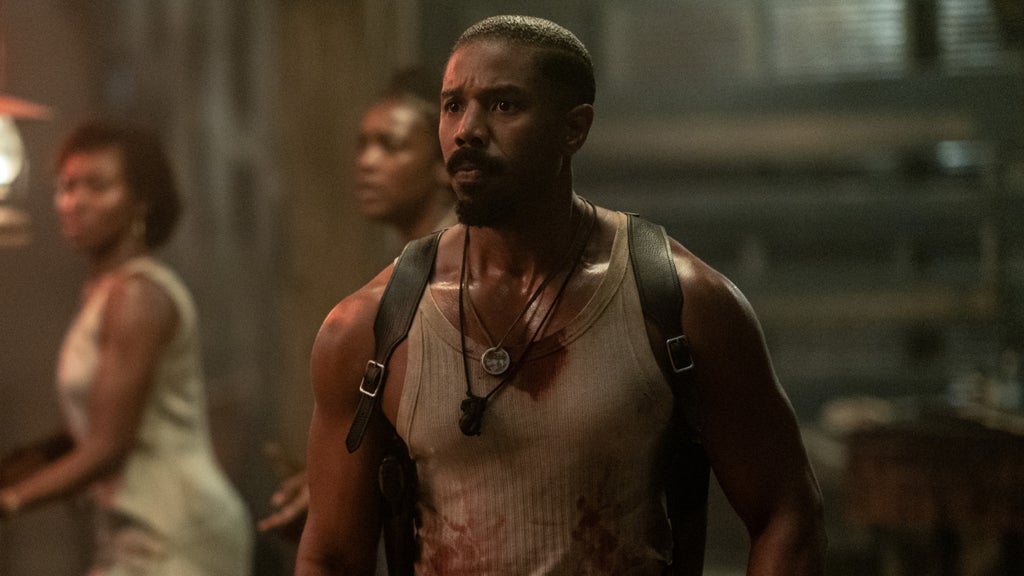
De Luca: And then “Weapons,” there was no amount of preparing the audience that was going to take away from the surprise, because we kept the twist out of the campaign, which I thought was genius, but we knew that was going to surprise people.
We discussed this a lot internally. We think marketing has evolved to be about the more you can hold back and tease and create a puzzle box out of campaigns. I think especially younger moviegoers really appreciate not being force-fed the entire plot of a movie. And movies like Paul’s movie and “Weapons” to a certain degree and “Sinners” let us bring back the idea of presenting an enigma, and letting you solve the puzzle when you show up and you buy a ticket.
Abdy: When there’s discovery, when the audience leaves that theater, they’re like, “Holy shit, you have to see this,” it excites them. And I think it creates that cultural moment where you feel it. We see it in reactions online, like when we watch a movie open, and you see how people are talking and engaging about it.
De Luca: Especially for Gen Z and Gen Alpha moviegoers, that means something to them, that authenticity and signature and authorship. We’re finding more and more, especially in the PLFs (Premium Large Formats) and the IMAX theaters, it really means something to people when a filmmaker communicates with them directly and says, “I made this for you.” Chris Nolan obviously does that, but it’s never been more important.

So how do you think about the work that you’re doing when the conversation in Hollywood and beyond is about the death of theatrical, and it’s because of the sale of this company? The theater owners themselves have been categorical: If Warner goes away, we’re not going to be able to sustain this business. How do you think about that, in terms of your conversations with your team, your conversations with filmmakers?
Abdy: We’re following the same path we’ve always followed, which is: bet on filmmakers, have an eclectic slate of movies that are going to be released in movie theaters. That’s our plan. Our strategy hasn’t changed. And we just come in and have those same conversations. I mean, 2026 obviously is baked. 2027 is almost full, and now we’re looking towards 2028, so we have to plan two years ahead.
De Luca: We’re tripling down on theatrical. We’re adding to our slate. We just announced our new label to be run by Christian Parkes. We want to be anywhere someone is buying a ticket to go into a movie theater, regardless of budget and genre. There are things that are outside our control, but we feel very solid in the slate strategy that we have, and we’re just looking to increase the number of movies a year out of this studio.
We’d like to get to 18, obviously based on available release dates. But we’re aggressively looking to increase the number of movies and tripling down on theatrical releases. That’s the order of the day.
You have a comedy coming this year written, directed by and starring Jonah Hill opposite Kristen Wiig. Don’t you know that comedies don’t work?
Abdy: They don’t work until they do.
De Luca: We don’t subscribe to blanket statements. And personally, I love when a movie is uncomp-able. I think there’s a real appetite, especially with the younger moviegoers, to not be fed the same old thing. I just read an article about box office being up by 8% and especially younger boys being more likely to go. They need to be fed more movies.
When the doom and gloom contingent reports box office is down by 20% they forget to write the next sentence, which is, the number of movies being released is down 20% so that’s why we subscribe to: If you build it, they will come. When I was a baby executive, the R-rated comedy was pronounced dead. Then the spec for “American Pie” came out.
And then everybody had to have an R rating right?
De Luca: Yeah, then you couldn’t get a PG-13 comedy made, because everybody thought you had to make an R, right? Hollywood is such a pack animal. The minute there’s a success, everybody runs in one direction. That’s why I don’t subscribe to blanket statements. One good movie will overturn any blanket statement.
What about love stories? What happened to those? My theory is that Hollywood studio executives are afraid of showing love and sex on screen. It’s safer to show brutality and violence and horror.
De Luca: It’s just a higher bar for love stories because you don’t want to be cliche.
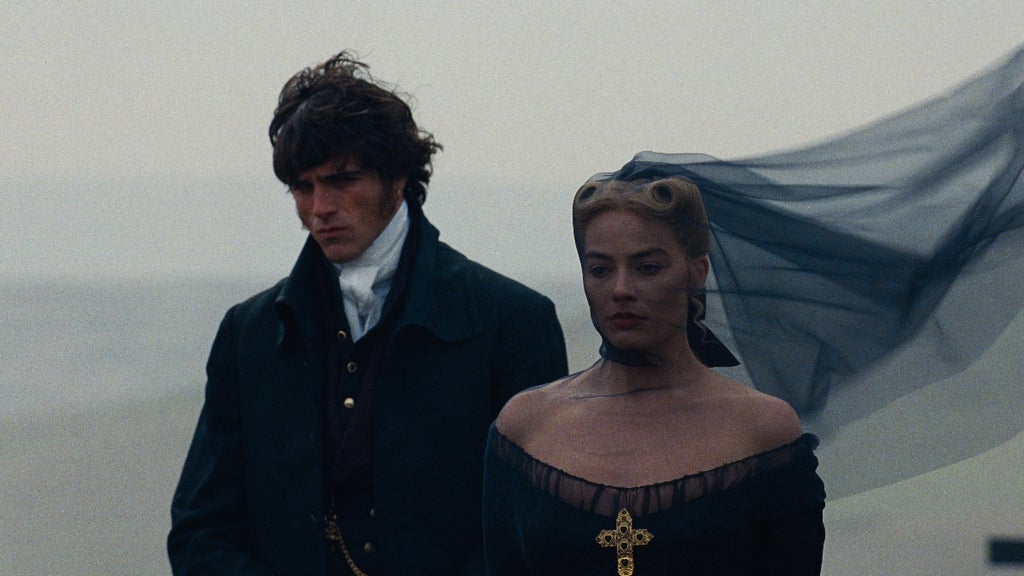
What are you excited about for 2026?
De Luca: “Wuthering Heights,” we love. “The Bride” is a punk rock assault on the senses. It’s Maggie Gyllenhaal. We thought Maggie was a filmmaker of note and she pitched this genre mashup almost more in line with “True Romance” and “Bonnie and Clyde” and “Natural Born Killers” than a traditional monster movie. It’s a very unique role for Christian Bale as Frankenstein’s monster. And it’s all about seeking love and being othered and finding your place.
I feel so lucky that we got Bill Damaschke. He was an animation executive with Jeffrey (Katzenberg) at DreamWorks and presided over “Kung Fu Panda” and “Madagascar,” so we were interviewing for animation heads, and I didn’t think we were going to get him. Bill feels the legacy here at Warner Bros. with Looney Tunes and also “Iron Giant” and “Happy Feet,” “The LEGO Movie.” He was really excited to step into Warner Bros. and reinvent the Warner Animation label. So we pitched him to come start an animation label, and he’s just crushed it. He’s got a slate and a pipeline of new animated movies, the first of which is “Cat in the Hat” with Bill Hader this November.
I’m really excited about this “Twilight Zone” kind of J.J. Abrams-produced movie that David Robert Mitchell, who’s usually an indie director, did.

Abdy: We’re changing the title on it. We’re really excited about Alejandro G. Iñárritu’s movie “Digger.” He’s next-level.
De Luca: He reinvents the wheel every time. That movie is stunning.
You’ve seen a cut?
De Luca: Twice!
Abdy: Tom (Cruise) is extraordinary.
What is it like?
Abdy: Nothing you’ve ever seen. That’s what’s so brilliant. This is the fourth time I’ve worked with him. He never repeats himself, and he’s constantly taking you into his mind and his vision and surprising you. And this movie does exactly that.
De Luca: We’re going to play mystery box with that too.
Abdy: And we have “Mortal Kombat II,” wait until you see that play with an audience. It’s like a rock concert.
And you have “Dune 3.”
De Luca: Denis Villeneuve’s dailies, you want to put them on your wall as artwork. They’re unbelievable. It’s the epic conclusion of the Paul Atreides saga.
Abdy: It’s so beautiful looking.
De Luca: When audiences find out what (Denis) went through to make this movie, like traipsing into 106-degree weather in Abu Dhabi and building these giant sets so you feel like you’re on another planet.
So can you project yourselves forward and imagine a world in which you’d be making movies like this at Netflix? Warner Bros. inside Netflix, which is the plan?
De Luca: You know, it calls for speculation. But I’ll just be honest — we hope that we get to continue to do what we’re doing in perpetuity. This is the last job I want to have. I’m working at Warner Bros., especially the way we revered the studio as producers. The dream was always to pitch and set something up at Warner Bros. because of the legacy. It’s the best job I’ve ever had.
Abdy: Me too. I hope I get to do it until they drag me out. It’s a dream. I mean, you get to work with all these filmmakers, the fact that we get to work together the way we do, as best colleagues.
De Luca: We were hoping last year was proof of concept that if you operate in the job fearlessly and respect the audience and bring an eclectic slate of movies that have something for everyone, that it’s proof that the audience, post-pandemic, is there. They want to come. Young moviegoers want to come even more than their older counterparts. And if you just bring them quality offerings by the best filmmakers available, it’s a very viable business with opportunity for growth.
