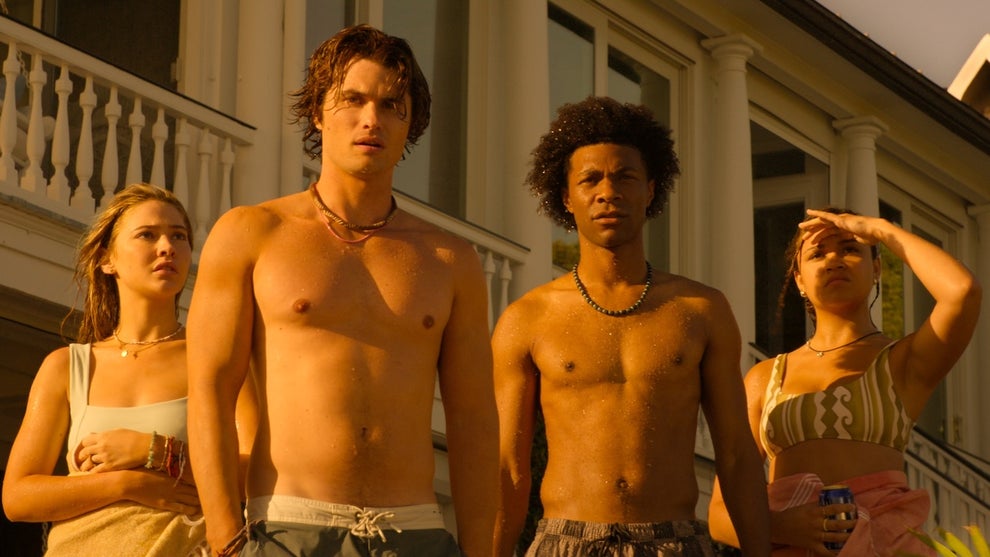
Netflix’s “Outer Banks” was built on a simple conceit, spoken both as an elevator pitch for the series and a promise to the audience by John B (Chase Stokes) in the first episode: “The Outer Banks, paradise on Earth.”
When series creators Jonas Pate, Josh Pate and Shannon Burke launched their sun-soaked, treasure-hunting adventure in 2020, they did so with an incredibly specific sense of place, whether audiences had traveled to the titular North Carolina barrier islands or not. They bound themselves to the land, both the fantasy of its natural beauty and the reality of living at the beach where financial and social disparities are as rampant as the sunscreen and Shibumi shades. But beyond the first season’s quest to find a lost cache of gold buried off the coast, the heroic band of outcast teens known as Pogues lost something along the way: their home. While they always come back, the Outer Banks has too often been put in the rearview mirror in the series that bears its name. The fifth and final season, now streaming on Netflix, does little to course correct that.
By the end of the last 10 episodes, the series will try to tell you that was the point all along. That going to far-flung places across the world to plumb new depths and new dangers in pursuit of bars of gold, mythical crowns and fantastical crosses was all intended to make coming home each and every time all the more sweet. That’s true to an extent, but every time it fled its namesake, the series felt more and more wayward on its journey back.
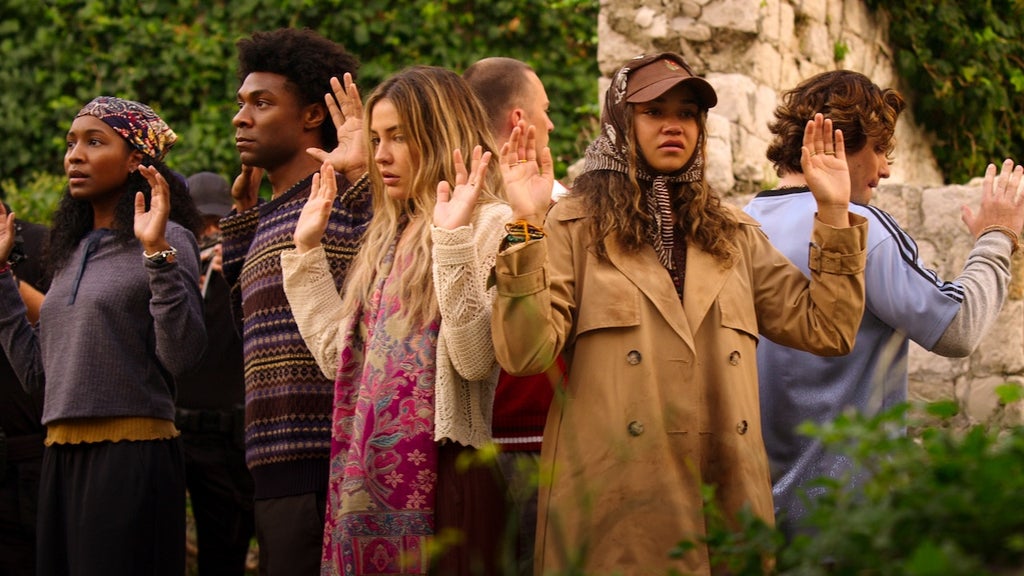
The final season picks up where the fourth left off, with the Pogues in Morocco mourning the tragic and genuinely shocking death of [SPOILER] JJ (Rudy Pankow), the live-wire heartbeat of the group. Killing off, arguably, its most entertaining and interestingly excavated character was the series’ biggest swing and the final season struggles with the void he leaves. But it should also be the thing that sends the gang back to where it all began for their final run. And fear not, fans: that is what happens. We won’t spoil how it all goes down but rest assured, “Outer Banks” ends with its toes back in the North Carolina sands. But to get there, the action goes through Croatia, New Orleans, the Balkans, Nassau and Azerbaijan.
Globetrotting is hardly new for the series, which left behind logical world travel long ago on that now-notorious inland ferry to Chapel Hill in Season 1. The second season ended in the middle of the ocean on a cargo ship, Season 3 saw the Pogues tromping through the South American jungle to uncover the lost city or El Dorado, and Season 4 gave chase through the aforementioned streets of Morocco. But in this final stretch, the heart longs for the simple days when the stakes were defined by the feud between the Pogues and the Kooks.
And yet, the Pogues have instead set their sights squarely on Chandler Groff (J. Anthony Crane), the man responsible for JJ’s death who also happens to be his father. Kiara (Madison Bailey), in particular, is out for blood to avenge her boyfriend. As such, more so than any of her costars, this is Bailey’s season, giving the actress a tremendous amount of solo physically demanding scenes, and she seizes every one of them without hesitation. It’s an impressive showcase for Bailey, even if everything around her is watered down by the series’ insistence to pile on scenarios to get to the finish line.
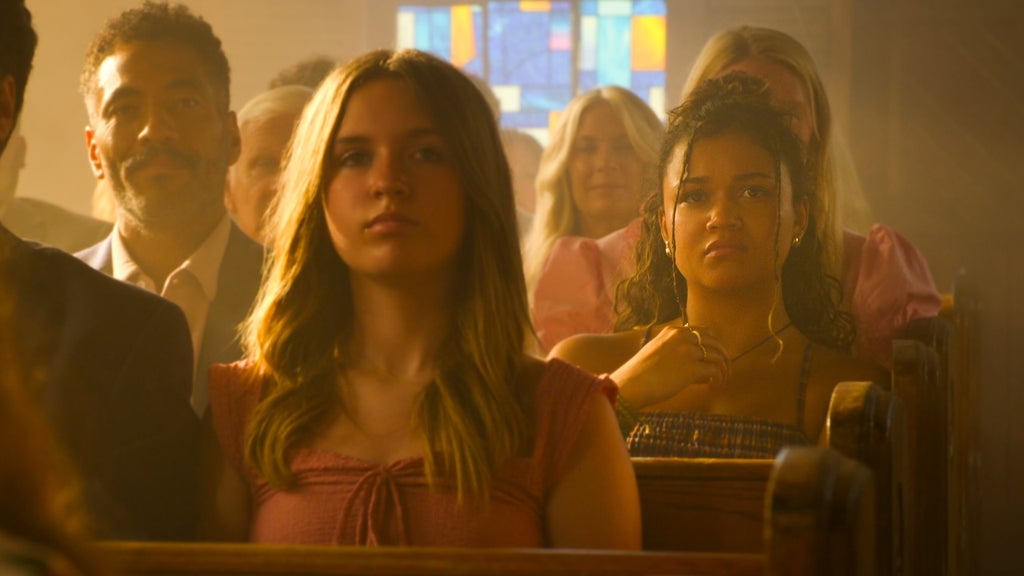
Per capita, this season is stuffed with story despite the housekeeping of tying up loose ends. In addition to the Groff pursuit, there is a bout of homelessness for two characters, a stint in jail for another, and an ill-advised drug-trafficking storyline that comes out of nowhere and snowballs into an even more ill-advised character rewrite for one of our Pogues. There’s also a resurrected land deal storyline, a resurfaced parent and one final faceoff with Mother Nature via a hurricane. It is all entertaining, but the sheer breadth of material distracts from what fans likely want from their last moments in Poguelandia: to simply bathe a bit longer in the beach breeze of the Outer Banks with their heroes.
Instead, what the final season offers is a hodgepodge of stories that don’t always connect, and ultimately have no narrative use except to keep the Pogues hustling to survive until they are finally allowed to do so. Wisely, the series reminds us in Episode 3 that Sarah (Madelyn Cline) is just now turning 20 years old. It’s a necessary reality check given the decidedly mature mortal danger from treasure hunters, pirates and their own fathers these kids have been warding off for five seasons. They are still just that –– kids. Even five seasons later, they are still fumbling through hair-brained schemes to make ends meet. It’s frustrating to see they haven’t learned much, but the show would probably say that is the lot in life for the Pogues, an endless cyclical journey to claw their way up only to feel the boot of privilege kick them back down.
That doesn’t mean the show hasn’t learned a few lessons by the end. The increased prominence of Drew Starkey as Rafe, Sarah’s diabolical-but-working-on-it older brother, strengthens the final run. Not just because Starkey continues to have such gravitas in this role, but because he wears reluctant Pogue much better than crazy Kook. Deploying him as an smart-mouthed asset to the Pogues from within their ranks versus an antagonist force on the outside is more growth than the show has shown in other areas.
“Outer Banks” has never not entertained. From a motorcycle chase on castle walls to a rockslide explosion, never say the show didn’t try something at least once. Nor did it violate the rest of John B’s opening monologue: “We’re the Pogues, and our mission this summer is to have a good time, all the time.” If that’s all you need from your last trip to “Outer Banks,” then mission accomplished. If you want more, then at least you’ll get an answer to a question you probably never thought to ask: what if the Pogues went to Azerbaijan?
“Outer Banks” Season 5 is now streaming on Netflix.