When did we first hear the term “chick flick”? Wikipedia suggests it was probably sometime in the late 1980s when movies like “Dirty Dancing,” “Beaches,” “Steel Magnolias” and “When Harry Met Sally” flooded the market.
Something similar is going on in the theater now with plays like Bess Wohl’s “Liberation,” Jocelyn Bioh’s “Jaja’s African Hair Braiding,” Kimberly Belflower’s “John Proctor Is the Villain,” and Bioh’s “School Girls,” which preceded those other three titles by a few years and was quickly preceded by Sarah DeLappe’s “Wolves.” The big difference between chick flicks and these Preaching to the Sorority plays is substance. The movies are fluff; they’re about falling in love. The plays, on the other hand, are about women’s solidarity in the face of collective oppression. The plays also feature large female casts (by today’s standard) and the number of roles for men can be counted on one hand. Not that the guys don’t make their presence felt. The title “John Proctor Is the Villain” says it all.
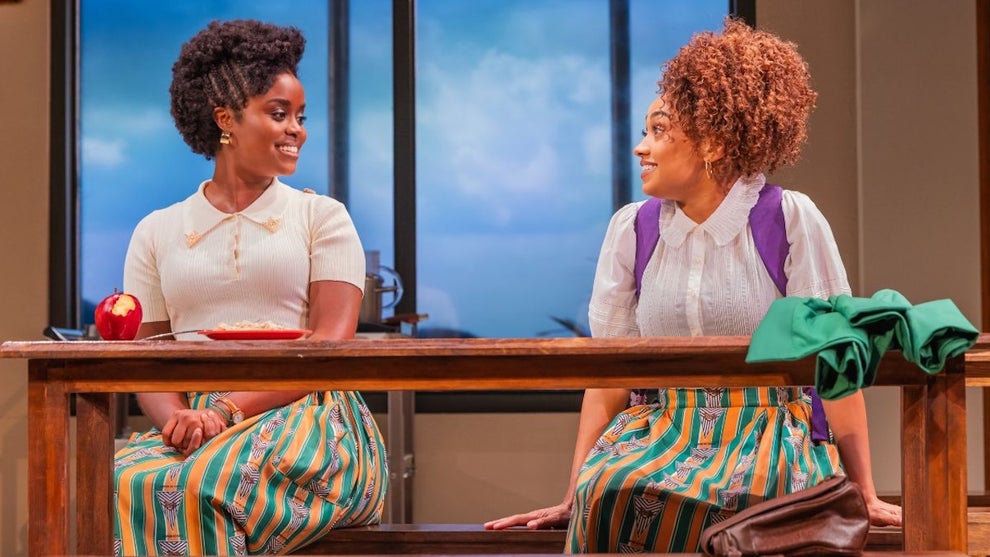
The first Broadway revival of “School Girls, or, the African Mean Girls Play” opened Monday at MTC’s Samuel J. Friedman Theatre, and the cast here is far starrier than the ensemble assembled Off Broadway for its 2017 world premiere. On Broadway, Denée Benton (HBO’s “The Gilded Age”) plays the ultimate mean school girl, who wages full battle on Jasmine Amy Rogers (Tony nominated for “Betty Boop” and soon-to-be Maria in “The Sound of Music” at Lincoln Center), who plays the beautiful new school girl, who attracts the immediate attention of Patina Miller (Tony winner for “Pippin”), who plays an arrogant beauty-pageant recruiter.
The cat fights that ensue among these characters go far beyond anything that takes place in Clare Boothe Luce’s “The Women.” Unfortunately, these nasty encounters in “School Girls” are also far less witty. At times, Bioh’s comedy isn’t just about teenagers; it appears to have been written by teenagers.

Here’s how Benton’s Paulina tells off another female student: “I don’t give a s–t about nice!” she screams. “There’s no room for that in this group, you hear me?… Or do you have food stuffed in your ears, too, you f–king cow!” Paulina later calls the same girl a “fat-ass daughter.”
Mean? Yes. But clever?
The C-word isn’t uttered, but Rogers’ Ericka does manage to up the crudeness ante by calling Benton’s Paulina “a f–king bitch.” Indeed, Paulina isn’t just mean; she’s a teenage Lady MacBeth, and when her small clique of friends (Lucia Aremu, Erin Morton, Nia Otchere-Sarfo and Jordan Rice) finally reject her to befriend new-girl Ericka, they do so with such verbal abuse that the audience at the Friedman Theatre breaks into applause.
No sooner does the audience show its strong approval of Paulina’s comeuppance than Bioh washes that same cheering chorus in guilt by having Paulina tell a sob story that would make Danielle Steel blush.
Although the cast has changed, the director Whitney White remains in charge, and, thanks to her starry cast and Cody Spencer’s very loud sound design, she has turned “School Girls” into an even broader and brassier cartoon than it was Off Broadway.
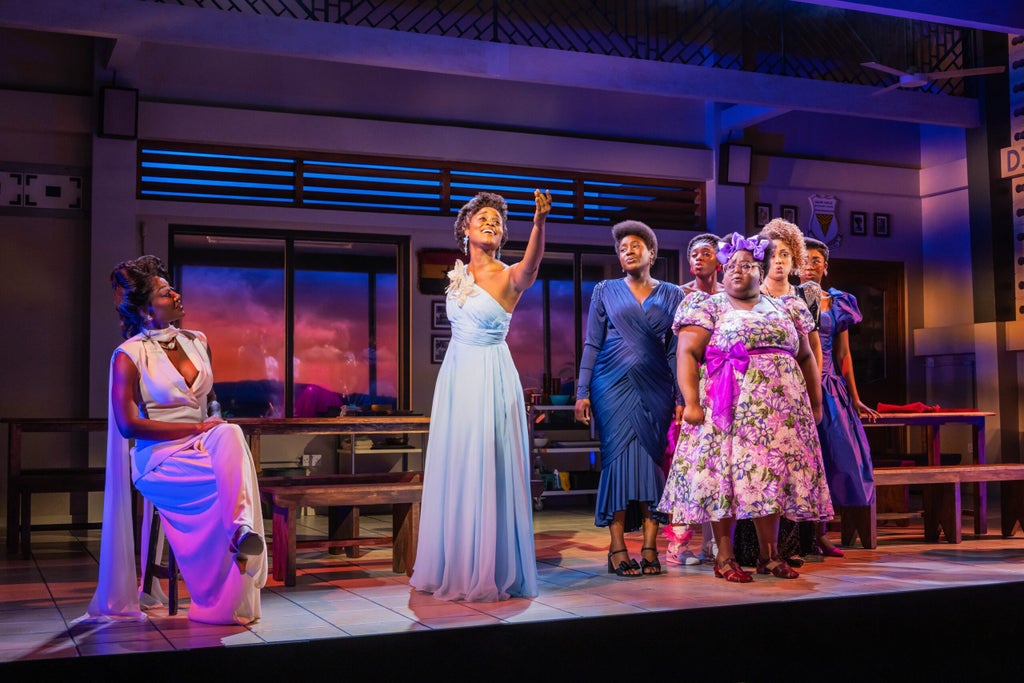
The comic highpoint arrives when all the school girls are decked out in their evening-gown best (flashy costumes by Qween Jean) to perform “The Greatest Love of All.” Each character presents a wildly different, not to mention hysterically funny, impersonation of Whitney Houston. A real theater pro, Benton pulls back on her considerable singing voice to present a merely acceptable rendition of that pompous anthem so that Rogers can blow her off the stage.
Otherwise, Bioh’s idea of jokes is for her naïve characters to call White Castle “that high class restaurant” and Wal-Mart a “trendy American boutique.” If that weren’t cringy enough, somebody mispronounces the brand-name Calvin Klein.
With “Jaja’s African Hair Braiding,” Bioh recycled Robert Harling’s beauty-shop dramedy “Steel Magnolias,” but wisely gave it the patina of relevance by adding an immigration subplot. With “School Girls,” she achieves a similar effect by setting her story in the Aburi Mountains in Ghana in the year 1986. Comedies about beauty pageants were already old stuff back in the Paleolithic on “The Garry Moore Show” with Carol Burnett.
What gives relevance to a subject as tired as beauty pageants is the scope of victimhood depicted here. The characters in “School Girls” are up against all of white Western civilization.
