If you’ve never visited D23, the once-every-two-years celebration of all things Disney, calling it Disney’s version of Comic-Con is an understatement.
The world’s biggest entertainment conglomerate takes over the Anaheim Convention Center, just steps away from Disneyland, the company’s first theme park and still its crown jewel, to showcase all that Disney has to offer – to celebrate its past, highlight its present and preview its future – and the faithful fans, dressed in cosplay as theme park characters or their favorite Imagineer, pay handsomely for the privilege (three-day tickets, with access to the Honda Center, ranged from $297 to $957 depending on your seats within the Honda Center; the Ultimate Fan Pass started at $1,299).
At the last D23, named after the official Disney fan club (1923 was the year Walt founded the company), the convention broke containment and spilled out into the nearby Honda Center, where the Anaheim Ducks (once owned by the Walt Disney Co. during the halcyon Michael Eisner days) play. With its more than 14,000 seats and separate ticket for panels on Friday, Saturday and Sunday, it was a massive, hugely lucrative expansion that carried into this year, with events in the Honda Center on Friday, Saturday and Sunday.
At this year’s D23 no corner of the Magic Kingdom went unexplored — on the convention floor there was a photo op for the ABC presentation of the Super Bowl; a booth devoted to Heinz’s new corporate partnership with Disney themed to the classic It’s a Small World attraction, complete with a sampling of condiments in a boat shaped like the attraction’s ride vehicle; and an immersive 3D theater plunging you into the experience of using the Disney+/Hulu app.
But perhaps the most striking thing about this year’s edition of D23 was that for all of the slavish brand loyalty that Disney expects from its fans, there was a surprising amount of attention paid to pleasing said fans, with a slew of Disney Parks announcements that don’t appear to make a meaningful impact on the company’s bottom line, but go a long way to showing that Disney is listening to its most ardent (and big-spending) devotees.
The move comes as Disney has battled bad press from two rounds of layoffs and mounting guest consternation as theme park prices continue to soar, all while new CEO Josh D’Amaro has promised more cost cuts to come as he reorients the company around a unified “One Disney” approach that treats Disney+ as the center of its flywheel. (If we’re going with the hub-and-spoke analogy associated with the layout of the theme parks, Disney+ is the castle.) And yet, as D’Amaro has made several moves to boost revenues and maintain cultural cache, the first Disney CEO to have grown up a fan of the Michael Eisner era is making several moves that proves he understands what motivates the company’s most passionate base.
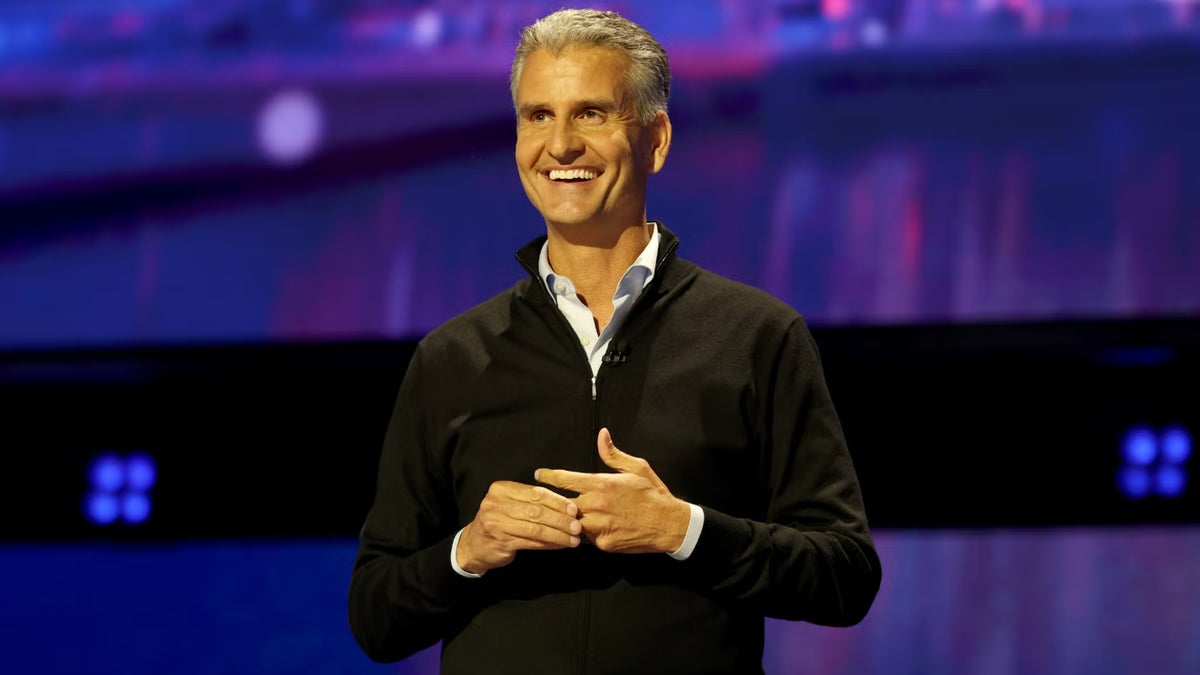
During the big presentation devoted to Disney movies and television on Friday night, D’Amaro addressed the crowd. Dressed in his best CEO cosplay (black zip-up, crisp white shirt, even crisper white sneakers), D’Amaro shared a story from his childhood about loving Disney.
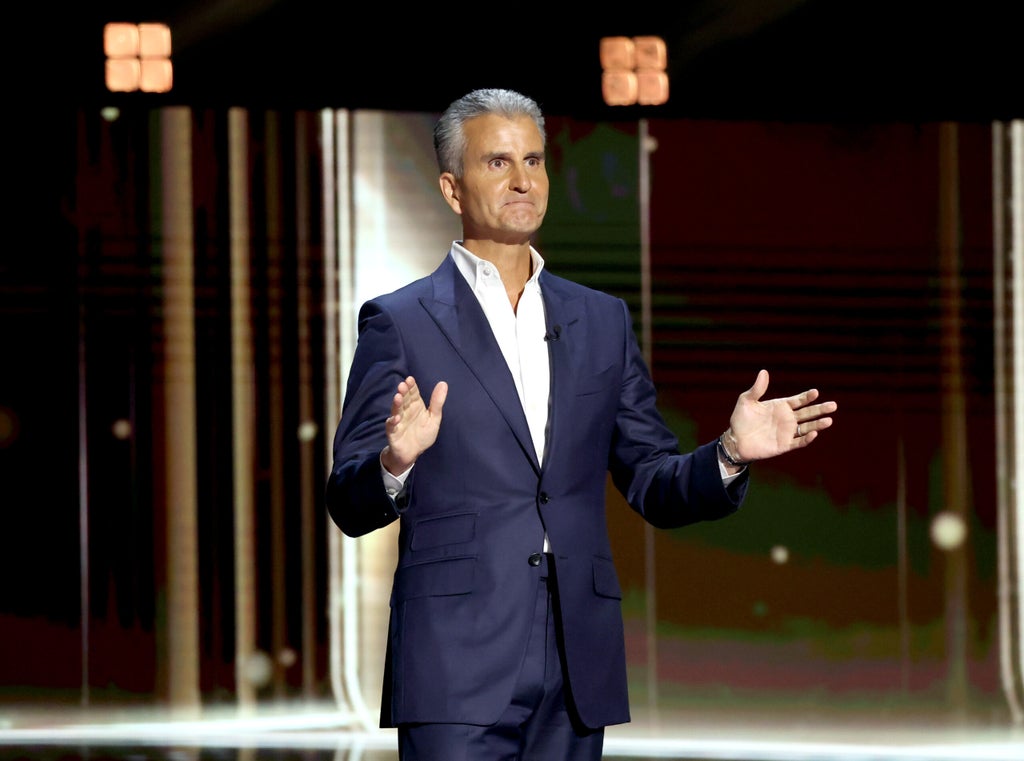
“I believe that in order to lead the company, you have to know what it feels like to be a fan. And I do,” D’Amaro said. Looking out over the sea of 14,000, he said that he likely had met some of them, since he is routinely stopped for selfies while he’s in the park. (Can you imagine Bob Iger stopping for selfies on his way to ride the Matterhorn?)
And while his comment about being a fan could, cynically, be heard as expertly crafted corporate-speak, it was also a sentiment that carried through the weekend. The overall feeling gave the impression that the Walt Disney Co. was a place that was actively listening to fans and delivering on promises that it had long held out for, particularly when it comes to maintenance and attraction refurbishments that should have happened years ago but haven’t because they didn’t serve any synergistic purpose. At the 2019 D23, which seems like a distant memory, a number of exciting projects were announced and then never mentioned again, victims of the pandemic, cost-cutting measures or some toxic combination of the two. After Bob Chapek’s brief, disastrous reign, Iger seemed unwilling or uninterested in restoring those projects. (Among them: a “Mary Poppins”-themed attraction for EPCOT’s United Kingdom pavilion and a Spaceship Earth redo.)
“All around us, companies are trying to acquire scale or acquire IP or acquire additional businesses. And the reason that they’re trying to do that is because they want to look a little bit more like Disney,” D’Amaro told CNBC on Friday. “I mean, we have the deepest library of intellectual property and characters and franchises by far. Our scale is enviable. The connection that we have with fans, you see it here, right here at D23, is palpable. And so we have everything that we need right now.”
Parks upgrades, Anne Hathaway and Fuzzball
During a press preview night for D23, this sentiment was already on display – not only in just how elaborate and fan-forward most of the bigger exhibitions and pavilions were, but in the way that executives were addressing journalists.
Bobby Kim, also known as Bobby Hundreds, a leading streetwear designer who was recently installed as a creative director at Disney Consumer Products, spoke about how he, for D23, wanted to resurrect a character that was important to him from childhood: Fuzzball, Michael Jackson’s alien sidekick from the 3D short film “Captain EO,” which used to run at Disneyland and EPCOT Center. Clutching his new Fuzzball plush, he said that it meant a lot to bring the character back for a new generation. “Captain EO” has long since closed at the parks and isn’t even streaming on Disney+. (An attempt to turn the property into an animated series at the Disney Channel was also unsuccessful.)
There is no data to suggest that investing in making a commemorative Fuzzball plush will meaningfully boost a piece of IP that cannot be mined for a reboot or TV series, although the character briefly appeared as an Easter egg in the background of a pair of “Star Wars” projects, successfully making the trip to a galaxy far, far away. The new Fuzzball plush is simply something a subsection of small but passionate fans would be interested in, and Kim was allowed to do it.
Instead of a stone-cold sales pitch, Kim’s comments seemed like a genuine outpouring of gratitude and a desire to return something to a fandom that meant so much to him.
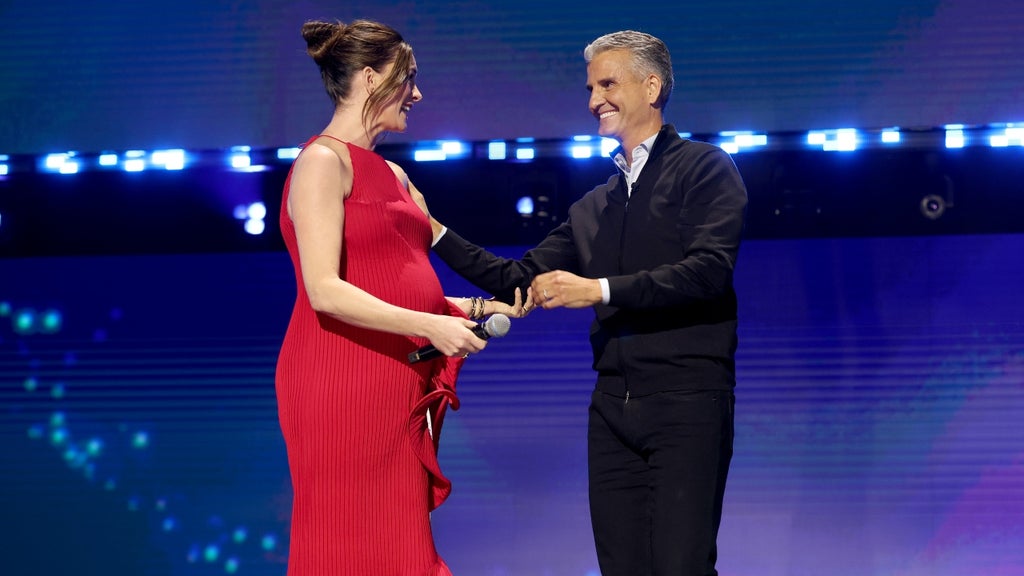
This kind of reciprocation was felt over and over again throughout the weekend, whether it was during Friday night’s presentation, where a custom bit of animation was created by Walt Disney Animation Studios to announce a third “Zootopia” film or in the way that a pregnant Anne Hathaway, who was crowned a Disney Legend this year, took to the stage just to thank those in the Honda Center for making the “Devil Wears Prada 2” such a hit (and to issue a promise that she’s working hard on the third “Princess Diaries”). There was no real announcement and nothing she was promoting; it was just another instance of one Disney fan interacting with thousands of others.
This was even more apparent on Saturday, during the big parks presentation at the Honda Center (a surprisingly star-studded affair hosted by Neil Patrick Harris and featuring Tig Notaro, Gloria Gaynor, Beck and Glenn Close among others). Among the updates to previously announced projects like Villains Land, the “Cars”-themed Piston Peak and Tropical Americas at Disney’s Animal Kingdom, all for the sprawling Walt Disney World Resort outside of Orlando, Fla., there were smaller, but just as impactful announcements.
There was the offhanded news that Disneyland Paris’ Space Mountain, which has existed in a much-maligned, “Star Wars”-ified version for the past decade, will return to its former, steampunk-y glory. And the solid commitment to finally fix the broken yeti audio-animatronic figure on Expedition Everest, which at one point was the most impressive robot in the Disney portfolio but has been broken for almost 20 years.
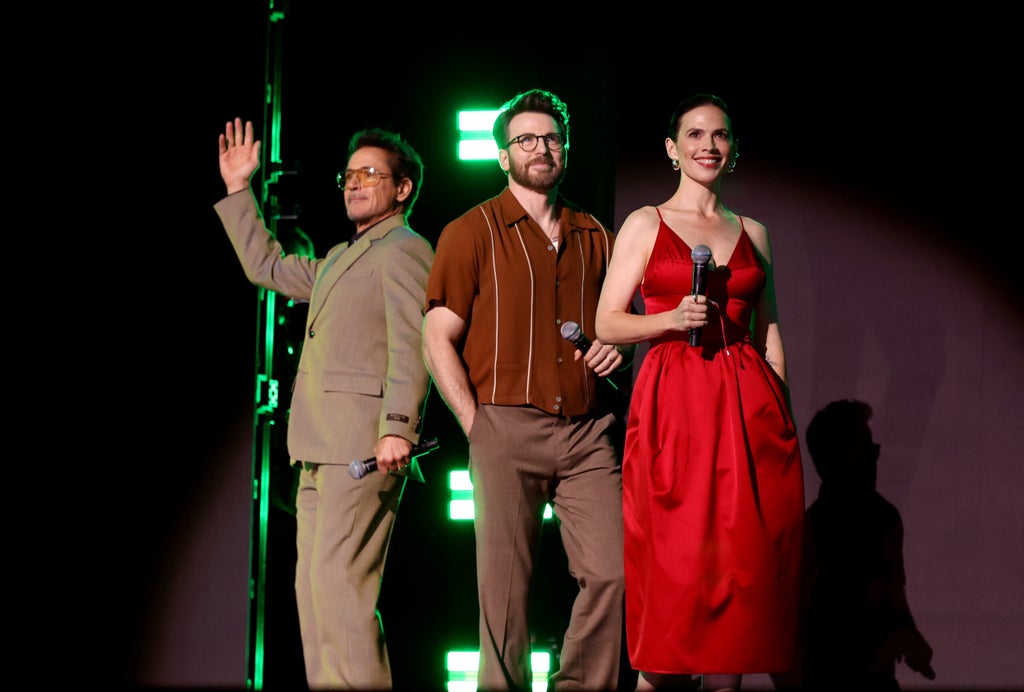
There was also a more vague (but still compelling) promise to update Spaceship Earth, the centerpiece attraction of EPCOT and one that hasn’t been properly updated since 2007. In addition to communication, this new iteration will be about community.
These are decisions that probably won’t drive attendance or spike merchandise sales, but are the right things to do, after years of fan outcry. They also felt like things that, at this point, Disney would never do because their implementation didn’t make sense on a spreadsheet or in a boardroom meeting.
And yet, here we are.
Rekindling fan trust
The announcements come at a time when tension between Disney die-hards and their corporate overlords has never been more fraught. In the past few years, a good number of guests have felt financial strain from the company as it attempts to squeeze every last penny out of those park visits (particularly the domestic parks but the international guests have also felt the pinch).
The shutdown in 2020 served as a reset button for Disney to do away with many of the perks that guests had come to expect, things like the Magical Express bus service that would whisk you from the Orlando airport to your Disney hotel or free FastPass tickets (now fully paid-for and known as Lightning Lane). A 2024 New York Times story reported on how many Disney guests go into debt just to afford their once-in-a-lifetime dream vacation.
There has also been D’Amaro’s recent, full-throated embrace of AI, a technology that some fans find in diametric opposition to the tenets of human creativity and innovation that the entire company has been based on. In a recent earnings call, D’Amaro noted that the company isn’t just looking to utilize AI in its various workflows; it’s already doing it. And a presentation inside the Walt Disney Imagineering booth at D23 made it clear just how all-in it is.
Towards the end of the presentation, there were a couple of announcements that shook the Honda Center to its core – that Disneyland’s Tomorrowland, which has largely languished without a proper refresh since the 1990s, would be receiving a bold reimagining and that the Imagination Pavilion, one of EPCOT’s most glittering crown jewels turned biggest laughingstocks, would be redone.
Much like these earlier announcements and things like the new Carousel of Progress, which is already underway (the company announced that Bryan Cranston and Jamie Lee Curtis would lead the voice cast), these developments are seemingly being done to appease fans of the parks. Maybe what it is understanding is that setting things right for older generations will actually ensure their vitality for future generations too. And there is a real power in that.
Perhaps, more clinically, the emphasis on the parks and cruise ships at D23 is an admission and embrace of just how much the company’s Experiences division has become the central financial engine for the entire company.
In the most recent earnings report, it noted that revenue for the Disney Parks and cruise ships (the fleet will soon balloon to 13 ships, sailing all over the world) for the quarter was up 10% from the year before, which it was quick to point out was the biggest increase in two years (so, since the last D23). Global parks attendance grew 4% from last year and, most importantly, per-capita spending increased, with occupancy of the company’s domestic hotels hitting 91%.
“Domestically we’re doing extremely well right now,” Disney CFO Hugh Johnston told CNBC.
The Disney Experiences division accounted for a whopping 40% of third-quarter revenue and 54% of operating profit, which are staggering numbers considering how vast and diversified the Disney portfolio is.
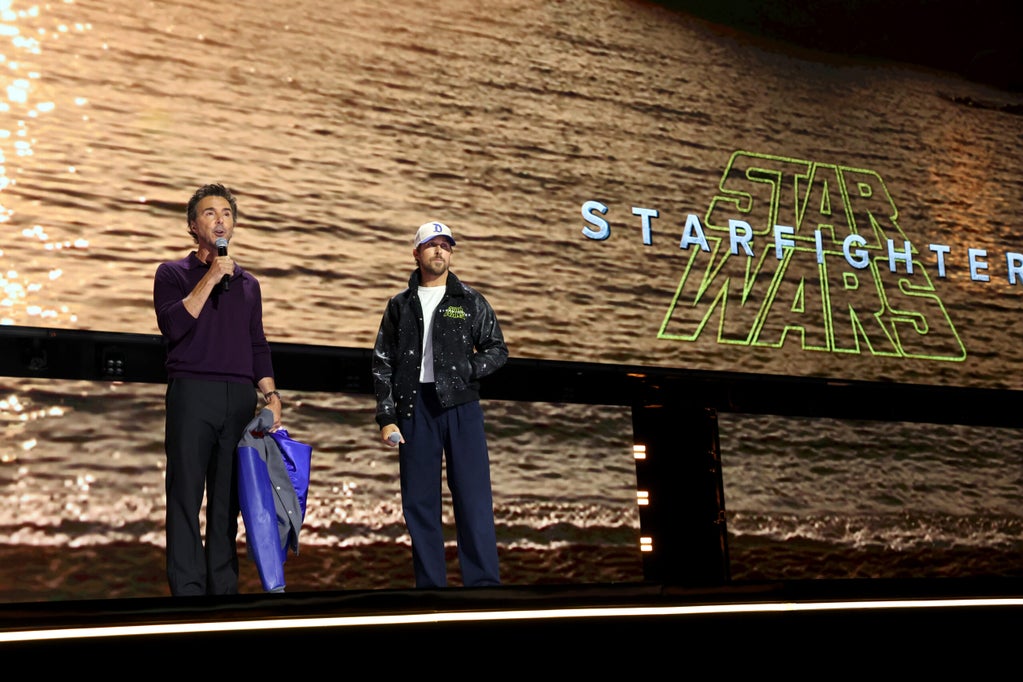
And as much as the presentations over the weekend seemed to cater to the fans, there was still naked capitalism to be accounted for, with a slew of sequels, including “Coco 2” and “Incredibles 3” (both from Pixar), “Frozen III” and “Zootopia 3” (from Walt Disney Animation Studios) and new installments in the vast “Star Wars” and Marvel Studios franchises. But at least, during the presentation for next summer’s “Star Wars: Starfighter,” just before Ryan Gosling walked out on stage, we were treated to a montage of his appearances on the new “Mickey Mouse Club.” It’s something that the Comic-Con crowd probably wouldn’t have appreciated nearly as much.
For years after Walt died unexpectedly in 1966, those at the company wondered What would Walt do? By the time Michael Eisner and Frank Wells were installed to run the company almost 20 years later, that way of thinking had ossified the company in a place that was largely out-of-step with the rest of the culture. Eisner and Wells modernized the company, revitalized its core brands and turned Disney into an unstoppable international conglomerate.
Almost 40 years later, with a new CEO at the helm, Disney is once again looking to its past to help chart its future in the same way that Walt, a restless futuristic who was still hugely nostalgic for what had come before, charted the course for an earlier version of the company. And D’Amaro, as the first CEO who grew up a fan of the Eisner/Wells iteration of Disney, knows that the only way that the future of the company can be written is by appeasing and engaging with those same kinds of fans.
As he stood in front of the devoted masses in the Honda Center on Friday night, he spoke like a man who knew that in another life, on another timeline, in some parallel realm, he could be out there sitting in the crowd with a Scrooge McDuck T-shirt on, instead of speaking from the stage in his designer zip-up sweater. He’d still be as much of a fan – and have just as passionate thoughts about how Disney should be run.