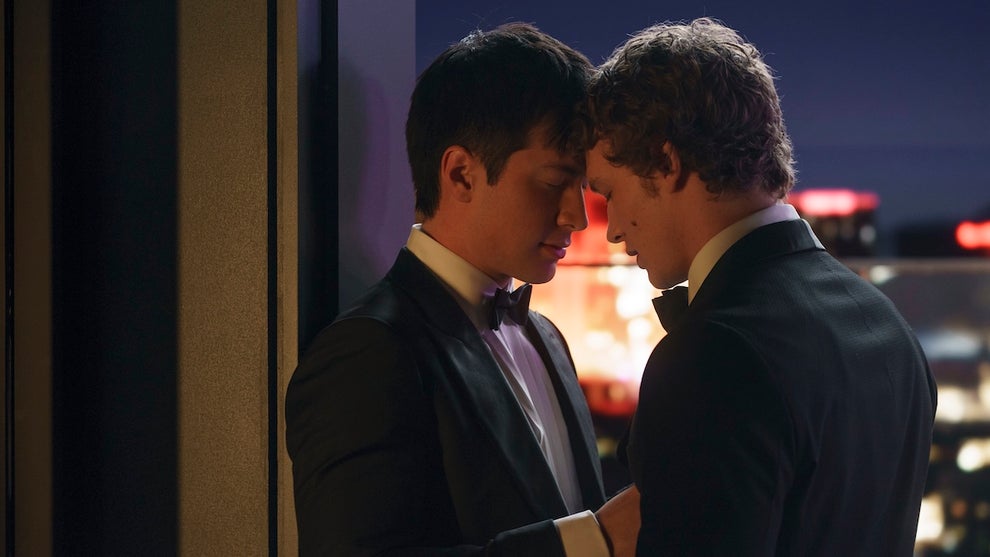
From 1934 to 1968, the Motion Picture Production Code, better known as the Hays Code, ruled Hollywood with an iron fist. Films complied with the Code or they didn’t get made at all. The Hays Code explicitly prohibited showing interracial relationships, the “ridicule” of religious figures, and stated that “the sanctity of the institution of marriage and the home shall be upheld.”
One of its primary restrictions was a ban on “sex perversion” onscreen. Since LGBTQ+ characters and stories were considered “perverse” at the time, we were either invisible, heavily coded or included only if we suffered and were punished for being queer. GLAAD co-founder Vito Russo documented this disturbing history in “The Celluloid Closet” 45 years ago.
History has a dark habit of repeating itself.
On April 22, the Federal Communications Commission (FCC) announced a new inquiry seeking public comment by May 22 and reply comments by June 22 about whether television ratings should be modified to specifically warn parents about the presence of LGBTQ+ stories. The Public Notice frames this issue as “empowering parents to protect their children,” yet those who study media history know it is not about protecting children, rather a revival of the same tactics used to purge LGBTQ+ characters from the screen for decades.

This FCC inquiry is a brazen attempt to remove LGBTQ+ people from television, rooted in the false assertion that being LGBTQ+ needs a warning label — stigmatizing our stories and decreasing the chances they will be made at all. It is the same playbook behind legislation like Florida’s 2022 “Don’t Say Gay” bill and the attempt to ban books with LGBTQ+ content. By suggesting that content featuring transgender and nonbinary characters needs a specific warning label, the FCC brands our lives as inherently unsafe and inappropriate to be seen; the moral equivalent of coarse and crude language, sexual situations and violence.
The FCC Public Notice specifically names “transgender and gender non-binary programming,” but anyone who thinks a TV show with two moms or two dads would not be a target for a warning label is kidding themselves. This administration has made it abundantly clear that their attacks on transgender people are only the start of their attacks on the LGBTQ+ community, not the end.
And under this administration, what’s stopping the FCC from also demanding a warning label for shows that feature immigrant families or low income families or families of color?
The FCC and chairman Brendan Carr, an architect of Project 2025, is not speaking for the average American viewer or the modern media consumer. A small but loud group of anti-LGBTQ+ activists, who view the diversity of the American public as a threat, might welcome the return of the Hays Code, but the highly competitive television market will not.
Gallup reports that 23% of adults under the age of 30 say that they are LGBTQ+. According to the Williams Institute, 5 million American children are currently being raised by LGBTQ+ parents. GLAAD and MRI-Simmons’ 2025 data shows over half of LGBTQ+ Americans, and 3 in 10 non-LGBTQ+ people, (84 million Americans combined) are more likely to watch a TV show with at least one LGBTQ+ character. Plus, a supermajority of Americans (79%) agree that everyone deserves to be represented.
Media companies should not remain silent in the face of this latest attack on the freedom to create content their own audiences demand. If television is to maintain its dominance in the current attention economy, it must prioritize producing rich and interesting content to remain relevant. If audiences don’t find it on television, they will look for it elsewhere — especially on social media, in podcasts, in video games and anywhere else that has not caved to government pressure and overreach.
The FCC does not directly set TV ratings, but under this administration it has repeatedly used its political leverage to pressure stations, networks and broadcasters into self-censorship and anticipatory obedience. The United Church of Christ’s Media Justice Ministry compiled evidence of a pattern where the Trump-era FCC pressured broadcasters into “voluntary” actions, in many cases successfully: In September 2025, Nexstar and Sinclair blocked “Jimmy Kimmel Live!” from appearing on owned and partner local TV stations after statements from the FCC; in July 2025, the FCC pressured merging companies like Verizon and T-Mobile to “voluntarily” remove DEI programs; CBS installed a “bias monitor” and cancelled Stephen Colbert’s ‘The Late Show’; in April 2025, it subjected ’60 Minutes’ news reporting to investigation and comment; in February 2025, it informed Comcast and NBCUniversal it was being investigated for its DEI policies and investigated a radio station for ICE coverage; on Jan. 30, 2025, just 10 days after Inauguration Day, the FCC launched a wide-ranging inquiry targeting NPR and PBS; and just last week, the FCC issued an order directing Disney to file their broadcast license renewals ahead of schedule, tied to the government’s yearlong investigation of the company’s DEI practices.
This is about more than fighting for LGBTQ+ stories onscreen, this is about fighting people who are trying to destroy core principles of a successful democracy: freedom of speech and a dynamic, multicultural society. This is an existential fight – and we all need to be in it or risk losing democratic freedoms that have been hard-won over the past 250 years.
Last week, more than 40 organizations including the Human Rights Campaign, PFLAG, Color of Change, National Hispanic Media Coalition and the Committee for the First Amendment filed a joint comment. GLAAD’s resource for those interested in filing a comment with the FCC in response to its Public Notice is available at GLAAD.org/FCC.
