

The Met Gala’s biggest trend was money, but it didn’t always buy style. The highs and lows of fashion’s richest night, and the controversy over its unscrupulous patrons, are a tale as old as art history. Plus, buzzy Argentinian fragrance house Fueguia 1833 opens its first West Coast store at South Coast Plaza, debuting a new scent created with an Academy Award-nominated composer.

The Met Gala’s Biggest Trend Was Money
The arts have always been about money. In fact, it’s doubtful we’d have museums at all if it weren’t for tycoons — oil (J. Paul Getty Museum); railroad (Metropolitan Museum of Art); luxury retail (Fondation Louis Vuitton); entertainment (Geffen Galleries at LACMA) — and on and on. And sad as it is, I sincerely doubt any of these patrons of the arts made their money while always upholding fair labor practices and social progressiveness.
And yet, this year’s Met Gala at the Metropolitan Museum of Art became a flashpoint for a heated conversation about our current-day tycoons, the very unfashionable tech titans who footed the bill for the night.
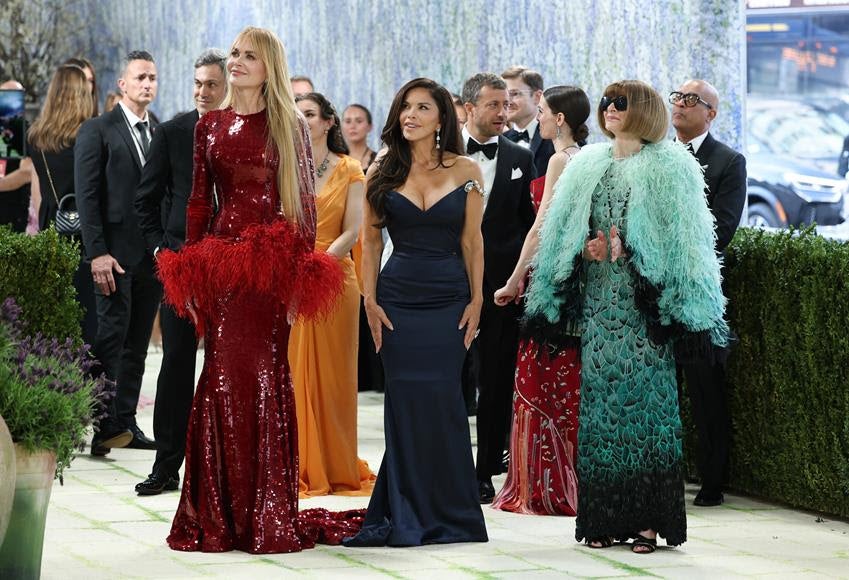
With Amazon founder Jeff Bezos (who skipped the red carpet) and Lauren Sánchez Bezos serving as honorary chairs and lead sponsors, donating $10 million, the “Tech Gala,” as it has been dubbed, became a symbol of wealth inequality. The association of fashion’s biggest night with Amazon’s sketchy labor practices and Bezos’ Trumpy political donations became a hot-button issue in recent weeks, prompting comparisons of the gala to “The Hunger Games,” counterprogramming by labor activists and Zohran Mamdani, and the arrest of an Amazon protester who briefly broke through the barricades on Monday night.
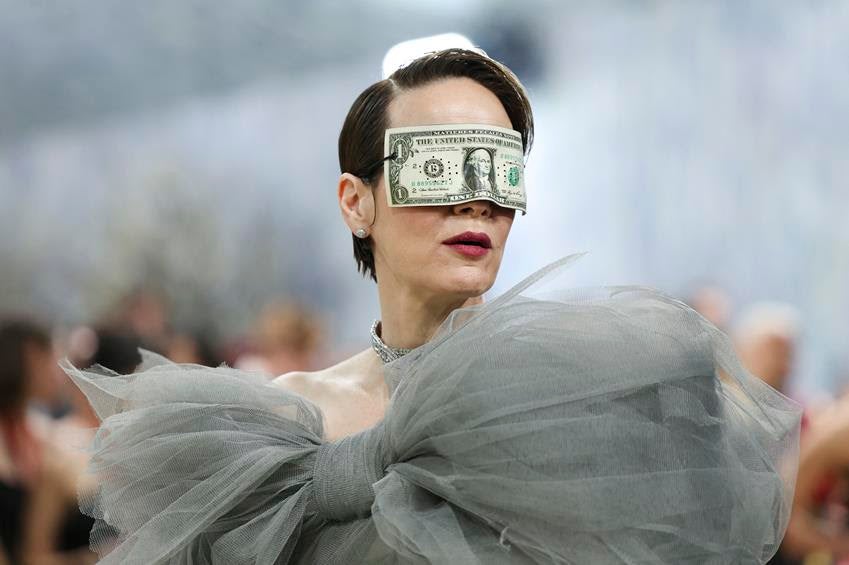
The most, and perhaps only, political fashion statement on the Met Gala red carpet, however, was Sarah Paulson’s fraying smoke-gray debutante gown, which she wore with a dollar-bill mask over her eyes, a literal comment on being blinded by money, designed by Matières Fécales, the avant-garde Paris fashion label that took aim at the One Percent in its Fall 2026 collection.
Now that dress, mind you, was from a haute couture collection, so it’s really an inside joke. Because who’s going to wear couture other than the One Percent?
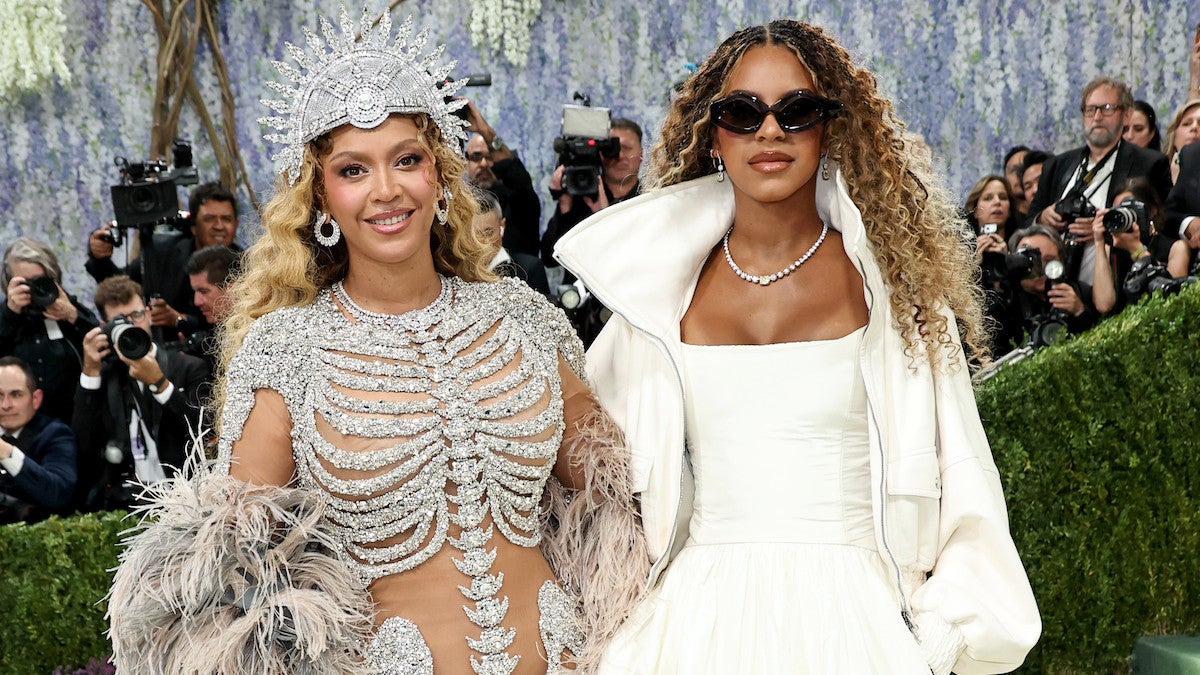
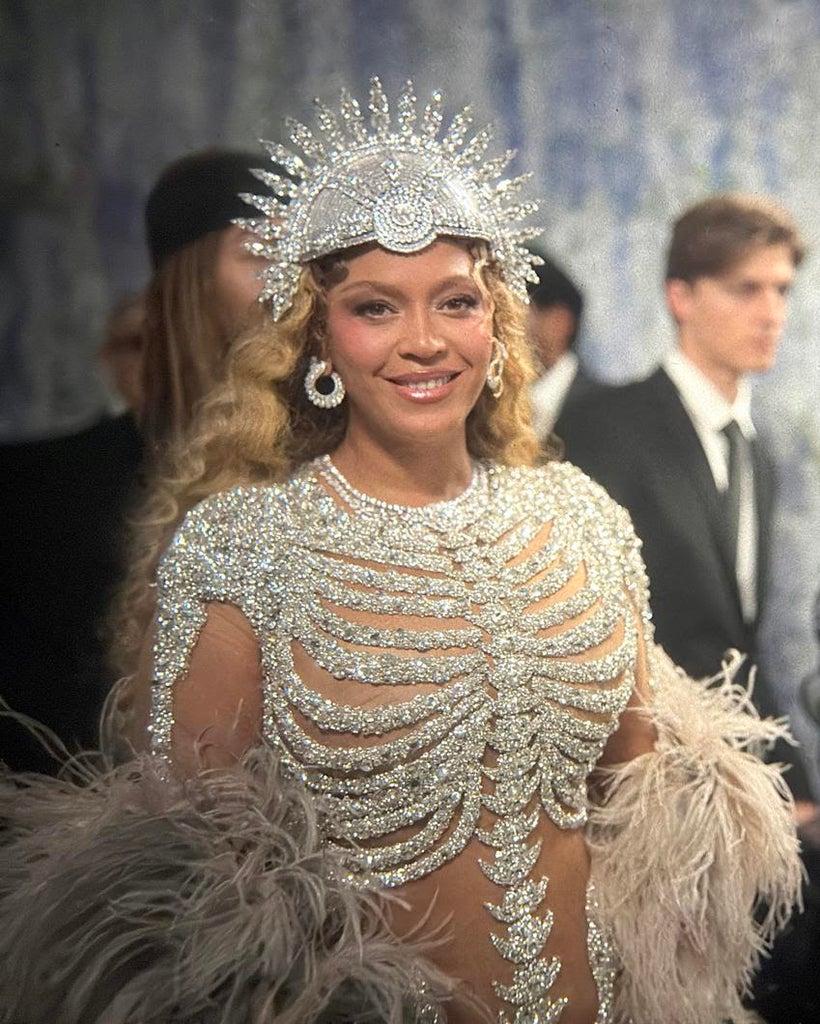
The night also brought an astounding display of wealth, from Lauren Sánchez Bezos’ 30-carat diamond engagement ring to the Queen of Kalahari, a $50 million Chopard diamond necklace worn by co-chair Beyoncé, who is herself a billionaire. The biggest mystery was how these women, and others, could have so much money and still look so mediocre.
But back to the controversy. Let’s not forget that the tension between art and the economic resources required from patrons and corporate sponsors for it to be made and seen has always existed, from the Renaissance-funding Medicis to the Gilded Age robber barons to the oligarchs of today. And corporate sponsors, which for the Met Gala included the Bezoses, Meta, OpenAI, Snap, Spotify, Instagram and Saint Laurent, are a necessary evil for the survival of media — and fashion — in 2026. One only has to watch “The Devil Wears Prada 2” to know that.
What was the Met supposed to do? Turn down their money? Not create a better gallery space for the country’s finest historical fashion collection? At least the tech titans finally stepped up and spent money on something enriching to humanity rather than tearing it apart.
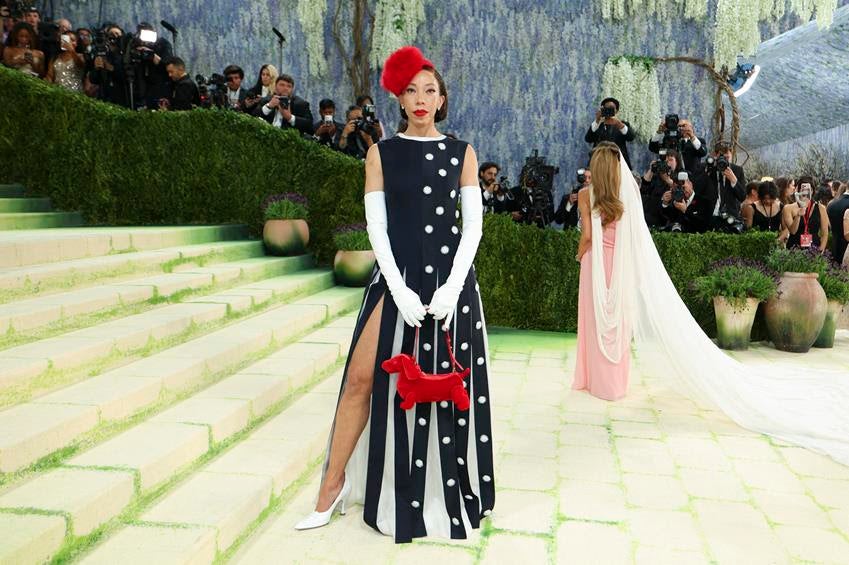
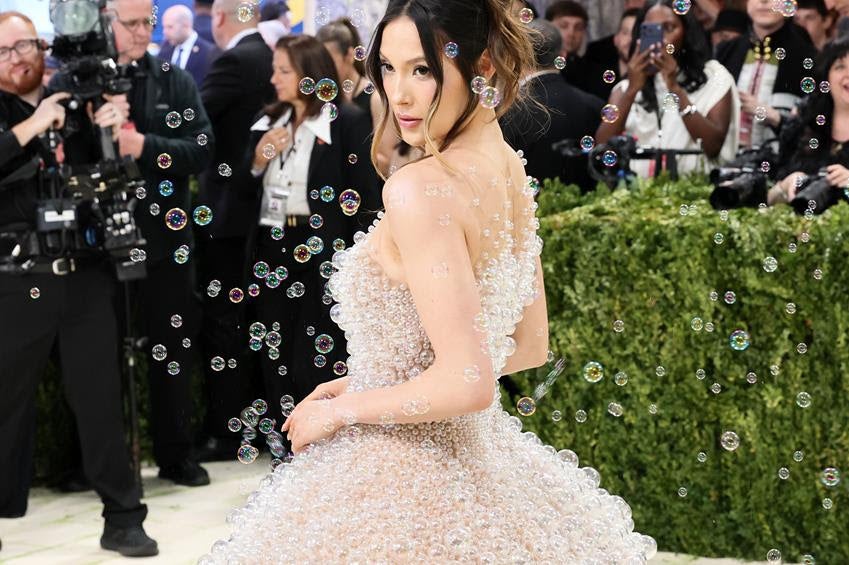
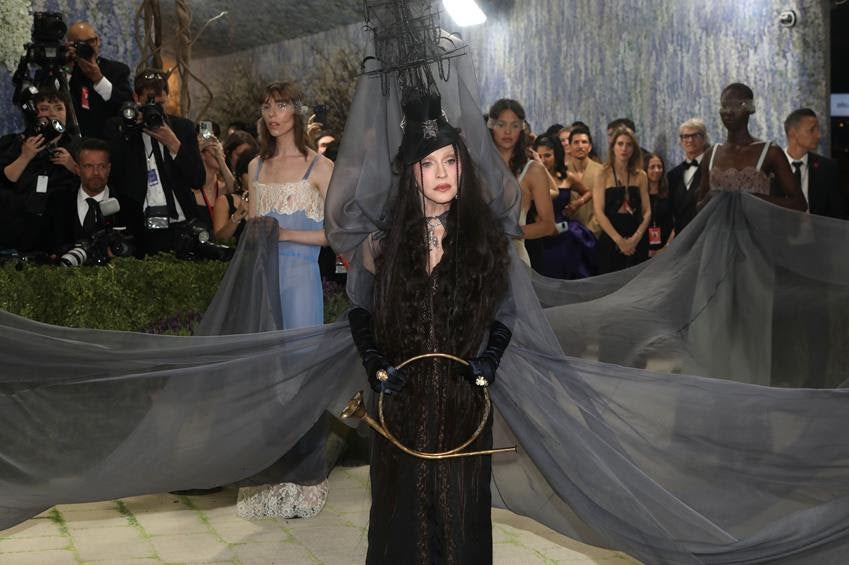
Although some stars stayed away, the event opening the new exhibition “Costume Art” raised a record $42 million for the museum’s Costume Institute. It attracted celebrities from every corner of culture interpreting the “Fashion Is Art” dress code, from Madonna in a Philip Treacy shipwreck headdress and ghostly Saint Laurent gown, with a retinue of helpers carrying her train referencing Leonora Carrington’s 1945 painting “The Temptation of St. Anthony,” to Olympic skier Eileen Gu in an Iris van Herpen dress performing performance art by blowing its own bubbles, to artist Amy Sherald in a striking polka-dot Thom Browne look inspired by the one in her own 2014 painting, “Miss Everything.”
It’s too bad the Vogue livestream and E! Entertainment television coverage were both so abysmal. (If the Met Gala is meant to be taken seriously, its live coverage should really be better.) Very few of the talking heads or celebrities seemed to have done enough homework to speak intelligently about their looks and inspirations.
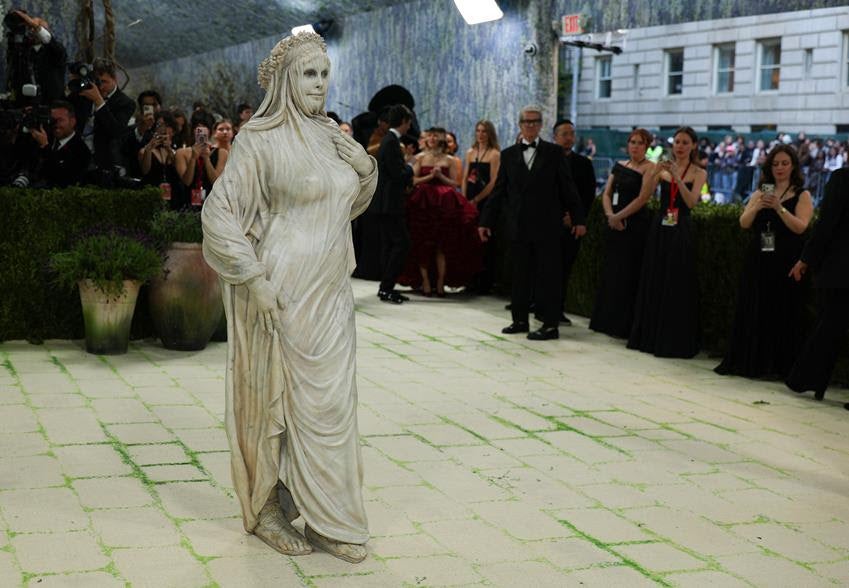
When it came to the dress code, interpretations were mixed. Most looks veered more fashion than costume, with a few exceptions. Heidi Klum’s kooky foam-and-fiberglass look, mimicking the Met’s marble statue “The Veiled Vestal” (1847) by Italian artist Raffaelle Monti, could just as easily have been worn at her annual Halloween party. However, kudos to her not only for doing her homework and being able to explain the look on the livestream, but also for actually wandering the Met itself looking for inspiration.
The dressed body in all shapes and sizes as the foundation of much of art history is one of the exhibition’s overriding themes. But on the red carpet, other than Bad Bunny sporting prosthetics to transform himself into “Old Bunny,” the dressed body was mostly surgically enhanced, smoothed, and lifted to ageless perfection. No wonder Mounjaro-maker Eli Lilly bought in as a Vogue livestream sponsor.
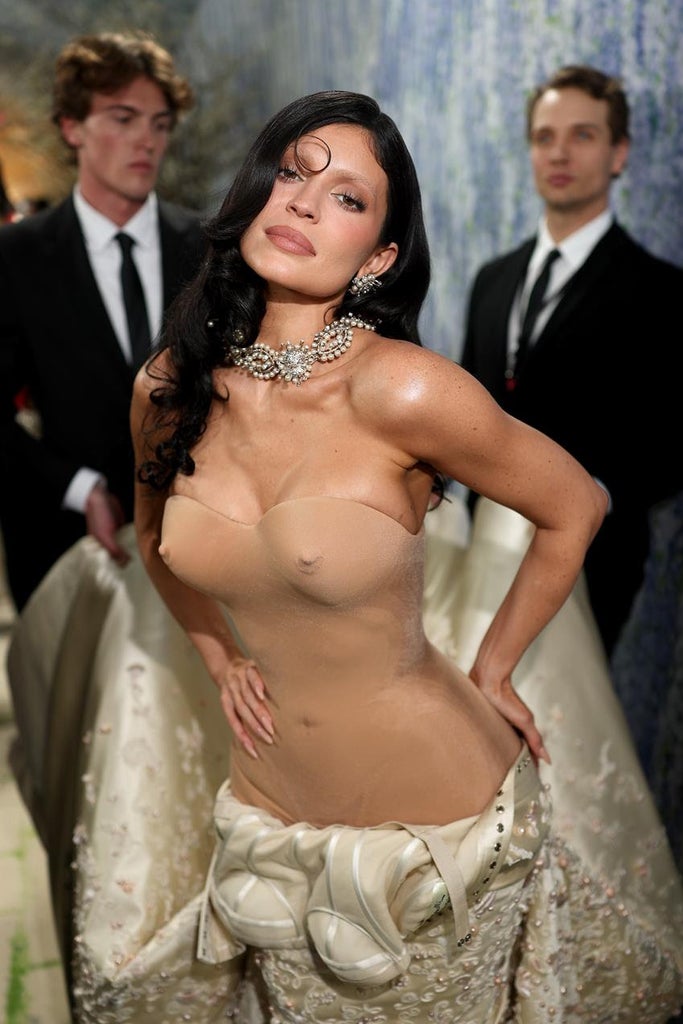

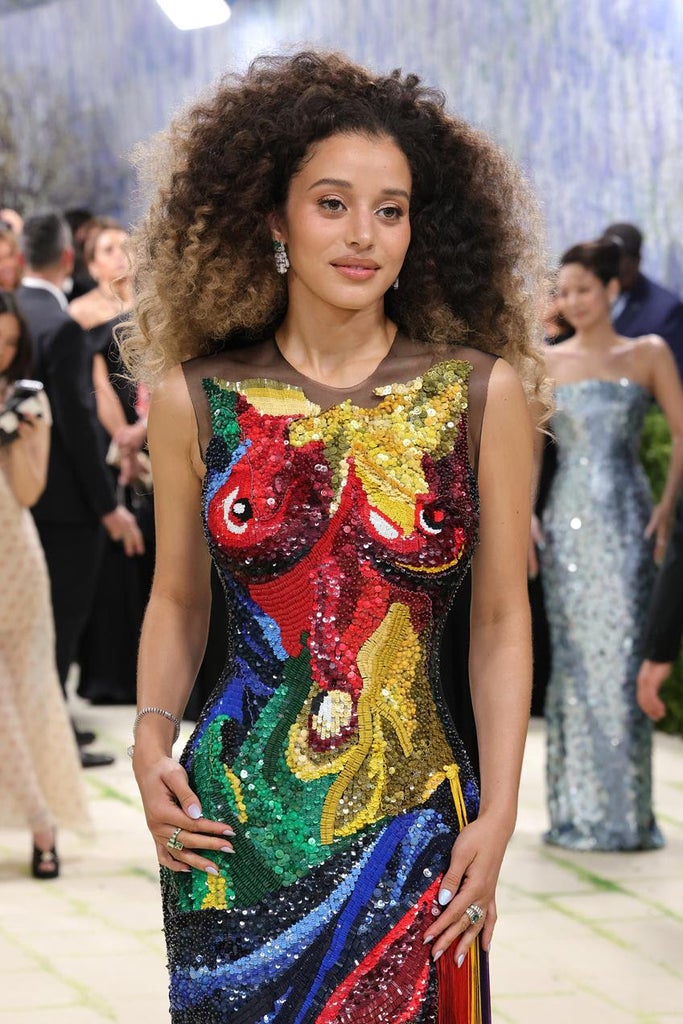
Designers, Artists and Body Mods
In addition to tech titans, fashion houses bought tables and dressed their famous guests, often with fine art and artists in mind. Here are some of my highlights.
The Insider Edge
Of all the designers, Thom Browne may have won the night. He is particularly well positioned to excel with Met Gala looks because he has an in: his partner is Costume Institute head curator Andrew Bolton. But his dramatic silhouettes, lavish embellishments, and sense of play worked especially well this year, including on Chase Infiniti’s spectacular embroidered trompe-l’œil dress inspired by the Greek statue “Venus de Milo.”
Fully embroidered using over 1.5 million stacked sequins, it had tiered silk fringes in more than 600 different colors, layered to mimic brushstrokes. Fashion as art, for sure. Thom Browne managed to dress his guests, Dwayne Johnson, Olivia Wilde, Finn Wolfhard, Marcello Hernández, Bill Skarsgård, Lindsey Vonn, Adut Akech, Skepta and KUN, with just as much thoughtfulness and attention to detail.
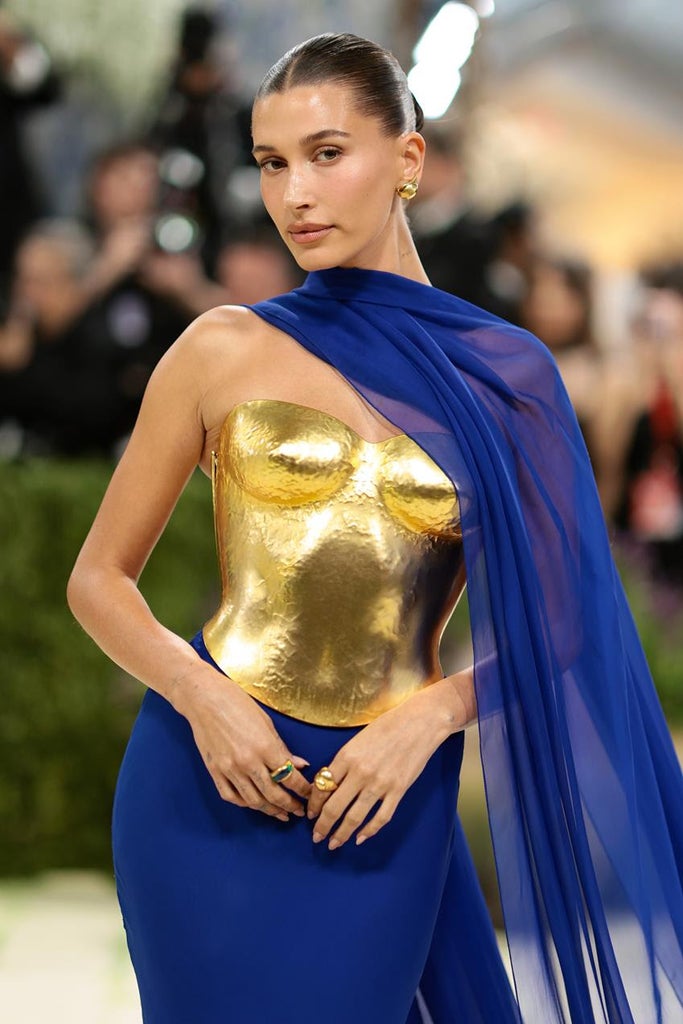
Self-Referential
Anthony Vaccarello, creative director of Saint Laurent, was a co-chair of the gala, and the brand’s decades-long history of collections paying homage to artists — Piet Mondrian, Pablo Picasso, Claude Lalanne, Henri Matisse and others — made it a natural choice for dressing guests.
One of the best was Hailey Bieber, who also did her homework, citing metalworker Lalanne, who inspired her 24-karat gold corset, and Saint Laurent’s affinity for blue as references in her strong look.
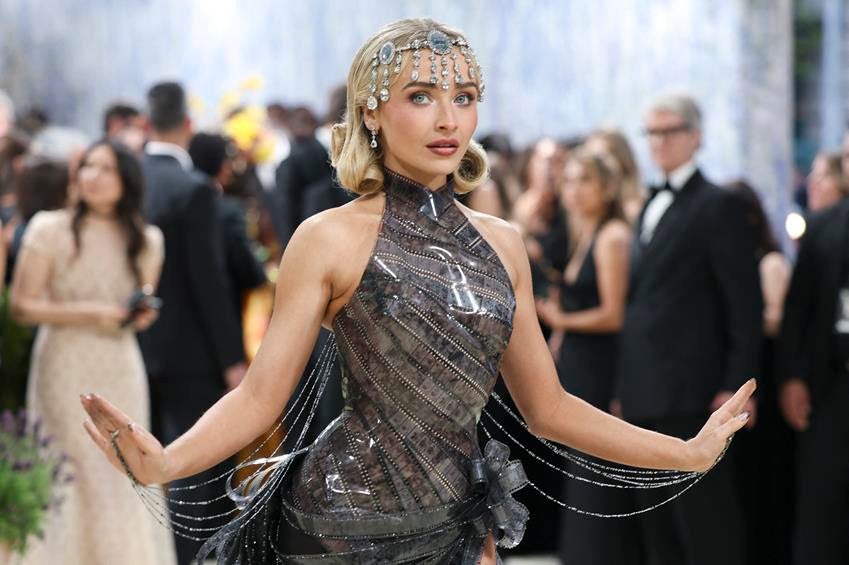
Classic Studies
Dior leaned into the classics to gorgeous effect, with Naomi Watts a veritable still life in a black satin dress with an outward-projecting skirt embroidered with fabric flowers, and Sabrina Carpenter wrapped in “Sabrina” film strips in a delightful nod to her name and the movie.
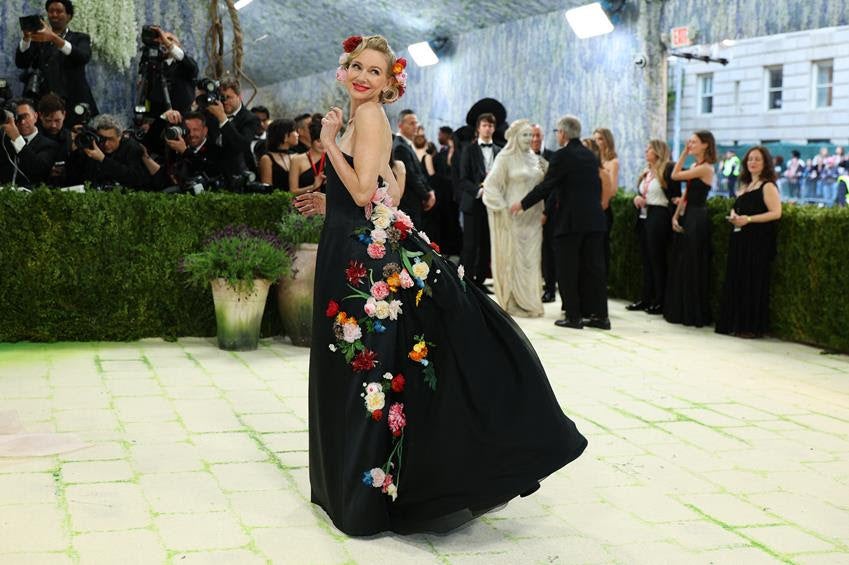
For his first Met carpet, Matthieu Blazy’s natural artistry and love of craft made Chanel shine, from Nicole Kidman’s glossy red, feathery gown to Gracie Abrams’ gilded, collage-inspired look based on Gustav Klimt’s work.
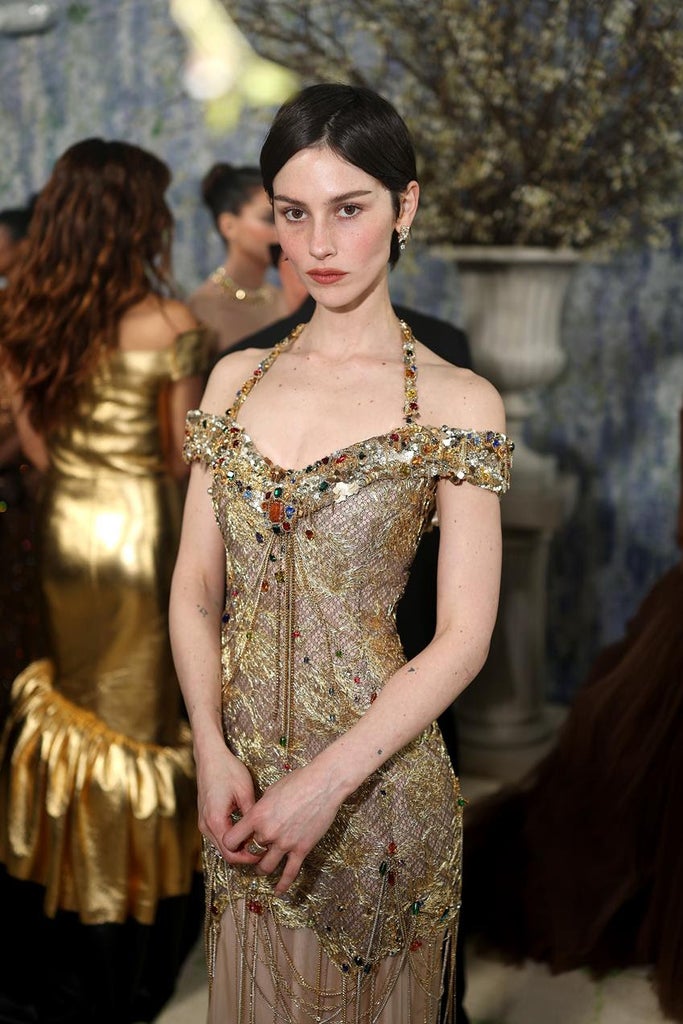
Multidisciplinary Art Deco-era artist Erté and his flair for theatricality were apropos inspirations for Alessandro Michele at Valentino, who dressed Tyla like an exquisite peacock, drawing on one of his favorite motifs.
Goddess Pose
Using one of the most enduring motifs in art history as his spark, Zac Posen transformed Kendall Jenner into the goddess Nike, inspired by the famed Hellenistic sculpture “Winged Victory of Samothrace,” wearing a twisted jersey gown by Gap Studio.
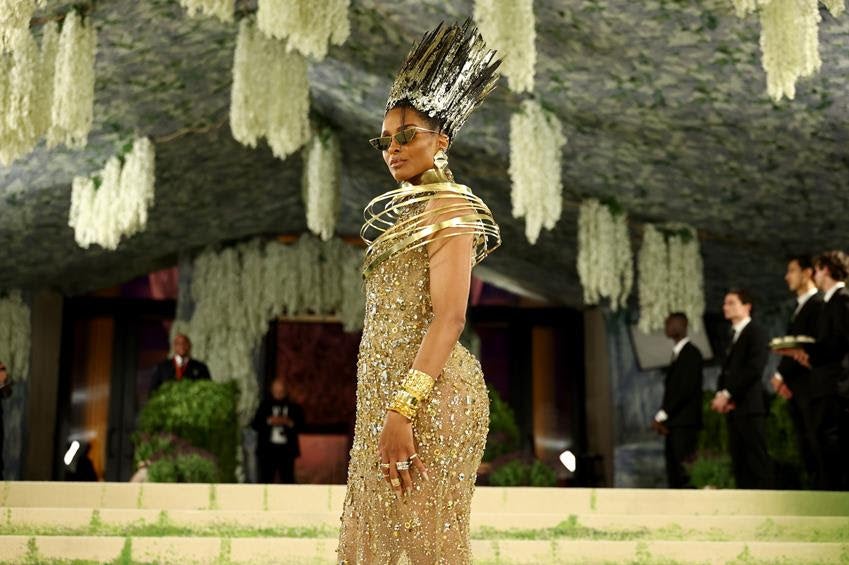
Ciara was rock ’n’ roll regal as a modern-day Queen Nefertiti in a gold gown by Greek designer Celia Kritharioti, with a dramatic neckpiece and crown. The Egyptian queen is depicted in several artifacts at the Metropolitan Museum of Art.
Body as Canvas
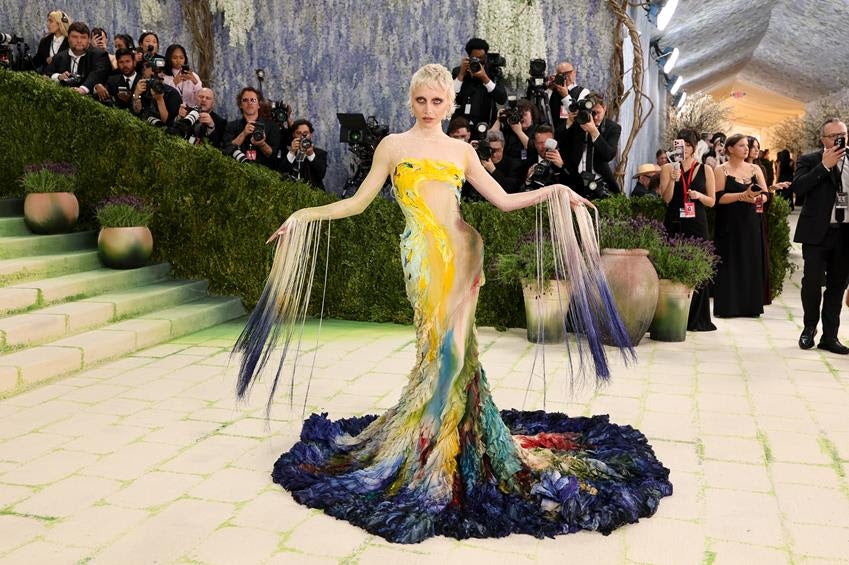
Emma Chamberlain collaborated with Miguel Castro Freitas, creative director of Mugler, and artist Anna Deller-Yee to hand-paint her dress, one of the best of the night, which deserves a place in a museum exhibition itself.
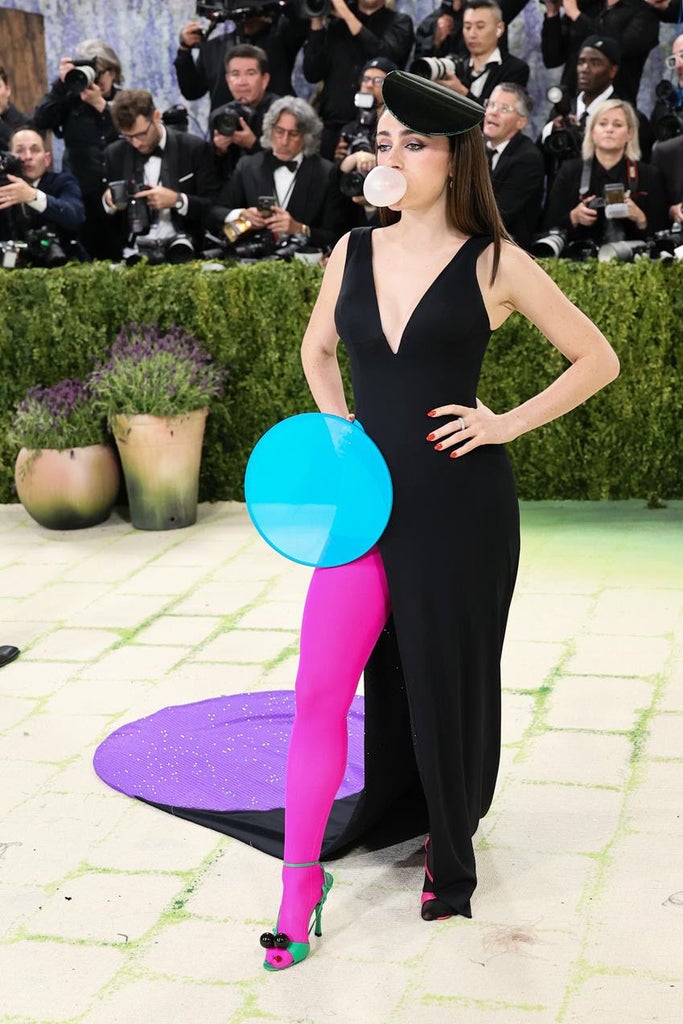
I also loved Rachel Sennott in a custom Marc Jacobs look inspired by the geometric, color-blocked and dot-covered artworks of conceptual artist John Baldessari. The comedian added a bit of performance to her red carpet turn, blowing a bubble with her gum to add another dot to the red carpet canvas.
Kim Kardashian tapped British pop artist Allen Jones for her orange fiberglass body plate. Jones and Kardashian seem like a good match; he is known for his fetishistic representations of the female form, including a 1969 furniture series that sparked debate about female objectification. Enough said.
The Male Form
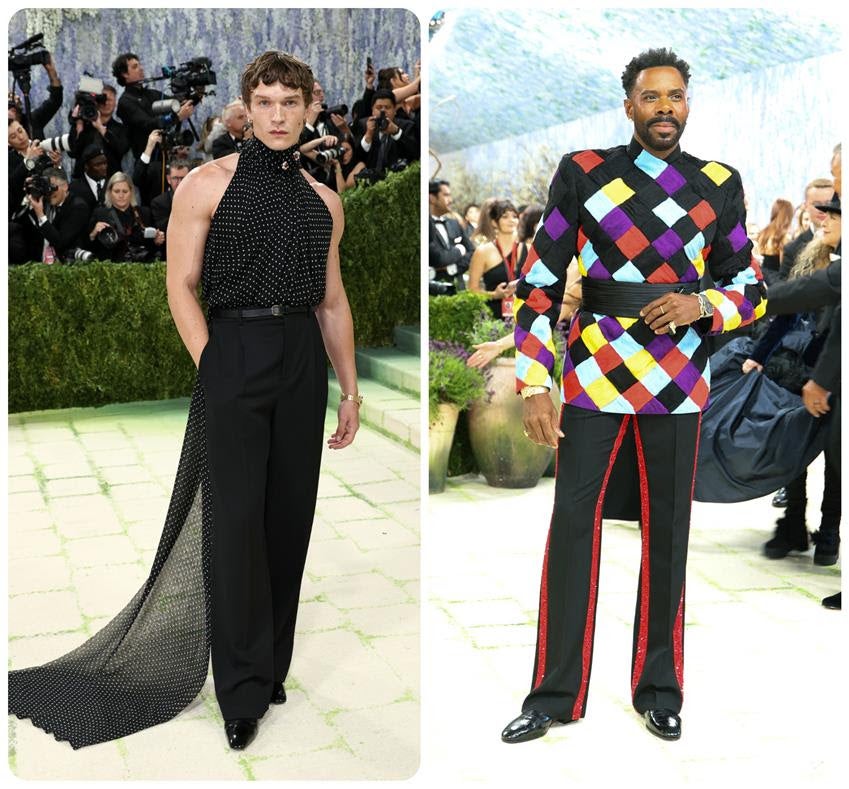
Although the men’s looks weren’t the strongest, Connor Storrie was Adonis-like in a Saint Laurent halter top with a train and a stunner of a Tiffany & Co. brooch, while Colman Domingo’s harlequin look was equal parts Valentino and Picasso.
Breakout Performance
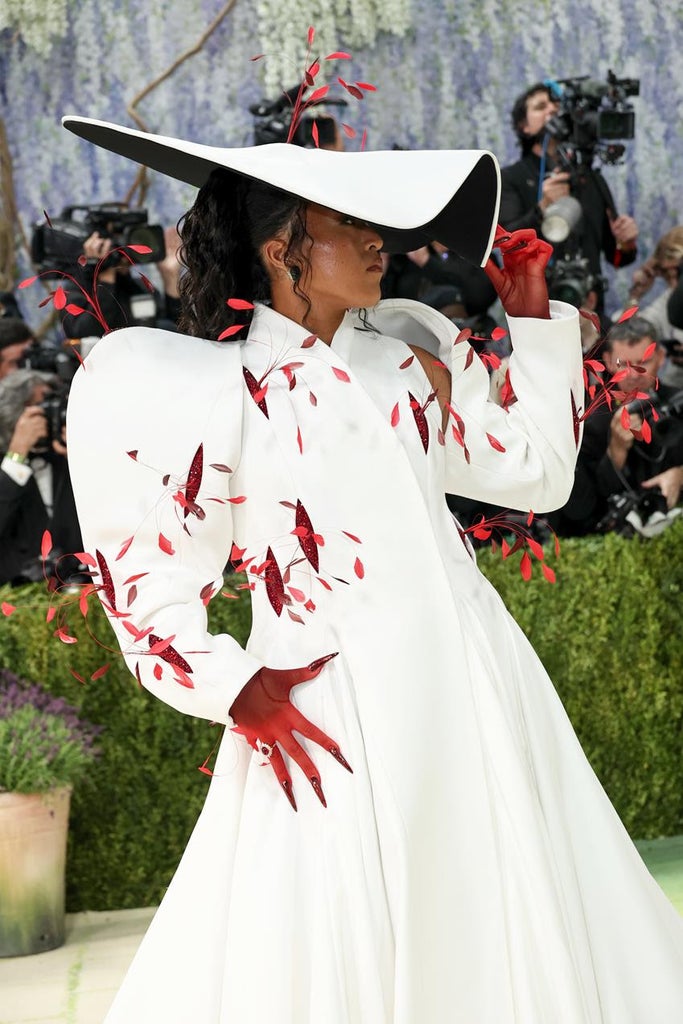
London-based couturier Robert Wun may not have been a household name before, but after this Met Gala, he should be on his way. The independent designer created eight jaw-dropping avant-garde looks, including Naomi Osaka’s dramatic coat dress sliced open with red feathers evoking exsanguination. The piece featured 659,000 stitches of embroidery and thousands of faceted Swarovski crystals in four shades of red, totaling over 3,280 hours of handwork, “illustrating the human anatomy, needle by needle, crystal by crystal.”

Jewels Unboxed
At the 2026 Met Gala, jewelry was as theatrical as everything else, with stars using it to amplify their looks, sometimes as part of their clothing.
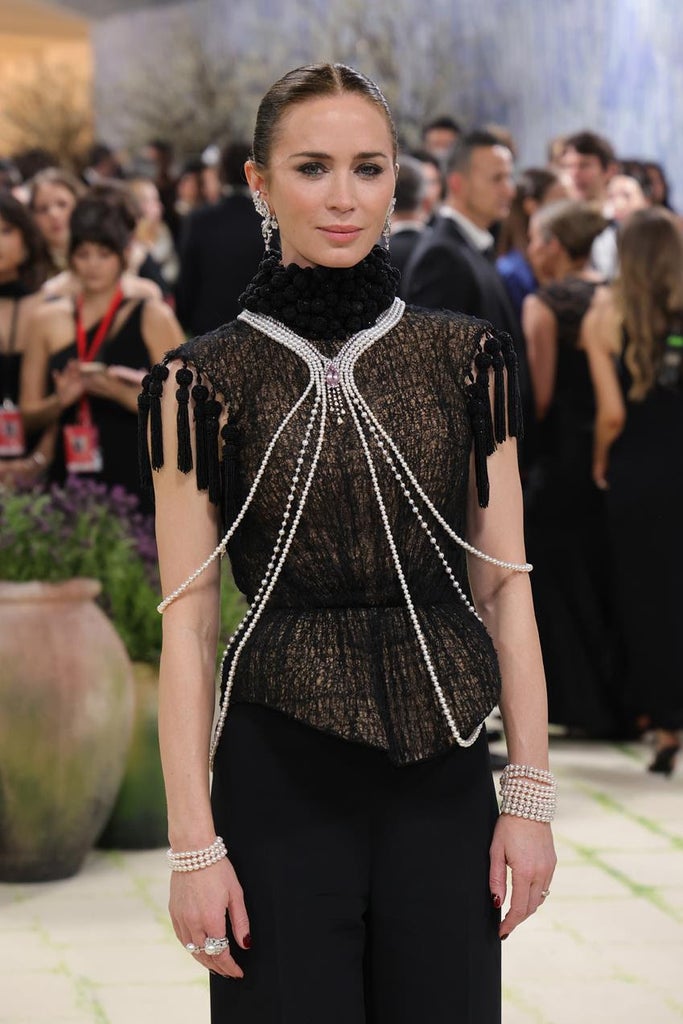
Emily Blunt accented her black Ashi Studio gown with ropes of Mikimoto pearls, while Sabrina Carpenter attached Chopard diamonds to her Dior dress, worn with a glittering headpiece with “Sabrina” written on its center stone.
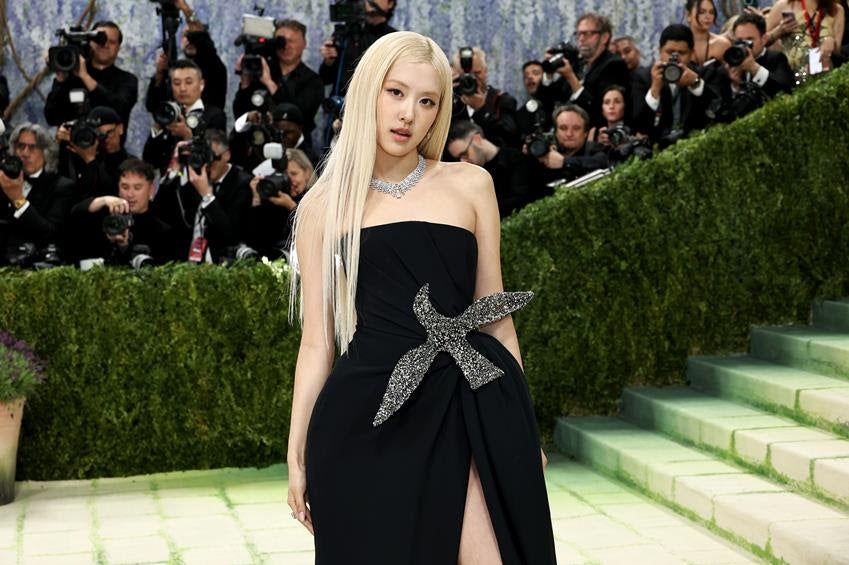
Following the awards season trend, statement necklaces continued to dominate, with Rosé’s winged Tiffany & Co. choker echoing the bird motif on her Saint Laurent dress, and Jisoo accessorizing her garden-inspired Dior look with a Cartier choker from 1905 sewn onto pink velvet.
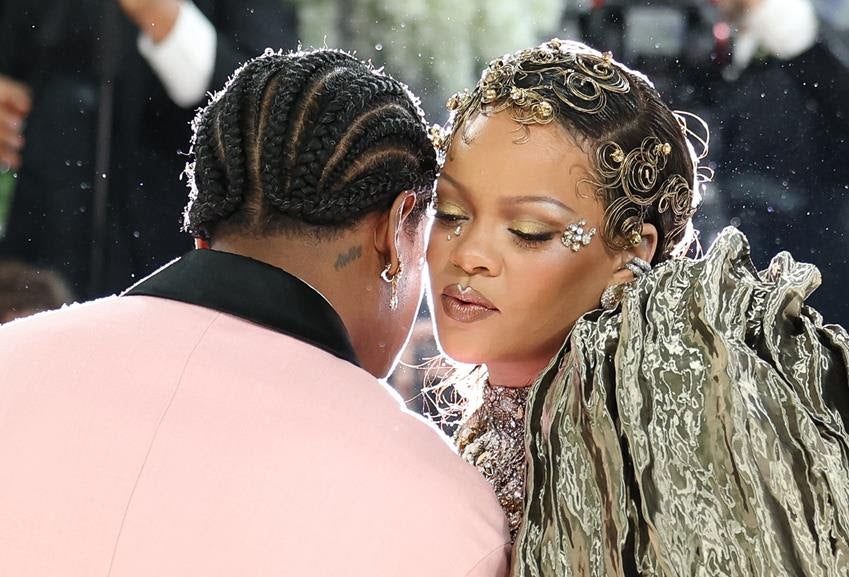
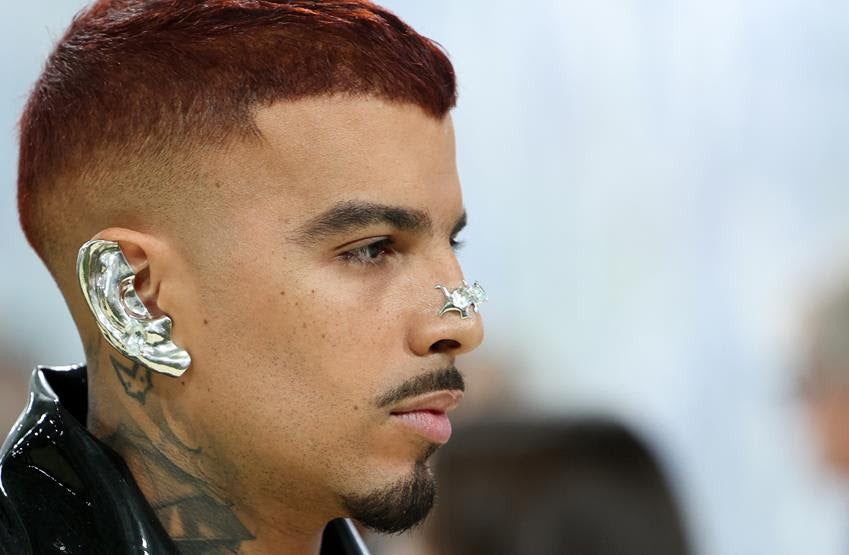
Others made avant-garde statements. Accenting her whirling metal Margiela couture gown with copious diamonds from Briony Raymond, Dyne and Fred Leighton, Rihanna and hairstylist Yusef Williams also tasked jeweler Jennifer Behr with creating silver hair coils for a crown. Puerto Rican singer Rauw Alejandro embraced the face jewelry trend with a silver ear cover and nose clip by Yaaqee Studio.

A Fragrance With Musical Notes
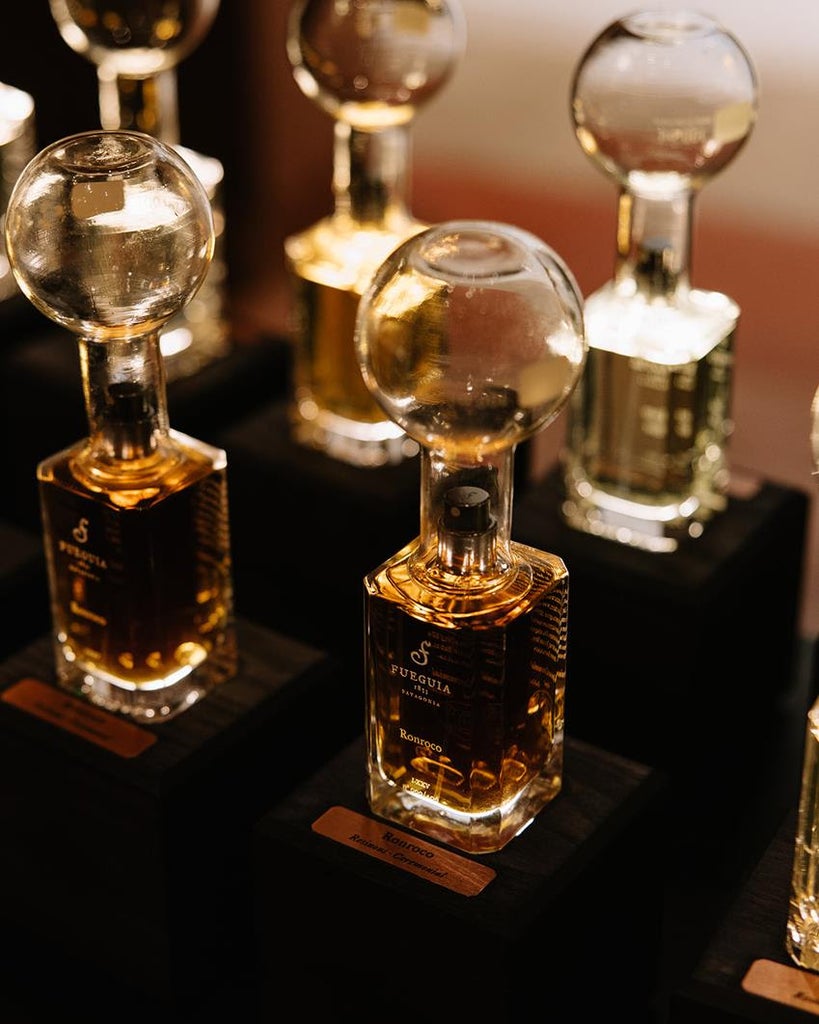
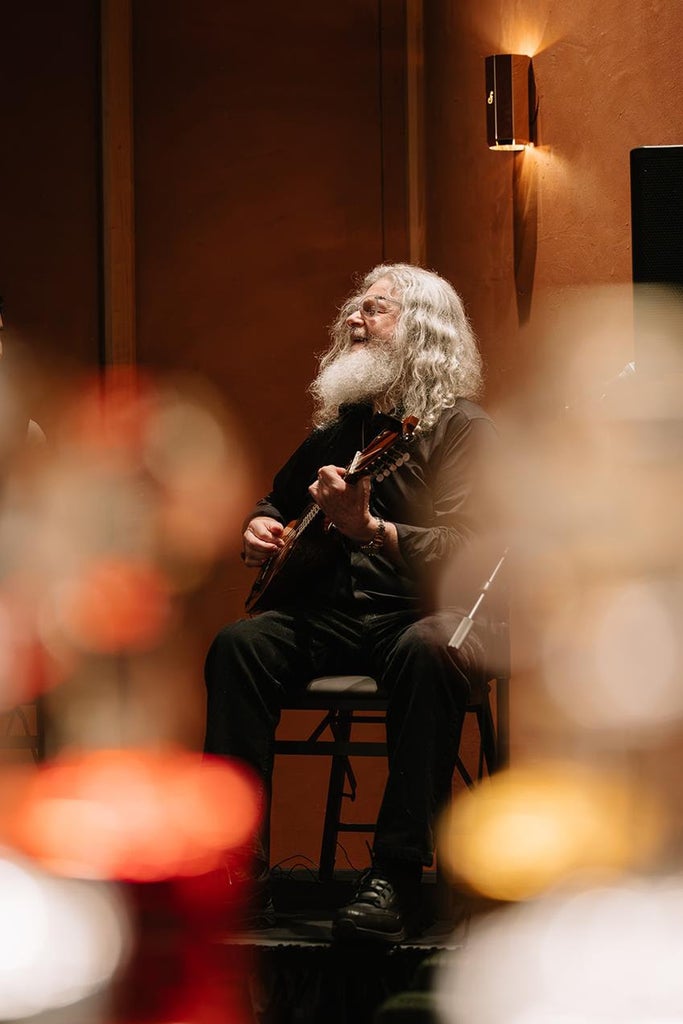
Argentinian luxury fragrance house Fueguia 1833 marked the opening of its new South Coast Plaza boutique this week with a performance by Oscar-winning composer Gustavo Santaolalla and the launch of Ronroco, a fragrance inspired by the traditional 10-string Andean instrument that is a signature element of his music.
Santaolalla, an Andean folk music preservationist, Hollywood composer and pivotal figure in L.A.’s Latin rock music scene, approached Fueguia founder Julian Bedel about collaborating, and the resulting scent translates the ronroco’s warm woods and resonant character into an olfactory composition built around copal, Oud Chaco and Salvia del Monte.
“The cedar and spruce embody the warmth of its wooden body, while the resins connect the earthly and divine, echoing the sacred vibrations of each note,” said Gustavo Santaolalla, who won Academy Awards for Best Original Score for “Brokeback Mountain” and “Babel” and composed the score for HBO’s “The Last of Us.”
After studying art and music, Bedel launched his fragrance brand in Buenos Aires in 2010, developing small-batch scents with rare botanicals and rooting the fragrances in South American culture. (He worked with Uruguayan-American fashion designer Gabriela Hearst to develop her fragrances.)
When Santaolalla approached him, Bedel was already working on a project analyzing and replicating the scent of famed Stradivarius violins, which will culminate in a $30,000 fragrance launching later this year. “There’s a scientific element to the smell of instruments. Besides being beautifully built, they carry a certain mojo. The smell triggers something in your brain that makes you play better. That’s why there’s this passion for vintage instruments,” explained Bedel, who plays guitar himself.
He applied the same science to distill the essence of the ronroco, creating a creamy, resinous wood perfume with aromatic herbs.
Fueguia releases about four to five fragrances a year and has 16 stores worldwide, with another Southern California location in the works on Melrose Place in L.A.
Fueguia 1833, 3333 Bristol St Suite 1603, Costa Mesa.

Forwarded this newsletter?
Subscribe here to get WrapStyle directly every week!
Have a news story for our readers? Please email booth.moore@thewrap.com
Interested in partnership opportunities? Please email Alex.vonBargen@thewrap.com