
The nominated composers in the Best Original Score category have for the most part been here before: Ludwig Göransson (“Sinners”) has three nominations and two wins; Jonny Greenwood (“One Battle After Another”) has three noms, two for Paul Thomas Anderson movies and one for Jane Campion’s “The Power of the Dog”; Jerskin Fendrix (“Bugonia”) has two, both for Yorgos Lanthimos films. Max Richter (“Hamnet”) only got his first Oscar nom this year, but he happens to be one of the most significant and successful classical composers of modern times.
And then there’s the fifth nominee, “Frankenstein”’s Alexandre Desplat, who laps the field with 12 Oscar nominations in the past 20 years. That’s more than any other composer in that period, with the iconic John Williams coming in second with nine noms. (Of course, if you look at his entire career, Williams has 49, the most of any composer ever.)
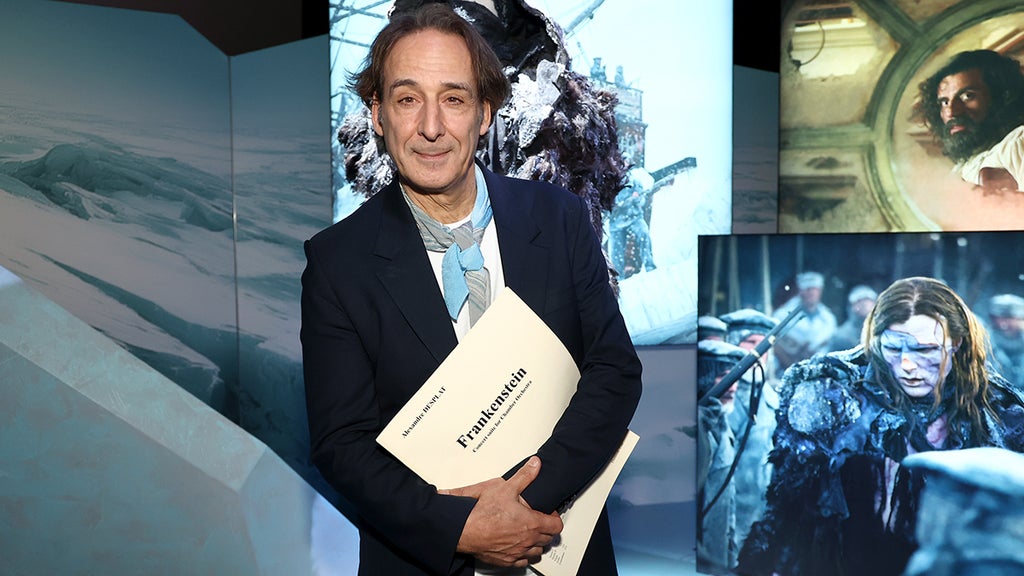
The three movies you’ve done with Guillermo del Toro — “The Shape of Water,” “Pinocchio” and now “Frankenstein”— definitely have themes in common.
To me, this is the third act of a triptych. It’s the creature-monster triptych. And I think this movie is the summit of his work. Guillermo’s world is very strong visually, but there’s always a deep sense of poetry that appears even and the wonderful romantic era of the early 19th century.

So how did you find the musical vocabulary for the film?
The thing that helped is that I wrote quite a few pieces before the shooting. Lullabies, waltzes. There were some waltzes that were played on the set and became source and then score in the film. There were lullabies that I thought we might need; we didn’t use them, but they helped me find the process.
It needed very fragile moments and then large, extremely lyrical melodies with a full orchestra. That was always the difficult task. How do you go from tiny, intimate, fragile melodies to huge things and then come back to a more gentle thing?
I believe that a good score should bring another dimension to the film, bring out the invisible and not just be a layer of wallpaper. At the very beginning, I wanted to see if electronica would work, but it just couldn’t match. We needed the grain of real instruments.
In terms of orchestration, early on I was looking for the creature’s inner voice. Of course, when you start, you want to write for the heavy, dangerous monster that he looks like. But when you start digging into the film, you understand that that’s just the appearance. Inside, he’s like an innocent child trying to find love and receive love. So I just thought about the violin, which is so beautiful, so fragile, so delicate. It could be his sound because it would immediately convey his fragility to the audience, since you see his extreme strength on screen already.

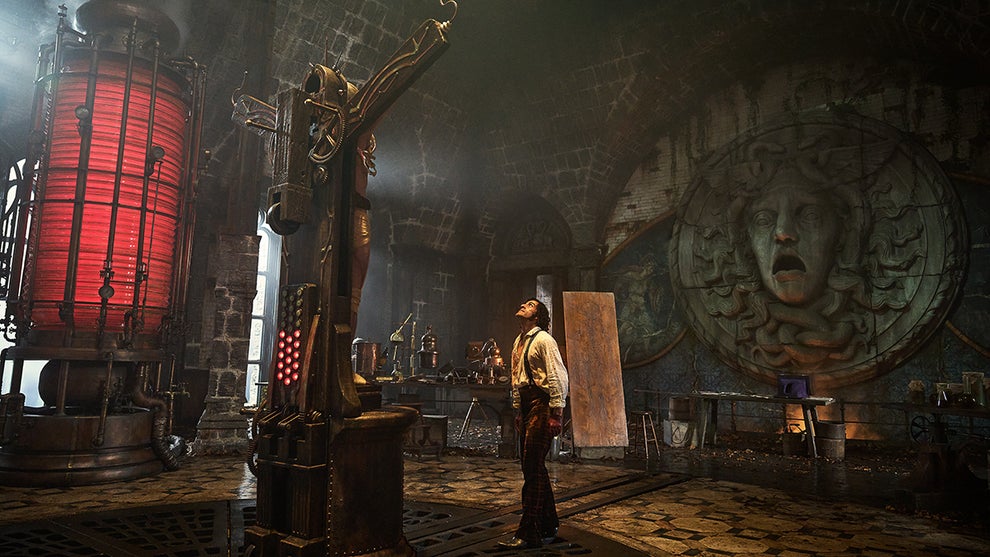
Even in the ultimate huge moment, the laboratory scene where Victor Frankenstein brings his creature to life, you start with a waltz.
Yeah. The waltz is connected to the waltz that I wrote for the dance scenes that came before. And it is a dance. He’s dancing with body parts. It’s fun to watch instead of being horrific. If I did something horrific, it would be unwatchable. (Laughs) Too hard, too dark, too gory.
So by switching the point of view to Victor Frankenstein, the artist who dreamed that moment where he can finally do his masterpiece, you can capture his exhilarating excitement trance as he tries to make the most beautiful thing. He wants to be better than anyone before him, which I think all artists want to do. Everyone wants to be Michelangelo or Stravinsky or John Williams.
Were there specific moments that you found to be major challenges?
It’s always, how do I start and how do I end? It’s like an opera: the overture and the finale. You need to have a good overture and good finale, and in between, who cares? (Laughs) I’m kidding. But yeah, how do you draw the attention of the audience with sound and texture and energy and melody? That’s the first challenge.
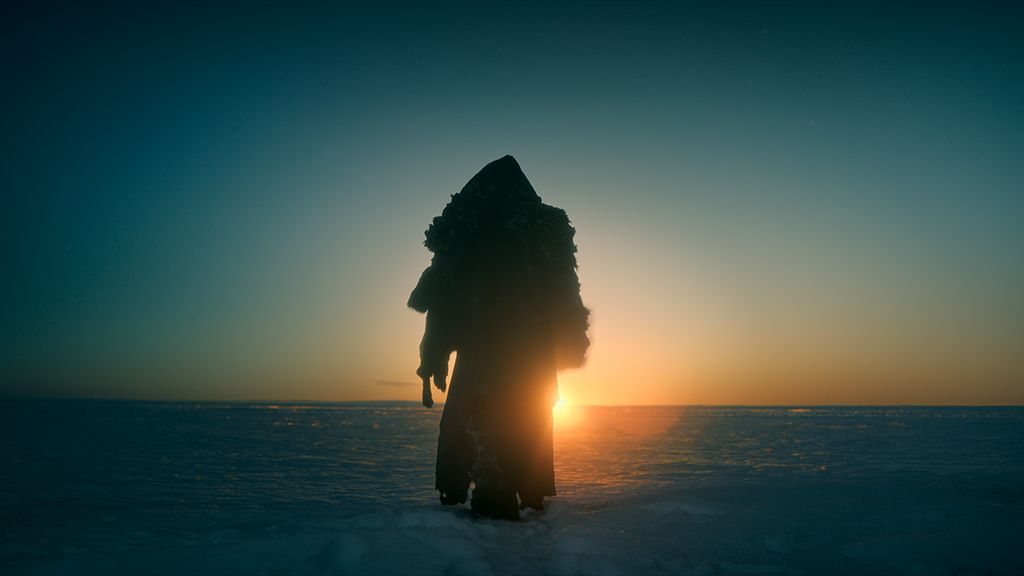
And then how do you close the chapter at the end of the film with a lot of sadness but hope at the same time? There’s this father-and-son moment where Victor Frankenstein dies and the creature is going to follow his own path now, we don’t know where. And that was a difficult one because the scenery is so beautiful, like a David Lean movie. It’s huge. There’s this incredible boat on the ice at sunset, and the music has to be as strong as what you see. That doesn’t mean it has to be loud, but it has to be lush and beautiful.

I feel that Guillermo can be wildly emotional and extravagant, and you’re more restrained. Do you play off each other?
Yeah. It’s almost a game between us. There are moments when I’m trying to be very delicate, very French and refined. And he says to me, “No, no, no! More Mexican! More Mexican!” And so I get rid of what I’ve done and I make it extravagant and baroque.
But there are other moments that we share intimately, when I have found a motif or a melody that I think is right for the film and I play it for Guillermo. He always says to me, “If I cry, it’s right.” (Laughs) We know that when he cries, we’re in the right spot.
This story first appeared in the Down to the Wire issue of TheWrap’s awards magazine, which will be published on Feb. 19, 2026.
