
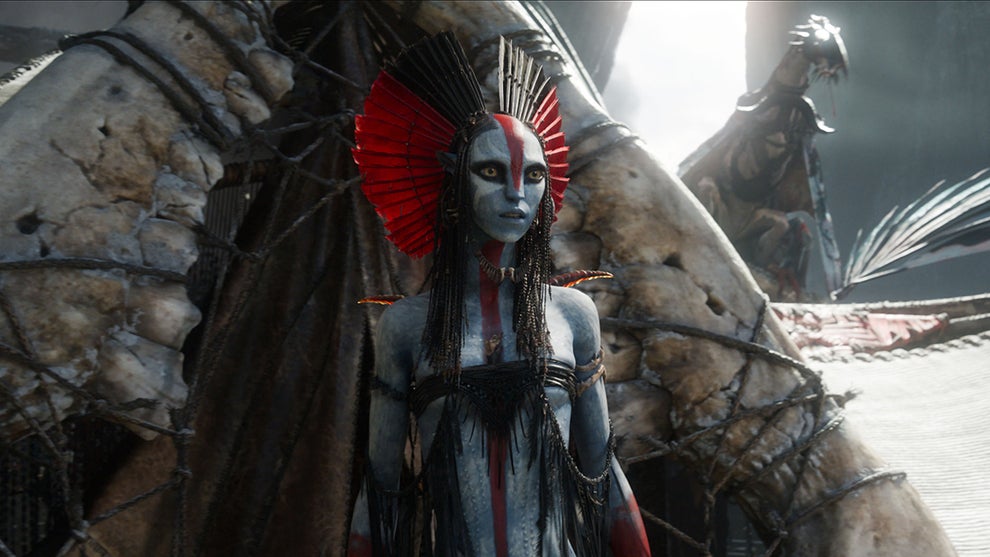
Costume designer Deborah Scott’s nomination for James Cameron’s “Avatar: Fire and Ash” is quietly historic. For the first time ever, a film almost wholly realized through high-tech performance-capture technology received a nomination for its costumes. This is not something that Scott, who won an Oscar for an earlier Cameron collaboration, “Titanic,” takes lightly.
“I have to give kudos to my Academy branch for acknowledging the fact that this is outside the norm and to embrace that; it’s not only for me,” Scott said. “I’m hugely grateful. I think it shows an incredible perspective on where we may be going — how costume design can be in a lot of different formats, not just the traditional way we think of it. We’re making all the costumes, but they don’t appear in that format when you see the film. They’re completely in a virtual-reality version of the same costume.”
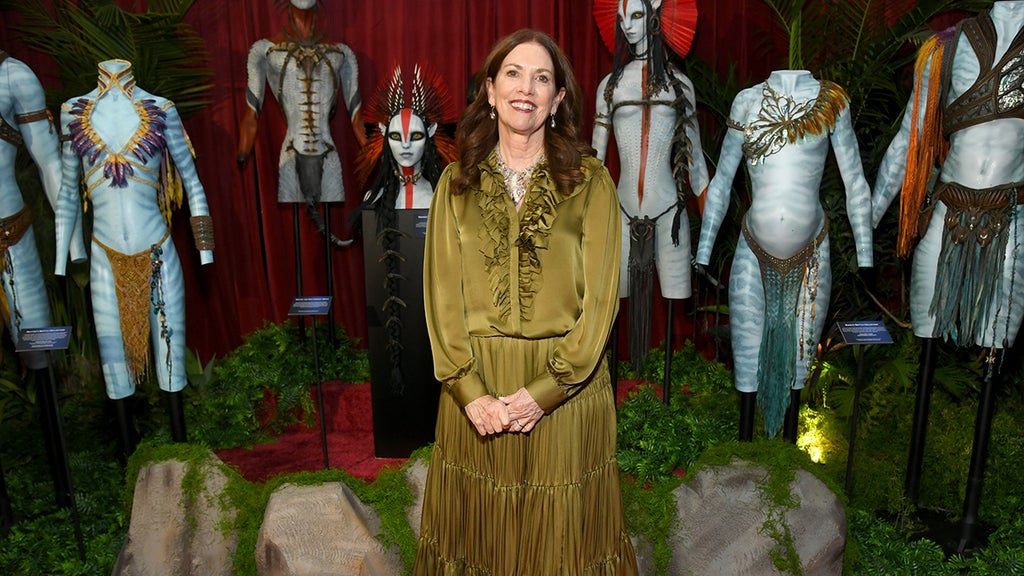
Touring a “Fire and Ash” exhibit inside a soundstage on the Walt Disney Studios lot in Burbank, Scott pointed out the different costumes that she and her team designed for the movie. Those costumes were then created by the Wētā Workshop and used by the digital artists at Wētā FX.

Sometimes the process would slide back and forth, with Scott giving feedback and making changes to a design that the digital artists had already produced.
It’s a hard process to wrap your head around. “I think more people know now,” Scott said. “People are getting there and I think that’s important, because we all need to embrace the technology of the future. James Cameron is just doing it now, because that’s who he is. He’s a genius. And he’s never not going to do something that’s bold and immersive.” (Since opening at Christmas, “Fire and Ash” has made $1.38 billion worldwide. It didn’t get the Best Picture nomination that the first two films in the “Avatar” franchise received, but beyond costumes, it was also nominated in the Best Visual Effects category.)
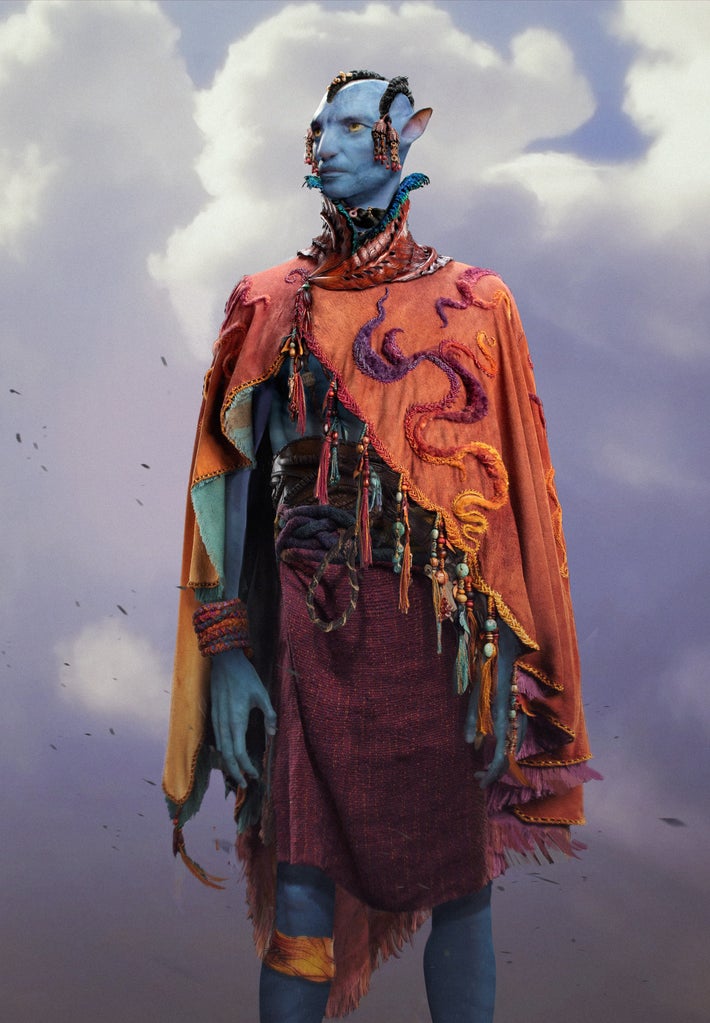
When asked if she had a favorite garment from ‘Fire and Ash,’ Scott said, “It’s like your favorite child. I’d have to say I changed my mind every day.” But from the exhibit, she did single out two battle costumes — one worn by the villainous Varang (Oona Chaplin) and one worn by heroine Neytiri (Zoe Saldaña).
“There’s a couple of things that the Varang piece is,” she said of the costume, one of the last things she designed. “It’s the journey of her character and (was inspired by) watching Oona Chaplin’s performance. The designs were really based around her motion and I think it really elevates her character. It was the full expression.” (Scott noted that another barrier needs to come down, as a performance-capture role has yet to earn a nomination in one of the acting categories.)
The design of Neytiri’s battle outfit was informed by the performances that Scott had been watching Saldaña deliver over the course of three years. “I think on the team that was left at that point, everybody had a hand in it,” she said. “Everybody, along the way, put their hands on that piece. For me, that’s significant, looking at it as a team effort.” Scott and her crew started the design early but returned to it later on in production.
“It was a hard-earned costume, because I searched for that design,” she said. “The other ones weren’t working—and the reason they weren’t working is because I hadn’t found the narrative yet. It’s like, What is she supposed to say? What’s her stance? What’s her motivation? Jim and I worked really hard together just to find that right moment—the expression we wanted to say. But the fact that it’s a very collaborative piece is super important to me.”
This story first appeared in the Down to the Wire issue of TheWrap’s awards magazine, which will be published on Feb. 19, 2026.
