
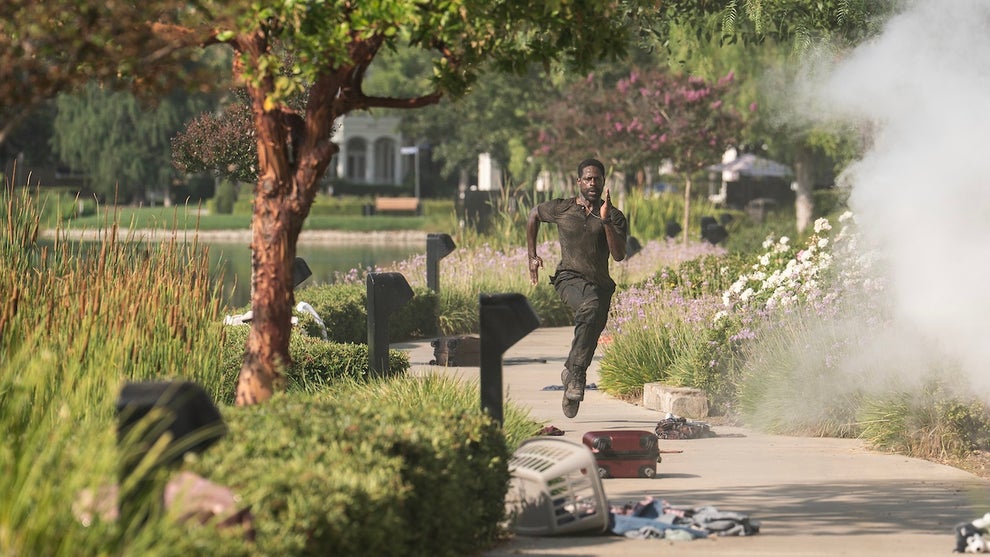
The visual-effects artists of Hulu’s “Paradise” spent the first season creating the vast underground town that gives the show its name, making sure the city looked bucolic under its fake sky and plotting out a maze of catwalks above it and subterranean levels below it.
In Season 2, they blew up the whole damn thing.
“It was kind of a release,” VFX supervisor John Weckworth said, laughing. “It was a catharsis to watch it go.”
The destruction of Paradise comes near the end of “Exodus,” the final episode of the second season. It’s the culmination of a season that begins with the first extended look outside the bunker that housed select remnants of humanity after an ecological disaster.

More precisely, it begins with an episode set at Graceland, which was re-created by the VFX team for a storyline featuring Shailene Woodley as a former tour guide sheltering in Elvis’ old digs. “With Graceland, we had to wrap our head around which pieces were going to be production design, which pieces were going to be CG and how we were going to present this story,” he said. “It was a lot to figure out. And then once they’re on the back balcony, what does it look like? We had to move the geography around to get everything to line up properly. You have all your cast on a balcony that they’ve built, but then it’s just a panoramic blue screen.”
“And we needed it to work. We couldn’t have people going, ‘Oh, is that supposed to be Graceland? Is it on a set?’ I think in the end, people were pretty convinced.”
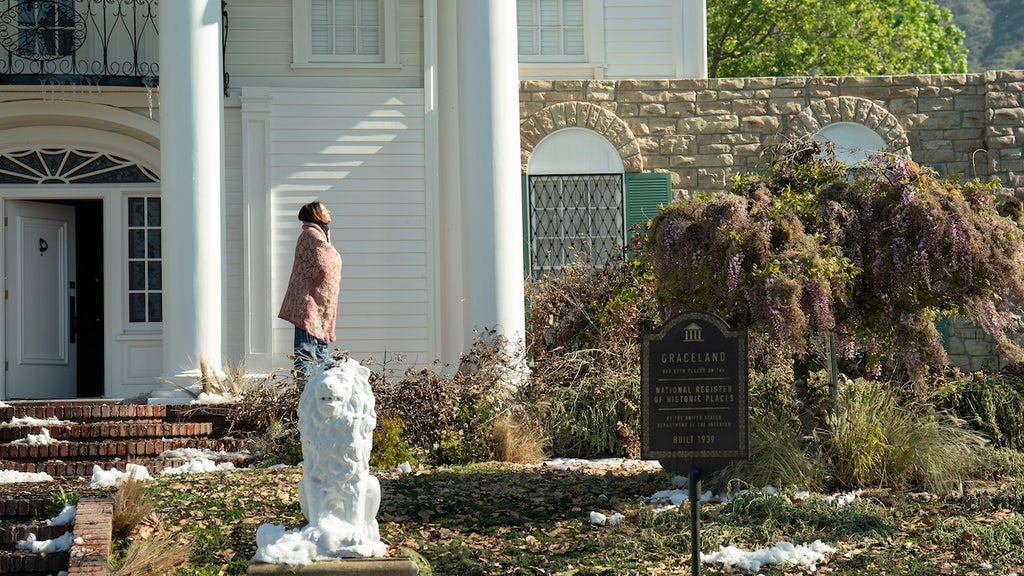
But Graceland was only the beginning. “Once we went outside, we had to do stuff inside the bunker and outside the bunker,” Weckworth said. “It just kept getting bigger.”
While much of the season follows former Secret Service agent Xavier Collins (Sterling K. Brown) as he looks for his wife in a ravaged and lawless landscape, the action also continues back in the bunker. There, yet another U.S. president is murdered (James Marsden’s Cal Bradford in the first season, Matt Malloy’s Henry Baines in the second) and Samantha “Sinatra” Redmond (Julianne Nicholson) tries to preserve her carefully constructed utopia, from the paneling that mimics a sunny sky to the laboratories and detention centers hidden underground in a labyrinthine layout that the VFX artists created.
“It was kind of a running joke,” Weckworth said. “I’m always saying, ‘Hey, this should really be over there.’ And I always get the response ‘Nobody knows where any of this stuff is except you.’”
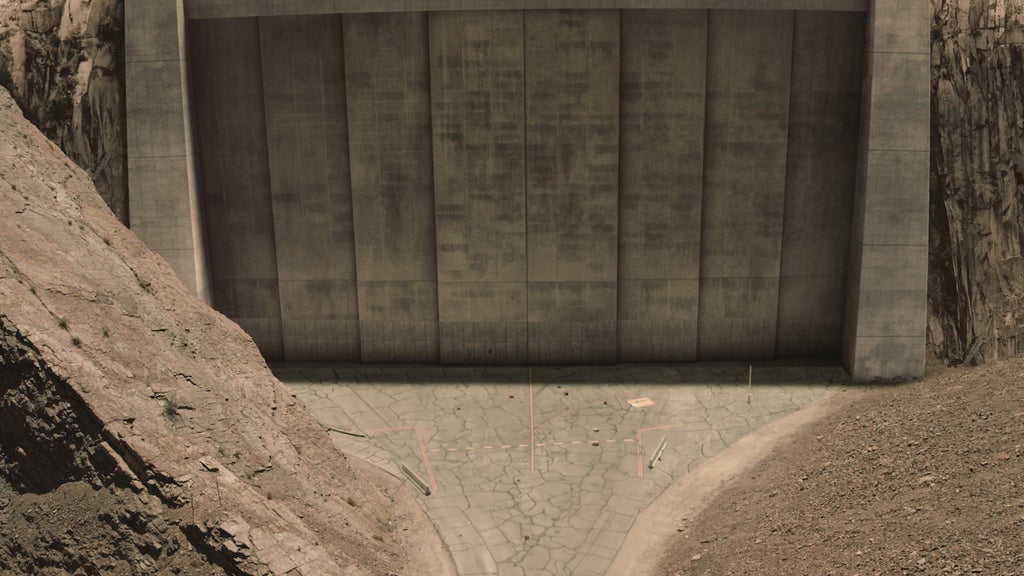
Effects work included everything from creating the enormous doors that lead into the bunker to replacing mounds of dirt with CG flower gardens. “We do a lot of stuff on the periphery, building the world a little bit here, a little bit there,” he said. Even when the cooling systems explode and nuclear reactors begin to melt down, some of the warning signs are underplayed: “We have one scene where Sinatra is walking down the main street and cascading panels of the sky are coming down. It’s more elegant, as opposed to when we go to the outside, where all the people are watching their home explode.”

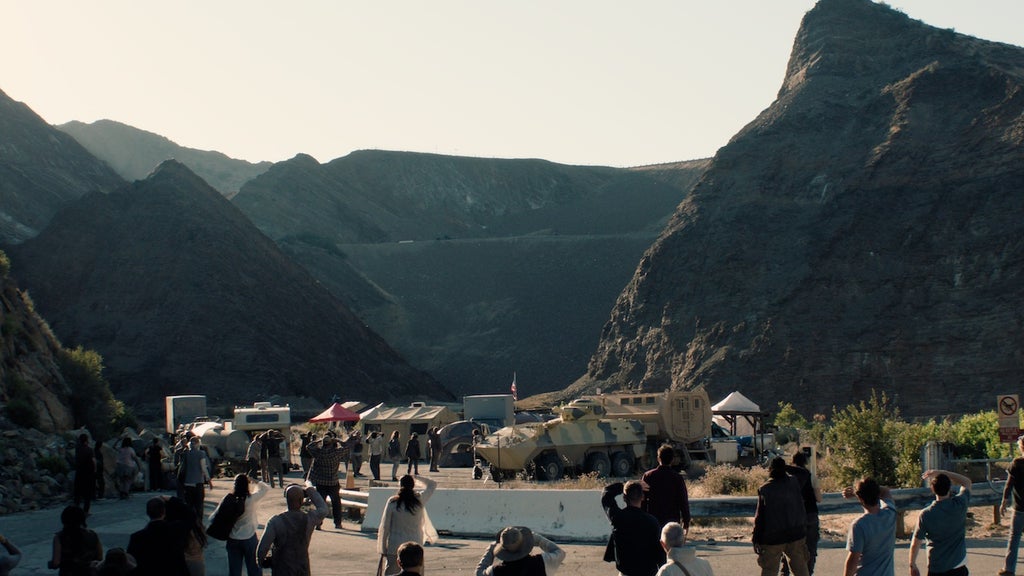
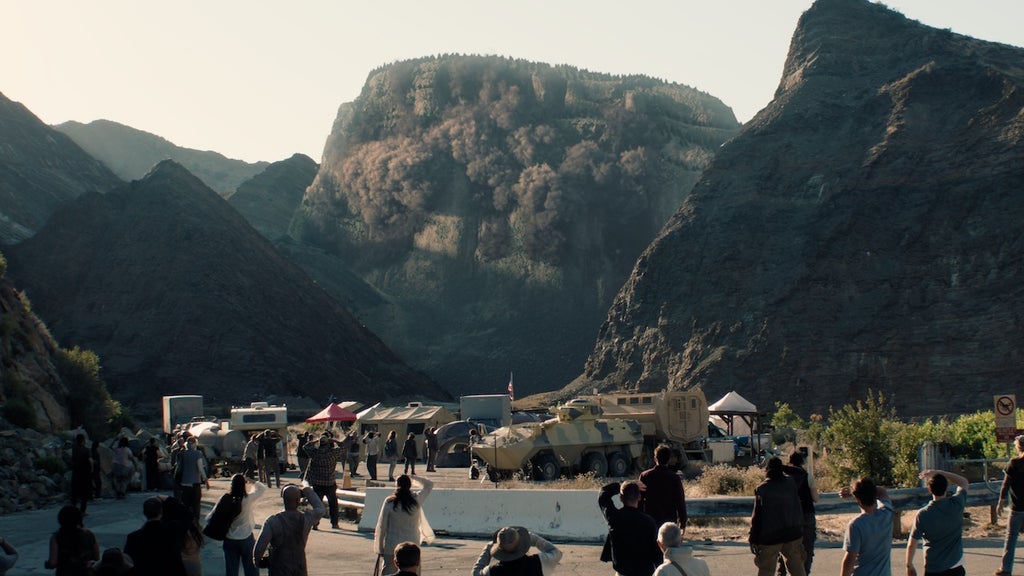
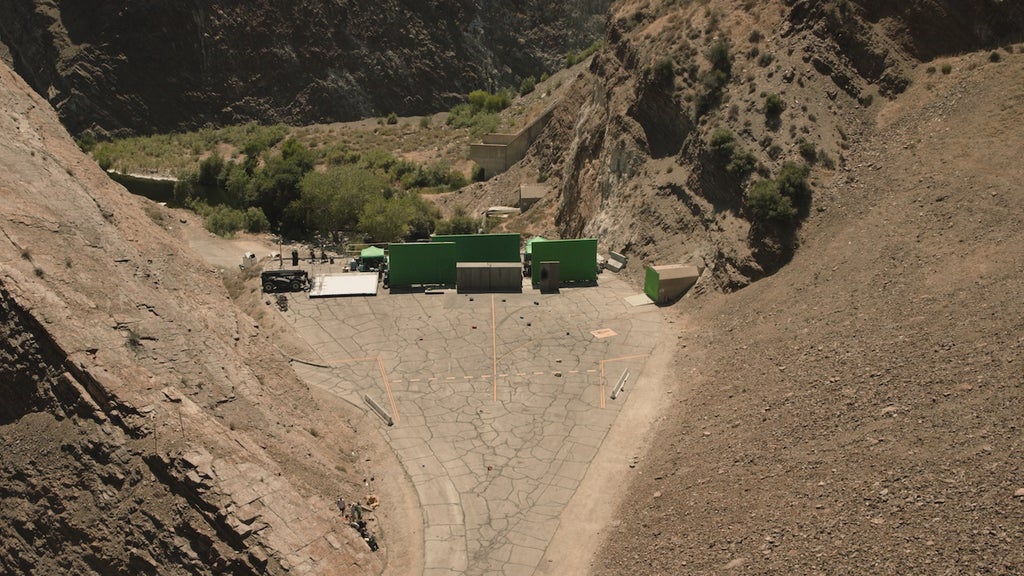
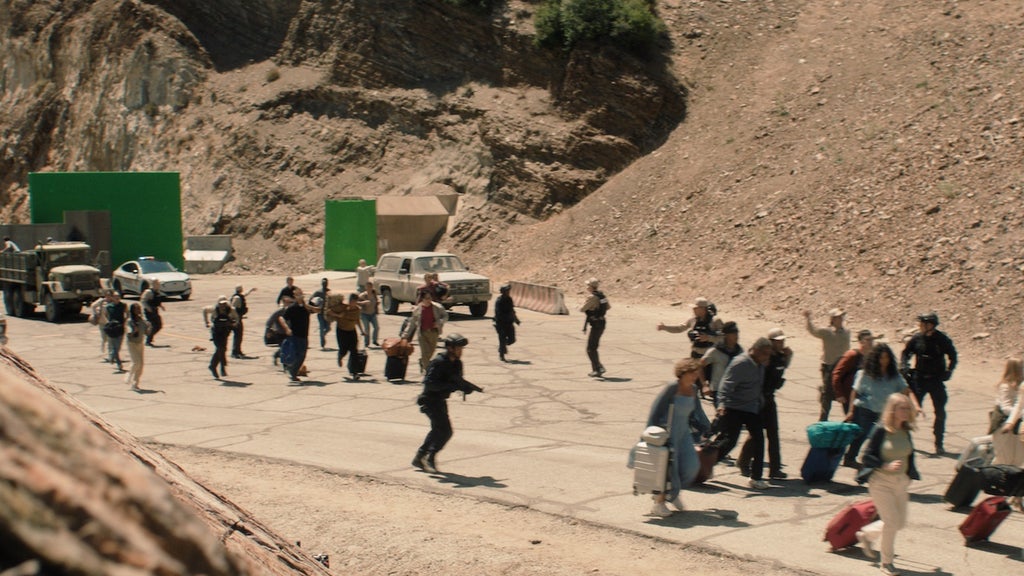
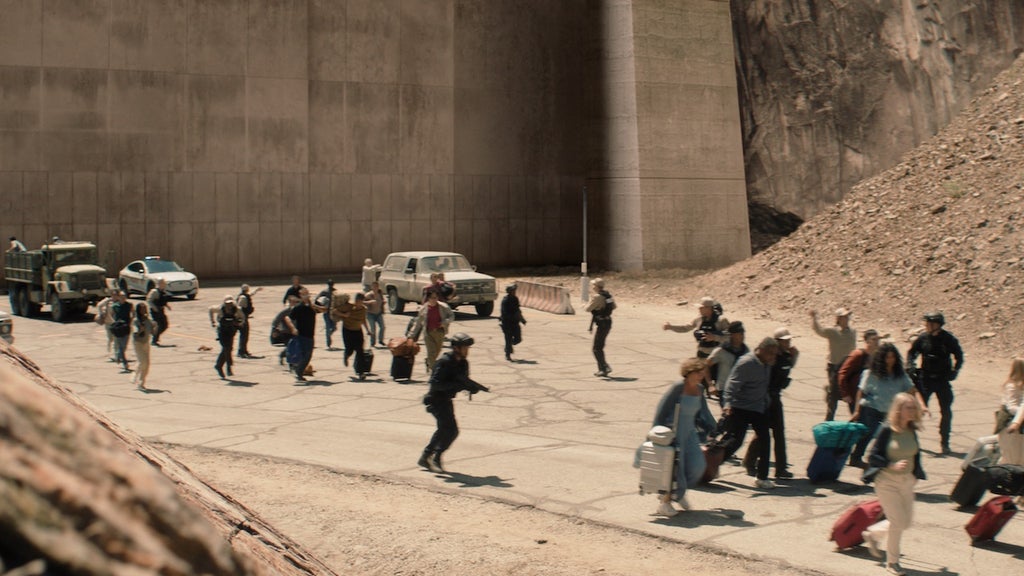
The scene outside the bunker doors is the biggest set piece in “Exodus,” the episode for which the VFX team was nominated. The outdoor scenes were shot in California near the Pyramid Lake dam, surrounded by mountains that were slightly augmented in post-production. But the larger mountain that housed the bunker was entirely a visual-effects construction.
“Our matte painter did, like, 12 different versions of the mountain,” he said. “We presented it (to the producers) and said, ‘Which one do you want to blow up?’”
A model was built and rigged to explode, using what Weckworth described as “maximum detonation.” The focus, though, was not to make a giant boom but rather to show the destruction from the point of view of various characters.
“You’ve got to tell the story of all these people that are being evicted from the mountain,” he said. “We were really crafting the visual effects to fit the character moments. It always comes back to the drama of the people.”
Before and after: the “Paradise” mountain
Before and after: the bunker doors
Before and after: fleeing destruction
A version of this story first appeared in the Down to the Wire: Drama issue of TheWrap’s awards magazine. Read more from the issue here.