
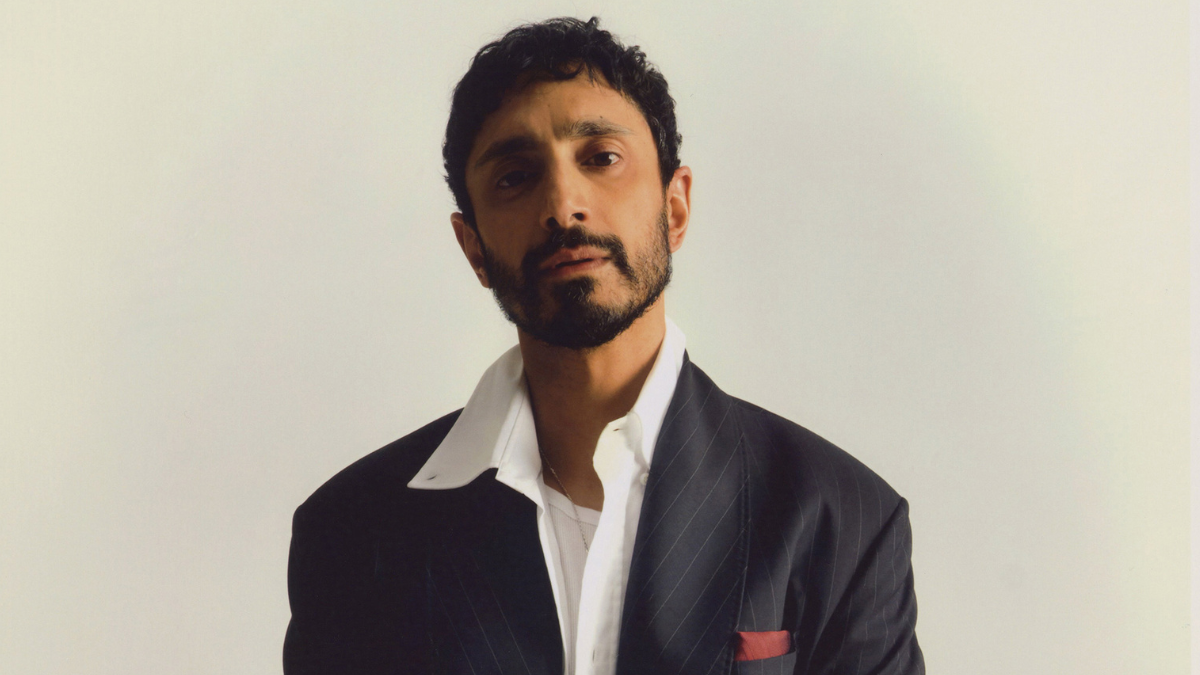
The Amazon Prime Video limited series “Bait” begins when Shah Latif, a British South Asian actor, sees a chance to throw his name into the ring to be the next James Bond. But the deliberately chaotic show, which emerges in a jumble of languages and filmmaking styles over six episodes, doesn’t really have much to do with a guy who wants to be the first brown 007.
No, it’s about Riz Ahmed, the guy who’s playing Latif. It’s about Ahmed’s career-long doubts and flights of ego. And it’s about his imposter syndrome and the self-lacerating inner voice that is manifested on screen in the authoritative cadences of Patrick Stewart as a severed, talking pig’s head.
The British Pakistani actor and rapper earned Emmys for his performances in “The Night Of” and “Girls,” received a 2021 Academy Award nomination for “Sound of Metal” and won the Oscar with Aneil Karia the following year for the searing short film “The Long Goodbye.”
He’s become one of the West’s most visible actors of South Asian descent for his work in films including “Four Lions,” “Nightcrawler” and the recent “Hamlet,” a streamlined, adrenalized version of the Shakespeare classic. And that status, with all the pressure and responsibility it carries, elevated his triple role (executive producer, co-writer and star) in “Bait,” in which an underappreciated actor tries desperately to get noticed for the part of a lifetime, then comes face-to-face with the cost of that desperation.
“The show is definitely not about James Bond,” Ahmed said after a recent photo shoot for TheWrap and TheWrapBook. “It’s about how life sometimes feels like one big audition.”

There’s a through line in the last few things you’ve done, including “The Long Goodbye,” “Hamlet” and now “Bait.” It’s in the idea that you expressed in your Oscar speech in 2022: “In such divided times, we believe that the role of story is to remind us that there is no us and them, there’s just us.”
I think if there’s a through line that I’m trying to consciously adhere to right now, it’s trying to work from a very personal place. I feel like I didn’t give myself permission to do that in the past. I felt like acting was about becoming someone else for someone else and putting on the mask. And now I feel like we have to find a way of taking the mask off.
Another through line is that I really enjoy smashing together genres and tones. Let’s get a rap music video director to do “Hamlet.” Let’s do a psychological thriller/family comedy with “Bait.” Let’s make a musical action thriller with “The Long Goodbye.” I feel like I am a hybrid person. Many of us are, if we allow ourselves to embrace it. I feel like that’s a great way of keeping me interested, keeping audiences leaning in and challenging our idea of what a story could look or feel like.
Even “Hamlet” is not a period piece by any means. It’s your personal take on what’s around you at this moment in time.
Yeah. And sometimes it’s my personal reaction to what’s going on inside me. With “Bait,” it’s really about self-love. How do you dramatize that battle against your own being? Well, you obviously cast Patrick Stewart as a severed pig’s head serving as a critical inner voice.
How long have you been thinking about this idea?
Since 2014 or 2015. It was after “Rogue One: A Star Wars Story” was in progress. I felt two things. One, you spend all this time trying to get to a certain place, and when you get there, it doesn’t deal with your deficit of self-love or self-esteem, if you have one, which most of us do. I’ll show my cards and say I do from time to time. That was a realization: You can spend your whole life chasing the love of others, but if you don’t love yourself, that’s nowhere. So what do you do with that?
And the other big thing that made me think I need to try to unpick this knot is this gulf that opened up between how people see you and how you really feel. People think if you’re in “Star Wars,” you’re on a yacht with Han Solo. Actually, I got banned for suspected shoplifting the same week the first press photos from “Star Wars” (2016’s “Rogue One”) came out. I wasn’t shoplifting, right? But I was dressed crazy enough because my washing machine was broken. And somebody told me, “The distance between your public and private self is how much shame you carry.” I thought, Yeah, should I get therapy or make a TV show about that? (Laughs)
I felt like acting was about becoming someone else for someone else and putting on the mask. And now I feel like we have to find a way of taking the mask off.
How do you make this subversive comedy in the playground of shame? I think the only way to handle shame is to laugh. And so it’s about a character who is trying to project a public self that’s totally different from his private self. And you face a choice: You either try to stretch yourself to maintain that gulf or you close the gap and feel naked, vulnerable. And I guess me making the show is also me closing the distance between my public and private self.
For example, particularly in America, I think people’s perception of me is like super-intense actor, super political. And my friends know I’m a London boy. It’s about banter and comedy and music, and I think that “Bait” gets to express that. This is who I really am. I enjoy silliness. I enjoy psychedelic funk from the 1970s. I enjoy smashing together spy thrillers and Bollywood soap operas from one episode to the next. This character’s taking off the mask, and in many ways this show is about me doing the same.
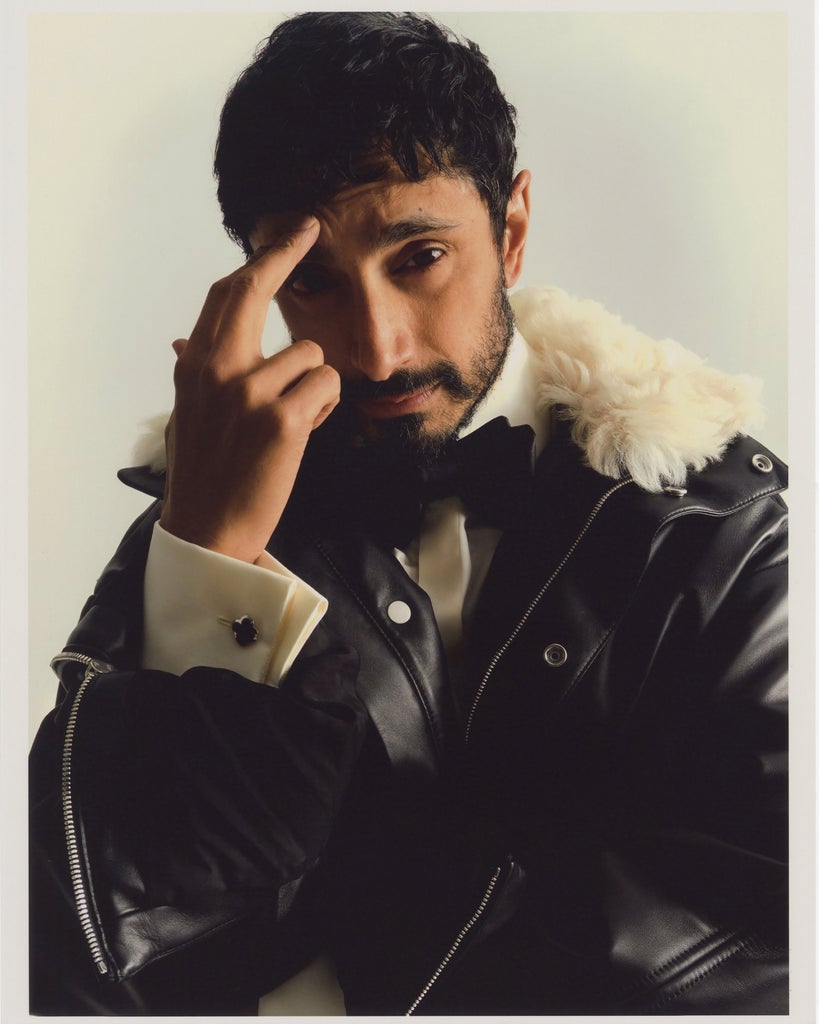
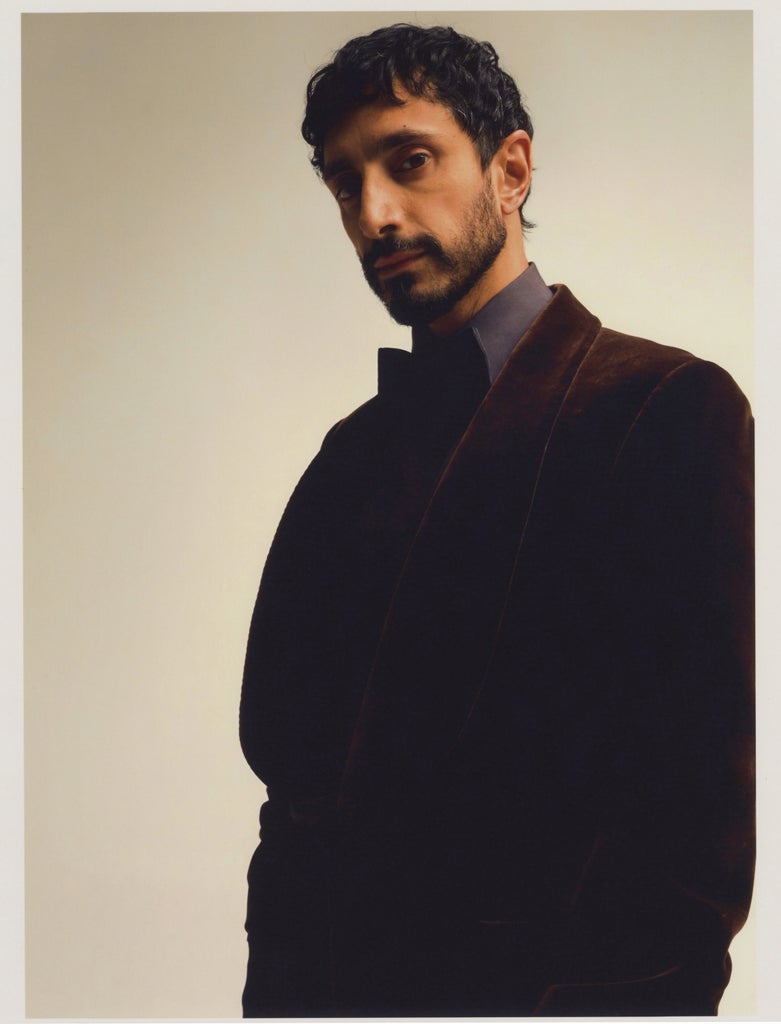
Zegna. Cufflinks by Van Cleef and Arpels. ( Photographed for TheWrap by Nori Rasmussen Martinez)
Why did it take 10 years to go from “Oh, I’d like to do something on that” to actually doing it?
Sometimes you have to live through an experience before you can write about it. I think I had to let go of being desperate to be in the room. Desperate’s a strong word, but I felt like I was on a mission to try to kick down doors that might be closed to me. It was important to be in the room, but I had to get to a place where I was more interested in building my own room. That’s what the show is: building my own room.
Each episode of the show can be dramatically different from the last.
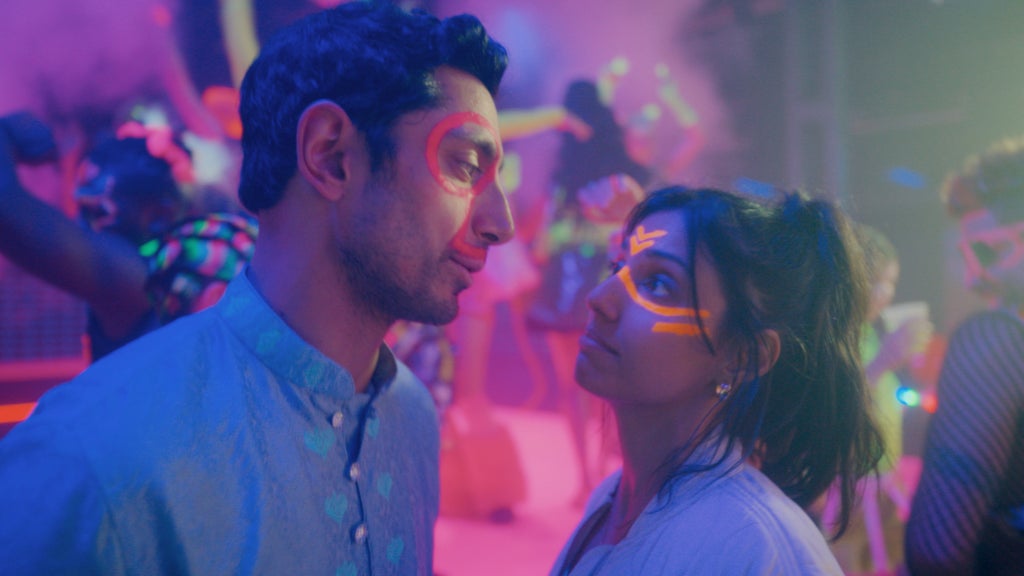
That was very, very deliberate. It was really the toughest thing to pull off. We knew that we had to honor the emotional truth of this character. He’s having an identity crisis; therefore the show must be having an identity crisis. If we settle into one tone or genre, we’re giving the character stable footing. And he’s an actor, so he must be trying to work out who he is by being first in a Bond episode, then in a Bollywood soap opera, then in a (Richard) Linklater “Before Sunrise” walk-and-talk, then in a contemporary Paul Greengrass spy thriller.
This was an incredibly challenging thing to do that required a lot of weaving and rewrites and redrafts and tweaking all the way through the edit and modulation of tone.
And it’s really been gratifying for me. Some people have understood all those layers, from the cultural specificity to the different genres.
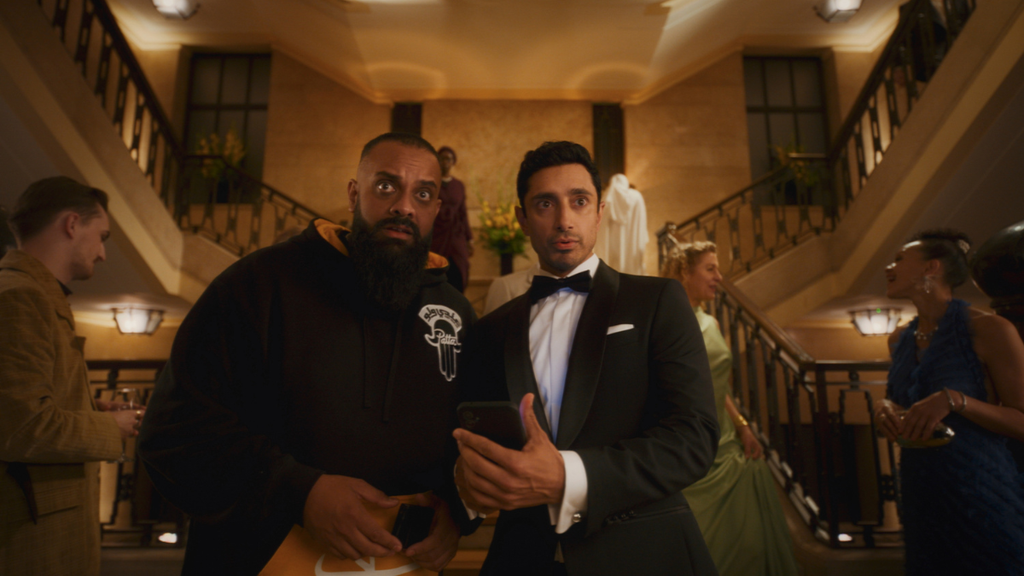
The cultural specificity you mentioned can be particular to a community — but if people recognize the emotions it can also make the show universal.
A hundred percent. I think I was afraid of being too specific earlier on in my career as a creator. And at the same time, I couldn’t help but be it, whether it’s from my early rap songs like “Post 9/11 Blues” all the way through to “The Long Goodbye” to this—the stuff that I have to express is going to be specific to me. Just the way that “Fleabag” or “The Bear” or “Atlanta” does, one of the joys of filming TV is bringing people into a world they might not get to visit otherwise. This is a world I love, and I feel like it hasn’t been on screen. It’s a boisterous, propulsive, chaotic kind of London, the one that I know and love.
It’s been amazing seeing people who have no experience with a family like the one we depict going, “That’s totally my family!”
Beyond the “Star Wars”/shoplifting thing, were you drawing from other events from your life in the series?
Oh, yes. My character has a panic attack at the end of Episode 1 at a music venue in London. That happened to me at that music venue on that stage in London. The same place, same venue, same thing.
My character gets jumped when he’s a kid, beaten up and attacked in the railway overpass in a park that is the exact place where that happened to me. We went back and filmed it there. My character is approached by MI5 to help work with it. I was approached by MI5 after gaining some notoriety as an actor. They said, “It helps us out with messaging.” I did not return the call, but that happened to me on three different occasions.
As an actor, you can hide behind things. And if you’re trying to stretch culture, you can do that by flipping the casting in stories that would’ve existed anyway. But the one kind of role that I’d never been offered, because it didn’t exist, was someone like me. Someone like Dev Patel. Someone like Himesh Patel. Those roles haven’t really existed. So I want to add that to the pantheon of our stories.
What was it like to shoot the panic attack and the childhood beating at the scenes of your humiliations?
Very cathartic. It was much more fun than therapy. Slightly better-paid as well.
There’s something entertaining about witnessing someone’s humiliation. It’s cathartic and it’s scary and it’s insane and it’s all good. That’s why I think clowning is such a profound and ancient art form. Who knew how healing public humiliation could be?
When you started getting recognition, did you feel the pressure to represent a community that is not often seen in Western entertainment?
I think I felt a responsibility to represent people. But the kind of representation I’m most interested in now is: How do I most authentically represent myself? How do I close that gap between the public and the private? More than being seen, what people want to experience from a piece of art is a feeling of freedom, like this person was dancing like no one’s watching. Rather than representing others, I’m now interested in presenting myself as honestly as possible in ways that even surprise me.
I have to ask you about “Digger,” the movie you made with Alejandro Iñárritu and Tom Cruise. How was that experience?
It was unique. I don’t know if I’ll ever experience anything like that again, to be surrounded by this holy trinity of obsessive perfectionists: Iñárritu, Chivo (cinematographer Emmanuel Lubezki) and Tom Cruise, right? (Laughs) Honestly, the thing that I felt more often than anything else was “This is crazy, in the best way.” Like, new horizons for how much you can care, how much you can refine a moment. The extent to which all three of those guys will go to nail something. And then once it’s nailed, to squeeze every bit of juice out of it. And when that juice is squeezed out, to nail the juice.
It was invigorating. I was doing “Digger” at the same time as I was in post on “Bait.” It was super intense juggling both those things, both beyond full-time jobs. But they fed each other in that way. Going to work with that gang and coming back, trying to bring that energy of experimentation, play and obsession into our edit…
It was a real gift, actually, the way these things can cross-pollinate. I hadn’t counted on that.
This story first ran in the Limited Series/TV Movie issue of TheWrap’s awards magazine. Read more from the issue here.
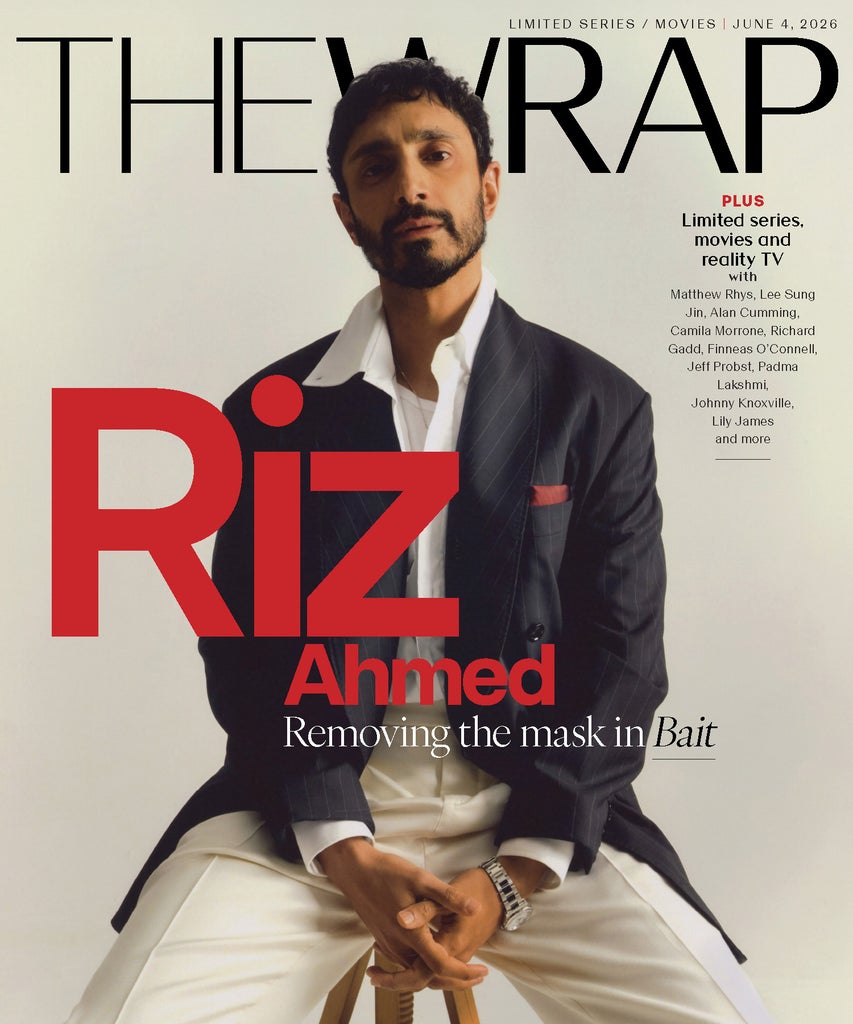
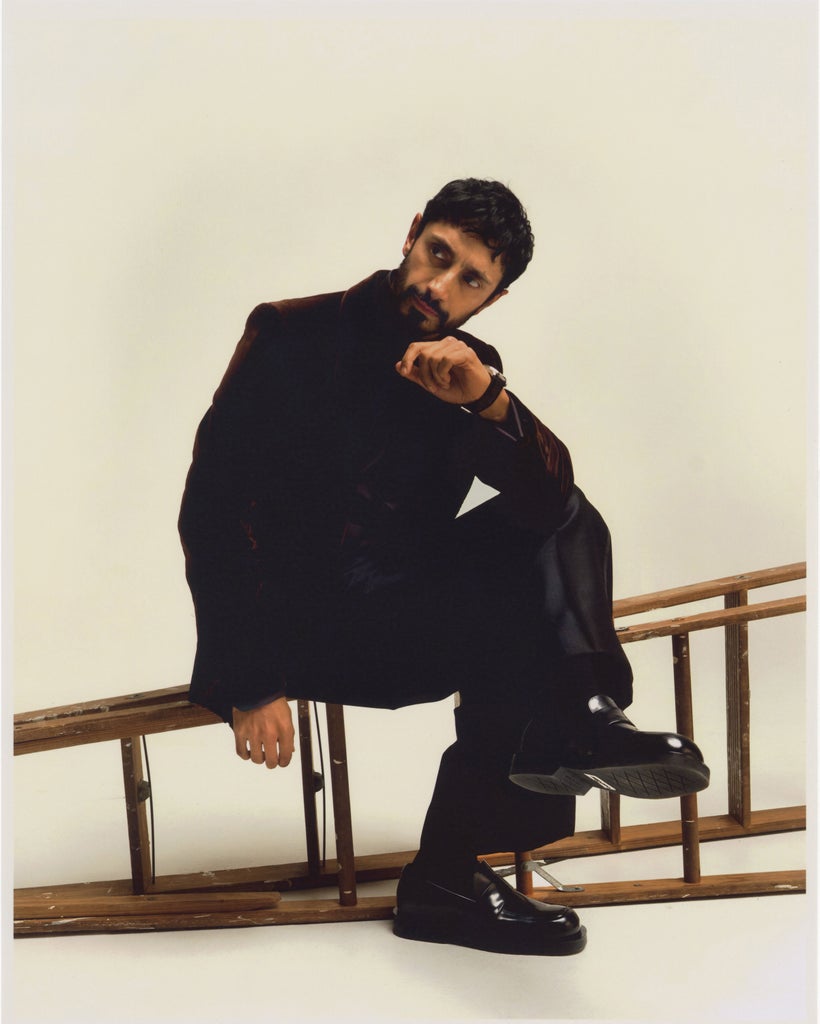
both by Van Cleef and Arpels. Watch by Rolex. (Photographed for TheWrap by Nori Rasmussen Martinez
