
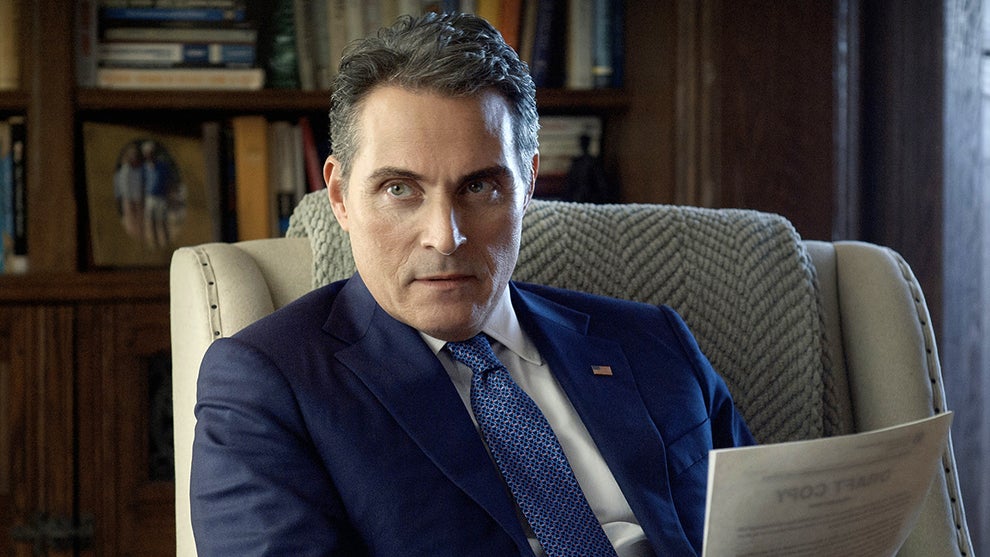
Season 3 of “The Diplomat” ends with one of the series’ biggest shocks, and one of the most morally questionable moves pulled off by Rufus Sewell’s Hal Wyler, an old hand at questionable moves.
When we meet Wyler in the first season, he’s a disgraced former ambassador who’s working behind the scenes to position his wife, ambassador Kate Wyler (Keri Russell), as a potential vice president — but by the third season, Hal has separated from Kate, usurped her and become vice president himself. And unbeknownst to Kate until the final moments of the season, he’s also helped the president (Allison Janney) carry out a wildly illegal undercover operation involving a crippled Russian nuclear submarine.
Debora Cahn’s Netflix series swings between geopolitics and personal dynamics, sparked by the bickering relationship between Kate and Hal and fueled by conspiracy theories galore. While Russell has been nominated for all three seasons and “The Diplomat” earned Outstanding Drama Series noms for the second and third ones, Sewell received his first nomination for the series this year, adding to his guest-actor nod in 2019 for “The Marvelous Mrs. Maisel.”

The British actor made his name playing villains in such films as “A Knight’s Tale” and “The Illusionist,” but Hal is a kick precisely because his underhanded scheming isn’t necessarily bad; it’s just a little misguided. As Kate learns again and again, you can’t trust him for a second, but you can’t quit him, either.
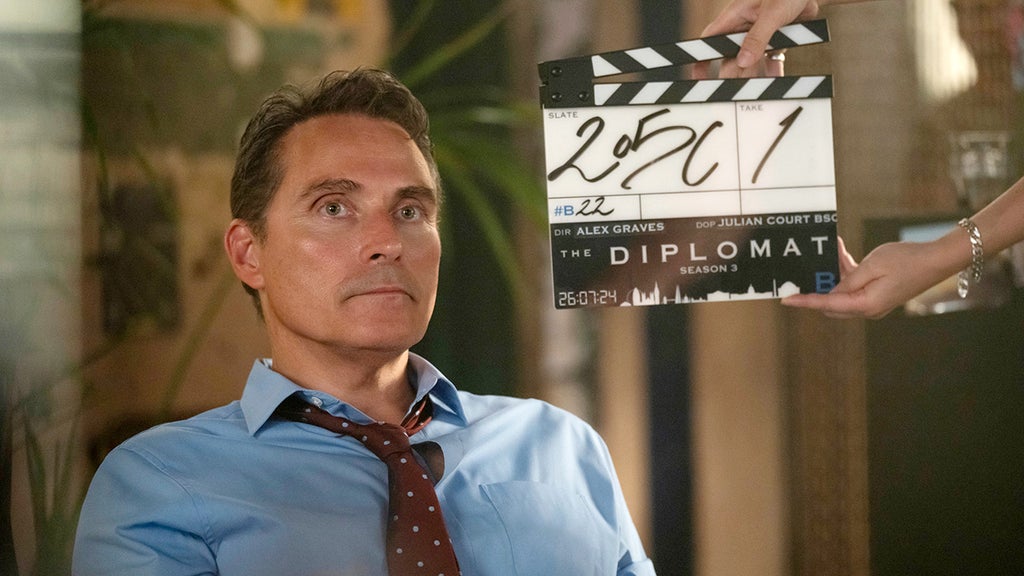
In every season, it feels as if shocking new revelations about Hal drop.
To me, too.
Have you learned things about Hal over the years that made you think, “I wish I knew that in Season 1?”
Not really. Interesting question, but no. I think everything that’s happened was pretty much part of the deal when I developed my understanding of him and had great long talks with Debora Cahn. All of his known potentialities were very much in play, and that’s why it was so exciting. I mean, I found out a little more as I was going along. What I always said to Deb is that if Hal would know this, please let me know. If it takes him by surprise, let it take me by surprise.
And the more extraordinary plot twists and turns that Hal’s behind, there’s always a very good reason for them from his perspective. Always. Things go wrong, but it goes back to who he is, why he makes decisions and what it’s for. Very often, it’s far more altruistic than it might appear.
What he explains very early on, in Episode 1, is that he believes that Kate is absolutely qualified to be vice president and more. She has the goods. But he can’t tell her that, because she’ll shy at the post. You can describe that as manipulative and you may well be right. But he’s also not wrong, and he’s manipulating her into something for her. I’m not arguing the morality of that. It’s a mixed bag. And as he grows in power, the potential for bigger and darker versions of that grow.
He may know she is absolutely qualified, but he knows he’s qualified, too.
One hundred percent. There’s never been any doubt about that. What I’ve always said about Hal and Kate is that their way of moving through the world politically is you push on doors to have access, to be in the room. Which door is going to open? In Season 1, there’s a door that could open for Kate. They push and they push and they push, and the door for him opens. And he is someone, when the door for him opens, he’s like, “I’m going through that. This is my door now. It was yours, now it’s mine.” (Laughs)

At the end of Season 3, he and the president make a huge, risky move that raises a question: How far are you willing to go to achieve this particular end?
Exactly. It’s very interesting stuff. It’s a moral problem. You could very easily argue that he is taking steps that are too far, but you could argue the opposite. Often, people will use the idea of doing good things as a stalking horse for more selfish reasons than even they allow to themselves.
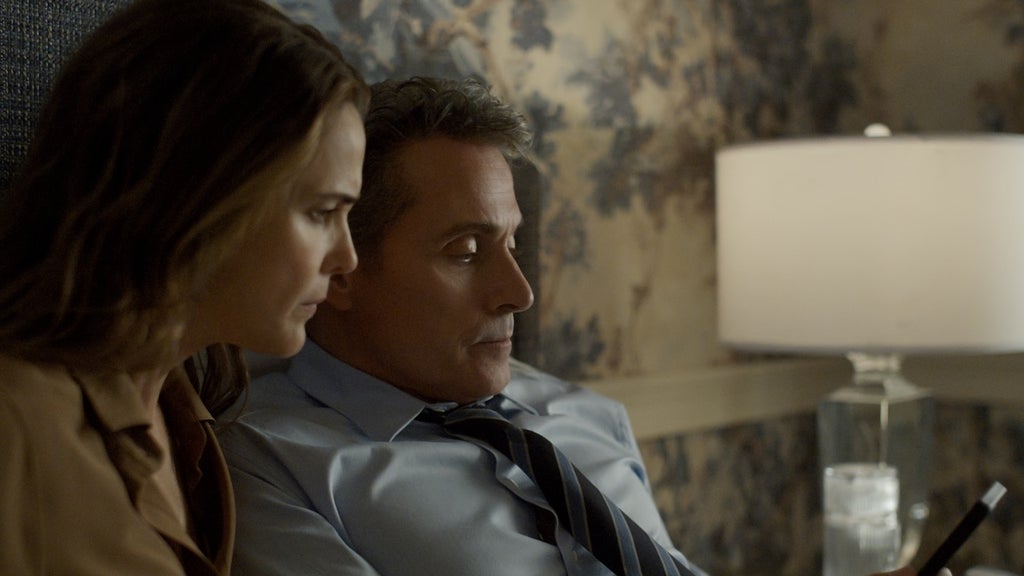
That’s the kind of dynamic that we often see playing out around us, where so many political decisions are made for the unstated purpose of acquiring or retaining power.
There’s a very conscious effort with “The Diplomat” to not try to keep up with the bizarreness of reality, because you can’t. Just in terms of the timing, there’s no way we could predict where stories in our real world are going. However, sometimes things will just end up rhyming, you know? And I think there’s no way you can prevent that, any more than you can coincide what you’re doing with what’s going to happen in the world a year later. ‘
(Laughs) The show is an interesting kind of netherworld — a kind of nice, safe alternate crisis for people to enjoy.
When we talked in the first season, you said you see the show as a comedy of sorts.
I see everything I do as a comedy. I’m being flippant, but what I mean is that even if something is deadly serious, I always try to see it in terms of humor. That may not show. It doesn’t play as jokes, but just as a way of breaking something open.
This is the best kind of material, as far as I’m concerned, because both (comedy and drama) are intertwined all the time. I get a little surprised to see it continue to be described as a drama by people, and I can’t help but judge people who say that. Of course it’s a drama, but it’s a funny drama. It’s a dramatic comedy.
And what I really like about it, and I think the key to it, is the fact that the jokes are not added. It’s just about these people and their sense of humor. It’s how they communicate. And when they’re talking politics and when they’re insulting each other, they have a wit to them that is not necessarily about “now you laugh.” It’s just their language.
This story first appeared in the Down to the Wire: Drama issue of TheWrap’s awards magazine. Read more from the issue here.