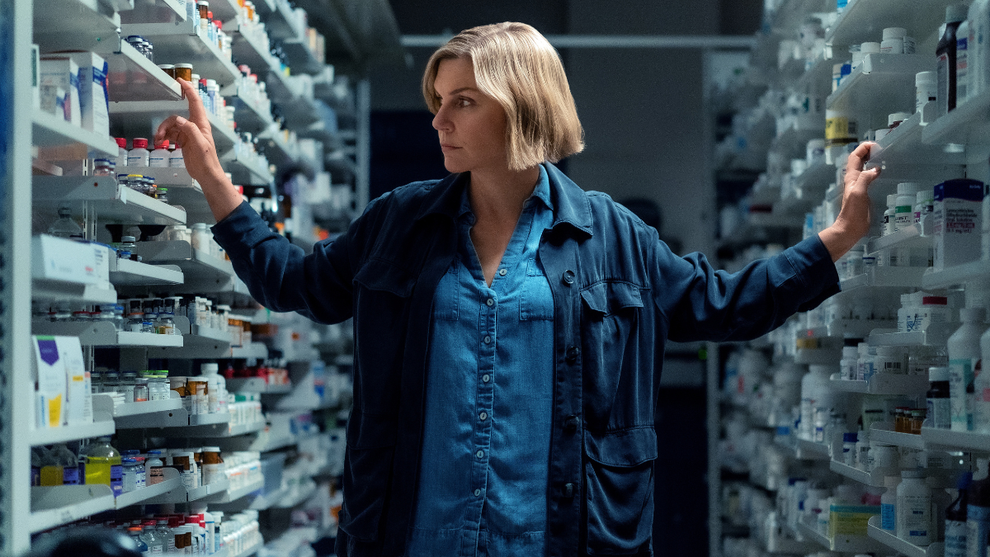
The details were not important to Rhea Seehorn. All she needed to know was that Vince Gilligan had written a character for her in his first post-“Better Call Saul” project. After co-starring in that “Breaking Bad” spin-off for seven years — and earning two Emmy nominations for Outstanding Supporting Actress in a Drama Series — Seehorn knew that whatever he had in mind would be smart and creatively fulfilling.
It was only months later, when she read the first few scripts for “Pluribus,” that she realized she would not only be the star of Gilligan’s new show, but she would be shouldering almost every scene of the nine-episode sci-fi drama about an alien virus that turns nearly all of humanity into a single beatific hive mind.

“I saw the workload at that point,” Seehorn said. “For me, every scene was a chance to be better. There were definitely days where I’d do what most of us do: second-guess myself and think, ‘Oh, I guess today’s the day the jig is up and everyone’s gonna find out that I’m not good enough.’ So it was challenging, and definitely physically, emotionally and mentally the hardest thing I’ve ever done.”
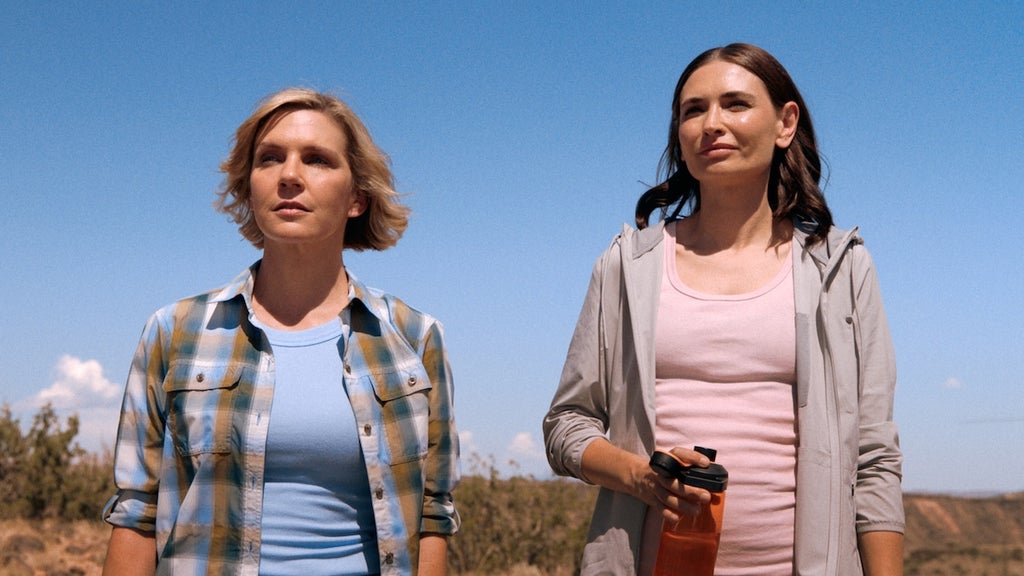
In the Apple TV series, Seehorn plays Carol Sturka, a depressed, alcoholic writer of bestselling romance novels who is one of just 13 people on Earth immune to the virus. During the “joining,” when 8 billion human beings become one consciousness, her wife, Helen (Miriam Shor), dies, leaving Carol to figure out the new world order on her own. She aches with loneliness but is so discomfited by the unnervingly content “Others” that she alienates them — until she starts falling in love with one of them, Zosia (Karolina Wydra).
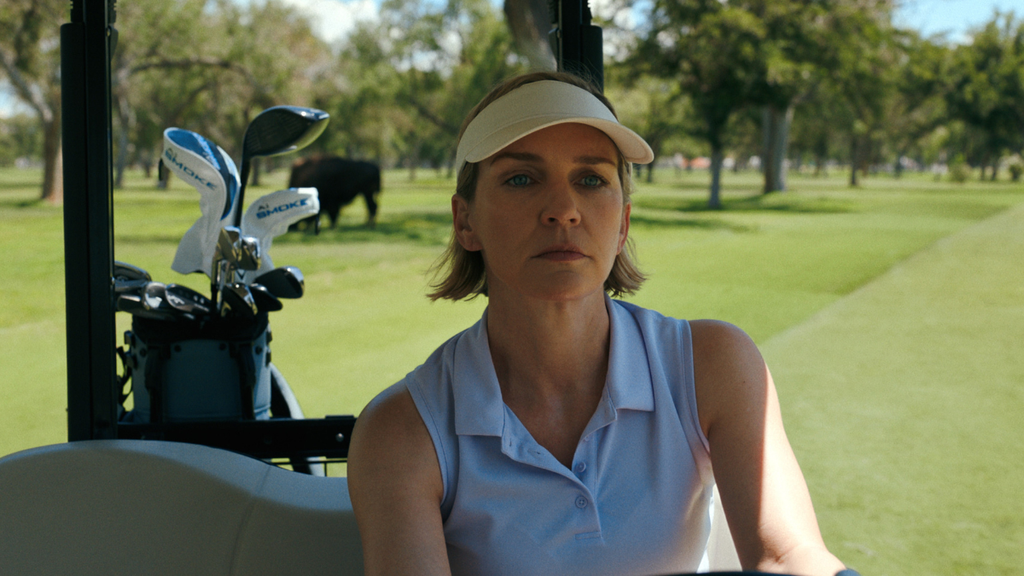
Seehorn spends a good deal of screen time with Wydra, but even more of it alone, conveying grief, heartbreak and anger, often without a word of dialogue. There are also flashes of laugh-out-loud humor, as when she cruises around an empty golf course in a cart, singing Kenny Loggins’ “Caddyshack” theme song, “I’m Alright.” The virtuoso performance won her Golden Globe and Critics Choice awards last winter, as well as nominations for the Gotham Awards and the Screen Actors Guild’s Actor Awards.
The last time we spoke, you had just been nominated for your first Emmy for “Better Call Saul.“ And now here you are, four years later, back in the race for another acclaimed performance in another acclaimed Vince Gilligan show. How has it been?
It’s a lot of fun. Part of the reason it’s been fun, actually, has been the journalists — the conversations that the show is inspiring have made for really interesting interviews. I’m just so proud of what we all made.
Carol goes through the world wearing a protective shell. She appears to be disdainful of her readers; she’s grouchy and closed off. How did you approach the gradual reveal that she’s profoundly lonely and unhappy?
I didn’t have all the scripts, and I’m used to that way of working with Vince Gilligan. It isn’t about knowing the end point and working backward to reverse-engineer what my character is doing on the front end, but to create as complete a picture as you can and then take these little seeds that become cumulative.
The loneliness started with Vince talking to me about when she is mocking her fans. She actually loves her fans, and she thinks she’s good at what she does. It is self-loathing that’s going on in those moments, and wanting to beat people to the punch of, like, “I know you think it’s just popcorn fare and it’s not a real book.” And that place that I think you probably know very well as a journalist — and any of us in subjective art forms — where there’s that sneaking voice that thinks, If you do anything popular, it’s not legit. She’s stuck in that place. It’s easier to make fun. Like, well, they must be idiots if they like my stuff.

An emotion Carol does show openly is anger. And when she does, the Others go into convulsions; some of them die. Her rage is literally lethal. It’s such an interesting play on the idea that women aren’t allowed to display anger.
I thought it was so cool. I was very interested, as a woman who absolutely suppresses her anger and is a massive people-pleaser, that this thing is, like you said, literally lethal to other people. I asked Vince about it, and I must tell you, he just sort of glazes over because Vince doesn’t write themes. He’s being honest when he says he wasn’t preaching anything in this show. Your interpretation is your interpretation. He’s got an incredible partner, Holly [Rice], so I’m sure he has discussed what gets done with women.
And look at his exploration of the pigeonholing of what it means to be a likable female character through [the anger]. What does that mean? Accessible and interesting are more important than likable. Did he write to that particular metaphor? No, but I and many other women, I know we’re very excited about it.
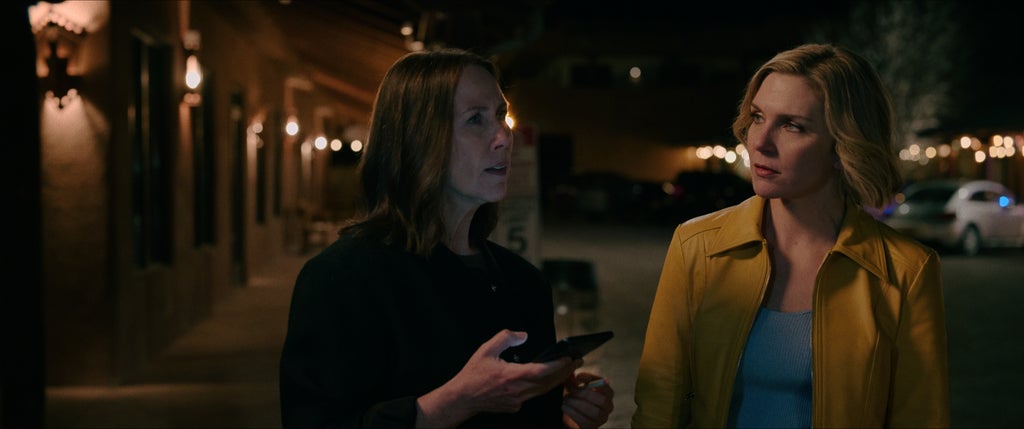
Toward the end of the season finale, after Carol and Zosia have spent time together, Carol says how happy she is. But she’s not comfortable in the happiness; she doesn’t trust it. That was one of the best expressions of depression I’ve seen. I found that really moving.
I’m very thankful that spoke to you and that you’re bringing it up now. It certainly was one of the things that I thought — like, thinking that the other shoe’s going to drop can really rob you. I remind myself religiously to be present for some of these wonderful things that are happening in life, whether that’s a perfect day and getting to walk in New York or [winning] some award or whatever.
But yes, I operate with this low-hum fear of the other shoe dropping. What’s going to be taken away? It becomes more and more conscious as you go throughout the season, this idea that, wow, I didn’t even appreciate the things I had when I had them, the joy of the small things. The idea of still not trusting her happiness, paired with this amazing storytelling device where the audience doesn’t actually want me to trust what’s going on at this point. So she’s actually correct in having a nagging feeling.

Right, the shoe does drop.
It drops huge! [Zosia confesses that the Others are using Carol’s stem cells to find a way to get her to join them, which she unconditionally objects to.]
You must have thought a lot about what happiness means while making the show. Did your understanding of it change?
I’ve had some really interesting conversations, deep dives — sometimes late nights, the sun coming up — with my crew and fans as well. First of all, happiness is not stasis. It’s not a thing that you arrive at and just sit in. There’s the journey of the up and down. This is nothing profound. People have said it a million times in a million different ways. For me, one of the biggest things that brings me joy is the pursuit of trying to be good at something that I’ve chosen to do. I love what I do, and I want to learn from other people.
And then someone else said to me, “But that’s all ego, right?” If you looked at it from an enlightenment place, it would be fine if everybody was the same level of great at everything. But I don’t think I would like it at all if we all had the exact same skill sets and talents. I don’t get to be joyfully surprised by seeing a painting that I didn’t do or hearing someone else’s violin concerto. Because if we all made it, then I already knew about it.
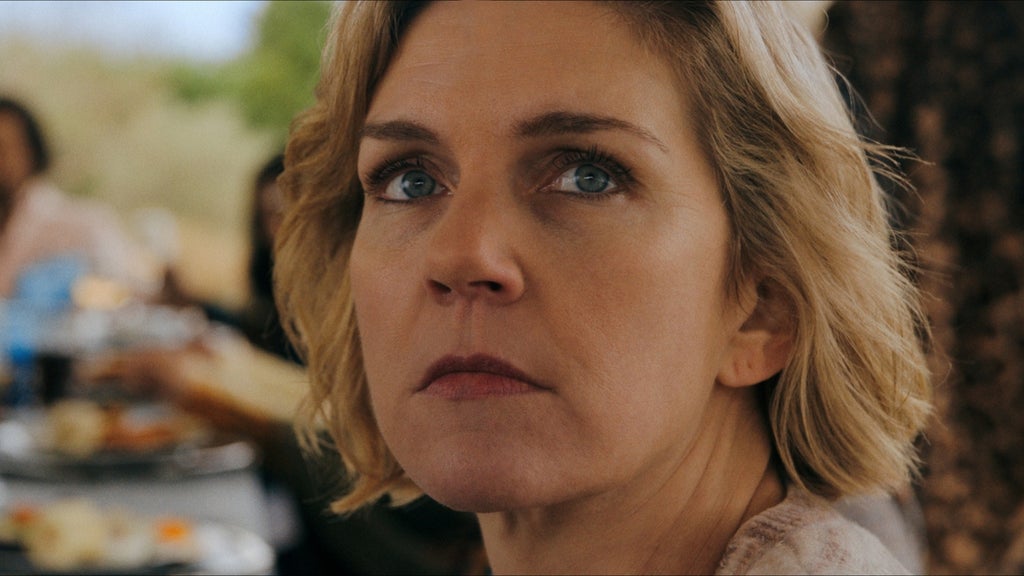
“Pluribus“ grapples with some giant, existential questions, but it’s also really funny. Carol’s drunken stomp-off after she tells the other immune survivors that they’re traitors to the human race, then falls on her face, was a great sight gag. You’ve done lots of comedy in the past, so it must have been fun to re-engage with it in this context.
Yes, really fun. Vince has always liked playing with tone in that way. And I was very excited that they aren’t jokes per se. It’s observational, behavioral humor, and we realized quickly that as long as we were aiming for the most honest I could be in the moment, that’s where a lot of the comedy came from. Vince has always loved using wide angles, which you do a lot for physical comedy, particularly in situational comedy, because you need to see that body language.
And then also, coming from theater, the walk-off that you’re talking about, it’s really fun to understand that the punctuation to the thing that’s making this drama turn instantly funny was a pratfall.
I was just talking to Bryan Cranston and Bob Odenkirk the other day, and we all said the same thing: “It’s some kind of insane, genius-level thing going on.” [Vince would] turn bright red if he was sitting here, but I never guess where he’s going. I get those new scripts, and it never feels like a cheap trick. It always feels like, Oh, yeah, I can see why she did that or Oh, I can see that in her background. It’s not the obvious choice, it’s not the one I would have thought of, and yet it’s perfect.
A version of this story first ran in the Drama Series issue of TheWrap’s awards magazine. Read more from the issue here.