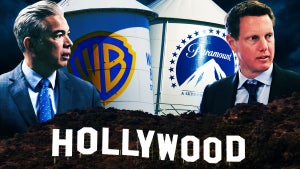
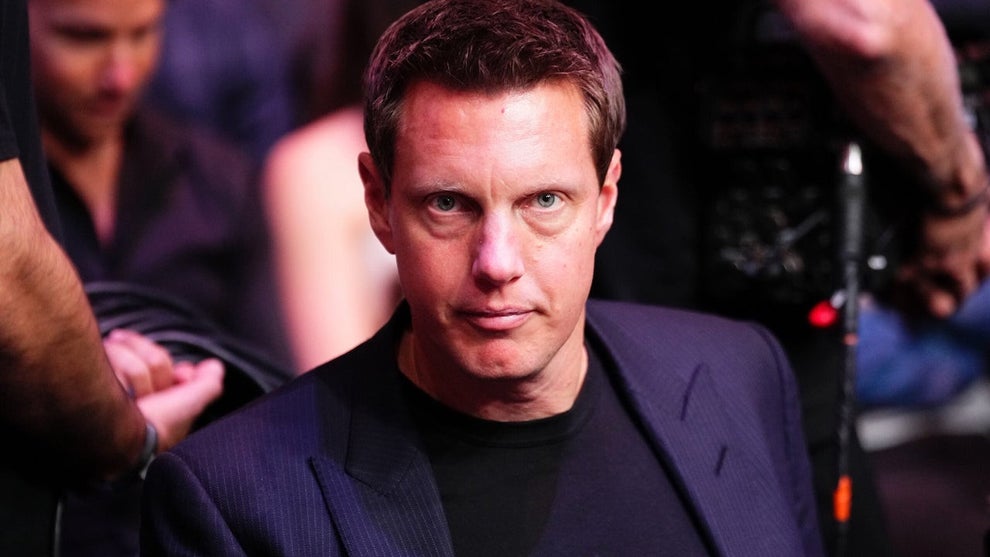
The Directors Guild of America and International Alliance of Theatrical Stage Employees (IATSE) urged the California Attorney General Rob Bonta to reach a settlement on his lawsuit against the Paramount-Warner Bros. merger on Wednesday, provided that CEO David Ellison keeps the film studios separate, commits to 45-day theatrical windows and maintains his promise of 30 films per year, among other conditions.
The joint letter, sent to Bonta and Paramount leadership, said the unions’ goal is to preserve a “vibrant, competitive marketplace” and raised concerns around price distortions, market abuses and reduced choice.
“While we have been consistent in our view that mergers, such as this one, historically offer few benefits to workers, we are also particularly concerned about the negative impact a delay in the decision regarding the proposed merger will have on our members and the industry at large,” the letter reads. “We further believe the benefits and detriments of the proposed merger should be measured against the alternative outcomes if it is not approved, especially if the anti-competitive impacts of the proposed merger can be mitigated by a binding agreement.”

While Paramount had sought a November start date for the trial for Bonta’s lawsuit, the attorney general requested a much later April 2027 start date. Judge Araceli Martinez-Olguin set a start date closer to what Bonta wanted: March 2, 2027.
Since that start date was set, various executives have released statements urging a settlement or withdrawal of the lawsuit, including Regal Cinemas CEO Eduardo Acuna and Endeavor CEO Ari Emanuel, with a common argument being that the entertainment industry will struggle to get productions off the ground with the future of two of its major studios in limbo for months.
DGA Executive Director Russell Hollander and IATSE President Matthew D. Loeb echoed those concerns in their letter.
“As our members struggle to find employment, the uncertainty surrounding the proposed merger is only making matters worse,” the letter states. “We are aware of productions that have been put on hold or canceled altogether, leading to further reductions in available work for our members and other industry workers.”

But having noted those concerns, the two unions set out a list of nine conditions that they wish to be a part of any settlement, the most prominent being the maintaining of Paramount and Warner Bros. as separate studios with their own distribution, marketing and production divisions.
It is common in media mergers for such divisions to be merged together to cut costs and eliminate redundancies, something that Paramount would be financially pressured to do should the merger close, as it is expected to carry a debt load of $79 billion.
Another condition listed is that Paramount keep its headquarters in Los Angeles, a demand that comes a day after CEO David Ellison warned Bonta that the studio would consider moving out of the state if a settlement was not reached.

Other conditions, as written by DGA and IATSE, include:
• The production and distribution by each motion picture studio of a minimum of 15 theatrical films per year with an exclusive theatrical window of at least 45 days (preferably 60 days or more) before PVOD exploitation and 120 days before SVOD exhibition.
• An agreement that Paramount and WBD will continue to license theatrical films from third parties at no less than the average percentage of films licensed from third parties over the past five years (excluding 2020 and 2023).
• The same separate operational structure for Paramount and WBD’s television studios as applied to the motion picture studios.
• The maintenance of HBO as a linear pay television channel that will continue to be available on third party platforms (e.g., MVPDs and Amazon video).
• A commitment to produce films and television shows in the United States at no less than the average percentage produced in the United States during the past five years (excluding 2020 and 2023).
• A commitment to license original content on the combined entity’s linear channels and streaming platforms from third parties at no less than the average percentage of licensed original content during the past five years (excluding 2020 and 2023).
In an effort to curry favor with movie theater executives, Paramount has offered contracts pledging to release 30 films annually for three years, an offer that has earned Regal support. But insiders told TheWrap that theater trade org Cinema United has balked at such an offer, pushing for Paramount’s pledge to last longer.
The studio has also offered such a deal to Bonta in the form of a consent decree as part of a potential settlement, but Bonta has called such an offer a “behavioral remedy” that doesn’t resolve its concerns over the merger and will only accept “structural remedies” as part of any potential settlement.