
Cannes Lions’ creator era is off to a rocky start. But heading into the 2026 festival, there was one company that understood how to make the advertising and marketing community’s biggest event of the year work for the next era of entertainment: YouTube.
For the first time, YouTube unveiled its Creator Club — a two story air-conditioned retreat with support and panels specifically designed for creators to gather, relax and share their insights, which TheWrap got an exclusive inside look at. The platform also hosted a night market that paired a curated selection of brands with creators, gave them food, an open bar and booths with free merchandise to encourage them to mingle. Plus, that A/C was especially crucial considering that Cannes Lions happened during an unprecedented heat wave throughout Europe.
At YouTube, the promise of the advertising and creators worlds converging was more than a bullet point on a schedule.
“We’ve seen that, from a brand and marketer perspective, they understand creators have a relationship with their fans and communities that’s unrivaled, and they understand that direct connection allows them to connect in a much more powerful way with audiences,” Mary Ellen Coe, chief business officer at YouTube, told TheWrap. “Because our platform is ultimately about creators telling their stories and connecting with fans, we wanted to bring brands into that. The more creators we can have introduced to more brands and marketing agencies, it’s kind of symbiotic.”
YouTube’s massive presence at Cannes Lions comes at a time when platforms and marketers alike are chasing creators. By fostering a place that supports them, it’s ensuring that they’re more incentivized to keep creating on YouTube, and that it remains a focal point of an economy poised to be worth half a trillion dollars.

“I love seeing how YouTube’s presence has grown here in Cannes year on year. The fact that they now have a second location on the Croisette is just a huge testament to their presence, both physically here, but also within the zeitgeist,” Brandon B, a YouTuber with over 16 million subscribers who makes ambitious special effects-heavy videos, told TheWrap. This year was the creator’s fourth time at the festival.
“I think it’s quite clear to anyone walking up and down the strip right now that YouTube really has taken a hold on Cannes,” he added. “But also, just from looking around at the people that are here, it really does seem to be the YouTube creators that are dominating the space.”
It’s also an investment that already seems like it’s working. Last month was the first time in the history of YouTube’s Brandcast — the name of its upfront presentation in New York — where the platform gave a spotlight to specific creator shows, like Kareem Rahma’s “Keep the Meter Running” and Morgan Jay’s “Music Therapy.” One of those shows has already sold out all of its advertising asks, a person familiar with the matter told TheWrap.
By now, it’s well known that partnering with creators can lead to big wins for brands. This year, U.S. advertisers are expected to spend as much as $43.9 billion on sponsored creator posts and related ads, an 18% increase compared to last year. Nearly half of marketers (48%) called creators a “must buy” for their media plans, according to a 2025 survey by the ad-industry trade group Interactive Advertising Bureau. The global creator economy is also expected to be worth $310 billion this year.
Yet most brands are still trying to figure out how to partner with creators, especially since creators don’t operate like traditional talent from the worlds of film, TV and music, requiring a more customized approach that treats them more like creative partners than celebrity spokespeople. There’s also no one-size-fits-all mold for how creators operate as most are in the process of building unique businesses using their personal brand.
But exactly how companies and creators can and should work together has been a continuing source of confusion, especially among less social media savvy brands. Over advertising’s biggest weeks, here’s how YouTube attempted to better merge these two industries.
Giving creators a home base
Cannes Lions can be overwhelming at the best of times. It’s not unusual for an attendee to have two panels they want to attend, a networking meeting and an anticipated happy hour all at the same time. Adding to the headache, there can be up to a half-hour walk between branded beaches and hubs, walks that took place in sweltering 90-plus-degree heat this year.
That complexity is why YouTube introduced its Creator Club. The two-floor air conditioned complex was located around the halfway point of the festival’s takeover of Cannes’ Boulevard de la Croisette. Creators were able to start their day at 8:30 a.m. with activities like yoga or a run club, which was followed 30 minutes later by smoothies and breakfast. The facility also scheduled panels and workshops that were specifically designed to help creators prepare for brand meetings.
The Creator Club also orchestrated opportunities for creators to learn from each other thanks to nightly happy hours. When TheWrap visited the facility, many were working with each other in the Creator Club’s shopping room, which featured full-sized products from companies like SuperGoop. In exchange for agreeing to post content featuring those products using YouTube’s Shopping functionality, creators were allowed to take them home. Though the partnership was good for the brands that partnered with YouTube, the real goal was to make creators more familiar with YouTube Shopping — another potential revenue stream that ultimately encourages creators to stay in the YouTube ecosystem.
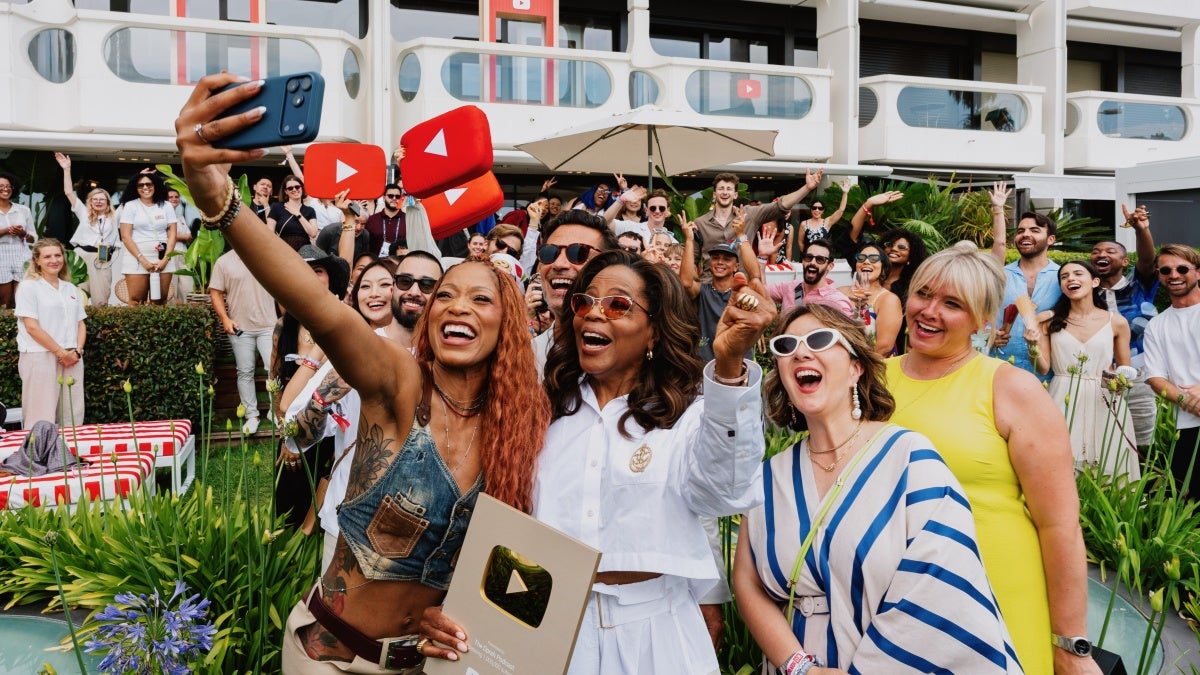
It became such a must-attend part of Cannes that two of the festival’s biggest attendees — Keke Palmer and Oprah Winfrey — stopped by. Palmer awarded Oprah a coveted YouTube Gold award in honor of “The Oprah Podcast” surpassing 1 million subscribers on the platform.
Building a bridge between two different worlds
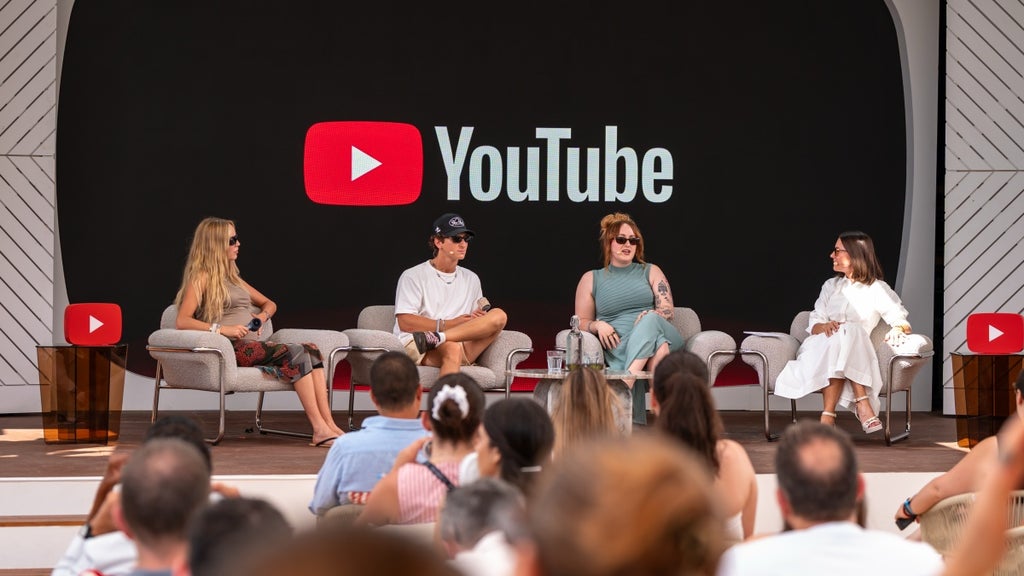
Throughout Cannes Lions, YouTube had several widely available panels designed to explain creator needs to the advertising community, such as a live installment of YouTube’s “Brand Deal Desk,” a series that aims to teach creators how to scale their partnerships into sustainable businesses. Two members of the content creator collective known as the Sidemen (23 million subscribers) — Jordan Schwarzenberger and Vikkstar — explained how they partnered with the British mass media and telecommunications company VMO2. YouTube also hosted a creator-focused panel about how attention spans haven’t decreased, viewers have just become more selective. That panel included Coe as well as Jack Goldburg, founder of Jack’s Dining Room and Yes Chef Group; Alex Cooper, founder of Unwell and host of “Call Her Daddy”; and Brittany Broski, host of “The Broski Report” and “Royal Court.”
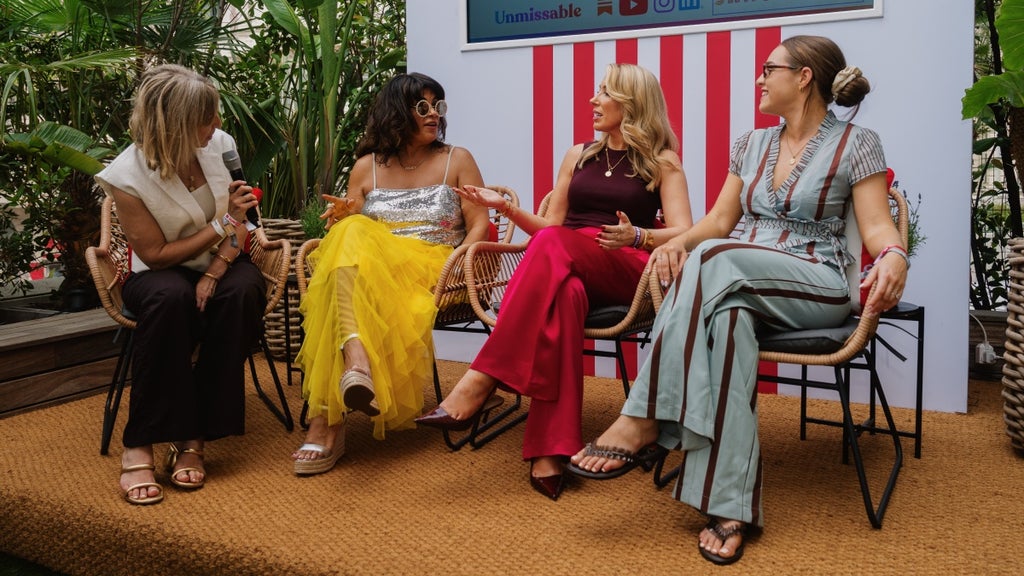
But some of the platform’s most informative and specialized sessions happened in its Creator Club. On Tuesday, around 30 creators gathered on a terrace in the south of France to learn about how to build better brand partnerships. Instead of a slew of empty advice, the session included practical tips as well as a workshopping session.
Grace Andrews, a creator who helped scale Steven Bartlett’s “Diary of a CEO” and is the co-founder of Community Service on Substack, said that follower counts still matter in this day and age. But to showcase how engaged her audience is with her content, she took screenshots of follower comments praising her personal brand collaborations, like what she did during a campaign with the soda company Poppi. Andrews then sent those screenshots to Poppi to prove that, even though her follower count may be on the smaller side, her fans listen to her recommendations. She advised that other creators take the same approach.
Nishma Robb, founder and CEO of the brand advisory company Unmissable, encouraged attendees to really understand the demographic breakdown of their audiences and use that information to argue why they should be the ones to fill in the gaps advertisers may be missing. In addition to encouraging creators to negotiate, Billion Dollar Boy Chief Marketing Officer Becky Owen called for them to get more serious about how they view their channels.
“Treat your creative career as a business sooner than you think,” Owen said. “If you start getting into that mindset of your own longevity, it is so much easier for other people to buy into that longevity.”

The Creator Club didn’t just offer specialized panels. There was also a support bar that connected creators with members of the YouTube team to help address any questions they may have about their channels, record episodes of YouTube’s creator-focused professional development series “Brand Deal Desk” and provided both meeting rooms and a content creation studio that creators were able to book. Additionally, the YouTube team created splash videos for all 200 of the creators it brought to the event, while also helping them create pitch decks and personalized rate cards, Kim Larson, global managing director and head of YouTube creators, told TheWrap.
But the real game changer happened on Tuesday night on Google Beach. That’s when a curated list of professionals from the advertising and marketing community mingled with YouTube’s creators over light bites and an open bar. The goal of the event wasn’t to cement new deals that night but to encourage introductions and present an opportunity for those meetings to happen at a later date.
“A lot of these creators got into this craft because they’re storytellers, there’s something they want to share with the world. It’s deeply personal, but they need to make money,” Coe said. “[Seasoned creators] have experience working with brands, understanding their worth and understanding how to help set expectations and collaboration. Newer creators that haven’t had that opportunity need to understand, quite frankly, what brands are trying to accomplish, how to establish their worth and their pricing structure.”
Coe described YouTube’s Cannes Lions strategy this year as being more of “an education” between advertisers and creators.
“Everyone will come out happier having achieving their goals if everyone understands [each other],” Coe said.
