
CULVER CITY — After Innovative Dreams CEO Jon Erwin showed off a sizzle reel of an epic Biblical series starring Ben Kingsley at an artificial intelligence conference last week, his next line elicited a gasp: “We prepped it in three weeks, and shot it in a week,” he said. “We never left the studio.”
The show “The Old Stories: Moses,” which dropped its first two episodes last month on Amazon Prime Video through the Wonder Project service, was shot in March on a massive virtual production stage with backgrounds and motion-captured actors rendered in near-real time via AI. At the AI on the Lot conference, Erwin stood in front of Amazon’s own volume stage, speaking at length about the tech giant’s support of the project and why it was important that Hollywood worked with these tools now.
“This technology will never emerge in a theoretical vacuum,” he said. “We’re jumping out of airplanes with these tools as our parachutes.”
His comments underscore a truth that some in the entertainment community may find nerve-wracking: The AI revolution in Hollywood is not just real, but taking form in tangible projects that people can now see. Whether it’s animated shorts, experimental theatrical projects or full-blown movies and shows, AI is showing that it can not only cut down on costs and production time, but push the boundaries of storytelling — even if some pushback is inevitable.
You’ve seen it in the headlines over the last few months, whether it’s Netflix paying up to $600 million for Ben Affleck’s AI startup, studios quietly integrating AI tools into their workflows or the rise of scary-good video models like Bytedance’s Seedance 2.0. Even just this week, Martin Scorsese — one of the most respected filmmakers in history — embraced the use of AI tools in pre-visualization.

The change was evident at last week’s AI on the Lot, a relatively young annual gathering of tech executives and creatives to discuss AI and its applications in the entertainment world. At last year’s conference, studios embraced the idea of implementing AI. Now in its fourth year, Amazon MGM Studios served as the host, illustrating how firmly entrenched AI has become in Hollywood — and how companies are publicly embracing the technology.
What struck me about the conversations I had at the conference was how many involved projects that were already on air or about to premiere in the coming weeks. They also weren’t all traditional shows, with some creators looking to take advantage of AI’s generative abilities to create different experiences.
“It feels like surfing a tsunami wave,” Erwin said during his keynote about the community jumping on this trend.
Saving time and money
The most obvious benefit of generative AI is its ability to potentially cut down the cost and time to produce projects, which Erwin demonstrated by detailing the production process of “Moses.”
In his session, he talked about how AI would be able to generate screen-ready backgrounds in near real time, allowing the actors in front of these large screens to perform with the appropriate immersive background scenery.
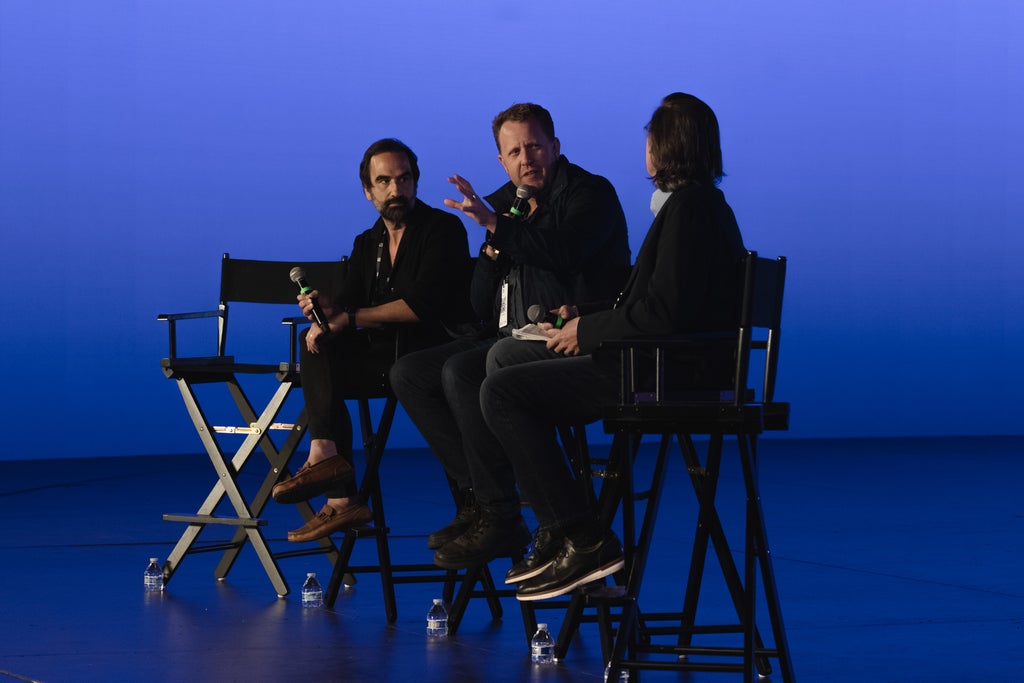
It’s exactly how “The Mandalorian” is shot in front of The Volume, only the scenes that are thrown up on that display take months to render ahead of time. With generative AI, those images can be changed nearly in real time, whether it’s changing the time of day to adding little details or background characters.
That kind of capability is also why much of Hollywood is nervous about AI as a potential jobs killer. Erwin’s response: “To people who are worried about taking our jobs in L.A., I say, ‘What jobs?’”
Erwin’s argument is that this technology will be key to bringing productions back to Hollywood and actually creating jobs, since it opens the door to new projects that never would’ve been greenlit.
“Moses” employs 600 people in Los Angeles, he added.

Using AI to go beyond
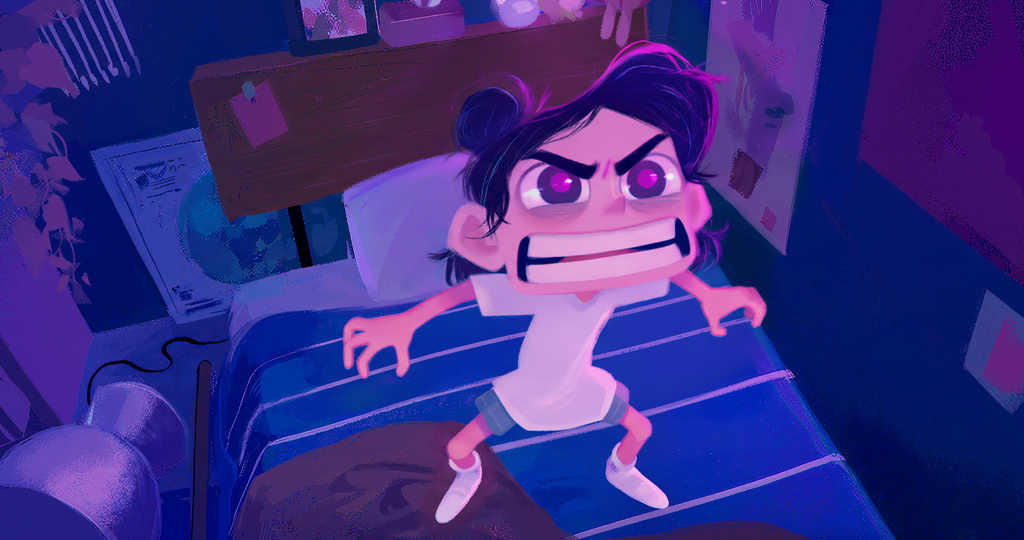
Not everyone is trying to use AI to save a buck. Connie He, a former Pixar storyboard artist, talked to me about using Google DeepMind’s custom video generation models as a way to enhance the visuals for her upcoming short, “Dear Upstairs Neighbors,” which premieres this month at the Tribeca Film Festival.
Rather than prompt her way to a film, He, who joined Google after the company showed interest in her project, said her team fully animated the frames but used AI models to enhance the elements based on a style she trained the custom model to employ. The result is a hybrid animated film that retains its handdrawn, messy look despite the use of AI. She noted that this process likely made the film more expensive than animating it the traditional way. But the cost wasn’t the point.
“The goal for making this film is not an AI film, it’s to make a very good, high-quality film,” she said, with the resulting lessons from the process passed on to Google to help with future creatives.
Then there’s “Whispers,” a short film from AI studio Pickford that adds an interactive twist for audiences. Playing alongside an animated “Law and Order”-type procedural film is a live feed that audiences can participate in via text message. The idea is that these messages serve as “whispers” to the main character and subtly influence how the story goes, with an AI generator creating new scenes every few minutes to account for audience feedback.
This element adds a level of unpredictability — and unintended humor — to the experience. During a screening of “Whispers,” the audience members kept texting Taco Bell to the film, leading to a climactic moment when the investigator protagonist offers the suspect a subscription to Taco Bell in exchange for a confession.
“What do audiences want right now? They want to feel that they matter,” said Bernie Su, head of creative for Pickford.
The film will play in Alamo Drafthouse in downtown Los Angeles next week, with screenings in other Alamo Drafthouse theaters in the coming months.

The backlash is real
Not everything was rosy at the conference. One of the key headlines that dropped at AI on the Lot was Amazon MGM Studios’ announcement of three projects that would join its GenAI Creators’ Fund initiative, which teams up the studio with Amazon Web Services and its Project Nara AI production platform.
“Creative breakthroughs happen when visionary storytellers are given access to transformative tools,” Albert Cheng, the head of AI Studios at Amazon MGM Studios, said in a statement Wednesday. “The GenAI Creators’ Fund and Project Nara position human creativity at the center of our efforts to integrate generative AI into our production processes at Amazon MGM Studios.”
One of those joining the initiative was veteran filmmaker and animator Jorge R. Gutierrez, who planned to use the technology on his latest project, “Punky Duck.” Following the news, he was hit hard by a wave of backlash and pulled out of the initiative two days later.
“Actions speak louder than words. My intent was to showcase artists, both new and seasoned, both inside and outside the studios, driving this new tech,” Gutierrez said on X a day after the announcement. “My sincerest apology to those I upset. I promise to do better moving forward. Thank you for your patience with me. I will try harder.”
The reaction highlights how AI remains a “dirty word” in Hollywood, and how toxic the reaction can get (someone edited his Wikipedia page to call him a “sellout”).
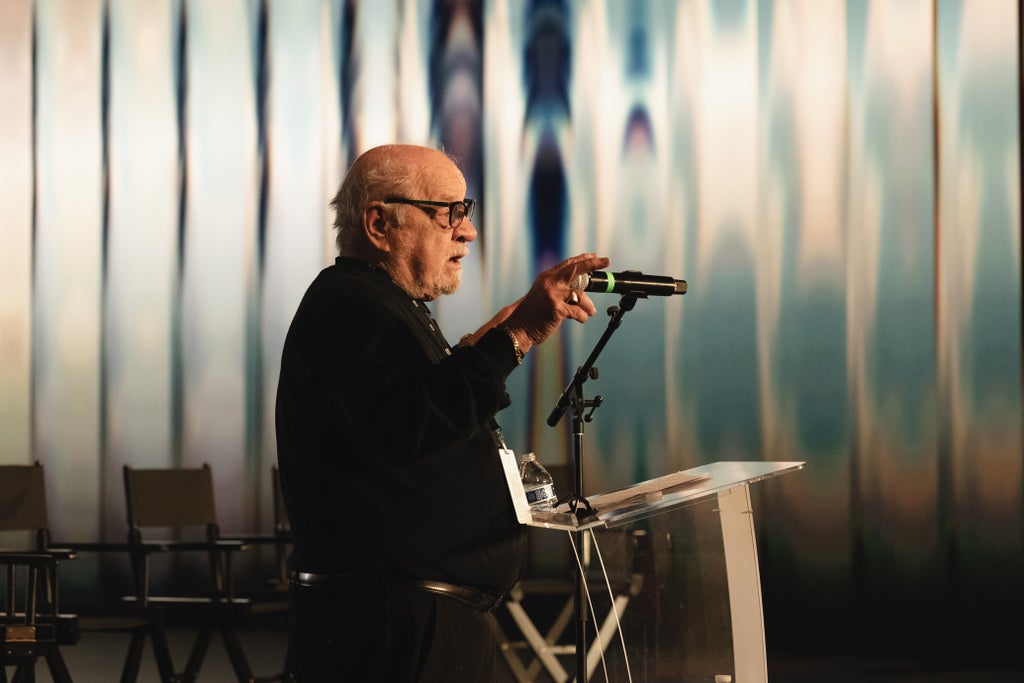
Still, some of the hotter takes on AI will raise eyebrows. Paul Schrader, the writer and director of “American Gigolo” and writer of Martin Scorsese’s “Taxi Driver,” called for the creation of an “AI protagonist,” reviving fears triggered by last fall’s Tilly Norwood controversy all over again.
When Erwin was asked about Schrader’s comments, he said he disagreed with the writer/director.
“Collaborating with the actor is my line in the sand,” he said.

What’s next
I hosted a panel at the conference discussing the differing attitudes of AI around the world, and there’s a stark contrast between places like India and China, where AI is being embraced more readily, and Hollywood.
For all the talk of “Moses” being the first AI hybrid production in Hollywood, Stephan Vladimir Bugaj, Emmy-winning creative who is the senior VP of GenAI content and technology for Indian giant Jiostar, touted a full season of a fully AI-generated show, “Mahabharat: Ek Dharmayudh,” that debuted in India last year. In China, he noted, there’s already a $20 billion domestic generative AI anime industry.
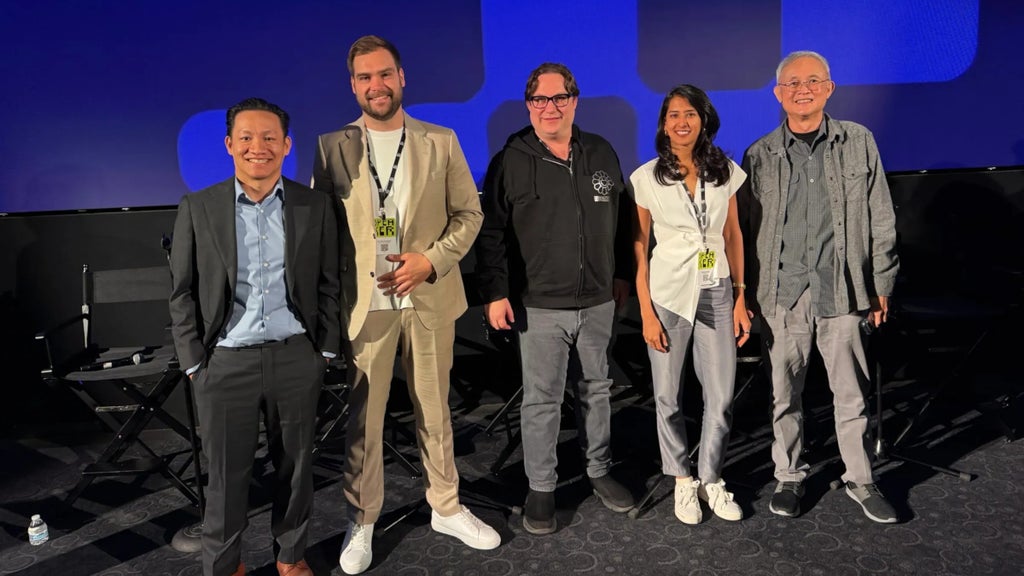
“There are two whole industries already spun up with two and a half billion audience members already running outside of North America,” he said.
In other words, the AI train is going to keep trucking along whether Hollywood wants it to or not.
When asked about reaction to “Mahabharat,” Bugaj acknowledged audiences didn’t connect with it the way Jiostar would’ve wanted, but noted that the fact that it was AI didn’t factor with Indian audiences.
“Indian consumers kind of don’t care,” he said. “If it’s good, they like it. If it’s bad, they don’t like it. But they don’t care what the format is or the medium was to make it.”
Like with any other program, it’s about making something that clicks.
“Now that we’ve been first, it’s time to focus on making things that are excellent,” he said.
