
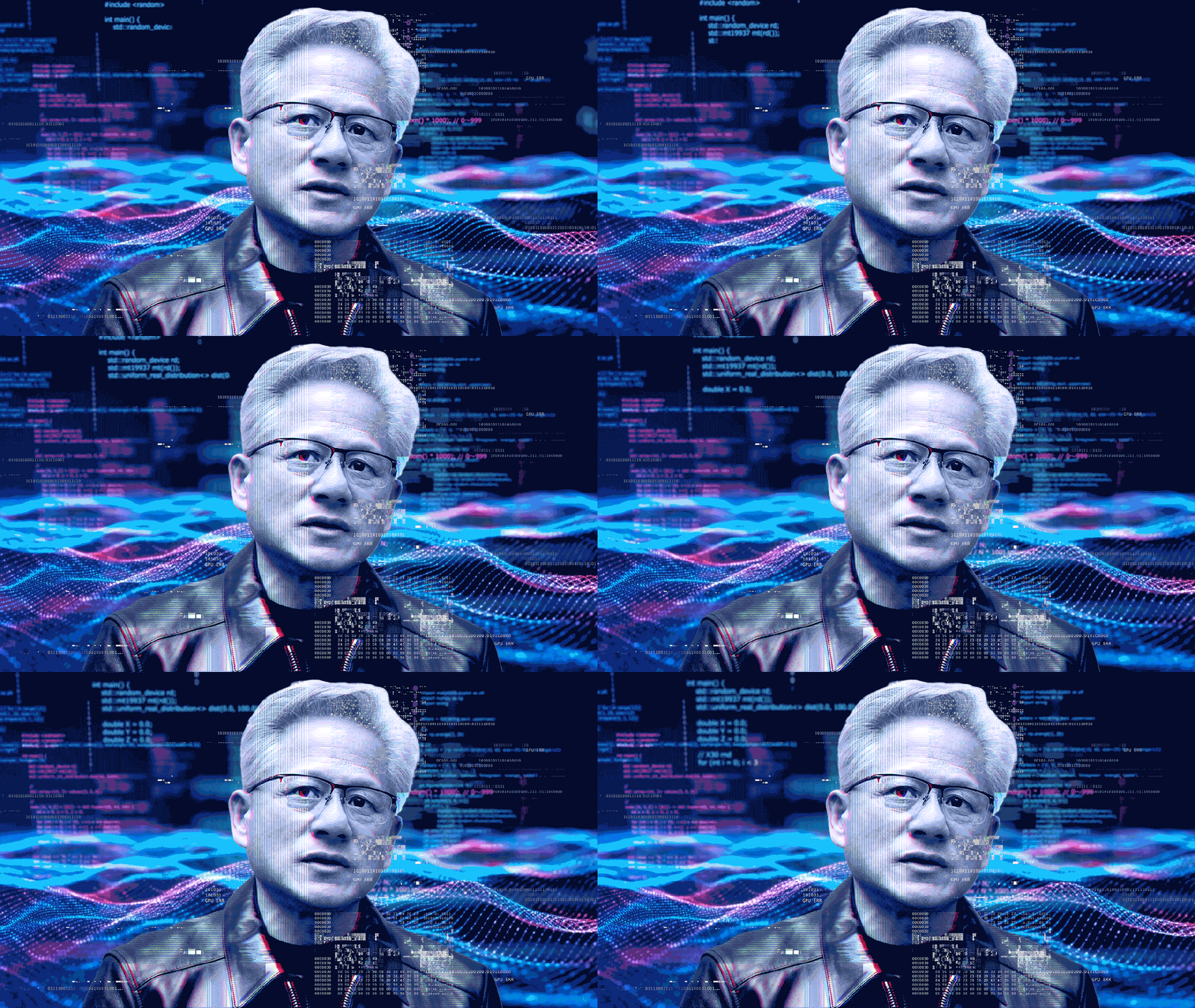
In September, Nvidia CEO Jensen Huang was speaking at a tech industry summit fireside chat in Los Angeles when a stagehand appeared with his iPhone Duo — more than a month before Apple would officially release the foldable phone — and special guest on the other line: President Trump.
For about a minute, Huang spoke with Trump on stage as the hosts and audience listened in silence to his end of the conversation. He finally turned on the speaker, leading to the president going on a four-minute diatribe about “the AI,” his uncle at MIT and the virtues of data centers. Huang finally cut off Trump, proclaiming, “We’re going to make sure everybody wins in the AI race in America.”
“I’ll call you back later,” he added as the audience roared with approval.
Call it the ultimate flex or a well-timed publicity stunt, the exchange nevertheless illustrated the power and influence that Huang wielded as the face and central pitchman for unbridled AI advancement. Nvidia is the biggest supplier of high-end processors used in AI development and a major investor in AI companies, including Runway and ElevenLabs, a position that has made it one of the most valuable companies in the world. Huang, who co-founded the company and has been a singular force driving its ascension over the past three decades, was seen as bulletproof.

That all came crashing down on Thursday, when Huang stepped down from the company amid controversy over three extramarital affairs, including one with a suspected Chinese spy and the other two with employees.
His exit closes a chapter on the remarkable tale of a tech pioneer who developed a cult following through charismatic unveilings of powerful graphics cards for gaming rigs and powerful computers used by Hollywood on visual effects, only to shoot into superstardom as they became essential for the AI boom. It also serves as a cautionary tale of the dangers of a company that ties itself too closely to a single figure (Huang’s contemporaries include Mark Zuckerberg and Elon Musk).
From a broader perspective, his downfall also comes at a time when the AI world is in flux. Anthropic is poised to test investors’ nerves with an initial public offering valuing the AI startup at $1.4 trillion (yes, with a t). The Democrats are poised to retake Congress in January, and will likely apply a far more critical lens to AI companies even as they continue to be locked in an arms race with China. Then there is the persistent existential threat that AI poses, with OpenAI board member Paul Christiano warning earlier this month about the catastrophic risks that come from rapid AI acceleration.
Nvidia shares fell 5.3% to $164.66. Both the Nasdaq and S&P 500 are also down fractionally.
The salacious details
Huang’s affair with Alice Huang (no relation), a Chinese businesswoman U.S. intelligence officials suspect is an asset for Beijing, appears to be the tip of the iceberg.
More dirty laundry spilled out after Jensen Huang’s admission. On Wednesday, New York Times reported that he had an affair with Kimberly Powell, Nvidia’s vice president of health care. On Thursday, Reuters said that Huang had a relationship with a second employee, but didn’t name the individual.
Also eyeraising, the Wall Street Journal reported that Alice Huang was introduced to Jensen Huang through her husband, Chinese businessman Kang Wei. Kang reportedly appeared to accept their romantic relationship, which was an example of how the two leveraged their relationships to advance their business ventures.
U.S. officials believe Alice Huang was recruited by Chinese intelligence because of her relationship with the CEO.
On Thursday, Nvidia said its chief financial officer, Colette Kress, will serve as interim CEO until a permanent replacement is found.
“Colette has helped lead Nvidia through a period of extraordinary growth and has a deep understanding of our business, customers, operations and financial position,” said Harvey Jones, Chair of the Nvidia Board of Directors. “She is supported by an experienced leadership team that has been instrumental in executing Nvidia’s strategy and advancing its technology roadmap. The Board has full confidence in Colette and the leadership team, and we expect the company’s operations, customer commitments and product roadmap to continue without interruption.”
While Kress is serving as interim CEO, at least one expert said she could be a good fit as the permanent chief.
“Jensen was not the technical mind behind the innovation; he was the one making money from it, which I think explains why they put CFO (Kress) as interim and honestly it could be the best choice for the company vs. someone from the outside,” said Carolina Milanesi, president and principal analyst at Creative Strategies.

Moving past a troubled CEO
History is littered with CEOs undone by their own dirty deeds — particularly in the tech world.
Uber co-founder Travis Kalanick was forced to resign in 2017 following scandals involving sexual harassment allegations and claims of fostering a toxic work environment. WeWork co-founder Adam Neumann was forced out by the board after a public filing exposed huge losses and erratic behavior.
Hollywood has its share of CEOs behaving badly, from CBS’s Les Moonves to Warner Bros.’ Kevin Tsujihara and Fox News architect Roger Ailes. But the vast media machines they ran dutifully marched on without them.
How does a company get past losing a visionary founder and charismatic chief?
“Jensen is the product strategist, the closer with the big cloud companies and the face of the company in Washington and Beijing, and there’s no named successor,” said Patrick Moorhead, CEO of consultancy firm Moor Insights.
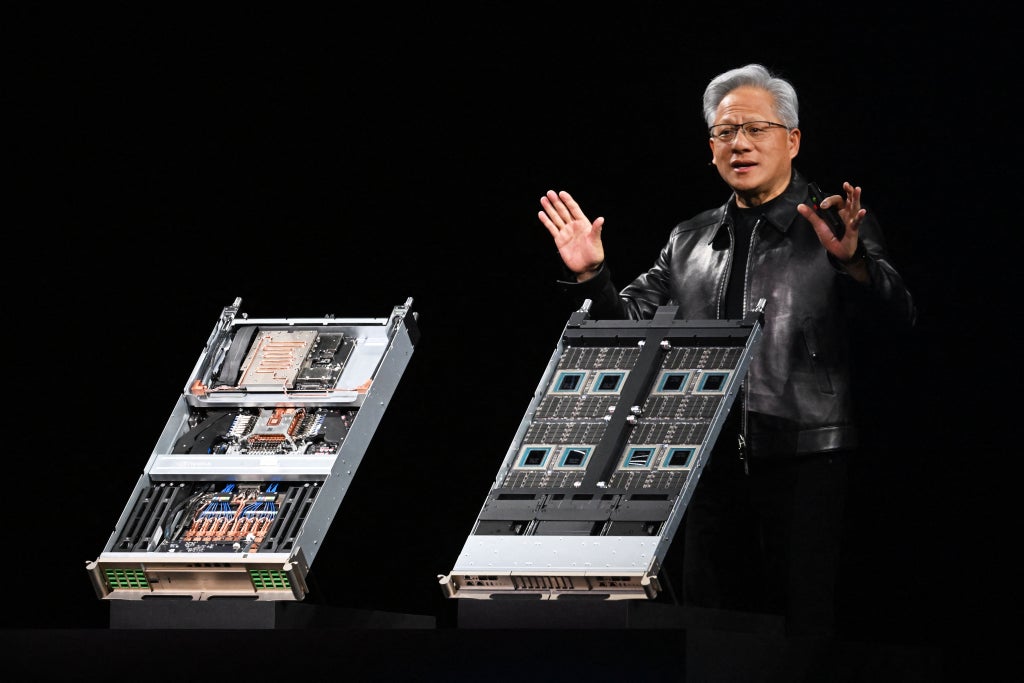
Given the demand for Nvidia’s chips and the long-term contracts already signed, the company isn’t going anywhere. But finding the right leader will be critical.
The best case scenario for a leadership transition is arguably Apple’s handoff from Steve Jobs to Tim Cook. Jobs, who was battling pancreatic cancer — a fight he would succumb to — clearly designated Cook as the next leader of the company. Trump posted on Truth Social Thursday that Cook, who retired from Apple in September, would be an ideal candidate to take the reins at Nvidia.
But Apple had the luxury of time and the changeover was free of scandal. Nvidia will be under the gun to find its new CEO, and Huang did not have a succession plan in place.
Whoever takes over may encounter a new world from a regulatory front.

New AI scrutiny
Beyond the sordid aspect, Jensen Huang’s affair also has massive geopolitical implications.
Huang has long been a proponent of selling his chips to as many customers as possible, regardless of borders. It’s a stance that stands in stark contrast to the U.S. government’s attempt to bar foreign adversaries — namely China, but also Russia — from getting access to chips made from U.S. companies, with Nvidia a chief supplier.
Huang’s desire to sell chips to China was already rooted in business sense — more chips means more money for Nvidia — but his comments now have to be viewed through the lens of the affair and influence Alice Huang held over him.
The other X factor is Huang’s close relationship with Trump, who reportedly knew about the affair a year ago but didn’t intervene. There’s already some blowback hitting the Trump administration for a loophole that AI suppliers like Nvidia have used to sell chips to cloud service providers in Singapore, which then lease their capacity to Chinese AI companies.
“Not only do I hope for Jensen Huang to come and testify, but I would like for (Commerce) Sec. (Howard) Lutnick ASAP to come testify before the Senate Banking Committee, because we have a lot of bipartisan questions and concerns about what’s happened over the last year that would allow some of these issues to continue to occur,” Sen. Jim Banks (R-Indiana) said on Fox News.
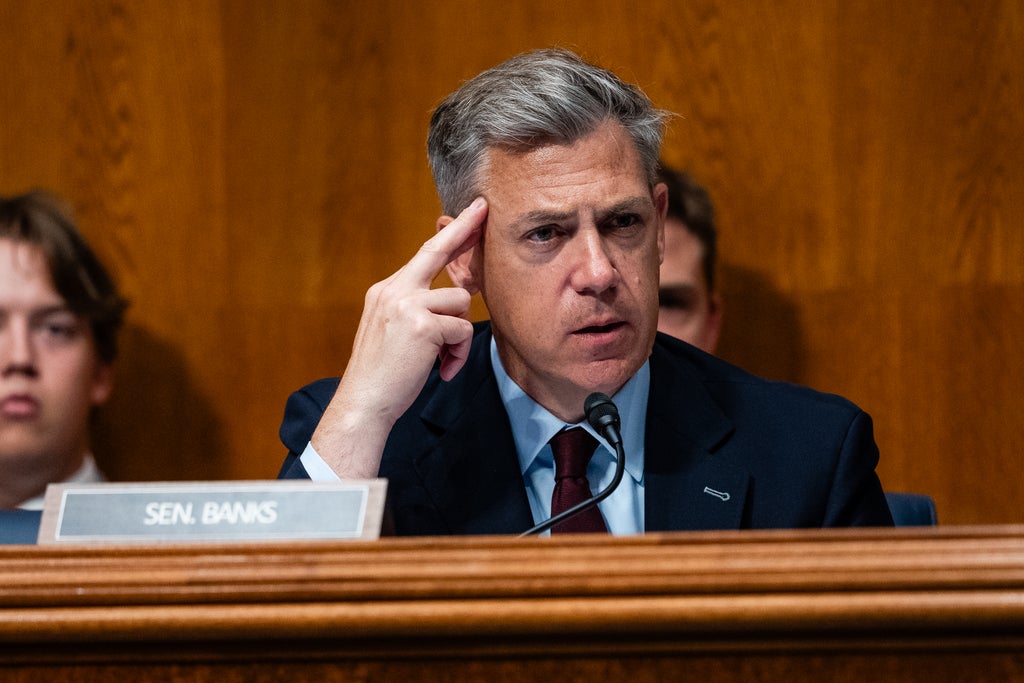
The Democrats taking over Congress were already looking to halt AI’s unchecked progress, and this red flag is an incident that could embolden many lawmakers on both sides of the aisle.
There are already two bipartisan bills in Congress that aim to apply more strict restrictions: The Chip Security Act has been proposed to prevent the smuggling and diversion of advanced AI systems and chips to foreign adversaries such as China, Russia and Iran. The AI OVERWATCH Act also aims to control the export of AI chips to those countries.
Beyond just supplying chips, Nvidia also is a shareholder in many of the major AI companies — OpenAI and Anthropic among a few — and is fostering a generation of AI startups. That includes several players familiar to Hollywood, including AI video generation company Runway, voice and audio provider ElevenLabs and image generator Black Forest Labs.
In many ways, Nvidia has served as the engine for the entire AI revolution. It remains to be seen whether Huang’s affairs represent a minor misfire or a more serious stalling out.