
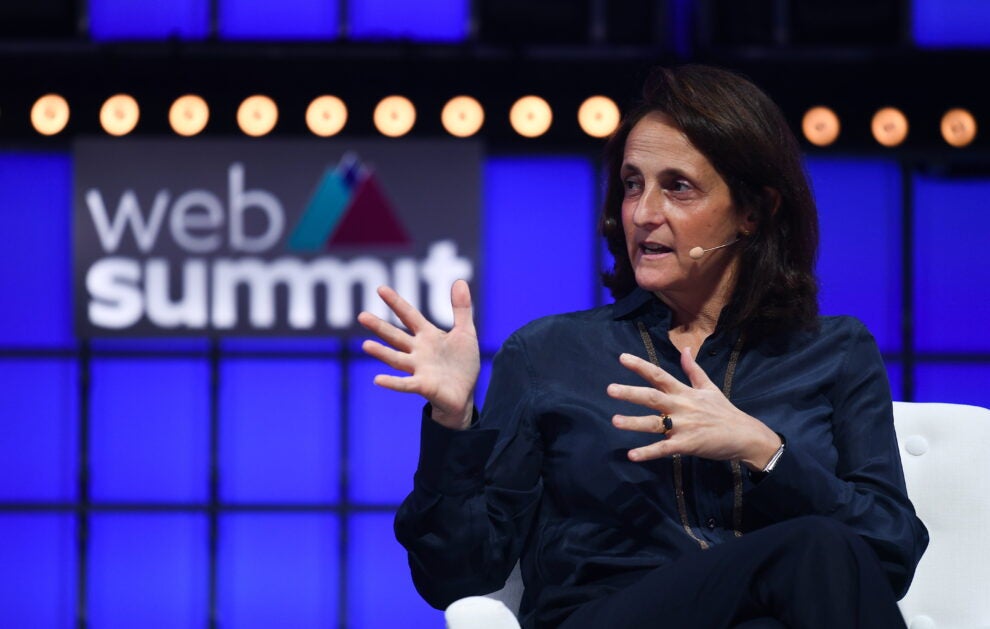
Artificial intelligence could pose an “existential” threat to journalism if publishers aren’t fairly compensated for the content that powers AI models, Reuters Editor-in-Chief Alessandra Galloni warned this week. She argued that the industry’s future depends on preserving the financial value of original reporting.
Speaking at the Andrew Olle Media Lecture in Sydney, Australia, Galloni said the rapid rise of generative AI has created one of the most consequential challenges news organizations have faced in decades, as tech companies increasingly rely on journalism to train and inform their products.
“Without reliable, independent journalism, democracy suffers,” the EIC said. “But without a sustainable business model, journalism itself is at risk.”
Galloni described AI as both an opportunity and a threat, saying the technology has the potential to improve newsroom workflows and help journalists work more efficiently. However, she also cautioned that those benefits could be outweighed if AI companies continue using publishers’ reporting without providing appropriate compensation or attribution.
She further characterized the issue as an “existential” one for journalism, arguing that news organizations invest heavily in original reporting while AI developers can derive significant value from that work.

Reuters, which has taken a relatively measured approach to generative AI, allows journalists to use approved AI tools for certain editorial tasks while maintaining that humans remain responsible for all published reporting.
Galloni said protecting intellectual property is essential to ensuring news organizations can continue producing original content, particularly as audiences increasingly consume information through AI-powered products rather than through traditional news websites and apps.
Her remarks came as publishers around the world continue to grapple with the legal and financial implications of generative AI. The New York Times has sued OpenAI and Microsoft over the use of its reporting to train AI models, while several other media companies have opted to sign licensing agreements with AI firms.
The debate has become one of the defining issues facing the news industry, with publishers attempting to balance the productivity gains AI can offer against concerns that the tech could undermine the very business model that funds original journalism.
Galloni argued that the long-term health of both journalism and AI depends on recognizing the value of professionally reported news. “If journalism is weakened,” she concluded, “everyone — including AI companies — ultimately loses.”
