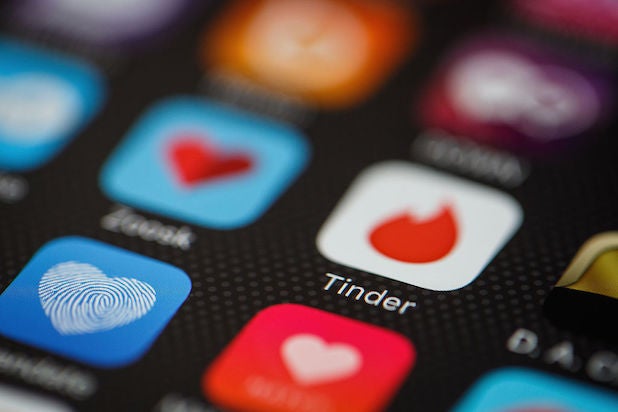
Just because you don’t want to “swipe right” on old people doesn’t mean Tinder can charge them more for using its app.
A California appellate court has ruled the dating platform made an “arbitrary, class-based generalization” by charging users older than 30 more for its “Tinder Plus” service. Users under 30 are charged between $9.99-$14.99 a month, while “geezers” have to pay $19.99 a month for the upgrade, which comes with perks like unlimited swiping and the ability to change your swiping location — if you’re looking to setup a holiday hookup in Cabo, for instance.
The lawsuit was initially filed by Tinder user Allan Candelore in 2015, accusing Tinder of violating age discrimination laws. He cited the Unfair Competition Law and the 1959 Unruh Act, which “secures equal access to public accommodations and prohibits discrimination by business establishments.”
Tinder argued younger users have less disposable income, and needed a “lower price to pull the trigger.” A lower court initially sided with Tinder, but Judge Brian Currey ruled in favor of Candelore earlier this week. Some older users “will not fit the mold” of having more money to spend, Currey said. He even made a Tinder joke when issuing his ruling:
“We conclude the discriminatory pricing model, as alleged, violates the Unruh Act and the UCL to the extent it employs an arbitrary, class-based, generalization about older users’ incomes as a basis for charging them more than younger users. Because nothing in the complaint suggests there is a strong public policy that justifies the alleged discriminatory pricing, the trial court erred in sustaining the demurrer. Accordingly, we swipe left, and reverse.”
Good one, your honor.
8 Eye-Popping Gadgets at CES 2018, From Storytelling Robots to Augmented Reality Glasses (Photos)
Tech companies have gathered at CES in Las Vegas to show off their newest gadgets for 2018. From Samsung's massive 146' TV to the first fingerprint sensor smartphone, check out what has caught our eye so far.
Vivo
Samsung has taken the big screen to a whole new level. "The Wall" is literally bigger than most walls, coming in at 146' wide. The picture is just as eye-catching, with its MicroLED display representing a major step up from the LED screens found on most TVs. If you're looking to cover your living room wall with "The Wall," it's coming out sometime in 2018, although the company hasn't put even a ballpark price tag on it yet.
TheWrap
Rokid's AR Glasses highlight the main reason TheWrap continues to be bullish on AR compared to VR. In short: functionality. Throw on a pair of these wi-fi enabled glasses, look someone in the face, and you'll be hit with their social media profiles and contact information. It's a bit Terminator-esque. The glasses, manufactured out of San Diego, will be arriving later in 2018. Rokid wouldn't put a price on it, yet, but said it'll be "competitive" with VR headsets like Oculus, which run for roughly $400.
TheWrap
Dolls are out, robots are in. That's what AvatarMind wants parents to believe, at least. The China-based company was showing off its three-foot robot, aimed as a 21st century educational toy for kids. The bot will sing lullabies and read stories, among other features. They'll cost around $1,600 to $2,000 when they come out in the U.S. later this year.
TheWrap
Samsung and Apple lost the race to fingerprint sensors to Vivo. The Chinese smartphone maker has put th scanner right on the front of its unnamed phone. Similar to signing in at the gym, simply place your finger on a blue dot at the bottom of your locked screen, and it'll open up. It's the first smartphone to integrate the tech.
VIvo
XYZ's 3D Da Vinci printer shows you can make nearly anything in minutes... even a bust of President Trump, if you want.
Getty Images
Sony is showing off its three new "extra bass" SRS speakers, running between $100 and $250. The Bluetooth-enabled speakers have 24-hours of battery life.
Sony
Japan-based Omron's electronic censors can mirror human movement by building an artificial intelligence-powered ping-pong partner. Unfortunately, you can't buy this for practicing in your basement. But the global company's tech is being used at U.S. companies like Tesla, where it helps assemble its cars.
TheWrap
Saving the adult content for last. Mashable recently pointed out porn accounts for 60 percent of the top virtual reality sites, and the industry is now betting on augmented reality as well. Naughty America, a San Diego-based studio, is displaying an upcoming AR app that'll allow fans to superimpose themselves right next to their favorites adult performers.
TheWrap
1 of 9
The first fingerprint sensor-enabled smartphone is also on display
Tech companies have gathered at CES in Las Vegas to show off their newest gadgets for 2018. From Samsung's massive 146' TV to the first fingerprint sensor smartphone, check out what has caught our eye so far.