
"He always seems to know where to look," Roger Ebert wrote of what Werner Herzog does in "Into the Abyss." The film is the German director's evenhanded, understated and powerful examination of a senseless triple murder in Texas, which sent one man to death row and another to life in prison.
"Into the Abyss" is made up mostly of one-on-one interviews that Herzog conducted with the two convicted killers, Michael Perry and Jason Burkett, along with their friends and family, family members of the murder victims, and others involved in Texas' death row.
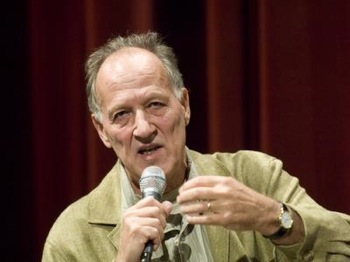
The film, which opened in limited release on Friday, never says that Herzog is against the death penalty (which he is), but it paints a devastating picture of cycles of violence and wasted lives on both side of the prison bars.
Note: Herzog's last answer (after I note that the two killers he interviews are dramatically different) contains a detail that might conceivably be considered a spoiler, if you haven't seen the film and aren't familiar with the story it chronicles.
Also read: Werner Herzog's New 'Into the Abyss' Poster: First Look
I understand that this isn't the only film you're doing about death row.
Well, "Into the Abyss" is a whole tapestry, and only part of it is about death row. It's very much about life. I have also filmed some death row inmates for a series of one-hour films for television, which will be called "Death Row." That's very much focused on one person on death row, and no big tapestry of people around it, members of the families of victims, and whatever.
So somehow like an aftershock in an earthquake, you still have some tremors. There will be some more death row films.
What drew you to the story?
I think it was my sense as a storyteller. When something comes across, you know immediately this is big and you better go for it. And in this case, what was so mind-boggling was the senselessness of the crime. I mean, it can't get any more senseless.
And of course what actually also emerged is the sense of life. How can we lead a decent life with a cohesion of small families that stick together and give a sense of values to the kids, pass something on and take care of each other? Which was absent with both of the perpetrators.
We do not know how we are going to die and when we are going to die. And all of a sudden you are confronted with someone who knows exactly every step of the protocol, and who knows exactly what minute and what day he's going to die.
Unlike many of your documentaries, where you're the narrator, you don't do voiceovers in this film. And yet your voice is a key part of the movie, because we hear you asking questions of all the people who are interviewed.
Yes. And every single person that you see on camera, I met less than one hour in my entire life.
So how did you know, for instance, that asking about a squirrel would get the chaplain to break down?
The chaplain had to be in the death chamber within 40 minutes. He arrives where we just had set up the camera and he says, "Quick, quick, let's get over with it because in 40 minutes I have to be in the death house." So I introduce myself, telling him why I would like to film with him, and he starts to talk almost like a television preacher about the ever-loving, forgiving God, and paradise awaits everyone, and he looks at creation and sees this beautiful grass, and on the golf course a squirrel and a horse and some deer, and how beautiful it is.
 And now I ambush him. I ask him, "Tell me about an encounter with a squirrel." And he very cheerfully says, "Oh yeah, I was on the golf course in my cart, and these squirrels ran out, and I put on the brakes, I could have run over them, and they looked at me, and how about that!"
And all of a sudden he unravels, because he realized in 20 minutes he has to assist an execution, and unlike the golf cart, he cannot stop what is going on. He cannot rescue anyone.
The question seems like a throwaway until you hear his answer.
Yes. And nobody in film school can ever teach you that, how to crack him open with his cheerful voice. When you're a director of movies, you better know the heart of men and know how to very quickly look in the deepest recesses of his soul.
I' m not a journalist. I don’t have any questions. "Tell me about an encounter with a squirrel" is not a real question from a journalist, but it comes because all of a sudden I see something and I know how to crack him open.
At the beginning of your conversation with Perry, you tell him, "I respect you but I don't have to like you … "
No, it's important to get the quote right. I tell him, "The fact that your childhood was really bad does not exonerate you, and it does not necessarily mean that I have to like you." It freezes him for a second, and I have to expect that after 120 seconds our discourse could have ended. But nobody speaks as free, as straight with them, and they appreciate it.
And yes, I tell him, "It does not necessarily mean that I have to like you. But I respect you as a human being." Everybody tells me that these crimes are monstrous and these are monsters to be killed off. I respectfully disagree. Correct, the crimes are monstrous, but the perpetrators are just human beings who have done something senseless, violent, evil. But they are still human, they are not monsters, and I treat them as human beings. And I do not believe the government should have the power to execute anyone.
 Many of the films that deal with crimes are devoted to figuring out exactly what happened. Your film isn't really concerned with that.
Those are issue films. Very often films about death row inmates are trying to prove the innocence of a perpetrator, very famously so in the case of Errol Morris' film "The Thin Blue Line," where during the making of the film all of a sudden another man confesses to the murder. Fine, yes. But that's not what I did. It's not an issue film. It has to do with us, with our lives, with our abysses, with our squirrels that we encounter.
The two convicted killers you interview in the film are dramatically different.
When you look at Perry (photo above), he is a very nice kid, almost like a lost kid somehow. And when you look at his co-defendant, Burkett, he is big and intimidating looking and scary looking.
But among all those who I have met, and I have seen now five or six people on death row, I am absolutely sure that Perry was the most dangerous. If you run into Burkett in a dark alley under murky circumstances and that guy comes at you armed and hostile, yes, okay, you can deal with it. But if Perry comes at you, you know this is it. He is the most dangerous one of all that I have seen.
Or he was. Sorry, I apologize. He was executed eight days after I met him.