With all that’s covered in the fine print of reality TV contestants’ contracts these days, it would seem that producers are bulletproof against lawsuits.
But when danger enters the equation, do those contracts really have the teeth to keep contestants quiet? Can reality shows hide negligence behind a piece of paper?
If participants are ever put in real peril, experts say, liability waivers and confidentiality agreements could be void under various whistleblower protections — depending on the state, and the severity of the situation, of course.
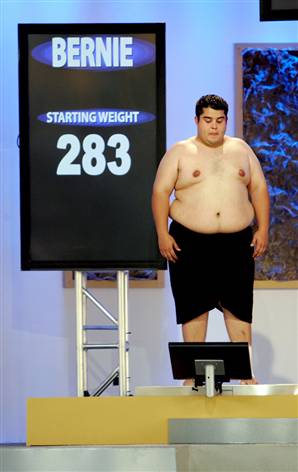 But should contestants decide to try their cases in the court of public opinion, they can find themselves threatened with legal action, as a recent New York Times story about "The Biggest Loser" demonstrated.
"Confidentiality agreements aren’t put in place so producers can hurt people," said Steven Katleman, an attorney with Greenberg Traurig who has advised reality shows. "They exist to protect the architecture of shows. For example, you don’t want someone to let out who the winner is."
When a reporter from the Times started contacting contestants about allegations that they were encouraged to engage in dangerous weight-loss techniques, a producer sent around a threatening email stating that anyone who talked without the show’s consent faced fines of between $100,000 to $1 million. J.D. Roth, the program’s co-creator said that he could not confirm any specific message from show producers, but that "emails like that go out multiple times a year."
"We’re not trying to hide anything here," Roth added. "Every contestant on the show is free to talk to the press and we provide plenty of press opportunities. We just want to be sure we’re always aware before they’re talking to someone, so they don’t reveal who won or ruin the show for viewers."
Roth points out that these agreements are standard practice among reality show productions, but they still raise a number of thorny legal issues.
To begin with, as TheWrap has previously reported, reality show contracts usually include a litany of stipulations absolving producers of responsibility for everything from public defamation to the contraction of sexually transmitted diseases. Just because something is included in a contract, however, doesn’t mean that it will hold up in court.
"In drafting these releases, producers typically try to limit their liability to the greatest extent possible. However, some clauses are overreaching and arguably not enforceable," said Matthew Savare, a media and entertainment lawyer with Lowenstein Sandler PC. "For example, states generally will not enforce exculpatory provisions that attempt to shield a party from his or her own recklessness and willful misconduct. Some will not enforce clauses shielding a party from his or her gross negligence."
That’s a high bar, though. Many of the unsafe measures practiced by the "Loser" contestants did not take place at the behest of the show’s producers. Nobody explicitly told participants to engage in potentially life-threatening activities like dehydration in order to shed pounds.
"I’m not sure how much sympathy I have," said Rob Rader, an attorney at Mitchell Silberberg & Knupp who has counseled reality show producers in the past. "You’re going on a diet show, so you know you’re going to be pushed to not eat as much and exercise more than you might be comfortable with."
The producers of "The Biggest Loser" said that they take precautions to make sure that participants are safe, such as administering regular blood and urine analysis to monitor contestant’s health and making medical staff and trainers available 24 hours a day.
"I believe that we create an extremely healthy environment that any obese person would kill to have at their disposal," Roth said. "We give them a chance to turn their life around and lose weight. I wish the Times had talked to one of the people who had an incredible experience."
Many lawyers also suspected that the show would never take undue risks with a contestant’s health.
"I don’t work on ‘Biggest Loser, but as a rule, reality shows, particularly those involving the health and safety of participants, are incredibly cautious," Katleman said.
And Rader said he’d be shocked if a show was willing to risk a contestant’s dying.
"If you have a death, your show might be over," he said. "It’s true people get hospitalized, but they are careful not to push too far. If for no other reason than they would be killing the goose that laid the golden egg."
Willful negligence would be difficult to prove. Some lawyers suggested it would have to be as extreme as the producers failing to have medical personnel on hand during dangerous stunt work or neglecting to weigh a contestant before they went bungee jumping.
Were the conditions truly dangerous, then the contracts would most likely be void and the contestants could cite various whistleblower protections to justify violating a confidentiality agreement. The strength of the various whistleblower laws varies dramatically on a state-by-state basis.
Savare said that while certain states are more protective of the little guy, "California is an interesting case … While the state is obviously the center of the entertainment industry and is extremely producer-friendly, it is also a state known to be protective of individuals and consumers."
California, where most of these cases would play out, has numerous laws designed to protect whistleblowers. They might even extend to cases where contestants weren’t expressly told to engage in dangerous behaviors, but were pressured to risk their safety because of the prevailing culture in the workplace.
Such as pushing the body to shrink faster than the guy who’s on the treadmill next to you.
"California law is probably the broadest law in protecting employee’s rights of anywhere in the country," said Carney Shegerian, an attorney specializing in whistleblower cases. "If there is illegality in forming a contract or there are unsafe work practices, the court will probably side with the employee."
"It’s so rare that most people know their rights," Shegerian added. "I’d be surprised if they ever ended up in the right attorney’s office."
It might not even get to that point. Many contestants lack legal advice and have limited means. It’s unlikely they would want to try their luck in court.
And sometimes, even the threat of litigation — in the form of, say, a reminder email — is enough to make contestants clam up for good.