
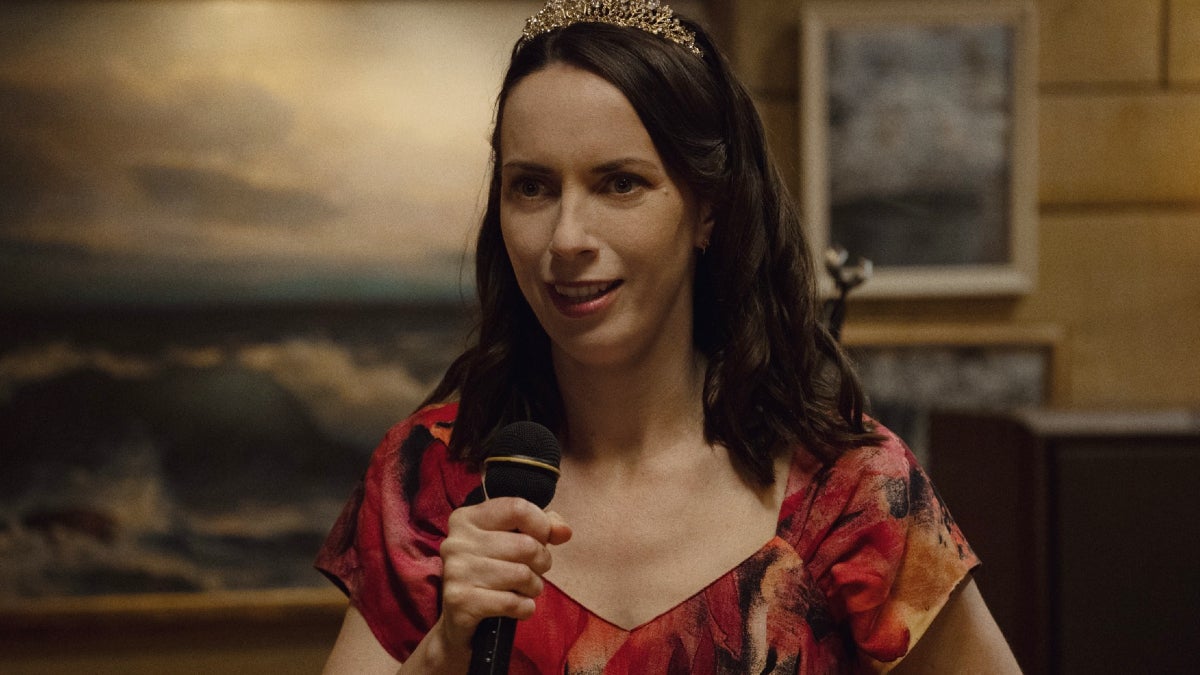
When Apple TV debuted “Widow’s Bay” on April 29, the critical consensus was that it nailed the notoriously difficult horror-comedy tone. But behind the glowing reviews lies a bigger industry story. “Widow’s Bay” is part of a broader decade-long shift in what audiences expect from the genre and highlights a highly lucrative global whitespace for content that can effectively walk the line between horror and comedy.
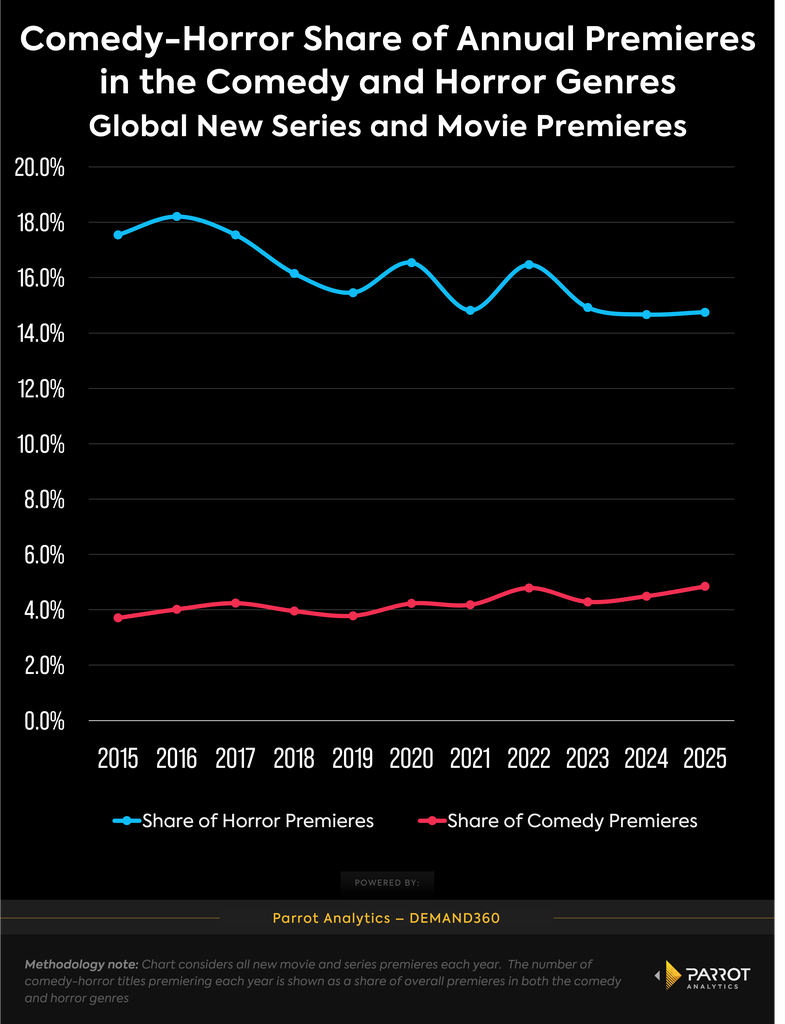
Horror has often relied on camp and comic relief to soften the blow. A decade ago, over 18% of all new horror premieres had some overlap with the comedy genre. That has declined, and as of last year, the number was below 15% as horror leans into pure fear and relies less on comic relief.
But as horror sheds the laughs, comedy appears to be embracing the jump scare. The share of new comedy premieres embracing horror elements has grown steadily since 2015, nearing 5% today. In a highly fragmented TV landscape, life-or-death stakes can help comedies cut through the noise.
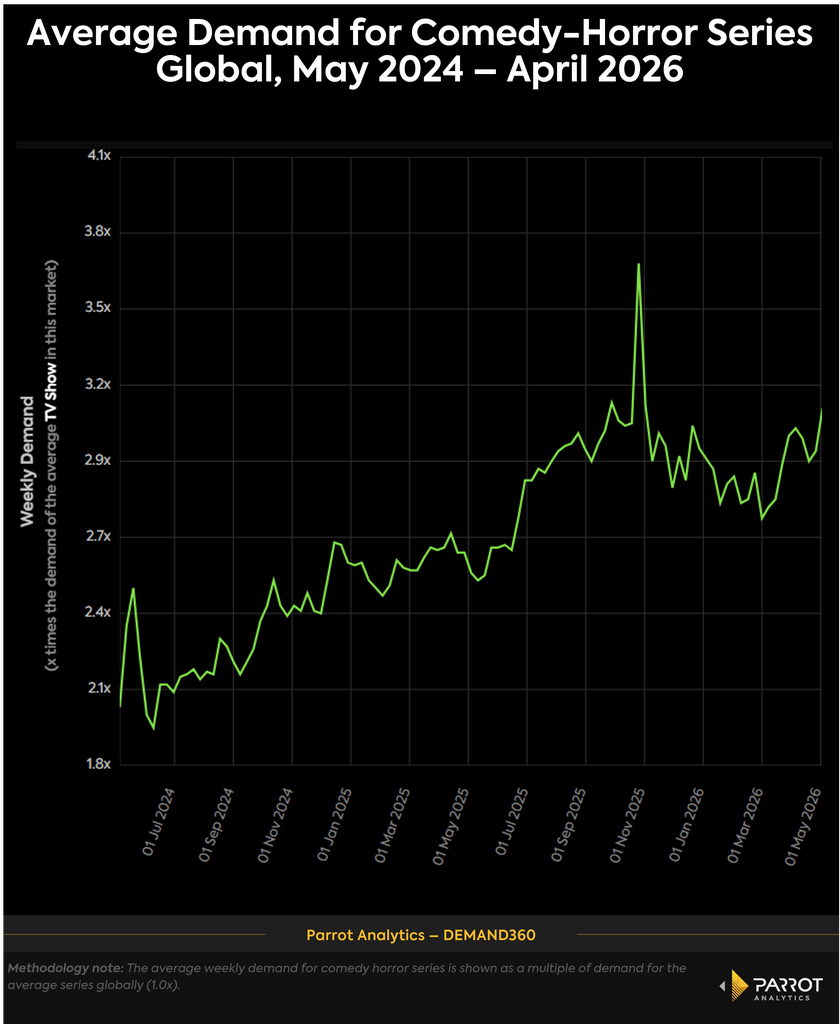
The business case for mixing these genres is strong. Over the past two years, audience appetite for comedy-horror series has shown strong growth. Since mid-2024, the genre has seen a 50% increase in average demand, rising from around 2x the baseline of an average show to a steady 3x today.
To put that in perspective, the overall average demand for comedy series was less than 2x the global average series demand in 2025. Comedy notoriously struggles to cross cultural borders because humor is highly localized. Fear, however, is more universal, and it seems that adding horror elements gives these comedy shows a leg up when it comes to international travelability. While the potential audience for a horror comedy may be smaller than a generic sitcom, this genre has had a higher hit rate, making these investments look less risky.

“Widow’s Bay” is proving this thesis in real time. The show peaked at 30 times the average series demand and has been matching other new titles like “Imperfect Women” and “Margo’s Got Money Troubles” in their equivalent launch windows.
Streamers and networks are constantly searching for the next surefire hit that can travel globally without losing its edge. The data is clear: audiences want their laughs served with a side of dread. For platforms willing to take comedy into darker territory, the demand is already there.
