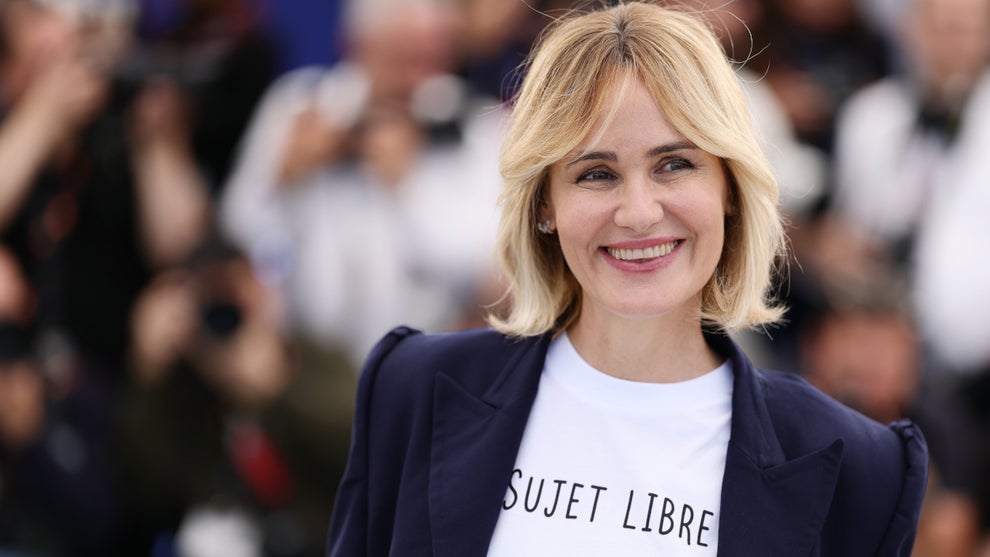
Judith Godrèche doesn’t just want to start a conversation.
A fixture of international film and television, the actor and filmmaker has more recently redefined herself as French cinema’s leading MeToo voice — calling out industry aggressors and codes of silence while backing her activism with legal action. She simultaneously stepped up her work behind the camera, moving from the 2023 series “Icon of French Cinema” to the 2024 docu-short “Moi Aussi” to her feature, “A Girl’s Story,” now premiering in Cannes’ Un Certain Regard.
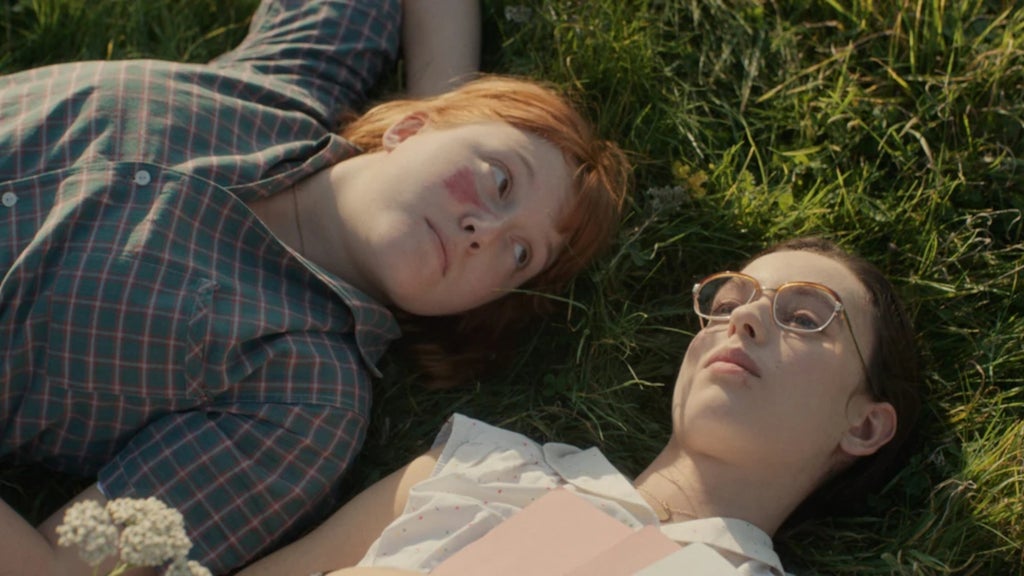
Adapted from Nobel laureate Annie Ernaux’s 2016 autobiographical novel — though that description applies to virtually all of Ernaux’s work — “A Girl’s Story” centers on adolescent intimacy and consent, following a 17-year-old over a summer at camp as she discovers that becoming sexually active means ceding much of her physical autonomy. Or, in Ernaux’s own words: “This is the last time I’ll own my body.”
Godrèche first read the book in 2024, just as she was collecting testimonies for her MeToo doc and readying her call-to-arms at France’s César Awards and Cannes. She immediately recognized her next project.
“You can’t separate the woman from the filmmaker,” she tells TheWrap. “I found it fascinating how current the book felt, given that the story takes place largely in 1958. It’s extraordinary how relevant those themes still are today — especially this idea of moral harassment. When you look at any director’s body of work, there’s generally a thread running through from one film to the next. In my case, that resonance has a particular direction.”
A second lodestar emerged months later, when Godrèche binged Netflix’s “Adolescence” in early 2025. The series only doubled the filmmaker’s ardour.
“I kept thinking, ‘It’s incredible how nothing has changed,’” she says. “This desire to belong to an in-group, this ever-present hand of patriarchy casting its shadow and defining human relationships — even between girls.”
Ernaux is celebrated for inhabiting the past from within the present — stripping away hindsight to render pivotal moments, however thorny, as if they’re unfolding right this minute. As a reader, Godrèche connected that permanent-now to her own experience; as a filmmaker, she set out to put it on screen.
“Annie is in the moment, even when writing about events from 1958,” says Godrèche. “I tried to do the same with an immersive camera — so the viewer never feels like a third party, but truly sees the world through Annie’s eyes. When directing my young actors, I didn’t ask them to perform in an affected ‘period’ way — because Annie told me that at the camp, they all tried desperately to seem cool, to be nonchalant. Which is exactly what teenagers do today.”

Godrèche envisioned young actor Tess Barthélémy in the lead from the start. The duo had worked together on Godrèche’s 2023 series and 2024 short, and had known one another as mother and daughter longer still. Even so, the filmmaker required screen tests and buy-in from her producers, financiers and Ernaux herself before committing to give her young lead a safe set.
“Making cinema responsibly matters most,” she said. “How to film violence in a feminist way, how to ensure the set is a safe place, how to make sure that my daughter’s first experience as a lead actress takes place in a context where she knows she can request an intimacy coordinator, where everything is properly framed. The first time is important. When you begin your career in a healthy environment — knowing what good conditions look like — it sets the tone for the future. When you start in a difficult context, you tend to believe that’s just how things are, and that you have to accept it.”
Here, three tenses converge — the actor who endured shameful practices, the activist now pushing back against them, the filmmaker looking to build something better.
“Actors are not supposed to live the violence,” she says. “Acting is a job. This is precisely what concerns me — the idea that because it’s your passion, anything can be asked of you and you can’t say no. That’s the grey zone. With an intimacy coordinator, a precise framework, agreed boundaries, rehearsals, all of that dismantles the fantasy that the actor must ‘live’ the violence. That can no longer be the reality.”
That standard shaped how Godrèche approached the film’s more fraught scenes.
“I needed to make an absolutely non-voyeuristic film,” she says. “The editing of those sequences — that first night — was extraordinarily deliberate, always from the character’s point of view, never allowing for eroticism or detachment. No nudity. How do you film the absence of consent? Because by definition, it isn’t cinematic. What interested me was filming the banality of that moment — someone says ‘Come on, let’s go outside,’ and you follow them. A minute later, you’re in his room. A second after that, he’s on top of you. How do you tell that story without sensationalizing it?”
The filmmaker forged her own method in “A Girl’s Story,” but she wants everyone to benefit from a better system. After inviting Godrèche to testify before France’s national assembly, local parliamentarians are now advancing a law that would enshrine child protection in the film industry. They introduced the bill on May 13 — just as Godrèche was on her way to Cannes.
