
There’s a sharable clip that Warner Bros. put out for “Mortal Kombat II,” which is now available on digital and a gorgeous 4K UHD disc, that shows some friends sitting down to watch the movie, a sequel to 2021’s “Mortal Kombat” and an adaptation of the beloved video game series. They have a giant bowl of popcorn and, just out of view, some spiky adult beverages (we’re assuming). “Recruit your champions, seize your snacks and get ready to kick it for a toasty movie night,” the text on the sharable reads.
It’s rare to see a piece of marketing so perfectly capture the ideal scenario for the movie, but this social sharable really does a remarkable job – “Mortal Kombat II,” a funnier, gorier expansion of the 2021 movie, with Karl Urban added to the mix as an egotistical American action star recruited to fight in a multidimensional brawl, is best enjoyed with some buddies at home. It’s a perfect “Friday night movie” – pure, did-you-see-that? fun.
And, again, we can’t recommend the 4K disc enough.
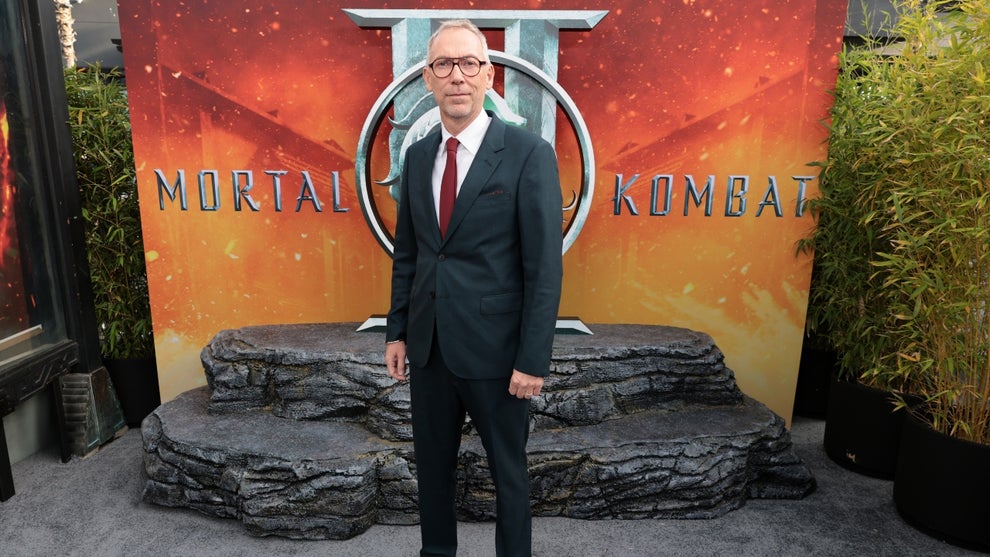
TheWrap spoke with director Simon McQuoid, who also helmed the 2021 version, about his intentions for the sequel, why studio notes aren’t always bad and what’s next for him (including whether or not it’s a third “Mortal Kombat” movie). Fatality!
Talk me through your experience on the first film, which was part of Project Popcorn (which saw every new Warner Bros. movie released in theaters and on HBO Max simultaneously) and what your intention was for the sequel.
Well, during that time, I was told that it was going to be released on HBO Max at the same time it was going to be in the theaters, I was just grateful that it was being released in theaters. We’ve all wiped it from our memory but they were rough times and we were finishing mode of post right in the middle of it. There were lockdowns and I was just grateful that we were getting any theatrical at that point.
I was just like, people have way bigger problems than I do about, Oh, I don’t just want it in cinemas. That’s a business decision that they were making, and that’s for them to decide. But I was just like, If that’s my only problem right now, I’m good. Everything was an unknown then and there was a weirdness around everything. It was like, Okay, well, let’s see how this goes. I think we were really excited by the fact that a lot of people came out to see it at the cinema. Opening weekend was $24 million in the midst of the pandemic. It was one of the first films that came out. I was really proud of that. I was actually impressed with the fans more than anything. It was like, Good for those guys, they want to see this film in the best way they can. I was impressed and thankful. And then it just went through the roof on HBO Max and we were told that it’s been streamed more than anything else they had on the site.

Wow.
Yeah, that was wild. And I try not to sort of breathe my own vapor about anything. I’m always very cautious about, Okay, let’s be realistic here. I never try and ride the highs too high and the lows too low. I’m always just trying to stay fairly steady about everything. But it was nice. It was good that people were enjoying it. I describe it as there was a climate of confidence around the film that allowed us to swing hard in the second film, and I think that’s the spirit that is infused into the second film.
So you got the greenlight and then what were your priorities for the follow-up?
After the first one, I just sat down, and it was still COVID times and I just thought, Okay, I’m going to put a document together that says, here’s what we did well, here’s what I could have done better, and here’s what worked and didn’t work and here’s where we can go, where we should go. And one of the first things was up the female representation. There’s so many great female characters in “Mortal Kombat.” Let’s bring Kitana. Let’s bring Jade. That brings Shao Kahn in. That brings Kitana’s primal revenge story, which is a very primal human connection to the audience, so that was really important to me – that we had these kind of really clean, clear, understandable, real emotions at stake, and it brings a great bad guy into the story that was going to be a creative challenge. I loved that challenge.
And then it was, Wouldn’t it be nice to go to some different realms and feel the different flavors that “Mortal Kombat” is and allows that visual variety that that adds to this sort of whole maximalist thing?
What I was really trying to do was be respectful to the material and respectful to the fans, but then also just continue to up the cinematic scale of it. But really what I learned was let’s put the characters and their relationships as the most crucial component, and then every creative decision we took from that point was about informing and building those relationships and characters.

What were some things from the first movie that you thought you could improve on?
I realized what I didn’t do as well as I could, what I wanted to focus on, was I wanted higher highs and lower lows emotionally. I wanted the bad guy to get his comeuppance more. I wanted you to feel that when there’s a fatality attached to something, it’s because you want the bad guy to die because of what he’s done and his actions and who he is. Also you want our heroes to succeed more. You want to be rooting for them more and I think I got a little better at that.
Also how do we get a greater sense of visual variety, which was appropriate for “Mortal Kombat,” it was an important part of the games’ DNA. I think there was a bit of that in the first film but I knew where we could expand and how we could expand, just on a practical level. I wanted the movie wanted to feel bigger on an emotional level and also a purely visual, cinematic level. I really leaned into the Imax of it all and really loved working with those guys. The technology they have there and the way they go about it, they’re very led by what the best creative experience is going to be and what the best cinematic experience will be for the audience. It was great. There was stuff like that that I just felt like, Okay, we can push here and we can push there.
Everything is much clearer in this one, even having the scoreboard up in the sky is extremely helpful.
Honestly, that wasn’t in the first couple of drafts of this edit. It was actually one of the notes from the studio guys. Like, It would be good if we had a clear reminder of the tournament. They didn’t prescribe how that it should be, but they were like, It’d be good if we had, and I thought, Yeah, that’s a really good point. I initially was like, Oh, I don’t know about that, is it going to get in the way of that narrative? And then I was like, Yeah, actually, it’s a pretty good note. And then it was just, how do we do that in a way that feels like it’s part of the essence of the elder gods. It was like, How do we make sure the audience knows who’s winning?
Not all studio notes are bad.
No. It’s to make better things. You want to listen. You want to give it a try because more often than not, there’s a really legitimate and good, smart reason that comes up. Often they’ll say something and you’re like, Yeah, what a good point. I had never thought of that. You need fresh eyes all the time and through the entire creative process.
What’s the status of the third movie? You coming back?
I think it’s still going through its life cycle. So I don’t know yet. I’m not sure.
Is a third movie something you would like to do?
Well, I feel like there are other stories that I want to tell that aren’t necessarily in “Mortal Kombat” and I have multiple things in development, one of which we’re just casting now and that’s not “Mortal Kombat” at all, something that is in the real world and very much a deep dive into a singular character and character study. I’m excited about it. But I never want to close doors. I’m just always trying to open doors.
“Mortal Kombat II” is out on digital and Blu-ray and 4K UHD Blu-ray right now. Fight!
