
“NAZA,” the buzzy Israel/Gaza documentary that received rave reviews after its world premiere at the Venice Film Festival, will be released online for free after its theatrical rollout, The Guardian announced on Thursday.
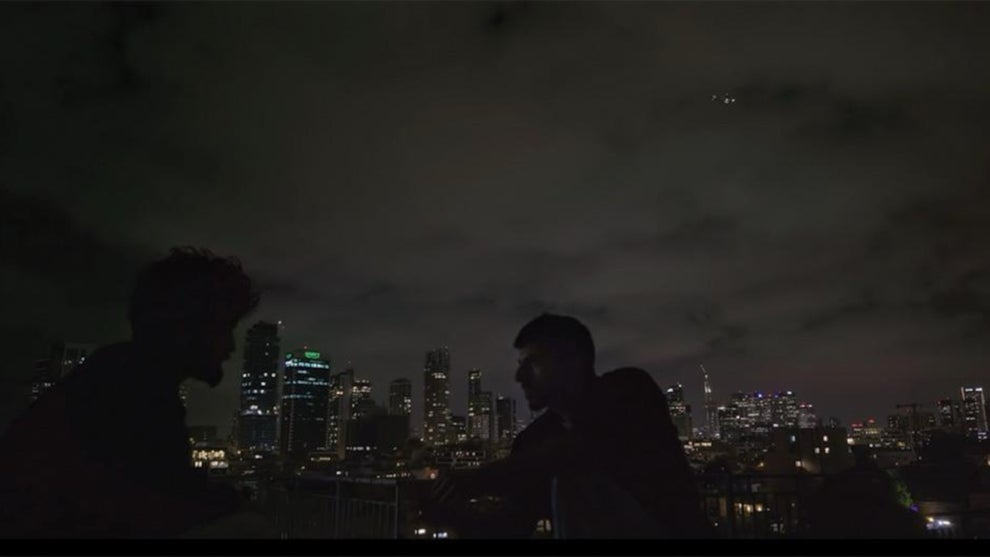
The film, which is produced by The Guardian and mk2, hails from Israeli Oscar-winning “No Other Land” filmmakers Yuval Abraham and Rachel Szor and features interviews with 24 anonymous IDF sources detailing the killing of Palestinian civilians.
The film will receive its North American premiere on Saturday at the New York Film Festival before opening four days later at the IFC Center in New York City, followed by an expansion to Los Angeles and other U.S. cities on Oct. 9 as part of a self-distribution model.
“NAZA” will also be released theatrically in 55 other territories including the UK, Australia, New Zealand, Japan, Canada, Hong Kong, Brazil, Turkey, Thailand, France, Spain, Germany, Turkey, Central America and the Middle East.
After its theatrical run has concluded, “NAZA” will stream for free on The Guardian’s website.

“NAZA is grounded in rigorous journalism published over the past three years,” said Harry Davies, a Guardian investigations correspondent and one of NAZA’s producers. “But it is also a powerful piece of cinema that will soon be available on screens, large and small, around the world.”
The Guardian said the film has been offered to several distributors and theaters in Israel and it is exploring ways to show the film in occupied Palestinian territories.
“NAZA” sparked controversy as soon as it premiered, with Israel denouncing the claims made in the film and Prime Minister Benjamin Netanyahu going so far as to move to revoke the Israeli citizenship of directors Abraham and Szor.
“We will stand by our heroic warriors. We will revoke citizenship from anyone who defames IDF soldiers abroad — and hit them hard in the pocket,” Netanyahu said last week.
“We made this film out of a sense of obligation to use our position as Israeli filmmakers and journalists to examine the systems behind the mass killing of Palestinian civilians for which our country is responsible. While filming members of Israel’s military on rooftops at night in Tel Aviv over the past three years, we found ourselves asking the very questions that were asked by our grandparents’ generation and throughout the 20th century: how does one group of people allow the total dehumanisation of another?,” the directors said in a statement.
