
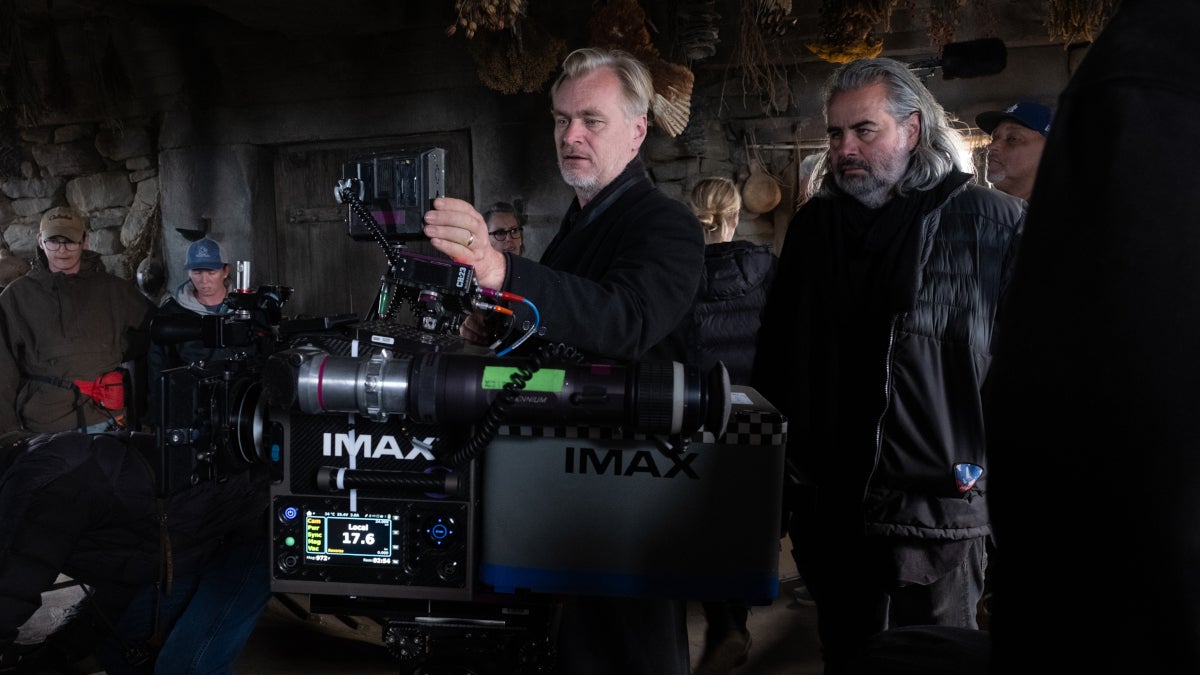
Every generation or so, a filmmaker becomes so globally beloved that their box office drawing power rivals or even exceeds the biggest actors in the world. In the ’80s and ’90s, that was Steven Spielberg. In the 2000s, it was Quentin Tarantino. Now, in our post-COVID theatrical landscape, “The Odyssey” has proven that honor belongs to Christopher Nolan.
In the two decades since he first introduced himself to the mainstream with “Batman Begins,” a film that brought back The Dark Knight to the big screen after a decade-long absence, Nolan has parlayed the goodwill from his superhero trilogy into a following that treats any film he makes, whether it is about dream world corporate espionage or the creation of mankind’s most destructive weapon, into a cinematic event. That following has grown so much that Universal has given him a quarter-billion dollars to create the sword-and-sandal epic he’s always dreamed of.
The result has been a film that cements Nolan’s status as a superstar director in his own league — one who has used his high profile to rekindle an appreciation for analog film formats that are being embraced by younger generations and have been a boon for certain theaters. And despite the jaw-dropping high budget numbers, Nolan is proving to be one of the safest bets in Hollywood at a time when once-popular franchises are hitting a wall.
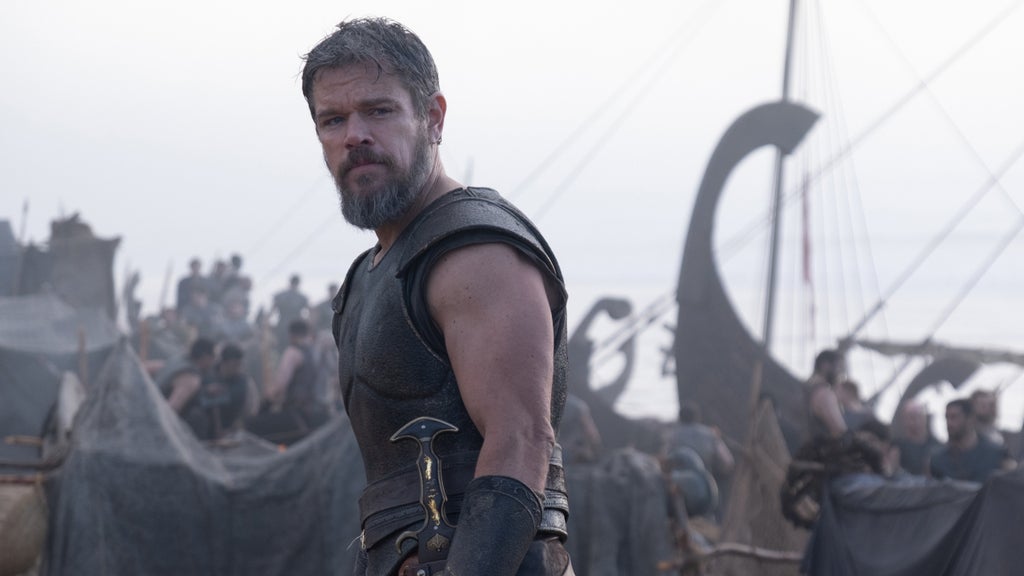
Nolan’s “blank check” passion project (he admitted that he was only able to make “The Odyssey” because of the cache afforded him by the commercial and awards success of “Oppenheimer”) stands as the fourth-highest opening weekend ever for an R-rated movie, as “The Odyssey” is off to a flying start with $123.5 million domestic and $263.7 million worldwide and rave audience scores across the board, including an A on CinemaScore and an 81% “definite recommend” rating from PostTrak audience surveys. For reference, “Top Gun: Maverick,” one of the best received films among global audiences in the past five years, got a “definite recommend” return of 84%.

With this sort of reception, and release in several major Asian countries including China still to come, the odds are very high that “The Odyssey” will join “The Super Mario Galaxy Movie” and “Michael” as Universal’s third $1 billion film this year. And unlike those films, which drew public interest from the enduring popularity of the video game franchise and the pop star they are based on, this take on Homer’s epic tale drew its crowd from the man who directed it, as Nolan was identified by audiences in PostTrak surveys as the top reason why audiences were interested in the film with 51% of those polled picking him as their primary reason for buying a ticket.
“It has been a privilege to continue our partnership with Christopher Nolan, a filmmaker whose work embodies what millions love about going to the movies,” said Universal Domestic Distribution President Jim Orr. “We have seen in our data that ‘The Odyssey’ has brought out people who do not frequently go to theaters, showing that when theaters have an epic adventure made by one of the greatest filmmakers ever, it generates an excitement that benefits everybody in this industry.”
A newfound appreciation for analog
But Nolan’s impact on movie theaters goes beyond filling seats. The director has taken his love of celluloid and analog film formats and spread it to his fans. Back in 2010, as exhibitors worldwide had completed the transition from analog to digital projection, Nolan insisted on providing 35mm prints of “Inception” to theaters alongside the now-standard DCP formats. This continued with subsequent films like “Interstellar” and “Dunkirk,” the latter of which made 70mm screenings in select theaters a prominent part of its marketing.
And after weeks’ worth of Imax screenings of “Oppenheimer” sold out in 2023, particularly those screenings in Imax 70mm, Nolan took it one step further by making “The Odyssey” the first film ever shot entirely with Imax film cameras, partnering with Imax veterans David and Patricia Keighley to design a new type of camera that could shoot a wide range of scenes from intimate conversations between Odysseus and Penelope to enormous battles like the sacking of Troy.
That made premium formats the definitive way to see “The Odyssey” among a majority of moviegoers this past weekend. If the Imax 70mm screenings are sold out or too far away, moviegoers sought out alternatives from digital Imax and Dolby to standard 70mm and 35mm.

In all, premium formats accounted for 53% of all domestic grosses for “The Odyssey” this weekend, with the 41 locations screening the film in Imax 70mm earning a per theater average of more than $100,000. In fact, the Chinese Theater in Hollywood earned more than $500,000 in just two days of Imax screenings.
And at theaters presenting the film in both analog and digital formats, the former has been the vastly preferred option. Allen Michaan, who has owned and operated the Grand Lake Theater in Oakland since 1980, told TheWrap that his theater screened “The Odyssey” in standard 70mm in its main 600-seat auditorium while screening it in standard digital cinema package (DCP) in a 450-seat auditorium upstairs.
By Sunday evening, the Grand Lake had sold 105 tickets for the DCP screenings. The 70mm screenings admissions? 1,254.
“We haven’t had crowds like this since ‘Sinners,’” Michaan said. “Our audience has not only been excited to see this film, but they specifically want to see it on celluloid, and that’s because we have filmmakers like Nolan and Ryan Coogler who value the medium of film, and that’s so refreshing for me. We didn’t switch to digital because we wanted to. We switched because we had to.”
Indeed, that switch from analog to digital was one that was pushed by the studios, not just because digital and later laser projection provided a more consistent baseline of sound and picture from theater to theater, but also because it saved costs on film distribution. And for a format like Imax 70mm, it takes a proven filmmaker like Nolan or “Dune” trilogy director Denis Villeneuve for Imax to invest in releasing their film in that format because it is so expensive and complicated to make such a release happen.
“On average, it costs between $40,000 to $50,000 to make a single Imax 70mm reel,” said Imax CEO Rich Gelfond. “The ones we made for ‘The Odyssey’ have 2.1 million feet of film and weigh more than 800 pounds. You need a forklift to get them in place.”
Still a rare sight
There are only a few dozen auditoriums in the world with the specs required to screen on Imax 70mm. Along with needing a projector room big enough to house the immense projector and reels, auditoriums require a screen tall enough to fit the 1.43:1 screen ratio of Imax 70mm. The vast majority of Imax auditoriums worldwide have screens made for the digital projection screen ratio of 1.90:1.
On rare occasions, Imax has been able to partner with theaters to take pre-existing auditoriums that have the size to fit these specs and convert them to Imax 70mm capability. Regal Cinemas expanded the projector room of its largest auditorium at its LA Live multiplex in downtown Los Angeles to allow “The Odyssey” to screen in that format, while Belgian chain Kinepolis was able to convert one of its auditoriums in Brussels to Imax 70mm while Imax provided a refurbished projector.
But mostly, the controlled expansion of Imax 70mm will come from completely new theaters such as the Pathé Odysseum, a brand new theater in Montpellier, France, that, if its name didn’t give it away, timed its grand opening with the release of “The Odyssey.”
Imax said it is also looking into partnerships with theater chains in China to include Imax 70mm-compatible auditoriums in the designs of new multiplexes.
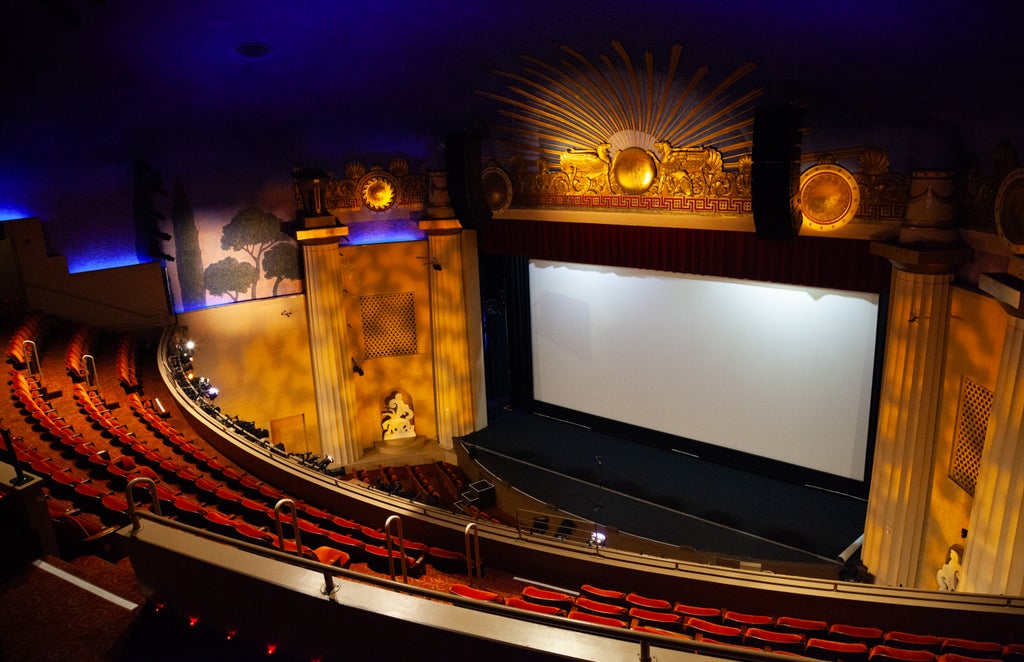
Despite those high costs, films like “The Odyssey” have made the investment worth it for Imax. Look no further than Imax’s highest-grossing location: the BFI Imax Southbank in London. The 500-seat auditorium has sold out 173 Imax 70mm showings of “The Odyssey,” which is being shown around the clock even at 4 a.m. At the time of writing, the earliest screening you can buy a ticket for is on Sept. 10, with more showings being added.
With $296,147 grossed on opening weekend alone, “The Odyssey” set the BFI Imax’s opening weekend venue record previously held by “Star Wars: The Last Jedi.” Throw in five weeks of advance sellouts, and the running total for the BFI Imax from this film reaches $2.8 million and counting.
This desire to see films from well-known auteurs on celluloid isn’t exclusive to Nolan. The most successful element of Warner Bros.’ marketing for “Sinners” was a viral video of Coogler explaining the difference between the various film formats his movie would be available in, prompting 70mm sellouts of the film in select theaters like the Vista in Los Angeles and the Grand Lake in Oakland, where Coogler boosted business with post-screening Q&As.
Warner Bros. followed that up with a limited VistaVision release of Paul Thomas Anderson’s “One Battle After Another” and is planning Imax 70mm releases of Villeneuve’s “Dune: Part Three” this December and J.J. Abrams’ digitally filmed sci-fi tale “The Great Beyond.”
But it is Nolan, the man who insisted on releasing “Tenet” during a pandemic and who has continued to shoot and post-produce on celluloid even as processing labs closed left and right over the last two decades, who stands as analog film’s greatest champion. And, in turn, he has inspired tremendous enthusiasm from film fans who flocked to theaters to witness “The Odyssey” on the biggest screen possible opening weekend.
At Milwaukee’s Oriental Theatre, where “The Odyssey” is screening exclusively in 70mm in a 1,000-seat auditorium, managing director Kristen Heller says that more than 3,600 people saw the film in its opening days, and the demand heading into Week 2 is so large that the balcony section of the auditorium that is usually reserved for high-demand showtimes will be open all weekend.
And as she recounted the busy opening, she relayed a story that was echoed by several other theater owners who spoke with TheWrap.
“Not to spoil too much, but when the bad guys get killed by Odysseus, there was loud applause coming from the theater at almost every screening,” Heller said. “It’s those reactions that make a hot opening weekend one of the best parts of working at a movie theater.”
