Virginia Feito’s “Victorian Psycho” has taken an unusual route from page to screen. The film adaptation of the Spanish author’s darkly comic horror novel was already in development before the book was published, after filmmaker Zachary Wigon read an early draft of the manuscript and immediately recognized its cinematic potential.
The movie, directed by Wigon and written by Feito, opened in theaters on Nov. 13.
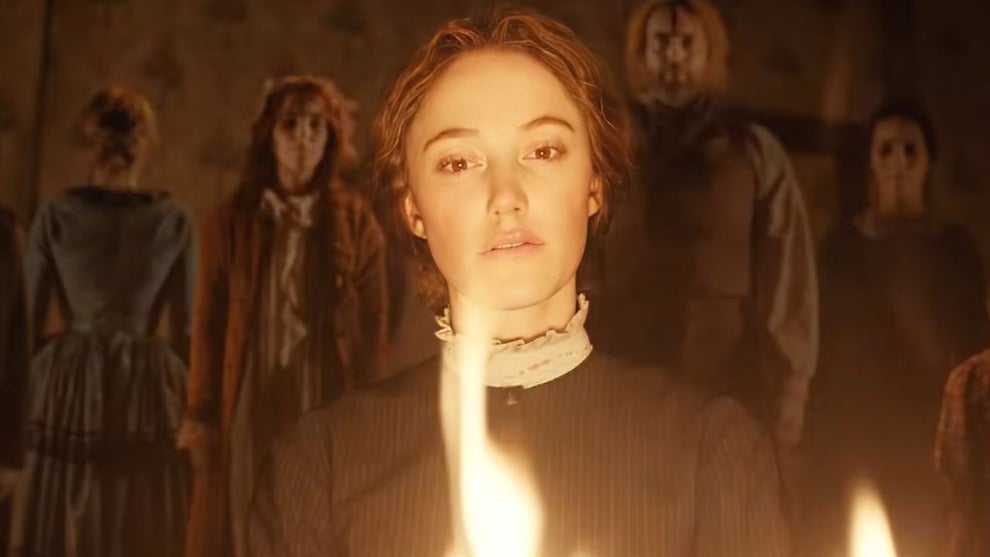
Set in 1858, “Victorian Psycho” follows Winifred Notty (Maika Monroe), an eccentric young governess who arrives at the remote gothic manor Ensor House to take a position with a wealthy family. But as staff members begin mysteriously disappearing, the household starts to suspect that its new employee may be hiding something sinister.
Adapting her own novel gave Feito the opportunity to approach the story from an entirely different creative perspective. She collaborated closely with Wigon on the screenplay and served as an executive producer, but said she was eager to let the material evolve rather than attempt a faithful reproduction. “As with any translation, I understood early on it’s impossible and useless to try to clone the original work,” she told TheWrap. “It’s a different language so you will inevitably lose some things but you will also gain unexpectedly great ones.”
The process also meant making significant changes, including altering the ending. That can be a risky move, particularly with a devoted horror readership, but Feito said the new ending ultimately worked better for the film’s more restrained visual style. The change also allowed the novel and the movie to stand as two distinct works. The film premiered in the Un Certain Regard section at Cannes in May, where it received a five-minute standing ovation.
Since opening in theaters last week, “Victorian Psycho” has also earned a Certified Fresh designation on Rotten Tomatoes, reflecting its positive critical reception. Also starring Thomasin McKenzie, Ruth Wilson and Jason Isaacs, the film features a Winifred who surprised even her creator. Feito said Monroe’s portrayal was another welcome surprise for her.
“Her Winifred was completely unexpected – she was more tender, almost sweet in a way, so that when she angers it feels like she’s betrayed you,” she said.
Feito spoke with TheWrap about the unusual path from manuscript to movie, the challenges of translating the novel’s interior monologue and graphic violence to the screen and how Monroe’s performance gave her a fresh perspective on one of her most unsettling creations.
This interview has been edited for length and clarity.

TheWrap: The journey of “Victorian Psycho” to the screen is unusual because the film adaptation was set in motion before the novel was even published. Can you take me back to the first conversations with Zachary Wigon and how the project came together?
Feito: Yes, Zach and I were working on another project while I was finishing the “Victorian Psycho” manuscript. As soon as I had a first draft I shared it with Zach because by that point I trusted his creative instincts completely and I knew his input would make the work better. I wasn’t trying to pitch it to him as a movie at all, in fact I was unsure of how to adapt it, but Zach had a clear vision. When he read the book he instantly knew he wanted to make the movie and how to go about it. Then we started very long daily phone conversations during which we developed an outline. Zach even flew to Spain to finish editing it together, and then I went on to write a draft.
You originally discussed collaborating with Zachary on an entirely different film. What about “Victorian Psycho” made you both decide to put that project aside?
Zach believed very firmly that we should because he had a very clear vision for “Victorian Psycho” and thought it was probably easier to make than the one we were working on. I trusted him, and also selfishly I was even more excited to bring my novel to the big screen than I was to produce an original script at that time, I’m that self-absorbed.
How did the experience of adapting your own work compare with writing the novel? Were there elements you found particularly difficult to translate to the screen?
Screenwriting is an extremely collaborative process, whereas writing a novel is quite solitary. There are also no restraints in a novel. You can have a billion extras and a hundred different locations, it’s pretty freeing. However the experience of seeing something you have written come to life is incredibly addictive and unlike anything else I’ve ever experienced creatively.
Pretty much everything was difficult to translate to the screen; Winifred’s stream of consciousness, anything expensive like stables or large crowds of people, and of course the violence, which is naturally more regulated in cinema than it is in literature.
Were there scenes, characters or ideas from the book that you knew had to make it into the film? Conversely, was there anything you were surprised to find yourself cutting?
Zach and I agreed pretty soon we wanted to avoid the flashbacks to Winifred’s childhood. We just felt it was important to focus on the present in order to keep the momentum going and to mirror the intense experience of reading the novel. We knew we had to keep Winifred’s spirit and personality, which is the backbone and tone for the entire movie.
How much freedom did you give yourself to change the story? Did you ever feel protective of the novel, or were you excited by the opportunity to reinvent it?
Definitely excited and curious to see how the novel would shift and grow into film. As with any translation, I understood early on it’s impossible and useless to try to clone the original work. It’s a different language so you will inevitably lose some things but you will also gain unexpectedly great ones. I saw the film as a new opportunity – I already wrote the novel and didn’t want to write it again.
The film has a different ending from the book. What prompted that decision, and did you always know you wanted to take the story in a different direction?
We were very tight on time and money to shoot the elaborately choreographed ending we had in the script. I’m so glad, though, because that is one of the changes I most like in the entire film. It also works better in the context of a movie, which is quite elegant in its visual style and language, less gory than the novel.
What was your inspiration for Winifred Notty, and did your understanding of her change as you moved from the novel to the screenplay?
She is a mixed bag of different inspirations, including Ottessa Moshfegh’s “McGlue,” Joyce Carol Oates’s “Zombie,” Phoebe Waller Bridge characters such as Fleabag or “Killing Eve’s: Villanelle, and real serial killers such as Amelia Dyer or Ted Bundy. I did feel slightly more empathy towards her in the screenplay. She seemed to be having a harder time of it than Book Winifred, and trying harder to belong and to blend into the background.
Maika Monroe takes on the role in the film. Were you involved in the casting process? Also, was her interpretation close to how you imagined her when writing the character?
Zach kept me closely appraised of casting decisions, and as soon as Maika became interested we were both freaking out – we admired her so much and thought she could be an unexpected and potentially brilliant choice. Her Winifred was definitely different to how I had imagined her, which was very exciting because powerful, compelling performances are rarely unsurprising. Maika always delivered lines in a different way to how I heard them in my head (in a better way, a way that was either unexpectedly funny, tense or frightening), which is a great sign because it means it’s going to be a surprising and stimulating performance.
Did Maika bring anything unexpected to Winifred? Were there particular choices in her performance that changed how you thought about the character?
Her Winifred was completely unexpected – she was more tender, almost sweet in a way, so that when she angers it feels like she’s betrayed you. Kind of like a lovable wild animal you think is your buddy and then it attacks you. The lightness and singsong of Maika’s voice felt particularly unique to the character, and that almost imperceptible lisp at times which I think may have been due to the fake tooth Maika wore during the shoot (this was another of Maika’s brilliant ideas). Book Winifred is always describing how her face moves, but to actually watch Maika’s insane facial expressions was astonishing. It made her so weirdly endearing!
The book shifts tonally between dark comedy, horror and social satire. How did you approach maintaining that balance in the screenplay?
Zach and I went through quite a few drafts trying to perfect that balance. We knew we had to keep the dark comedy throughout (which Maika made even funnier with her expressions and lilting voice), the baby scene as a wild turning point, and the mummy scene which was important for the social satire. Those were kind of our pillars while crafting the script.
How much did the film’s visual world (costumes, production design, interiors, atmosphere, etc.) shape your understanding of the story? Were there details you particularly wanted to see brought to life?
I was so delighted we found Dunsany Castle to portray Ensor House, which is arguably another character in the story. While doing the research for the house I was looking at a huge number of old manors and country houses, but of course I had forgotten to picture the house as if it were currently lived in and not an old, abandoned museum. The bright colors of the interiors and costumes reminded me the Poundses are actually a hip, young family trying to impress their wealthy friends and attempting to find happiness through materialism.
You were involved not only as the screenwriter but also as an executive producer. How hands-on were you during production, and what was it like having to relinquish some control over a world you had created?
I was definitely relieved to relinquish control to people I consider more talented than myself and who know way more than me about making a movie! This said, I loved being on set and helping out with the production in any way I could. I would help the Second Unit with certain shots, for instance (not that they needed my help quite honestly, but we all pretended they did in the spirit of camaraderie), or I would read the VO during the filming in order to measure the timings, so I was reading on set with these amazing actors like an insanely dreamy drama class. Zach would also let me know how the post-production was coming along and it was so exciting to see how the editing, music, effects, etc. progressed. All in all I feel very lucky to have been able to witness the crafting of this movie by wildly talented people.
The film premiered in Cannes’ Un Certain Regard section. What did it mean to bring your work to an international festival audience, and what has the response been like so far?
That was insanely surreal and exciting, as well as validating after such an intense few years of work. It was the first time I watched the film with an audience and was so pleased by the laughter and buzzy vibe in the theatre. It was a gift to be able to attend Cannes with my first movie, an experience I will never forget (and oh all the lovely outfits I got to wear!). I find the response so far beautifully welcoming for a movie that is very niche and weird. I have to say horror fans tend to be the loveliest, most supportive people.
