
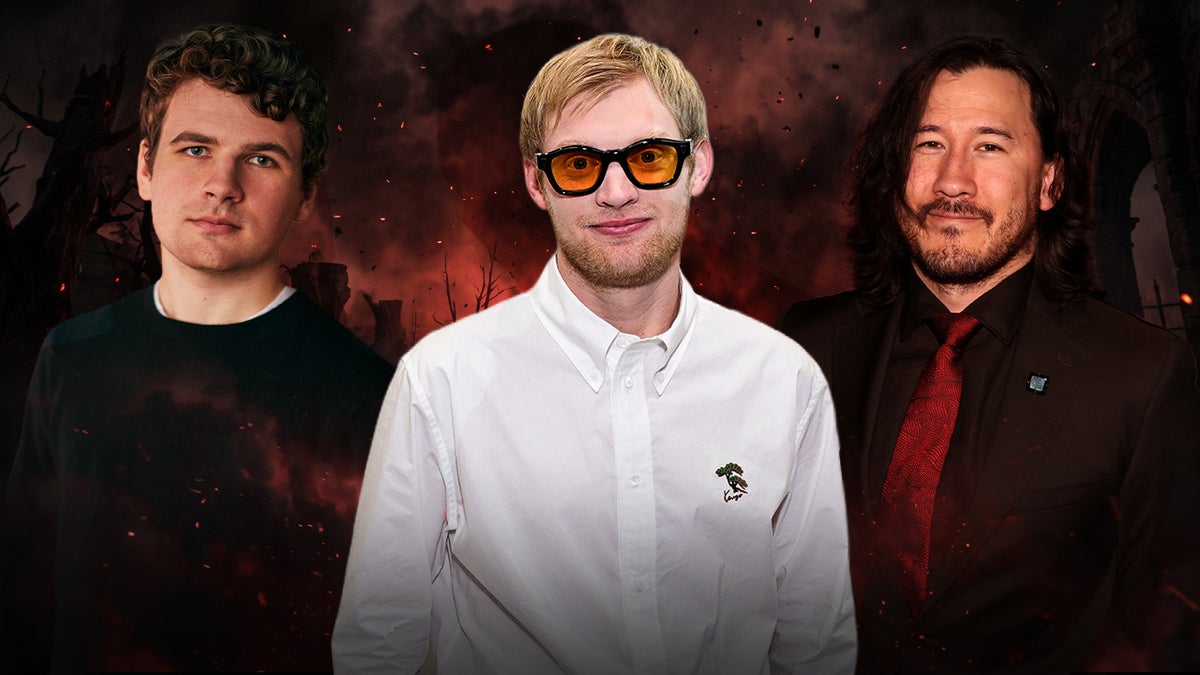
No matter which movie wins the Oscar, 2026 in film will be defined by horror and some of the genre’s key filmmakers. The triple hitter of Curry Barker’s “Obsession,” Kane Parsons’ “Backrooms” and Mark Fischbach’s (aka Markiplier) “Iron Lung” proved to Hollywood that the era of features from creator directors has arrived.
And Hollywood has responded as it always does: by bandwagoning as hard as possible.
Nearly every major studio now has its own horror project from a creator in the works:
- Blumhouse has “Anything but Ghosts” from Barker (Focus), an “Amanda the Adventurer” adaptation from Matthew “MatPat” Patrick, “Lust” from Spencer Lackey (Neon) and will be involved in however “Backrooms” expands (A24).
- Warner Bros. is making a movie produced by Zach Cregger about Trevor Henderson’s viral creation Siren Head.
- Sony is also giving Henderson’s Cartoon Cat creation a movie.
- Lionsgate is going all in on Dylan Clark, putting him in charge of “The Blair Witch Project” reboot and moving forward with a “Portrait of God” movie.
- Amazon MGM Studios has “Mandela Catalogue” from Alex Kister. A24 has given Barker a “Texas Chainsaw Massacre” reboot, is expanding “Backrooms” and is working on the sequel “Talk 2 Me” from Danny Philippou and Bill Hinzman.
So yes, the trend is big and everyone’s catching a wave. But what’s been underexamined is why 2026’s big creator-led movies worked and over-indexed with Gen Z viewers.
Yes, it was because Barker, Parsons and Fischbach cut their teeth on YouTube and TikTok, allowing them to emerge in the market more fully formed than other directors. But it was also because the digital communities creators foster are practically designed to help workshop videos that push buttons, and horror — a genre that loves to provoke audience screams — is one of the most reactive genres of all time.
It’s also a genre that has been historically friendly to independent filmmakers and big swings, as evidenced by Tobe Hooper’s “The Texas Chainsaw Massacre” in the 1970s and “The Blair Witch Project” in the 1990s. Pair that with a generation of fans who have been shaped by critically acclaimed films and horror-focused gaming streamers, and a genre that has long been thought of as being secondary to big, explosion-filled blockbusters is steadily becoming a reliable vehicle to draw Gen Z audiences.
“Hollywood has always discovered filmmakers in unconventional places. We used to find directors making commercials and music videos. David Fincher, Michael Bay and Spike Jonze all came through that world. Today, we’re finding them on YouTube,” Adam Goodman, founder and CEO of the creator-focused studio Invisible Narratives, told TheWrap. As president of Paramount Motion Picture Group, Goodman was key to bringing movies like “Paranormal Activity” to the screen.
“The difference is that these creators aren’t just demonstrating their filmmaking abilities; they’re building audiences and proving their storytelling instincts in real time,” he said.
“In 10 years, horror has really blown up in the online space,” James A. Janisse, one of the co-founders of the horror-focused YouTube channel “Dead Meat,” told TheWrap. “Dead Meat” and other channels like it have gone a long way to introducing younger audiences to the classics in the genre. “But at the same time, there have been a bunch of horror games coming out. People who maybe don’t have the bravery to play them themselves are able to watch these streamers do them and get really into them. I know so many people who have never opened a horror game on their own, but they watch endless hours of streamers playing them because they’re so entertaining.”

The increased interest in horror hasn’t just translated to ticket sales. HorrorTok, the cutesy name for TikTok’s community of horror fans, has seen 30 times more posts this year compared to last. And horror games is one of the fastest-growing categories on the streaming platform Twitch — content related to horror increased by 12% compared to last year, and the horror genre has generated 335 million hours so far this year. Both TikTok and Twitch are popular among younger users who are primarily under the age of 35.
“More than a million hours a day are watched on horror content on Twitch,” Mike Minton, chief product officer at Twitch, told TheWrap.
The way Fischbach (Markiplier) sees it, this new wave of theatrical films from creators wasn’t a fluke. It was inevitable.
“There’s plenty of people who are in the movie-going audience who are tired of the offerings that are there. Not to be overly critical of studios making movies, but there’s always talk online about people being tired of remakes, recycled things and safe ideas,” The “Iron Lung” director told TheWrap at VidCon in June. “The problem is it’s been fed into itself so much that the studios feel like they have to spend $200 million to make anything … If my time on YouTube has taught me anything, it’s that there’s a wide variety of people that want a wide variety of content.”
And if there’s one genre that is tailor-made for low budgets and high potential upside, it’s horror. “The Blair Witch Project” is still one of most profitable movies ever made with nearly $250 million grossed on a budget below $1 million, and “Obsession” copy/pasted that formula with $523 million grossed on a budget of just $750,000.
Prepping a chilling new generation of directors
Every part of the content creation process, whether you’re recording a Get Ready with Me for TikTok or a documentary for YouTube, forces creators to learn more about directing, filming, editing and acting. These small moments can add up, especially when it comes to a profession that’s as hands-on as directing.
“A lot of people are forgetting how much of the craft we’re perfecting in the background. Even if it’s a Let’s Play [Editor’s note: a type of video where a streamer plays a game and offers commentary], you’re getting familiar with cameras, editing and what works,” Seán McLoughlin, better known online as Jacksepticeye, told TheWrap. A longtime gaming streamer, McLoughlin will be producing an animated “Bloodborne” movie for Sony and he executive produced “Godmother” from creator Alanah Pearce and director John Veron.
“A lot of us, especially for my generation, started off as editors and videographers. We did it all ourselves,” he said.
But for many creatives, the real value of the creator ecosystem lies in creators’ relationships with their audiences. A movie that’s developed through the traditional studio process may be seen by hundreds of people at various stages, but typically only a few producers and executives actually weigh in on the direction and effectiveness of the project. Conversely, creators get feedback instantaneously from their fans on their videos.
“Even the smallest movie would take a long time. Whereas a YouTube video, I can record, edit and upload it in a 24-hour period. For some ideas, that’s all it needs. There is a real catharsis in that instantaneous feedback,” Fischbach said.

“When [creators] make videos for their YouTube channels, they are getting direct feedback from the people watching them and are able to tailor them to what people like and what people don’t like. I don’t mean that in a cynical way of chasing what’s popular, but being able to tap in on what’s resonating with people,” Janisse said. “That’s so important for horror because horror is trying to get a response out of someone, so it really has to land with someone and their sensibilities.”
The value of a creator’s audience is why so many creators who have “made it” beyond online platforms keep returning to their channels. Fischbach has been regularly posting gaming livestreams even after his self-financed independent movie “Iron Lung” made $50 million at the box office. Parsons dropped a new “Backrooms” video after his movie shattered box office records for A24. And two days before Halloween, Barker — the director behind a movie that made over $524 million worldwide — dropped a new short on his YouTube channel. Those who work closely with creators aren’t surprised by this loyalty to their channels.
“It’s something that creators have been passionate about and want to continue to invest in, not just because of business reasons, but because they generally like connecting and having these conversations with users and other creators,” Dennis Papirowski, the global head of content at TikTok, told TheWrap.
A horror generation primed by gaming streamers
If you pay attention to gaming trends, this year’s upswing in horror doesn’t seem unexpected at all. Every few months, a new horror title will rise to the top of gaming platform Steam, from bigger hits like Halloween: The Game and Silent Hill: Townfall to indie games like Shift at Midnight. These games are often embraced by streamers, who film their reactions to jump scares and creepy monsters. The most exciting parts of those streams are then clipped and posted to shortform platforms like Instagram Reels, YouTube Shorts and TikTok.
This cycle of streamers finding new scary games to scream at has been going on for years, and the popularity of this type of content may have had the unexpected impact of popularizing the genre at large.
Janisse also sees 2017 — a year that marked the releases of Jordan Peele’s “Get Out” and Andy Muschietti’s “It: Chapter One” — as being a cultural turning point in how younger audiences perceive horror. “The percentage [of people who say they don’t watch horror] has definitely gone down in recent years just because people are beginning to understand that it’s not just slashers.”

On Twitch, the most popular horror game last year was Dead by Daylight, a multiplayer game that resulted in over 200 million hours of watchtime on the platform. R.E.P.O. and Five Nights at Freddy’s — a 2014 survival horror game that spawned a $537 million film franchise — are also popular on the platform. Fittingly, Fischbach livestreamed himself playing the 2022 game Iron Lung before debuting his own adaptation of the property four years later. Games that are popular to stream, like Dead by Daylight, Bendy and the Ink Machine and Mouthwashing, are unsurprisingly getting movie adaptations.
“Streamers are all over the place as it relates to the intersection of gaming, entertainment and Hollywood,” Minton said. “You have a streamer that’s building a community around their content and interests, but the community can very much actively participate in the experience.”
“I think gaming has fundamentally changed how younger audiences experience horror. They’re not just watching scary stories. They’re participating in them, exploring the worlds, discovering hidden mythology and sharing those experiences online,” Goodman said, pointing to the cultural impact of “Five Nights at Freddy’s” and “Backrooms.” “The lines between gaming, digital storytelling and movies are disappearing. And I think some of the next great horror franchises will emerge from that intersection.”
Creators pushing forward into the future
As the aforementioned long list of horror projects proves, the trend of creators directing horror movies isn’t going away anytime soon. Creators are making sure of that.
McLoughlin personally financed principal photography for the upcoming movie “The Godmother.” As for Janisse, this year the Dead Meat channel launched “Fresh Meat,” a shorts competition that sorted through over 550 submissions and chose the top 13 to be part of the anthology film “Fresh Meat.” That movie was released theatrically and is now available to rent. Each of the selected winners will get a cut of the revenue made, which is divided between Dead Meat, Hades Films and the creators. They were also given a first look option from Dead Meat and Hades.
“That was a fundamental part of this whole project,” Janisse said. “We want to find these talented people, these next Kane Parsons and Curry Barkers, and help get them exposure and develop their ideas because, I think at this point, we’re pretty good at knowing what works and what doesn’t in horror.”
Though he didn’t reveal any concrete future plans, Fischbach is also passionate about helping the next wave of creator filmmakers. “As long as I’ve got my foot in the door, I’m going to try to sneak some people in as it grows wider, people I know who are really talented, have been doing YouTube for a very long time and I would trust with a project,” he said. “I can only do so much. I don’t want to be an empire, but I can at least get a few cool things made.”
Tess Patton contributed to this story.
