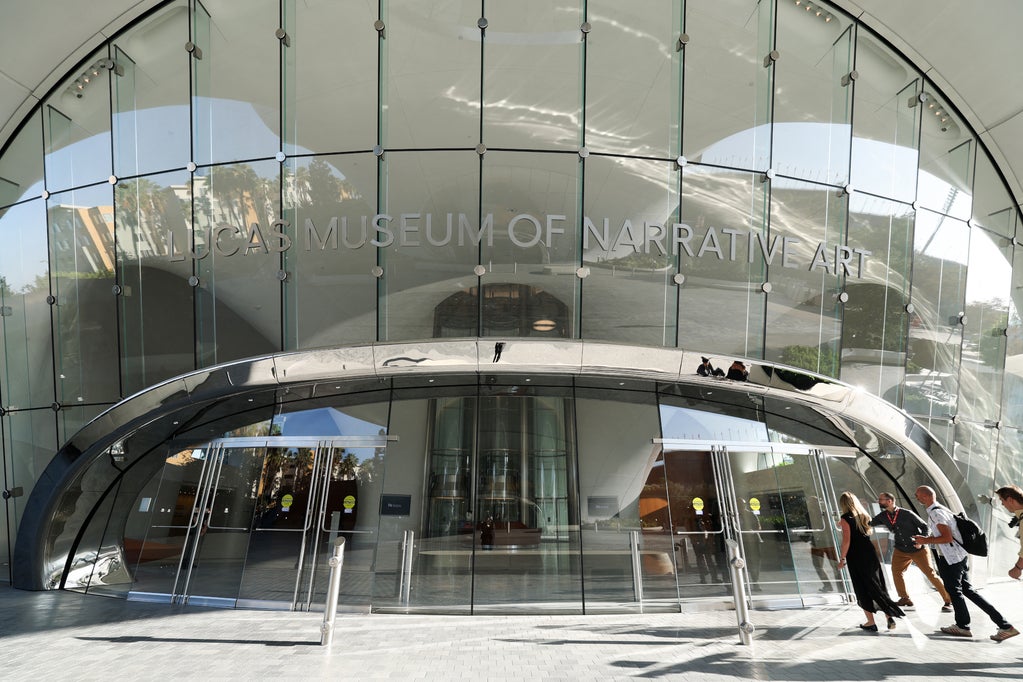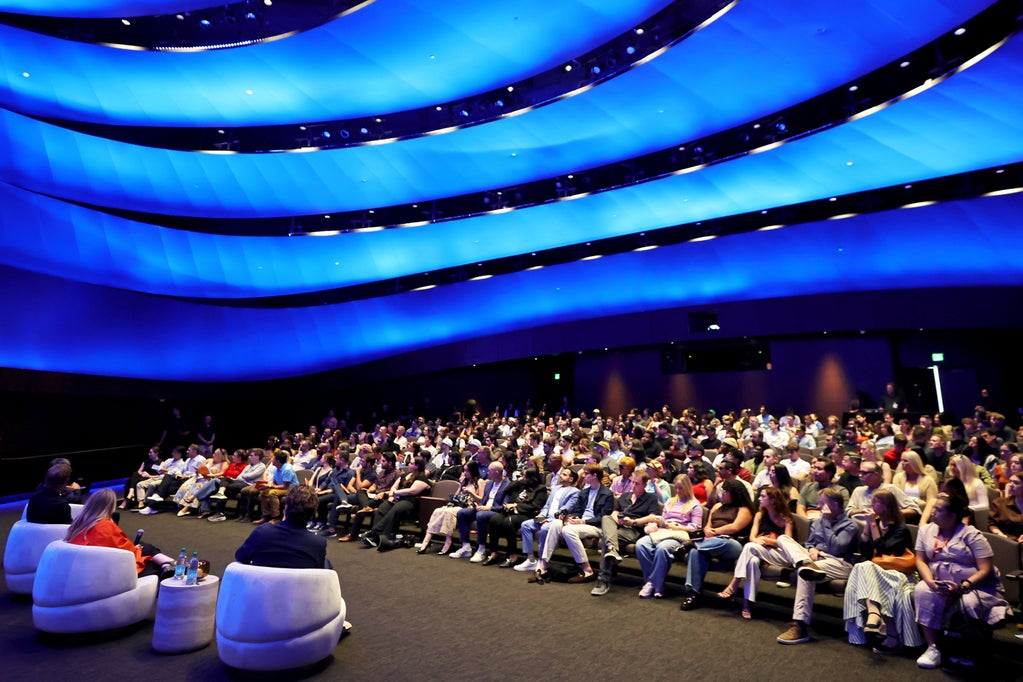
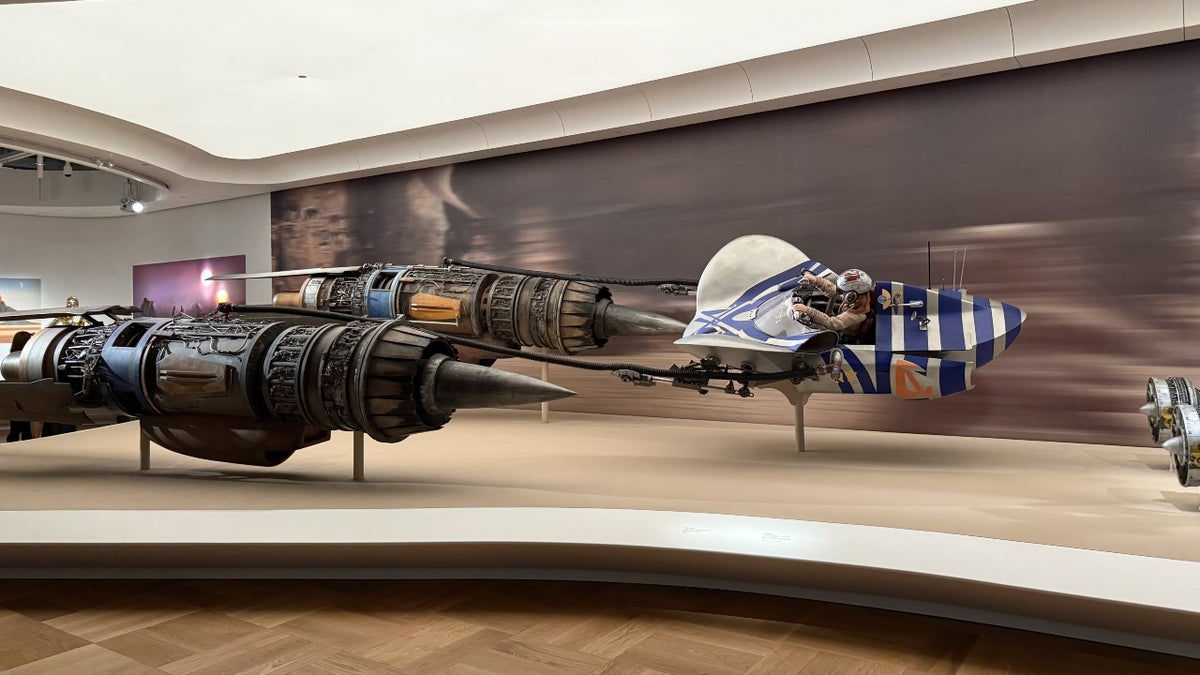
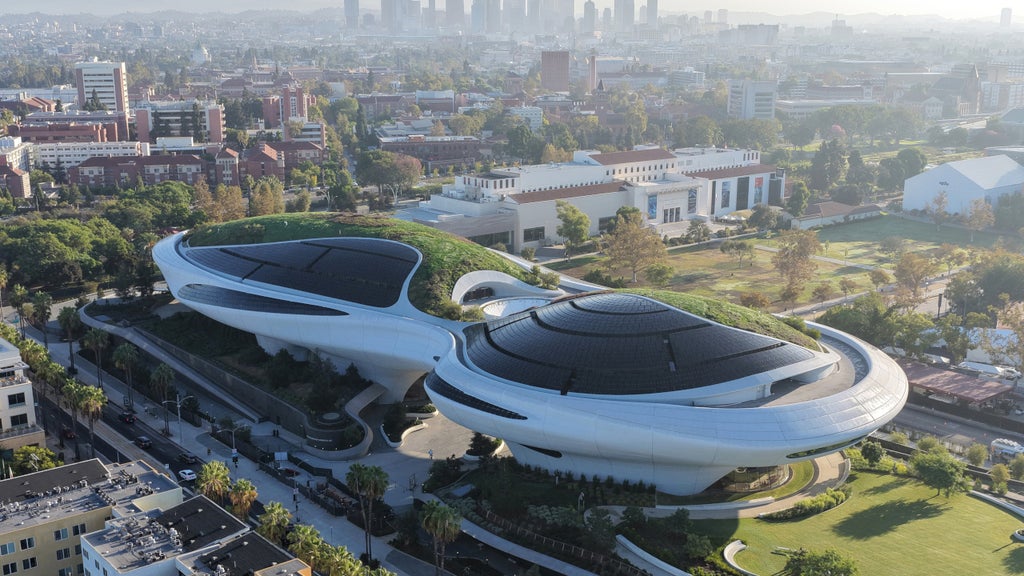
At a press preview of the Lucas Museum of Narrative Art, a giant, swooping building that sits – floats? – atop a massive plot of land in Southern Los Angeles, across the street from the Los Angeles Memorial Coliseum and down the way from the Natural History Museum of Los Angeles County, a guest emerged unexpectedly – George Lucas himself.
While Lucas’ name is on the building; he wasn’t on the list of speakers meant to present. But after hearing from Tracey Bates, CEO of Lucas Museum; Ryan Linkof, senior curator and the head of the film programs; Ma Yansong, the building’s genius architect; and Mia Lehrer, the landscape architect behind the museum’s grounds; Lucas and Mellody Hobson, his wife and co-founder of the museum, shared a few words.
“George started by aspiring to have a building so unique that eight-year-olds and 80-year-olds would equally want to come inside. He wanted to celebrate the illustrators who have often been underappreciated for their contributions – those who have narrated our lives in pictures, often using a single frame to tell a story,” Hobson said. “This narrative art is important because it depicts the myths that anchor us, the stories that we believe in, they may not necessarily be true, but they unite us as families, as communities, as countries, as nations.”
When Lucas spoke, he said that the museum had been a “long haul.”
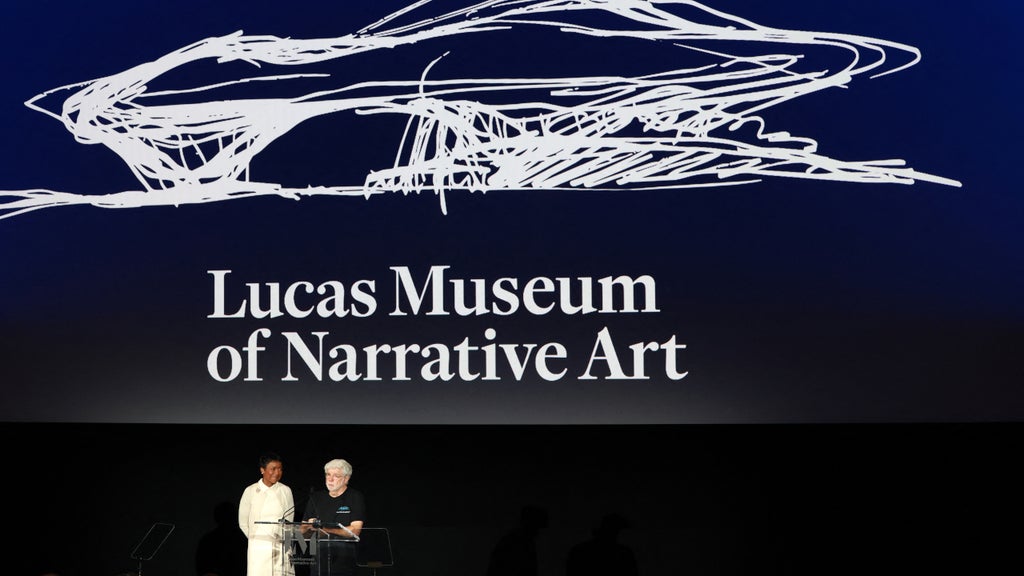
And he’s right. The opening marks the culmination of a nearly 20-year journey from Lucas’ original conception to what has become one of the most hotly anticipated museum openings of all time. To Lucas, the massive space, which formally opens Sept. 22, is dedicated to “the people’s art.”
Even if there were a lot of people against the very idea.
Constant opposition
The museum, first known as the Lucas Cultural Arts Museum, was originally earmarked for San Francisco, near Lucas’ Skywalker Ranch. But a four-year-long negotiation with the Presidio Trust couldn’t be worked out. Lucas then took the proposed museum to Chicago, where it would have been built on the shore of Lake Michigan. Blowback, as icily harsh as any Illinois winter, quickly followed. A withering 2014 Chicago Tribune editorial said that the plans, unveiled earlier that week, “crystallized what until now had been a disagreement about a controversial location and a structure of unknown size.” The discussions became so heated that the size and scale of the museum was impacted; even with a lesser footprint, Chicago (including a prominent preservation organization known as Friends of the Park) pushed back. Development continued, but so did the public outcry (Chicago Business’ headline says it all: “Lucas Museum rolls out a design R2-D2 would pan”).
In 2016 Hobson announced that they were looking for a new home for the museum, citing, in part, escalated disagreements between the museum and Friends of the Park. A 2025 piece in the Chicago Tribune, made by the same editorial board that successfully spearheaded the campaign against Lucas and his museum, wrote, “city snobs have pushed two narratives: one that the museum would never get built and another that it would not be any good if and when it did. Both of them are proving to be nonsense, as was obvious to us from the start.” The editorial concluded that Chicago driving the museum away was a “Midwestern mistake for the ages” and “a colossal missed opportunity.”
Finally, in 2016, Los Angeles was given the go-ahead. The project would be built in Exposition Park, designed by Yansong of Chinese architecture firm MAD Architects, who had worked on earlier iterations of the museum. Construction began in 2018, with the completion suffering delays due to the COVID-19 pandemic and other issues. It also went through several high-profile staff changes – first president Don Bacigalupi stepped down in 2019; director and CEO Sandra Jackson-Dumont was appointed in 2019 and then stepped down in 2025; chief curator Pilar Tompkins Rivas also left in 2025.

Local press was just as unkind as in Chicago. The Los Angeles Times art critic Christopher Knight, in an article titled “The Lucas Museum of Narrative Art is a Bad Idea and Here’s Why,” he dubbed the term “narrative art” made-up and ill-fitting, instead suggesting an alternate name – The Museum of Treacle. (“Los Angeles lost by winning,” he sneered.)
Lucas was undeterred.
“Part of the problem is I’m a contrarian. I don’t like to do things that people think can be done. I’m fascinated by doing things that people say can’t be done. And even when you do it, they say, ‘Well, that’s not any good. You can’t do that.’ I’m used to doing the impossible. This one almost broke my will,” Lucas said, admitting just how difficult it was to get the museum across the finish line.
Celebrating the people’s art
Lucas said that the museum – and the contents within it – were something that “I felt very, very strongly about in terms of honoring illustrators, people who are artists, who illustrate stories that are already written, and most of those stories are myths. They’re not real, but the illustrations make them real.”
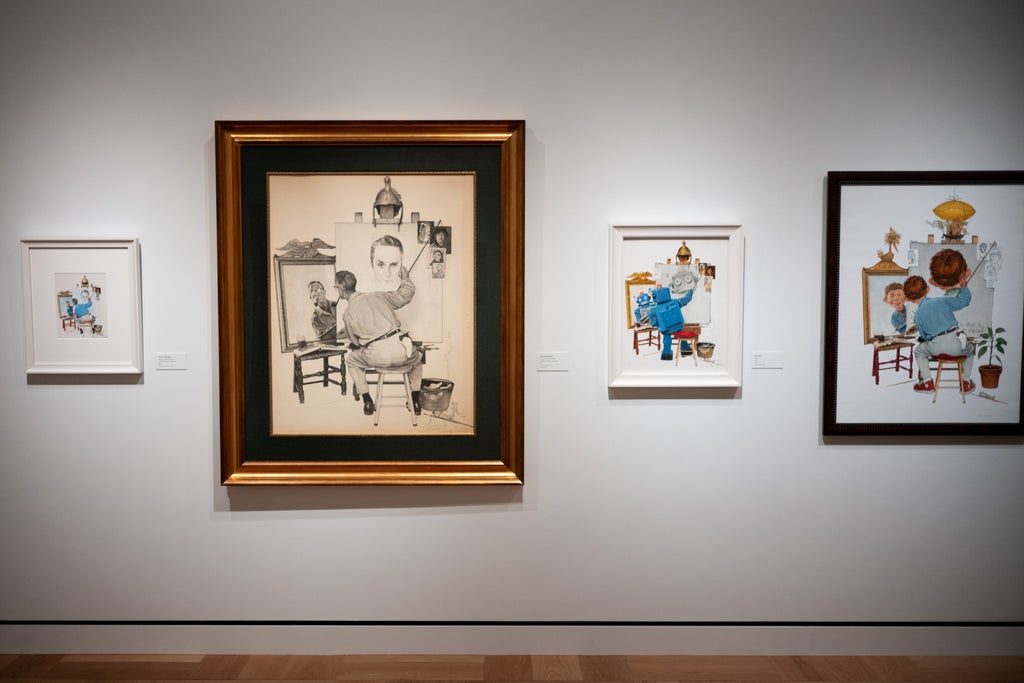
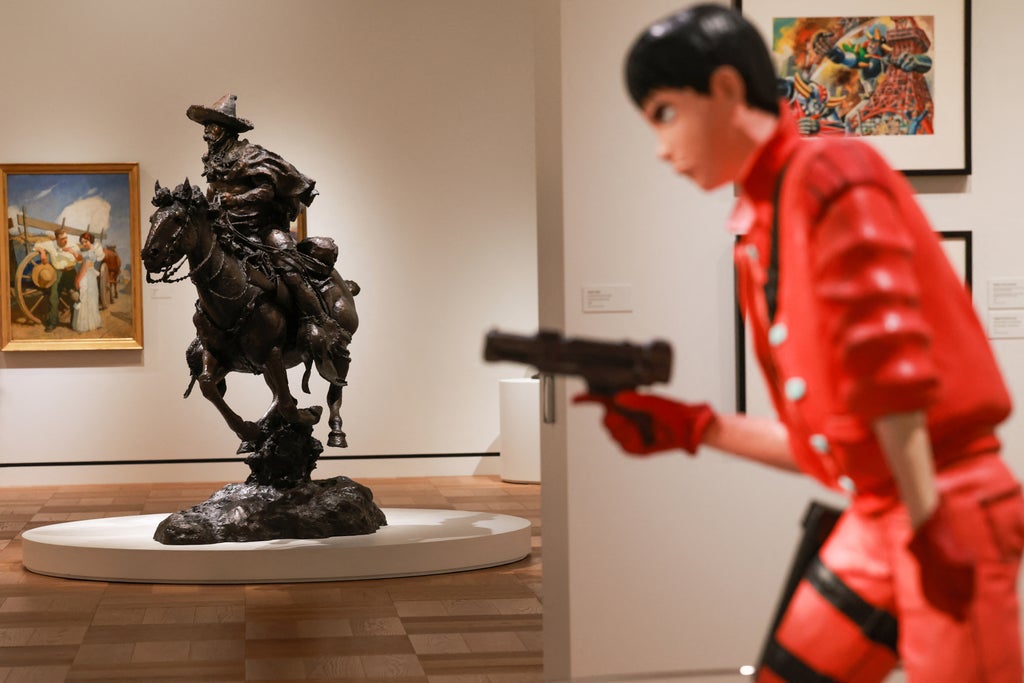
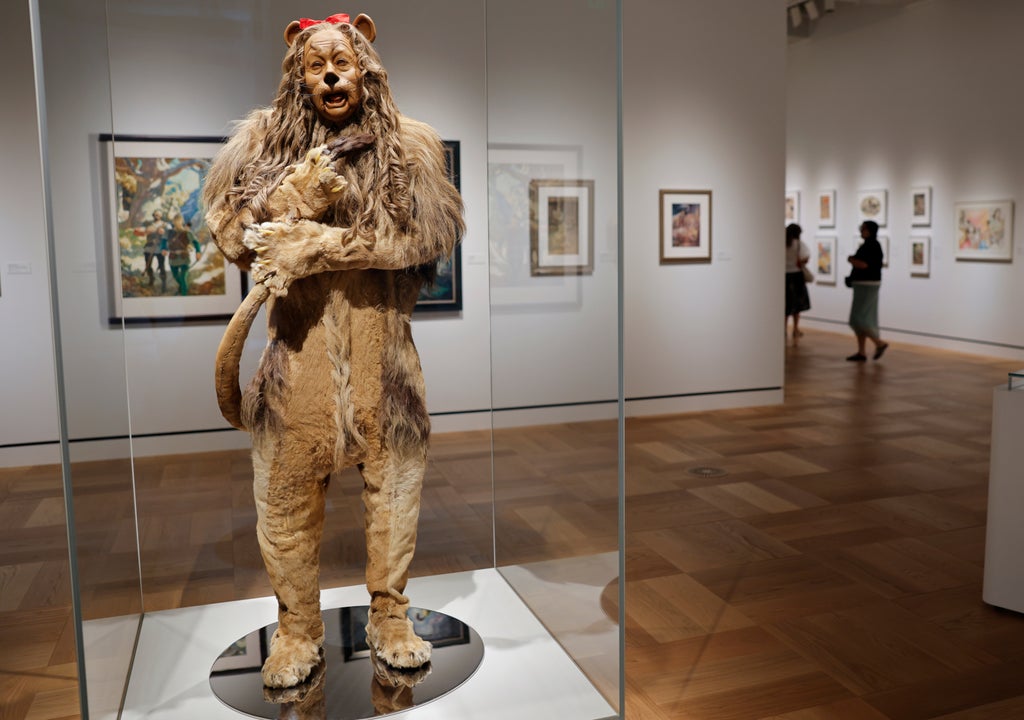
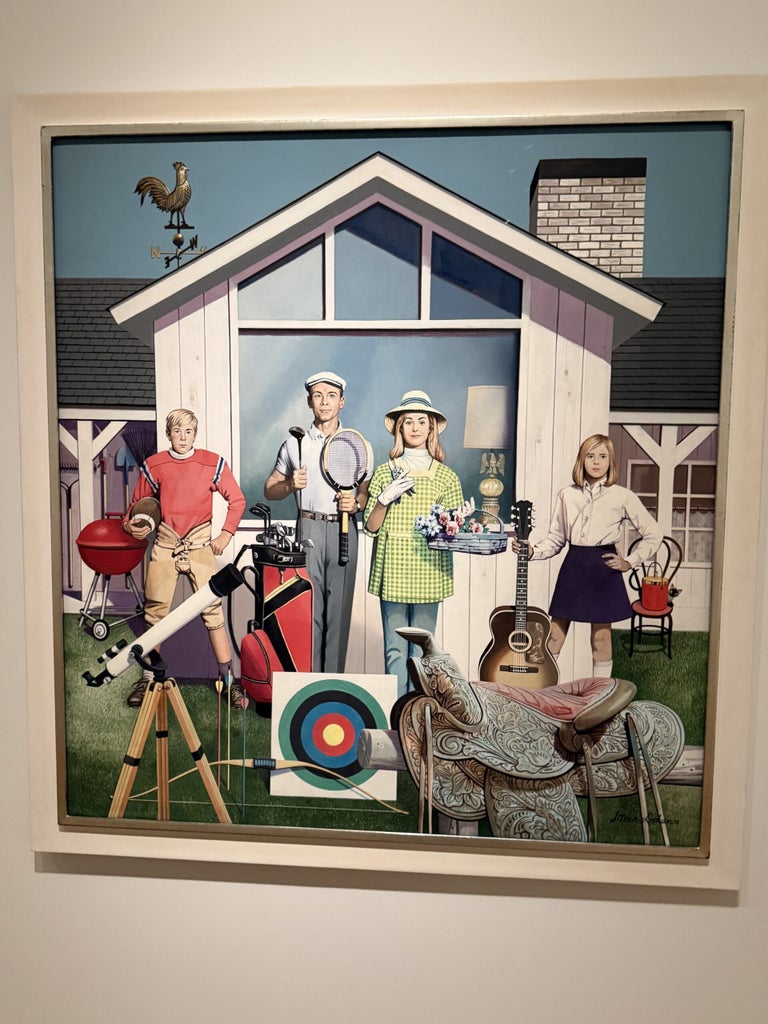
These are the artists that populate the Lucas Museum of Narrative Art – Frank Frazetta and Norman Rockwell and Banksy. Pages from “Hellboy” and “Ultraman” comic books. One of the little aliens from “Close Encounters of the Third Kind.” Original illustrations from children’s books by Maurice Sendak and Chris Van Allsburg. Cowboy art and sculpture. A painting of dogs playing poker – yes, seriously.
As he wound up his speech, Lucas seemed somewhat gun shy about the amount of press in the room. He had been harangued before. The last movie he directed, 2005’s “Star Wars: Episode III — Revenge of the Sith,” was the conclusion of a new “Star Wars” trilogy that many found stiff and unconvincing. (For the generation that grew up with them, they are now considered classics.)
“Thank you all for being here. I’m a controversial in terms of the media. But hey, I just do what I feel I have to do and you guys do what you have to do,” Lucas said. He motioned to his wife in a classic she’s-going-to-kill-me-if-I-keep-talking gesture.
He shouldn’t have worried.
The Lucas Museum of Narrative Art is one of the most exciting, jaw-dropping museums you’re likely to ever experience. And the celebration of the “people’s art,” as Lucas calls it, isn’t just lip service – not only is the art collected in the museum, which elitists would probably deem as kitsch or camp, beautifully curated and laid out, but there’s also a real effort to make this a place where everyone can come and enjoy themselves.
There are little touches all around the campus that suggest this – from the development of much of the area as a meticulously landscaped public park to the fact that all of the text in the museum, designating specific areas or on the little placards next to the art, are in both English and Spanish. (A section of the museum’s library, very much in the style of Skywalker Ranch, is also open to patrons to browse and just relax.)
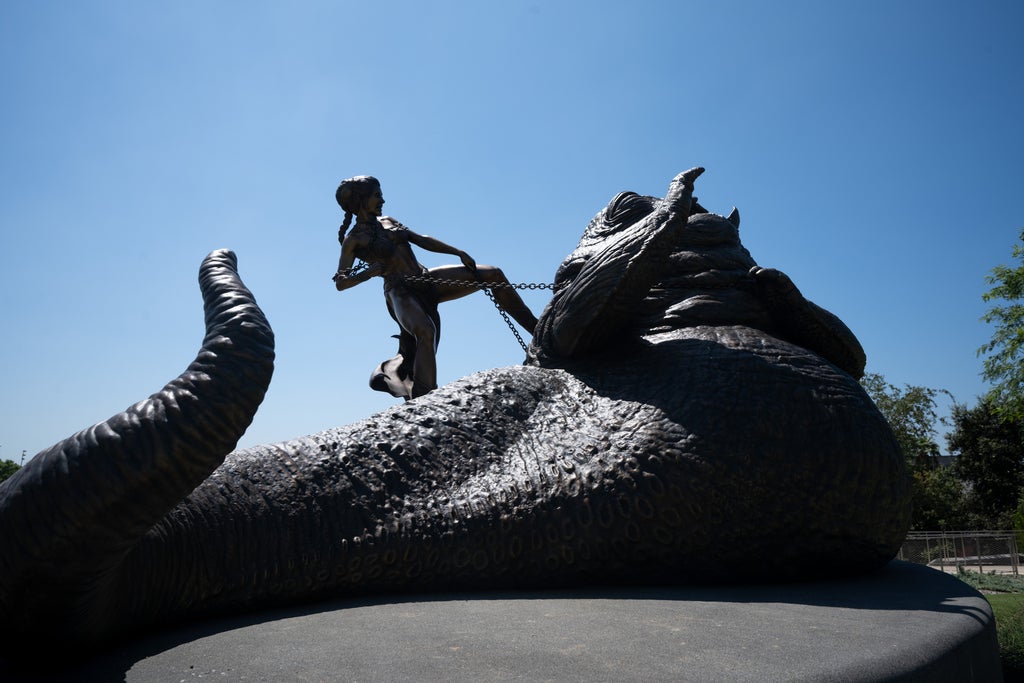
There really seems to be an appreciation of both Los Angeles, from the many windows that look out across the rambling sprawl of the city, and the service that the museum is providing to not only elevate the art contained within (quite literally, as the building looks like a massive UFO or a cluster of cotton candy-ish clouds) but also to give the neighborhood something unique and profound.
The pretenses of other museums are done away with. Everywhere you look you see something you are familiar with but have never seen quite like this – or under this lens. We’ve all chuckled at Gary Larson’s “Far Side” comic strips but have never been able to examine his original art, marveling at both its simplicity and detail. The juxtaposition of political art, photography, poster art and more creates a unique, unified cohesion. The art in the museum tells a story for sure but so does the museum itself – about the way that this art has impacted and shaped our lives, oftentimes without us (or anyone else) designating it as art.
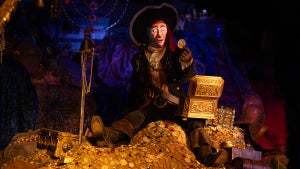
For a museum that feels so groundbreaking, it has mercifully stayed away from gimmicks or ploys. There isn’t some great emphasis put on interactivity. You never wear VR goggles or tap into some elaborate audio tour that explains the exhibitions. There’s plenty of room to simply explore. Each floor opens up to curved windows that give you gasp-inducing views; there are plenty of benches everywhere. The wi-fi is great. It’s a place designed for play but for also relaxation, meditation and reflection. These are the works that, like it or not, have governed many of our lives. That’s something worth sitting and thinking about.
There’s 100,000 square feet of stuff (roughly 37,000 objects) in the Lucas Museum, a café, an upscale restaurant (Skywalker Grill, just as immaculately put-together as the rest of the building), an event space and two theaters – one dedicated to experimental films and animation, the other to documentary features. (You can either come for specific programming or just pop in.) It’s a place that feels at once old-fashioned and like it was beamed in from a distant, more democratic future, which perfectly suits George Lucas the man, a restless futurist always pushing technology forward but whose center was a honied, sentimental nostalgist.
The museum is also notable for what isn’t inside of it as much as what is.
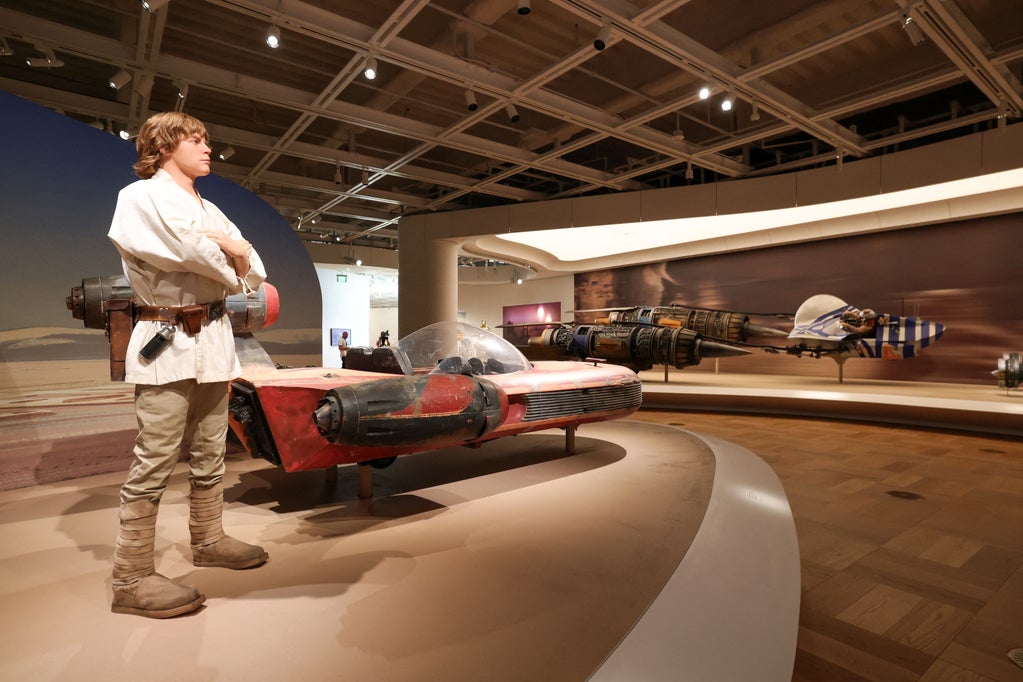
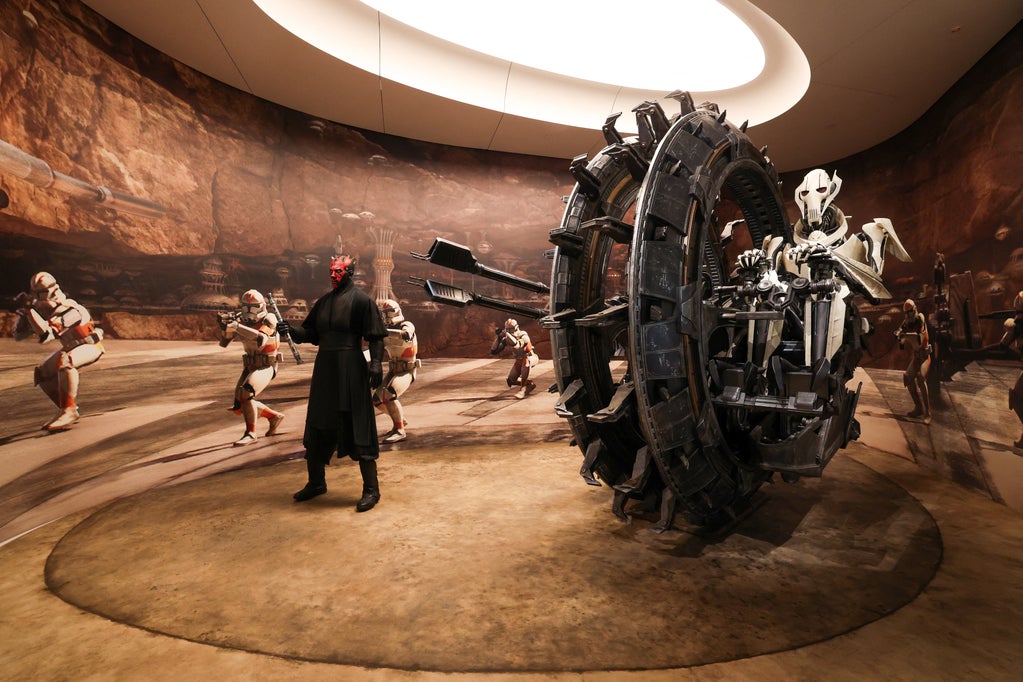
Linkof, in his opening remarks, made a rather pointed distinction that there would be art and artifacts from the first six “Star Wars” movies – the one’s made by George himself. Besides a small Grogu bust peeking out of a larger Yoda statue (a nod to the fountain outside the Lucas-founded effects house Industrial Light & Magic), there is no real ephemera from a galaxy far, far away that dates after Lucas sold the company to Disney in 2012. There isn’t even anything from “The Clone Wars,” the long-running and hugely influential animated series that Lucas created in 2008. Ditto anything from Lucas’ ongoing collaboration with Disney’s parks division, which began in the late 1980s, shortly after the original trilogy wrapped. There are no sketches of ExtraTERRORestrial Alien Encounter, the controversial thrill ride for the Magic Kingdom. No props or creatures from “Captain EO,” the 3D movie he made with Michael Jackson and Francis Ford Coppola. And most disappointingly, no exploratory work from Lucas Port, a proposed all-Lucas takeover of Disneyland’s Tomorrowland.
In an interview with Charlie Rose shortly after he sold his company, Lucas referred to Disney as “white slavers.” Lucas would still occasionally pop up at promotional events, like the opening of Disneyland’s Galaxy’s Edge, an elaborate, “Star Wars”-themed land behind Big Thunder Mountain Railroad, but it seemed beyond perfunctory. There might as well been a ray gun pointed at his head.
The near-exclusive erasure of Disney material (save for a few comic strips) and his relationship with the company double-underlines the fact that at the Lucas Museum of Narrative Art, the most important narrative is that of Lucas’ and the art that inspired him to create some of the most breathlessly memorable narratives in human history.
Everything else is just treacle.