
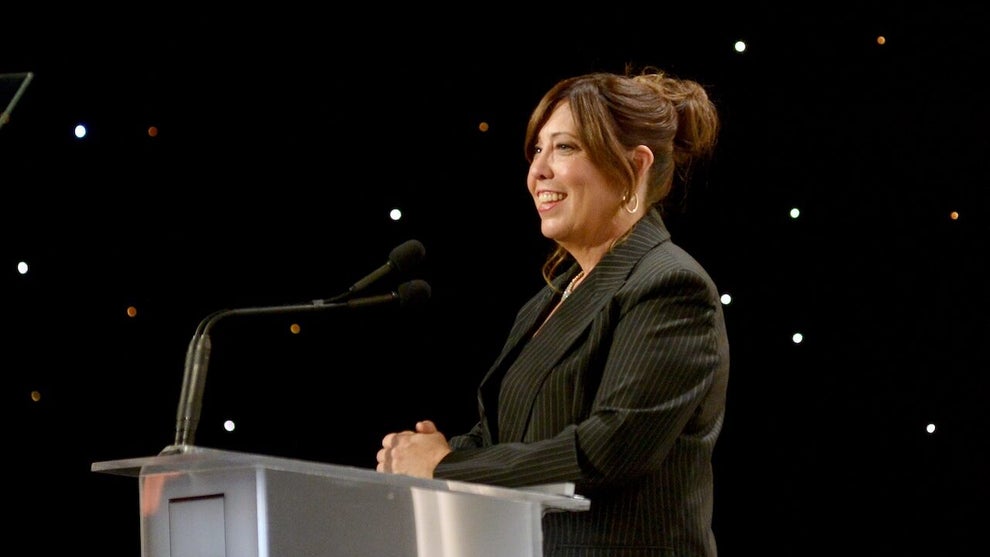
On Thursday night, there will be a heaviness in the air at the Women in Film (WIF) Honors when former Warner Bros. film chief Pamela Abdy takes the stage to accept the Inaugural Vanguard Award.
Abdy was selected as an honoree months ago due to the strong run of films she and Michael De Luca spearheaded at Warner Bros. (2025 saw big swings like “Sinners,” “One Battle After Another” and “Weapons,” to name a few). But her recognition will take on a new meaning now that she and De Luca are out of their positions following Skydance’s acquisition of her studio.
“We are really excited to be honoring Pam Abdy at Thursday’s event because she has done so much for women over her entire career, and particularly in the last few years at Warner Bros.,” WIF CEO Kirsten Schaffer told TheWrap. “They made a lot of films directed by women, and we thought this was the right moment to honor her, not knowing what was to come.”
Schaffer admitted it’s “disappointing” Abdy is no longer leading the studio, noting that “she had a budget to use to make a whole variety of films that have been really important to the culture and the industry.”
As for how Abdy will address the room in the wake of her departure and amid other high-profile exits from female executives like Bela Bajaria and Cindy Holland, Schaffer hasn’t read Abdy’s speech, but imagined that it will be “poignant, maybe a little fiery.”

In light of high-profile departures of female executives this year, Schaffer is glad Skydance Pictures co-chairs Dana Goldberg and Warner Bros. Television chairman and CEO Channing Dungey are in place to continue their roles, saying “those are important women to be in those positions.”
“But then when … the photos come out of the people who are in leadership across Skydance, sometimes there are no women in them … Sometimes there’s Dana and and Channing, but that is not 50% — that is not half the population,” Schaffer said. “What we want for the industry is that it reflects the population, and that there are 50% women, also nonbinary and transgender people, in every job from entry level to the top decision-makers.”
And it’s not just female executives that are feeling the growing pains of corporate consolidation and a shrinking job market — WIF’s ReFrame report found that there were only 39 women, nonbinary or trans people in leading roles during the top 100 series of the 2025-26 season, down five from last year and the fewest in seven years. And UCLA study found that the percentage of women directors behind theatrical films decreased by 5% in 2025.
“It’s all concerning,” Schaffer said, noting that women of color are having a particularly hard time. “But … when we’re not telling stories that center women in at least 50% of the shows and films, we have a real problem.”

Amid the industry slowdown, Schaffer said many WIF members are out of work. And it’s an across-the-board issue, with everyone from cinematographers to craft service workers impacted.
“There’s a lot of energy being spent trying to bring production back to Los Angeles, trying to bring production back to the U.S.,” Schaffer said. “I think those efforts will result in an uptick in the coming years.”
And as consolidations shake out and studios concern themselves with making big-budget projects, Schaffer pointed out there’s “real opportunity” in independent film and new media avenues.
“People who aren’t working are figuring out how to use this time to make short films or to make web series or different kinds of storytelling in different formats,” Schaffer said. “We’re definitely seeing that among our fellows. I am also seeing a lot of creativity around people starting new businesses and new business models and working together to find a way through this moment.”
In the meantime, however, Schaffer encourages those in higher up positions to put pressure on their companies to make sure representation and diversity is “a value that is held universally.”
“Having women, people of color, people with disabilities, LGBTQ people is not only good for culture; it’s also good for business,” she said.
And even if you’re not in a position of power, Schaffer encourages folks to keep showing up for women and maintaining a positive showing at the box office and beyond. “We keep the industry moving, and we signal what our values are when we buy tickets, when we watch television shows made by women with women at the center,” she said.
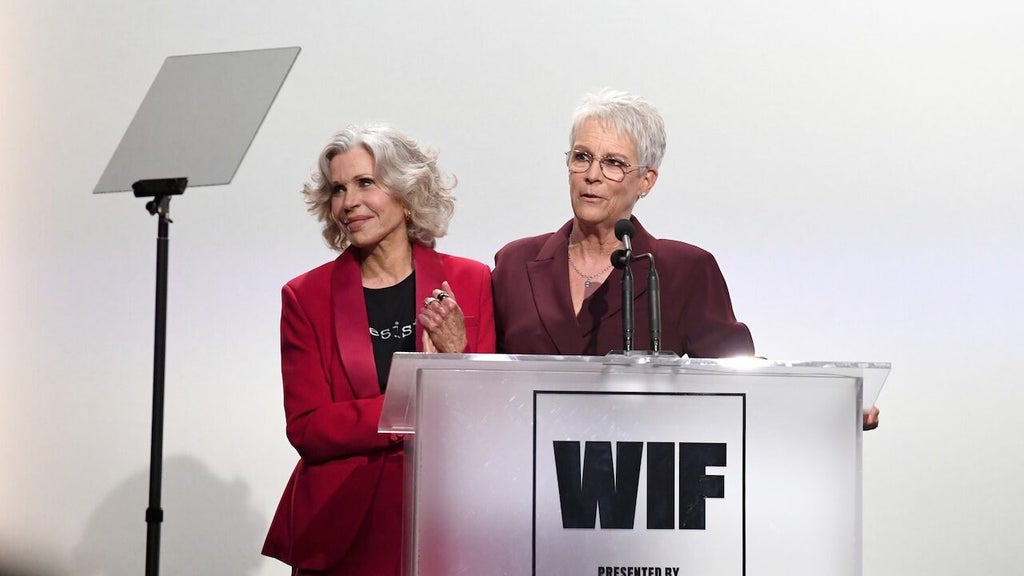
That support will be front and center during the WIF Honors, which will also honor Salma Hayek Pinault with the Jane Fonda Humanitarian Award, Adria Arjona with the WIF Max Mara Face of the Future Award, Hannah Waddingham for the Crystal Award for Advocacy in Television for “Ted Lasso” as well as Beth de Araujo and Gemma Chan for the Crystal Award for Advocacy in Film for “Josephine.”
“The role of honors is really to celebrate women, nonbinary, transgender folks who have achieved success, have made excellent films and TV shows, and also are lifting up others around them,” Schaffer said. “Everybody that we honor is not only furthering their own career, but participating in building the collective and ensuring that women are hired.”
The political climate is inevitably tied to the back slide in representation, with Schaffer noting “there’s been such an attack on diversity, equity, and inclusion … that people have gone a little bit quiet around around their values.”
For that reason, Schaffer and WIF look forward to honoring Hayek Pinault, who Schaffer calls “one of the most vocal people in the industry around protecting freedom of speech, protecting democracy, and as part of that protecting women’s rights.”
“Her being outspoken on all of these issues, I think, has inspired other people to do that,” Schaffer said.
Ahead of Thursday’s event, the executive shared her hopes for a “clear outcome” from the midterm elections — and she’s getting her wish: The majority of races have been called, resulting in a blue wave and historic milestones across the board for women and people of color.
