
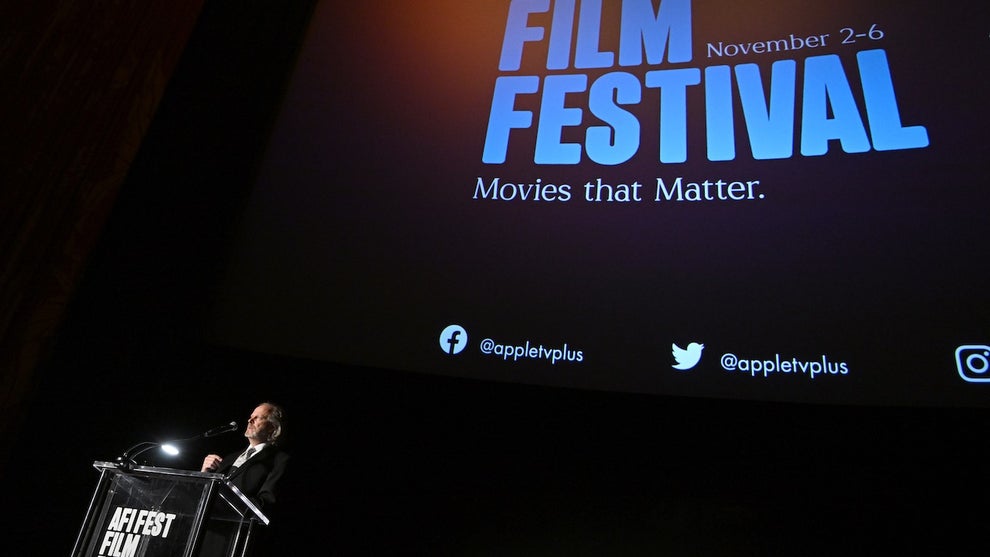
This may be a stormy time for Hollywood, but the town’s hometown film festival likes to think that it has things under control these days. The AFI Fest is enjoying its 40th anniversary this year, after four decades in which it clearly had its share of growing pains: It moved from Santa Monica to West Hollywood to Hollywood, changed the time of year it took place, experimented with giving away its tickets for free for a while, cut back on the length of its schedule and the number of films, and took a hit during the COVID pandemic.
And now, as studios merge, layoffs increase and AI threatens, the festival gets to celebrate a birthday. And Bob Gazzale, the American Film Institute’s president and CEO, insisted in a conversation with TheWrap that the rocky state of the industry isn’t a concern as the festival kicks off on Wednesday with Laika’s “Wildwood.”
“It hasn’t affected what we do,” said Gazzale, who joined AFI in the early 1990s and has been there for 34 festivals, 19 of them in his current position. “I think that speaks to the idea that excellence always has an audience. That’s really what this moment in time comes down to, because the ability to tell a story is now easier than ever.
“I was at a seminar at AFI with Charlton Heston when I first started – and I’ll never forget it, he said, ‘Film is the only art form where you cannot afford your tools.’ But now the tools are everywhere. Everybody has the opportunity to tell their story, and that’s something to celebrate. But curating what is excellent among this avalanche of opportunity is what AFI Fest is about, what all these festivals are about.
“That’s why we need Sundance and Telluride and Toronto and Cannes and Venice. There are a lot of great people devoted to this art form who are saying, ‘Take a look at this,’ and the audiences are there to listen. Nobody loves movies more than this town. So as we approached 40 years, we were like, ‘Let’s just keep it going.’”

But while nobody may love movies more than Los Angeles, running a film festival in the city can also be tricky. AFI Fest faces a problem unique to festivals in major entertainment capitals: While festivalgoers at Sundance, Cannes, Telluride and the like have traveled specifically for the purpose of seeing movies, viewers in L.A. are by and large at home, where jobs and daily life are constantly pulling them away.
“That’s a very valid point,” Gazzale said, adding that five or six years ago, he asked his team to run the statistics on how many films the average AFI Fest patron saw over the course of the festival. They returned with a sobering stat. “The average was 1.2 movies,” he said. “I thought, ‘OK, that’s something we can work on.’”
By that point, the festival had abandoned its policy, begun during the recession of the late 2000s, of making its tickets free. “We realized that it actually lessened the dedication of the audience to attend,” he said. But selling individual tickets wasn’t enough to generate return business, so the fest shifted the emphasis to passes that were good for a number of tickets. Since then, the average has risen to close to four films per person.
“I found it encouraging that we could be part of the solution simply by creating a pass that made it more accessible,” Gazzale said. “The truth is, psychologically it gives an audience much more of a commitment. And the exciting thing about the last couple of years is that we’ve been breaking all of our box office records. Our research is showing that it’s kind of a COVID rebound where people are eager to be together again.”

Taking place late in the year, after the string of awards-focused fall festivals in Venice, Telluride, Toronto and New York, the AFI Fest doesn’t put its focus on world premieres; instead, its red carpet presentations and special screenings are typically big awards movies that are coming to Hollywood after premiering elsewhere. (This year, they include “Being Heumann,” “I Play Rocky,” “Elsinore,” “Wild Horse Nine” and “14th,” along with a screening of “Once Upon a Time in Hollywood” with Quentin Tarantino and an evening with guest artistic directors Phil Lord and Chris Miller that will include a presentation of Stanley Kubrick’s “2001: A Space Odyssey.”)
“The game for festivals used to be, ‘What’s the first place you can see it?’” Gazzale said. “We’re not in a position to do that at AFI, and that’s OK with us. Our focus is on what’s excellent.”
To some degree, he adds, the focus is also on ties between different facets of the American Film Institute. “We’re opening with ‘Wildwood,’ and the cinematographer is Caleb Deschanel, who is a graduate of the AFI Conservatory,” he said. “We’re closing with ‘Being Heumann,’ written and directed by Siân Heder, who is a graduate of the AFI Directing Workshop for Women. Part of the achievement of this event is that it brings the AFI mandate full circle, which is not only to celebrate excellence, but to ensure it in the next generation.”
And if there’s no telling what kind of Hollywood landscape will greet that next generation, Gazzale isn’t going to be a voice of doom.
“I’m always optimistic about movies and storytelling,” he said. “And I’m also keenly aware that nothing endures but change. But I am reminded that this town was once not so keen on having sound in the movies.”
He laughed. “It continues to evolve and change, but one of the great gifts of being alive is that we get to tell stories. And no matter what the medium is, when the lights go down, I think to myself, Tell me a story. And that’ll never go away.
“So yeah, I’m optimistic, particularly when we have a program like we have coming up and a lot of people want to go. So let’s make the most of it.”
