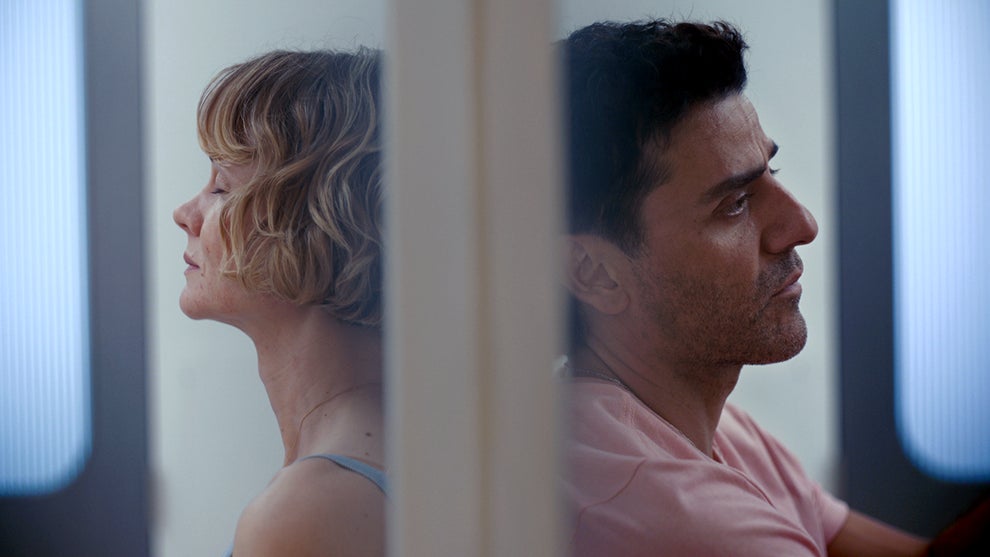
“Beef” Season 2 is, among other things, a love story. And James Laxton knows how to shoot the hell out of a love story.
“Maybe it’s just how I see things,” the cinematographer said. “I’m not sure. Maybe it’s just about the themes, the topics and stories I love to tell, or maybe it’s just how I want to tell them. I seem to always want to find some romance in a general way. I guess it’s a way to connect with audiences.”

Laxton wasn’t always part of the “Beef” family. The breakout first season of Lee Sung Jin’s critically acclaimed Netflix show about feuds and connection, which won eight Emmys including Outstanding Limited or Anthology Series in 2023, was shot by Larkin Seiple, who received an Emmy nod himself for his work. But while Season 1 focused on the personal feud between two parties in a road-rage incident, “Beef’s” Season 2 shifted to follow the twisty entanglement of two couples from different generations — one played by Oscar Isaac and Carey Mulligan, the other by Charles Melton and Cailee Spaeny.
For that story, Lee tapped Laxton, whose painterly camerawork in such Barry Jenkins projects as “Moonlight” and “The Underground Railroad” brought him cinematography nominations at the Oscars and Emmys, respectively.
“It’s no easy thing to come into Season 2 of a show that has such a specific visual perspective, but that was something that Sonny (Lee) really wanted and James embraced,” said Jake Schreier, nominated for directing the season finale. “He found this really beautiful new visual language for the show in the way lighting is expressed, in the way sets and faces are lit and the way the whole tone of the show, in the sense of color, feels different from Season 1.”
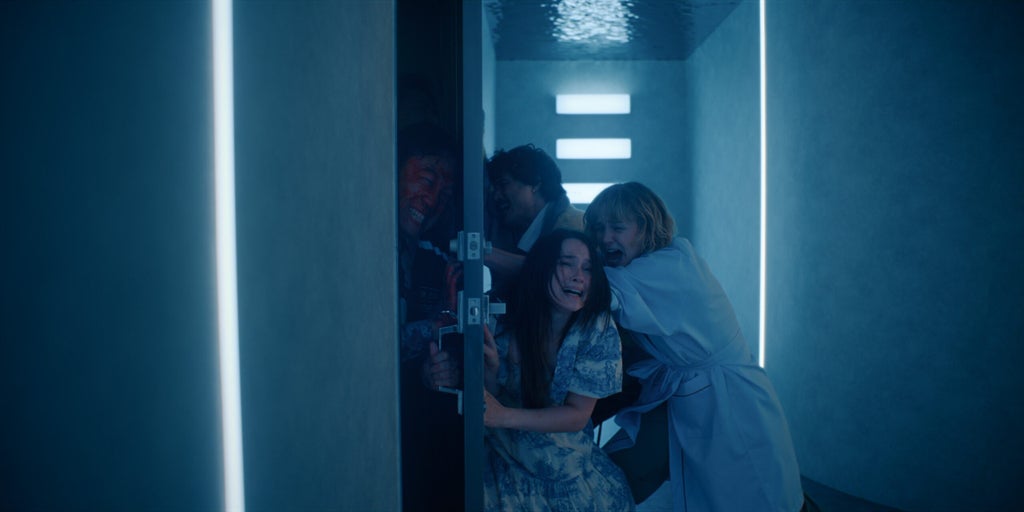
One of the show’s biggest set pieces is in the finale, the episode that also earned Laxton his nomination. As Ashley (Spaeny), Austin (Melton) and Lindsay (Mulligan) attempt to escape the clutches of Chairwoman Park (Youn Yuh-jung), they find themselves in a life-or-death brawl at a skin clinic — captured in a single, action-packed shot lasting just over 60 seconds. It’s the type of shot Laxton had seen in Schreier’s filmmaking before, most recently in last summer’s Marvel tentpole “Thunderbolts*” (released a day before the director flew to Seoul to film the episode).

“I think before Sonny even knew what the season was, he had this idea of doing a kind of ‘Oldboy’ oner in a Korean skin clinic with bloody skin being thrown around almost as a weapon,” Schreier said. “In Season 1, we would always talk about the season as being ‘Dumb Heat.’ This felt like the same, where we’re not going to attempt in Seoul to match up with Director Park (Chan-wook)’s ‘Oldboy’ sequence. You have people who are not action heroes, so they’re not going to win in that way. How could they win in that situation?”
But Laxton noted that the flashiness of this camerawork would mean little if it didn’t simultaneously communicate character. The DP viewed the epic sequence as a release valve for the intricate “web of conflict” built up throughout the season.
“What I’m most proud of about it, actually, is not that it just captures the action — that’s something that probably a lot of people can do,” he said. “Yes, in a dynamic way, it’s fun to see the action, but also in a more story-driven way to make sure that we’re getting into these beats. In the end, I felt like we did something that felt special — not just camera fanciness, but a bit more story-driven structure as well.”
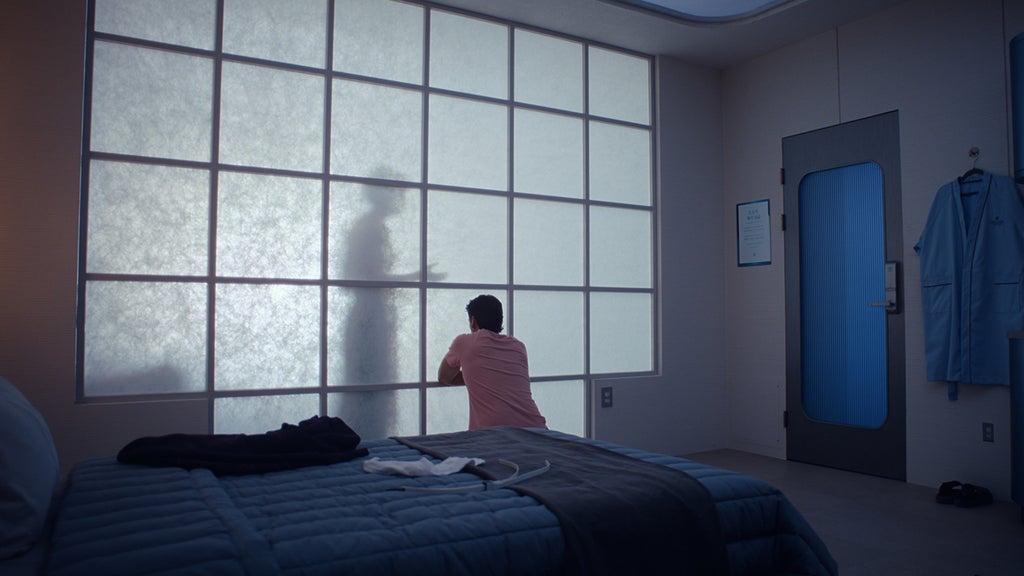
After their failed escape, the three (now joined by Isaac’s Josh) are held prisoner in a series of adjoining rooms, with each couple only able to see their partner’s silhouette through the wall. Finally forced to confront their demons yet unable to do it face-to-face, the characters have breakthrough conversations in unusual circumstances. Ashley attempts to confront Austin through a port in the wall (and is unable to meet his eyeline), and Josh and Lindsay sit down for a long-needed heart-to-heart. The scene is one of Laxton’s favorites — “a synergy of so many different disciplines within our work,” he called it.
“It was important for us to make sure that all those discussions — about where the port is and where Charles will be and how the silhouettes function within those scenes between each character and each couple — really map them all out,” he said. “It was one of these moments where you hope all these conversations make sense. And I feel like, in the end, they really did.”
This story first appeared in the Down to the Wire: Drama issue of TheWrap’s awards magazine. Read more from the issue here.