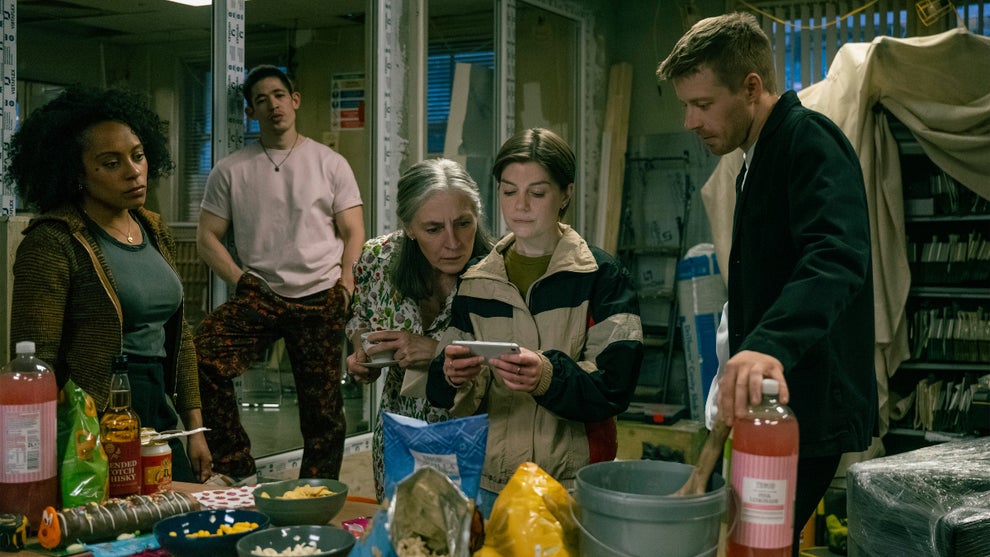
Anyone who watches “Slow Horses” knows Slough House is a dump. Since Season 1, the run-down offices with yellowing paint and a permanently jammed back door have functioned as a visual reminder of the status of the disgraced MI5 agents who work there, exiled from the spiffy central London headquarters. When Slough House is nearly destroyed during a shootout in the Season 4 finale, it follows that the place would undergo a long-overdue renovation.
But when we reunite with Gary Oldman’s Jackson Lamb and his band of misfits in Season 5, the office is suspended in mid-makeover. Would-be new walls are just slabs of unfinished drywall, electric cables dangle from the ceiling and workspaces are littered with tools and tarps. Not even the contractors can stand to work in such a sty.
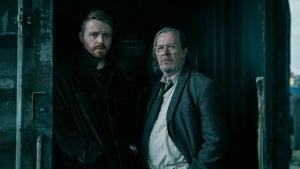
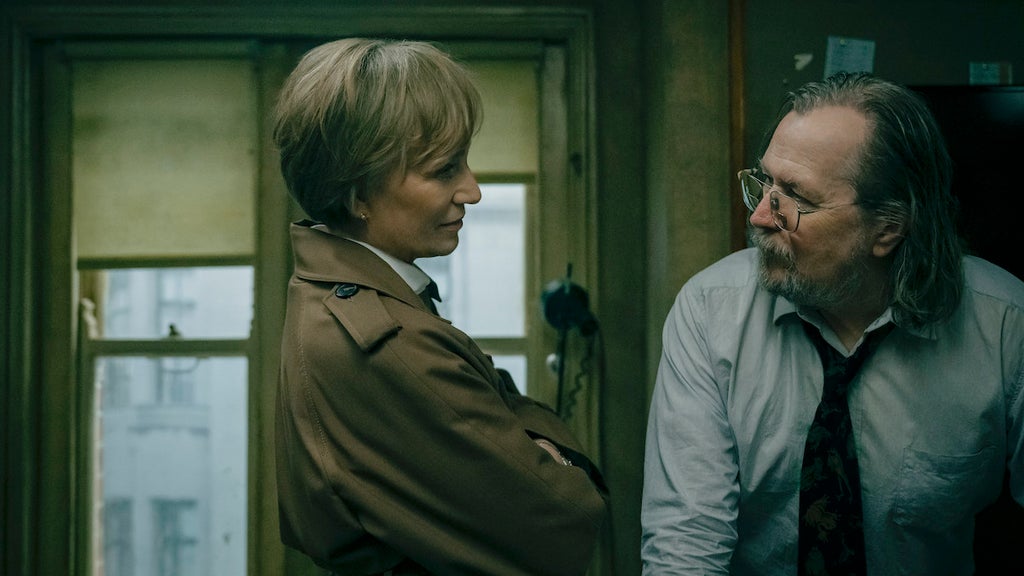
“The powers that be are always threatening to shut it down or to mothball it or to sack them all, so there’s always that threat hanging over [Slough House],” said production designer Choi Ho Man, who has been with the show since the first season. “And it’s that perennial thing where construction moves in and then they don’t complete. They go to breakfast and you’re going, ‘Where are they?’ So it felt like the right thing to change it up a bit and give that threat another layer.”
Fine Dining and Spying
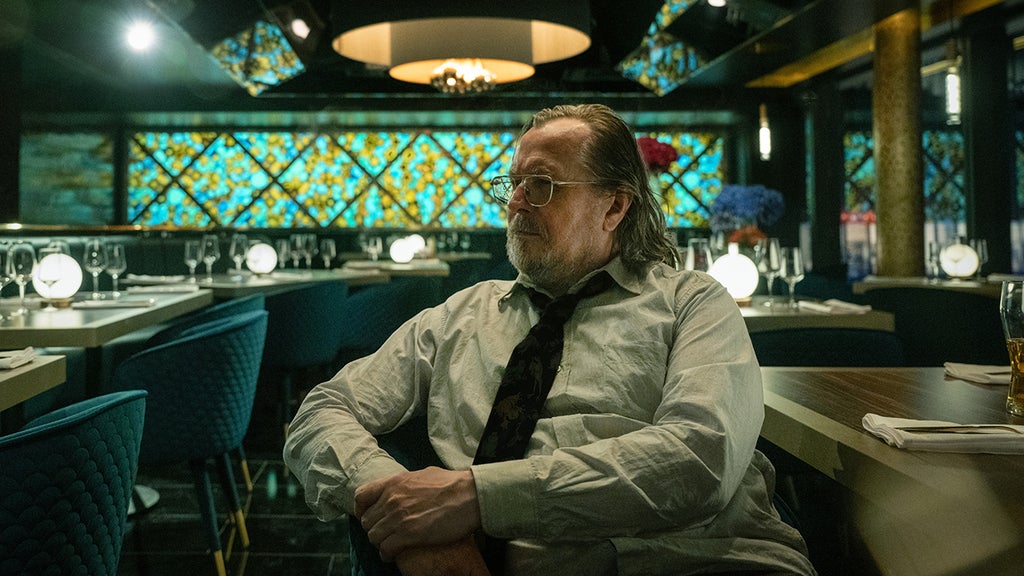
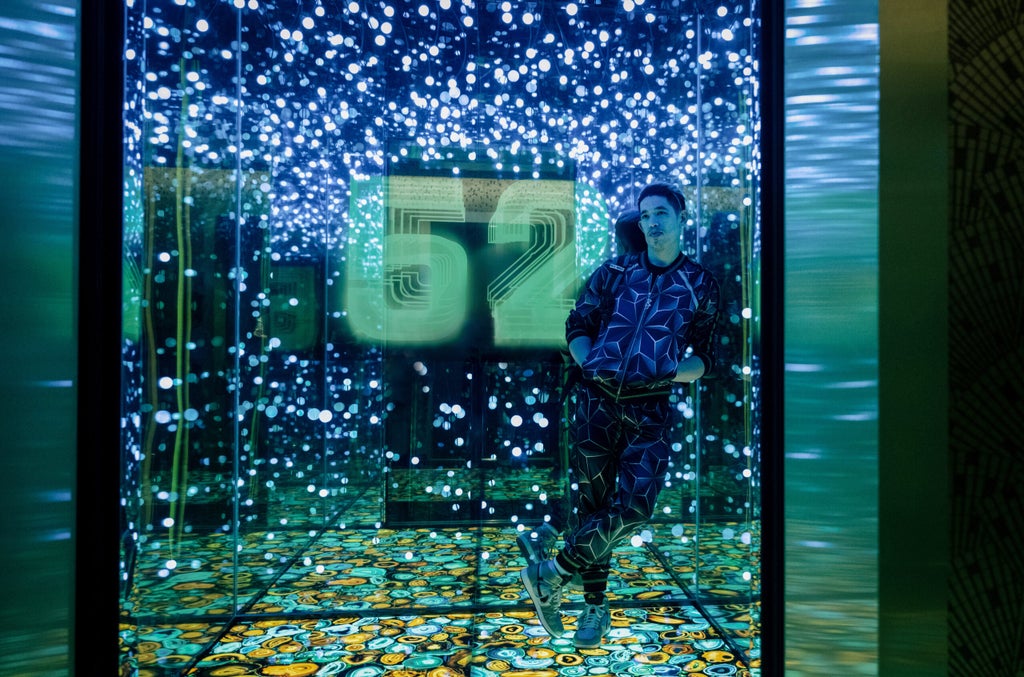
After an assassination attempt on Slough House’s IT geek Roddy Ho (Christopher Chung), Jackson Lamb assembles his agents at a posh restaurant on the 52nd floor of a high-rise building, accessible via a dazzling glass elevator. Choi’s team built the restaurant and the lift from scratch.
“For this high-end restaurant with a view and a lift, the brief was fairly specific,” Choi said. “We could find those places in London. Unfortunately, none of them could really bear to shut down for the length of time that we needed to shoot the scene.” To create the restaurant’s stunning view of the London skyline, the art department stitched together panoramic shots of the real cityscape and printed them on a translight (a high-resolution image lit from behind).

The Great Glass Elevator
Choi used mirrors to turn the space into one big box of infinite light. “My supervising art director has a great background in model making and special effects, so he helped me put it together,” she said. “There were a lot of discussions and collaboration with the DP throughout the process. It was actually quite a simple build, but it took a long time to get people on board with what we wanted to do.”
Man Cave
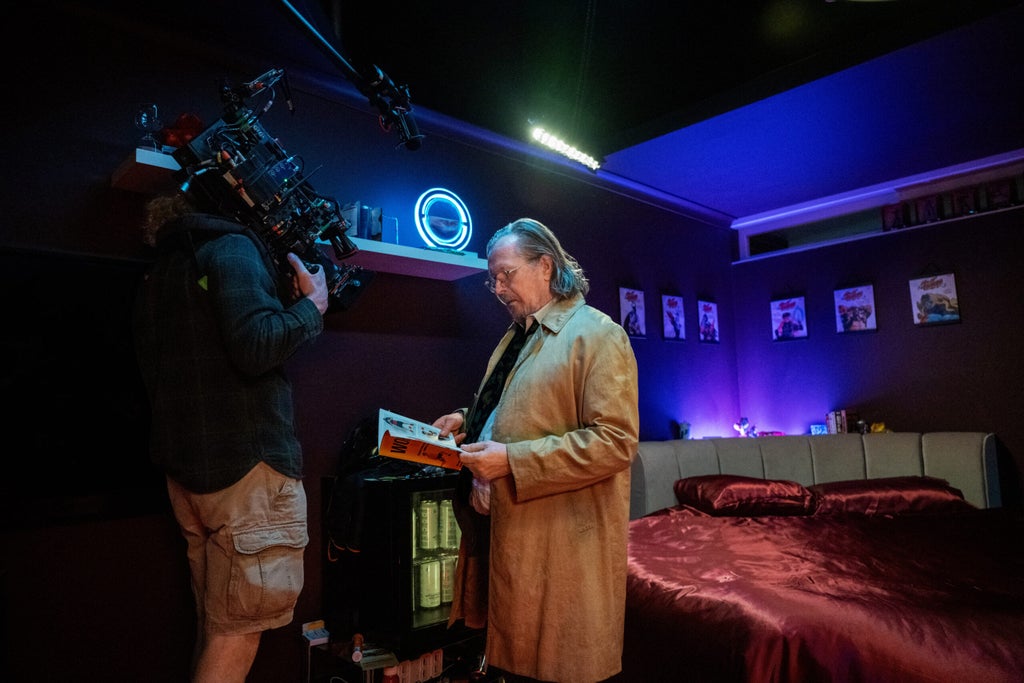
Choi designed Roddy’s apartment to befit a man who spends most of his life online. “We wanted to pick up on the gaming thread,” she said. “We’d seen some great references of these gaming guys who have lights all over the ceiling in weird patterns, so we ran with that.”
In addition to multicolor LEDs, Choi gave Roddy a bedroom with dark walls and a waterbed covered with a hideous red velvet spread. Other walls she decorated with framed posters of video games — one of which Chung coincidentally had a personal connection to. “When we showed Christopher around the set the first time, he walked in and said, ‘Oh my God. I actually did the voice-over for that!’ It was so funny.”
This story first ran in the Down to the Wire Drama issue of TheWrap’s awards magazine. Read more from the issue here.