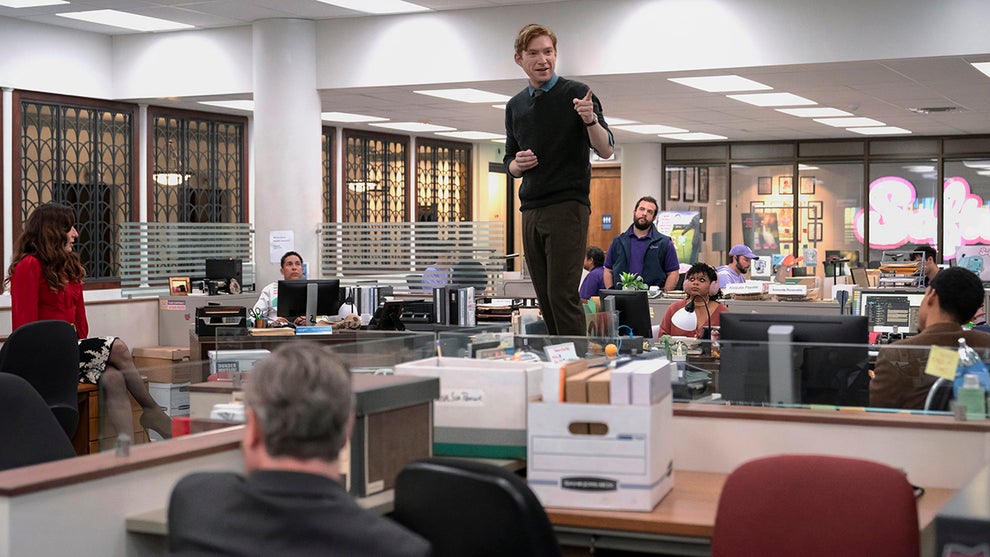
David Rogers is no stranger to the world of mockumentary. The industry veteran edited nearly 100 episodes of NBC’s “The Office” and took home two Emmys for it. So he was well suited to help bring to life the first season of “The Paper,” “The Office” creator Greg Daniels and Michael Koman‘s Peacock spin-off set at a struggling Ohio newspaper. He abides by the same “guiding principles” editing the new series as he did its parent.
“There’s supposed to be a documentary crew filming these characters, so we try to really follow the rules of a documentary. We don’t have cameras bouncing around everywhere. If you see one shot, you typically don’t see a reverse,” Rogers said during a recent visit to the “Paper” edit bay on the Universal Studios lot in Burbank. He and fellow editor Julie Cohen walked TheWrap through some of the most memorable scenes from the series’ first season.

Rogers noted that, as was the case with “The Office,” there are pros and cons to the multi-cam setup. “Obviously, when you have a lot of footage, it makes for a lot of choices,” he said. “I have bins and bins’ worth of alternate cuts that I made just to show the different possible versions of a scene.”
Sometimes those differences were as simple as starting the show’s fourth episode, “TTT vs. the Blogger,” with an establishing joke between Travis (Eric Rahill) and Detrick (Melvin Gregg). In another take, Rogers cut straight to the arrival of a group of high schoolers visiting the Toledo Truth Teller offices. Later in the same scene, one cut lingered on a tight frame of Travis and Adelola (Gbemisola Ikumelo) to highlight her silent reaction to a joke. The final version broke sooner to a wider group shot of the newsroom.
Rogers also demonstrated how he constructed the series’ main credit sequence. Originally, the title card appeared on a prompt for an online paywall, but he felt that was too snide a gag. In its place, he used AI and visual effects to lengthen an existing take of the fictional newspaper being scraped into a trash can, revealing the show’s title on the side of the bin.
None of this process was new to Rogers. But it was to Julie Cohen, who edited four episodes of Season 1. Prior to “The Paper,” she had worked primarily on drama series, apart from the first two seasons of another Daniels comedy, “Space Force.”
When she began working on “The Paper,” she created a meticulous system to organize the overwhelming amount of footage. She started by sorting through an ever-growing, color-coded binder full of script supervisor notes. These annotations helped her understand not only each scripted take of the scene she was about to edit but also the content of the improvised line readings — or “candy bag” takes, where the actors are given free rein to try whatever they want.
Each scene is a carefully curated assemblage of scripted lines and improvised candy-bag miracles that Cohen and her team sifted through and pieced together. Sometimes the “Paper” crew made that easier for her.
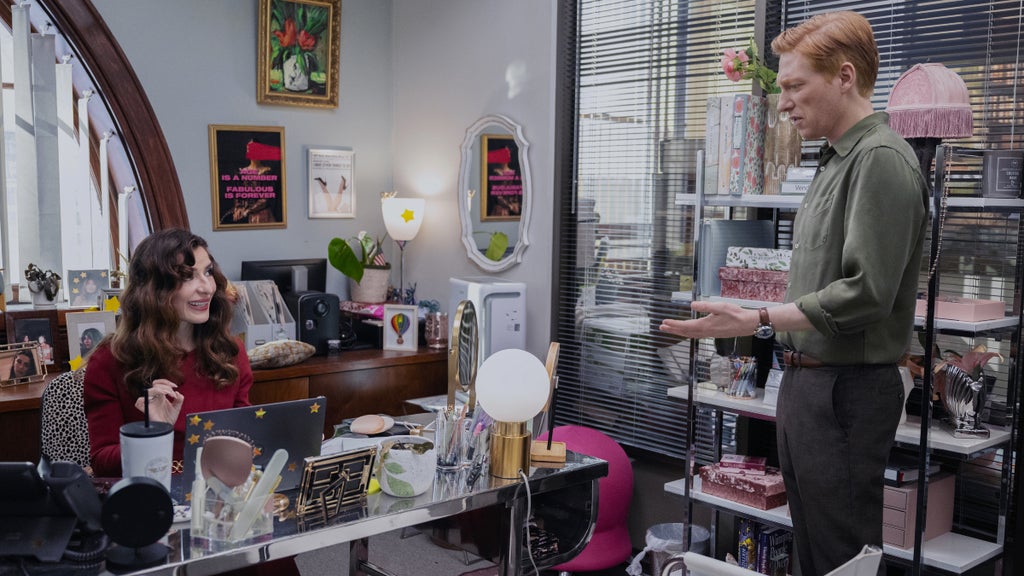
“I love a two-shot,” she said while breaking down a scene in Episode 5 (“Scam Alert!”) in which editor-in-chief Ned (Domhnall Gleeson) uncomfortably blows on managing editor Esmeralda’s (Sabrina Impacciatore) hair. Having the duo both in frame meant Cohen didn’t have to cut to capture their individual performances. Which, in Gleeson’s case, was improvised. As scripted, the scene had Ned using a brush to calm his colleague down.
Cohen showed how she created an artificial whip pan in Episode 5 to stitch two different takes together. On any other series, the quick horizontal camera movement would stand out — but not on “The Paper,” where camera whips, slow pans and sudden zooms are a fundamental part of its visual and comedic language.
“It’s this extremely difficult puzzle that you’re putting together,” she said. “You’re basically handling all of these ingredients and trying to make a huge cake, and everything has to go together. It requires so much collaboration.”
This story first ran in the Comedy Series issue of TheWrap’s awards magazine. Read more from the issue here.