
Margaret Brown wasn’t looking for answers when she directed “The Yogurt Shop Murders.” But answers found her anyway.
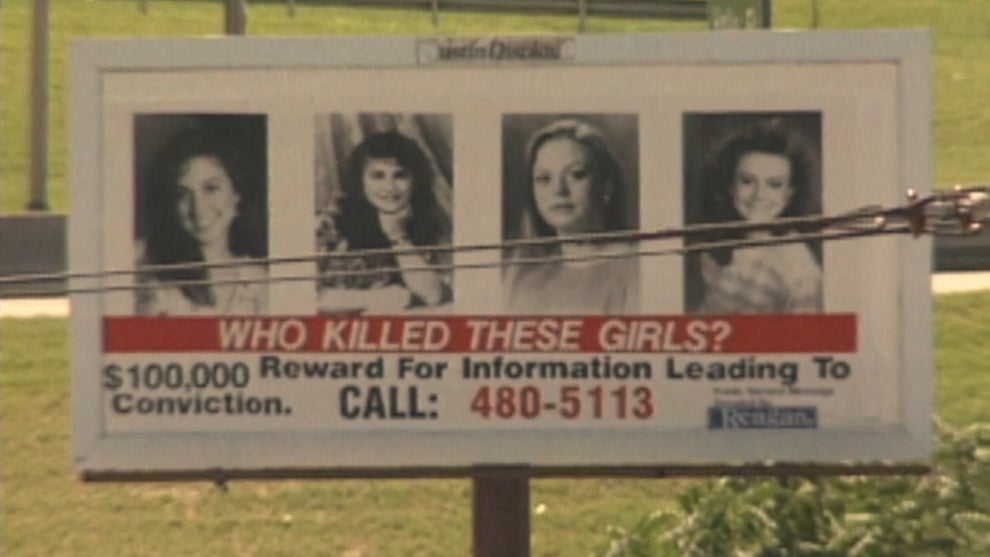
The documentary series, which premiered on HBO in August, follows the brutal 1991 killings of four teenage girls, Amy Ayers, Eliza Thomas and sisters Jennifer and Sarah Harbison, at an I Can’t Believe It’s Yogurt! in Austin. Brown, who’s lived in the city on and off for nearly three decades, focused on the victims and their families, aided by an archive of footage from Claire Huie, who years ago sought to make her own documentary on the subject before stepping away.

Brown initially conceived of “The Yogurt Shop Murders” as a story about grief, examining how families living in unfathomable pain grapple with not knowing who murdered their loved ones. (Four men were wrongfully accused of the crimes; one, Robert Springsteen, was on death row before his conviction was overturned.) Then, about a month after her series aired, Austin detective Dan Jackson solved the case using advanced DNA technology. Serial killer Robert Eugene Brashers, who died in 1999, was the culprit. Brown speedily reassembled her crew to make a final episode that premiered only a week before Emmy eligibility closed.
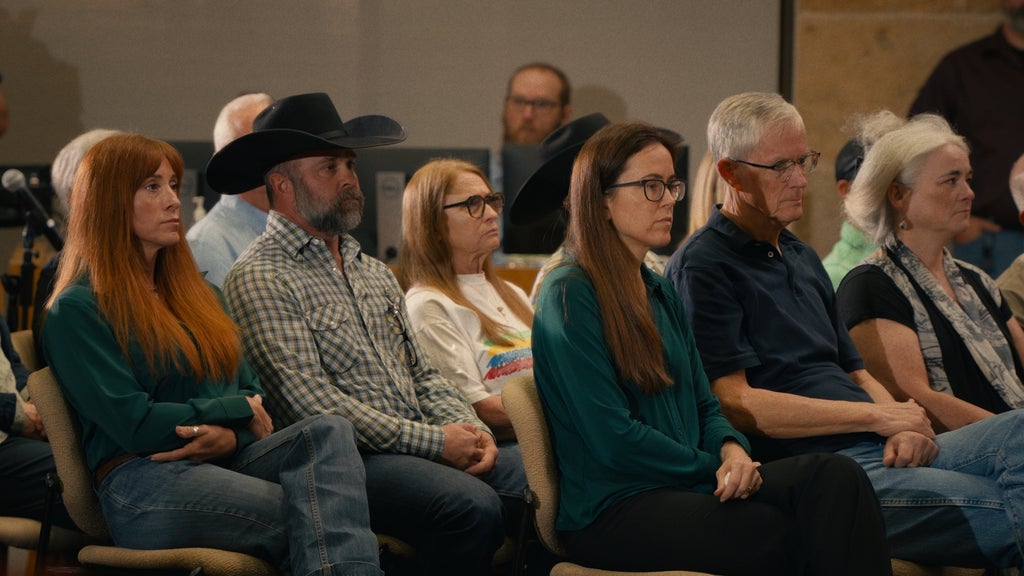
“It releases something, the knowing,” Brown said. “We titled the fifth episode ‘The End of Wondering’ because it’s something Shawn Ayers said. When I interviewed him, it was insane—a serial killer killed his sister, but he definitely feels better than he did not knowing. I thought psychologically that was fascinating. The team felt it too. We were so happy (the families) had some kind of partial closure.”
Take me back to 1991. Where were you when the murders happened, and when did you first hear about them?
I think I was a freshman in college. I didn’t live in Austin. I went to college at Brown, so I didn’t hear about them until I moved to Austin in the late ’90s. The billboards were still up. At the time, I never thought I’d be making a series about it, but you would hear people talking about it at parties because it was this huge unsolved thing. A lot of people I know knew those girls and went to school with the (wrongfully accused) boys. It felt very close.

A lot of this doc is about not seeking answers. Then, just after it comes out, you find them. How did you make that final episode in such an extraordinarily short amount of time?
I was about to drive with my dog to a different city, starting a whole other project. I met Dan, the cold-case detective who solved it, before I left, and he was being really fidgety. I was like, “Is there something you’re not telling me? Should I leave? You’re being weird,” and he was like, “Yeah, there might be something happening.” But there had been so many almost things. Then I got a call in my car with my dog, and I had to drop my dog off with my parents and fly back to Austin. We had to put a crew together in two days. It was cool because my team was just calling me like, “I’m in.” So we got the same team. Everyone dropped everything.
After we finished the first four episodes, there was this feeling of “Almost.” I got to do what I wanted to do, which was to make a show about grief. It was really about “How do you process grief and trauma?” because these people went through something unimaginable. Grief comes for all of us because we’re human, but nothing like that. That is just horrible. But I do think it touches us all and that you can learn from all of these people, and that’s what the story was for me as a director.
The documentary also gets into the debate surrounding the death penalty. We now know Robert Springsteen is innocent. Talk to me about that element of the project and how it factors into the finale.
This did not get included in the fifth episode, but I did an interview with Mindy Montford, who’d been working on the case in the AG’s office, and she said this changed her opinion on the death penalty. I tried to get it in; it just didn’t quite fit. But I remember we were shooting a scene and she was like, “I now do not believe in the death penalty because you see how it can go wrong.” I thought that was incredible, that you can have this long-held belief and it can change. Things like this are why people change.
This story first ran in the Race Begins issue of TheWrap’s awards magazine. Read more from the issue here.