
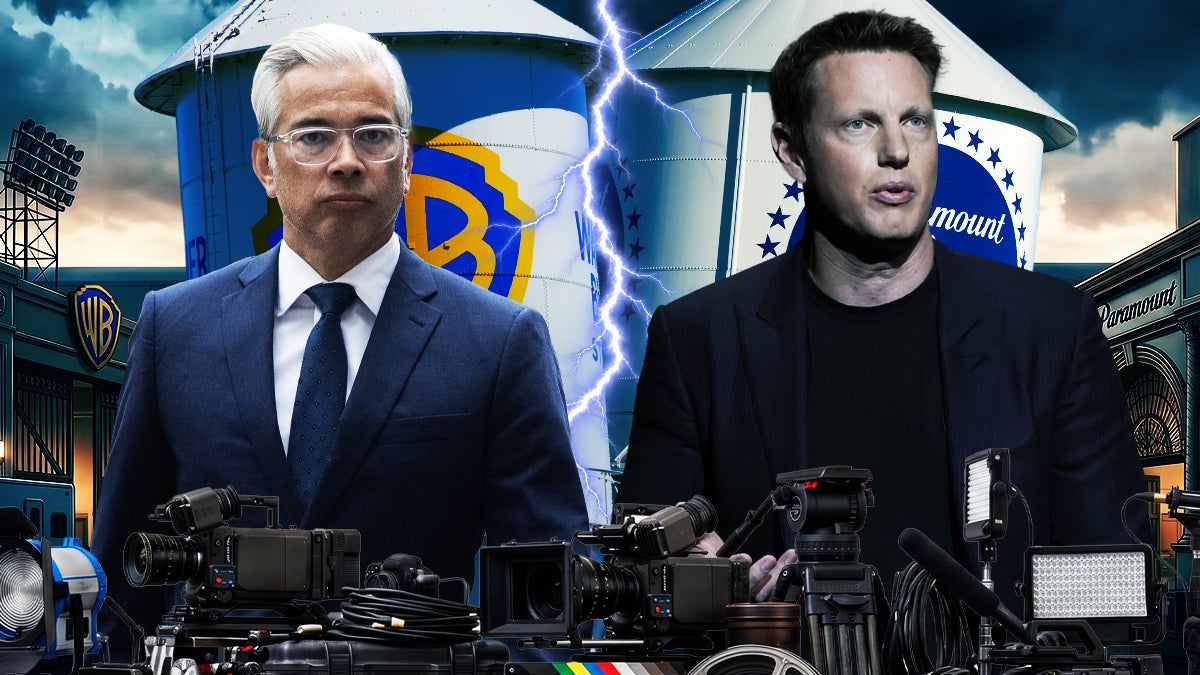
Following more than a month of indirect verbal sparring via media appearances and press releases, Paramount’s legal team and California Attorney General Rob Bonta were finally poised to discuss terms face to face on Monday. That is, until Bonta canceled the talks late Sunday, accusing Paramount of leaking details of the agenda and noting he’s happy to meet once the company “stops playing games and engages sincerely.”
So no Monday meeting, but settlement talks seem inevitable at this point, sooner or later. Who’s entering the room with the most leverage?
After all, this is turning into the mother of all high-stakes poker games. Paramount is keen to wrap this lawsuit up and close the $110 billion acquisition of Warner Bros. Discovery before its $7 million daily “ticking fee” kicks in on Oct. 1. Bonta, whose lawsuit filed alongside 11 other attorneys general and the Writers Guild of America is the only obstacle standing in the way of the deal closing, is under immense pressure from industry leaders and his own boss, Gov. Gavin Newsom, to find a resolution.
“Legally, the states have the leverage,” said Braden Perry, a regulatory and government investigations attorney. “Politically, Paramount does.”
Paramount CEO David Ellison and Chief Legal Officer Makan Delrahim have publicly called for a settlement, and said they’ve offered concessions. Bonta has also said he’s open to talks, but urged Paramount to offer structural remedies, such as divestments, rather than behavioral remedies, such as Ellison’s pledge for 30 theatrical film releases per year. He has argued those pledges are difficult to enforce.
“As I’ve said before, generally for all of my cases, I prefer to resolve disputes in the boardroom, not the courtroom,” Bonta said in a statement to TheWrap. “As I’ve also said, if the opposing party in litigation wants to meet in good faith to make a sincere effort to resolve the case, we’ll meet.”
Paramount didn’t respond to a request for comment.
Just because the growing number of organizations and people — from the Directors Guild of America to California Gov. Gavin Newsom — are calling for a settlement doesn’t mean Bonta will acquiesce. As such, there’s no guarantee that the discussions kicking off this week will lead to a resolution (the judge overseeing the case had earlier asked the two to identify potential magistrates to oversee the mediation this week).
After all, both sides hold significant cards. Here’s a breakdown of where Paramount and Bonta’s camp stand:
Paramount’s advantage
A chorus of support: Over the last few weeks, executives and even trade groups have come out in support of either a settlement or the deal itself.
California Gov. Gavin Newsom, Los Angeles Mayor Karen Bass, the Democratic nominee in California’s gubernatorial race Xavier Becerra, the Directors’ Guild of America, IATSE and trade organization Cinema United, which previously opposed the merger, have all called for a settlement.
Cinemark, the CEOs of AMC Theaters and Regal, Lionsgate CEO Jon Feltheimer and WME Group executive chairman and Ellison’s business partner Ari Emanuel have all come out in support of the merger.
The narrative has been pretty consistent: that this uncertainty dragging out for months is bad for the industry as a whole, and that a deal of some sort that players can prepare for is better than nothing.
“Bonta doesn’t need a deal,” Perry said. “But he’s under real pressure from the governor, the mayor, and the guilds to make one.”
But not everyone believes the pressure will be a factor.
“I don’t think it changes the analysis or Bonta’s decision,” said Abiel Garcia, an antitrust attorney at Kesselman Brantly Stockinger. “No one likes uncertainty in the market and so the industry is understandably nervous about this dragging out and what it means for Hollywood overall. The antitrust analysis still remains the same.”
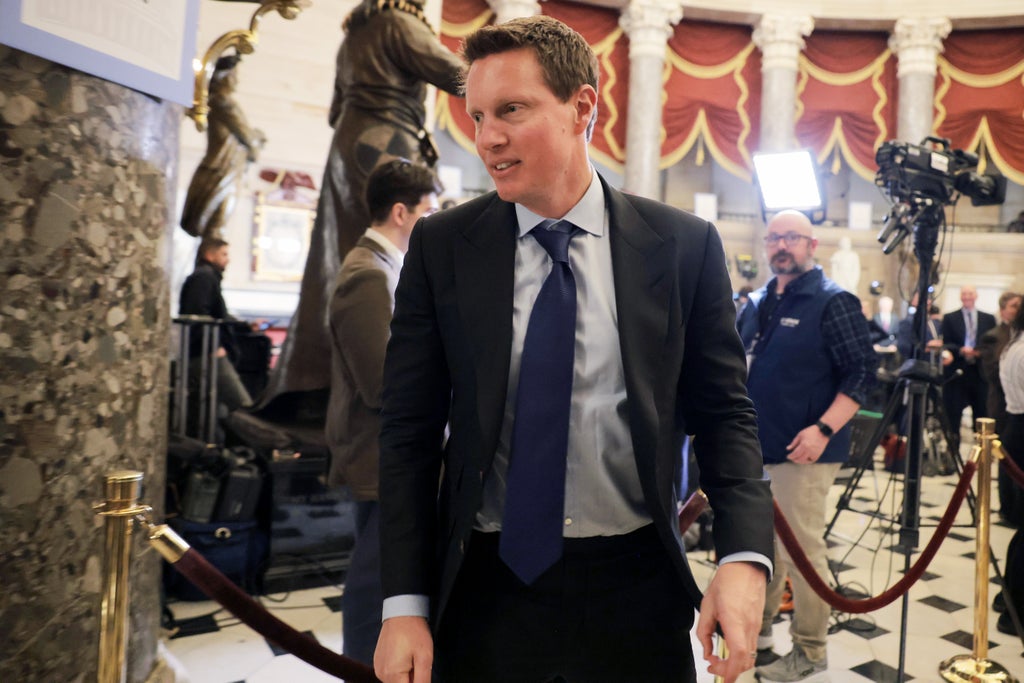
Threat of departure: Hanging over the talks will be the spectre of Paramount moving out of California. Paramount CEO David Ellison said that he would move the entire company if the attorney general continues to ignore his efforts to negotiate a settlement.
So if talks break down, does Ellison pick up and leave? Possible destinations include Nashville, Tenn., and Austin, Texas, both locations where his father’s company, Oracle, has large campuses.
What about that bond: Paramount has asked the state and WGA to put up a $1.88 billion bond to cover the potential damage it would incur from the deal process dragging on as a result of the lawsuit. The threat of a bond that the state would have put up is another pressure tactic that Paramount could hold over Bonta’s team.
While companies traditionally can seek such protection when sued under Rule 65(c), legal experts believe it’s unlikely that Judge Aracell Martinez-Olguin will decide to rule in favor of Paramount. She already rejected the bond in July when she granted the temporary restraining order, and courts do have the discretion to waive or minimize bonds for government enforcement actions. There’s also Bonta’s argument that the company agreed to the ticking fee knowing the deal could face regulatory scrutiny, essentially a self-inflicted injury.
“It’s somewhat absurd to ask the government to put up a bond to allow them to prosecute a case that is in the interest of the public,” Garcia said. Another seasoned attorney who spoke to TheWrap said the judge may grant the bond but at a much reduced fee, more in line with traditional asks.
Martinez-Olguin is set to rule on the bond on Sept. 24, after which this disappears as a point of leverage for either side.

The state AG’s advantage
Timing: Bonta and the state attorneys general’s biggest advantage is time, as evidenced by Bonta’s willingness to abruptly cancel the Monday meeting. Paramount wants to wrap this up within the next month. But with a trial set to start in March and lasting roughly three weeks (12 court days), the delay could prove costly to the media company.
The numbers illustrate why Paramount isn’t playing the waiting game: the daily ticking fee will cost it $7 million, or $650 million a quarter. If this drags out to June, Paramount could be on the hook for roughly $2 billion. While that number is just a fraction of the total $110 billion sale price of Warner Bros. Discovery, it’s significant considering the amount of debt Paramount is taking on to complete the deal.
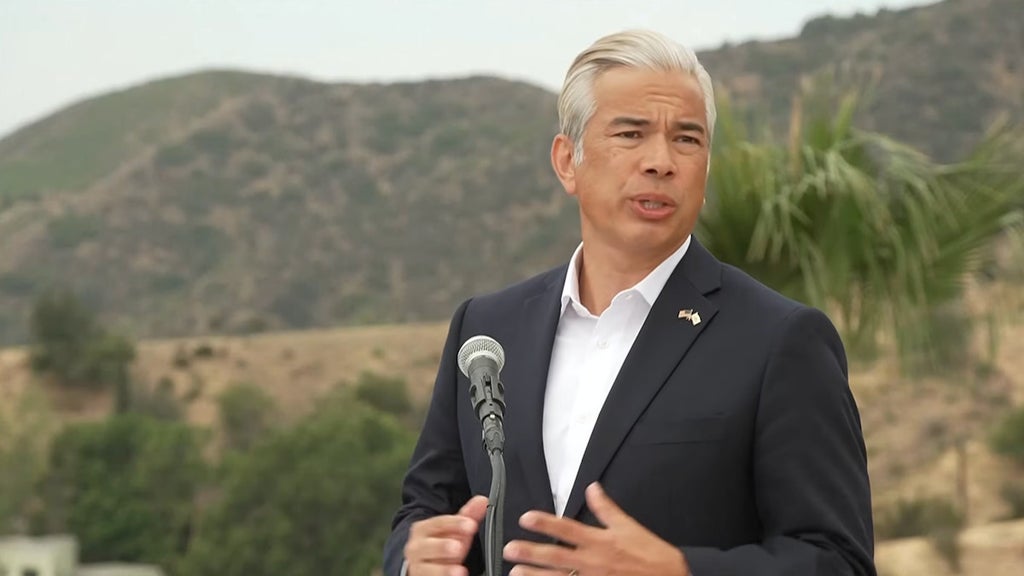
Structural vs. behavioral: Bonta has consistently said he would entertain offers for “structural remedies,” or a fundamental change in a deal’s physical or organizational architecture achieved by actions like an asset sale, divestiture or a break-up of the company.
“Any potential discussions about the Paramount-Warner Brothers merger will be unproductive absent robust structural remedies on the table that address our concerns,” Bonta said in a statement.
His public comments set an undefined expectation for what Paramount will need to offer if it wants to get serious about a settlement. But TheWrap has interviewed insiders on multiple occasions who say that CNN is a significant concern to the Democratic AGs, who do not want to see Ellison control both the cable news network and CBS News.
Bonta is expected to seek the divestiture of some cable channels and a commitment to keep its movie studios separate (notably, what the DGA has asked for), according to The Wall Street Journal.
“If Paramount puts real assets on the table, there’s a path to settlement,” Perry said. “If it offers more promises, this is a listening session, not a negotiation.”
Data tells another story: Paramount insists its merger with Warner Bros. will be pro-competitive and good for jobs, but a recent report pokes holes in that claim (which is one few in the industry believe anyway). An analysis conducted by CVL Economics that was commissioned by Los Angeles County’s Department of Economic Opportunity said the merger would result in the loss of 4,500 film and TV jobs in the country over the next three years.
Furthermore, the overall impact of the merger, which includes hurting the smaller industries that rely on local productions, would cost Los Angeles County $2.78 billion in economic value, $4.06 billion in total business output and $547 million in tax revenue.
The timing of the report, which came out Wednesday, means the data will be fresh in the minds of both sides when they come to the negotiating table. On Saturday, Bonta retweeted TheWrap’s summary of the report — the second time he’s done so in the last four days.
“Among the many reasons we’ve sued to block this merger…” he said while sharing our story.
Given his stance and rhetoric — and the fact that he’s up for re-election in November — it’s unlikely he’ll give up without significant concessions.
Lucas Manfredi contributed to this story.
