
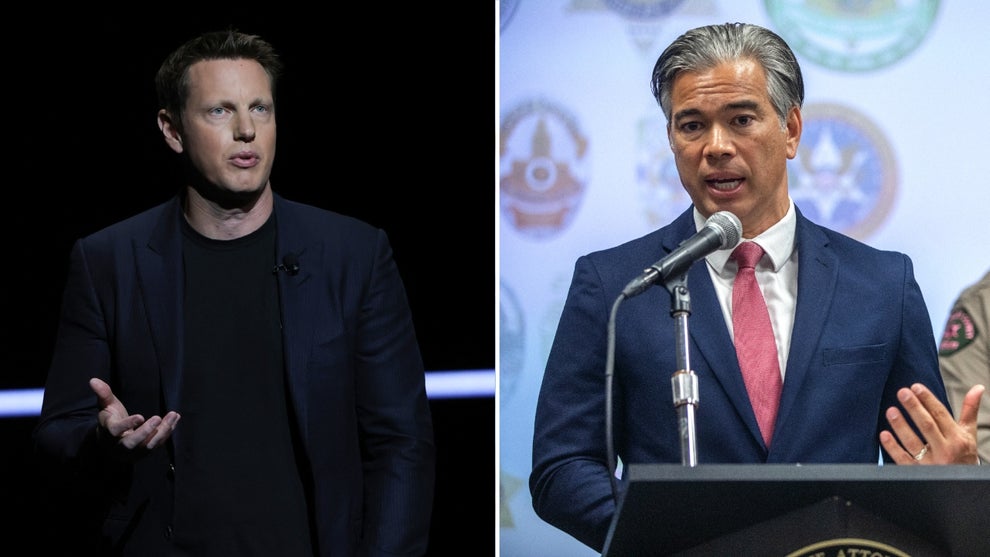
Paramount has requested a court order that would require a group of 12 state attorneys general and the Writers Guild of America to post a $1.88 billion bond to cover financial damages as their litigation delays the closing of its pending $110 billion Warner Bros. Discovery merger.
The bond amount is based on the straightforward calculation of the maximum potential ticking fee consideration and other financing costs. Per the terms of the merger, CEO David Ellison is on the hook to pay WBD shareholders a 25 cent per share ticking fee starting Oct. 1, which translates to a payout of $7 million per day or $650 million per quarter until the deal closes.
The final deadline for the deal to close is June 4, 2027.

Paramount has agreed to delay the closing until five days after the outcome of a trial, or June 1, 2027, whichever comes earliest. The antitrust trial is set to start on March 2 and end on March 19, 2027. By the time trial concludes and the
parties submit their final briefs, Paramount expects to pay WBD shareholders at least $1.3 billion in ticking fees.
It also said that the delay threatens to nullify the regulatory approvals that Paramount has spent months securing, noting that it would have to take additional steps at “substantial expense” if the transaction still hasn’t closed by the end of the trial.
“We have satisfied all closing conditions under our merger agreement, having received regulatory clearances from 68 jurisdictions. These two lawsuits are the only barrier to closing this transaction,” a Paramount spokesperson told TheWrap. “Both the Clayton Act, the federal antitrust law upon which these suits are based, and other federal law expressly provide that plaintiffs are required to post a bond covering the potential harm from halting a transaction to litigate, so that if they lose, the injured party has a source of recovery for the damage caused. Here, every month of delay carries substantial and quantifiable financial consequences.”
In addition to the financing costs and ticking fee, the Ellison-led media giant warned that there would be “no integration and no ramped-up investment in content, production, and creative talent by the combined company” for at least eight months. The spokesperson also said that employees of both companies would be harmed by the uncertainties caused by the delay.
“We remain confident that plaintiffs’ case is without merit and will defend our pro-competitive transaction in court,” Paramount’s statement concluded. “We look forward to closing this transaction and delivering its benefits to consumers and entertainment industry workers in California, the United States and around the world.”
California Attorney General Rob Bonta’s office responded to the bond request in a statement to media later Monday, saying that it was an additional “blackmail” effort “to get us to back down” from going to trial.
“Paramount and Warner Bros. are two sophisticated companies who willfully decided to include a costly ticking fee as a provision in their merger contract,” the statement read. “They knew this merger would undergo regulatory review; they knew it was not a done deal; and they chose to include it anyway.
“What’s more, Paramount itself stipulated to the timing it is now protesting — they agreed to the dates and did not request a bond as a condition of agreeing not to close until after the trail, and potentially as late as June 2027. Now, they’re trying to get a do-over.
“Bottom line: Paramount went into this process with eyes wide open. They are lying a bed of their own making, and once again, trying to blackmail us to get us to back down.”
Representatives for WGA did not immediately return TheWrap’s request for comment.

The latest move comes as Ellison and Paramount Chief Legal Officer Makan Delrahim have urged California Attorney General Rob Bonta to reach a settlement before the trial. They’ve also threatened to pull Paramount’s operations out of the Golden State if Bonta doesn’t come to the negotiating table by the Oct. 1 ticking fee deadline.
Bonta called the threat of a move “blackmail” and said that he is open to settlement talks, but that Paramount will have to propose structural remedies, such as divestments, rather than behavioral remedies.
In addition to Ellison’s pledge to release 30 films in theaters per year, Paramount has considered creating an editorial board to oversee CNN to ensure it remains independent under the combined company, but has not been open to an outright sale of the network. Bonta has said that neither the creation of the editorial board nor a CNN sale would be enough on their own to satisfy the states’ concerns.
A spokesperson for Bonta also told TheWrap he remains “committed” to the lawsuit despite a settlement proposal from the Directors Guild of America and International Alliance of Theatrical Stage Employees. That proposal includes conditions such as keeping operation of Paramount and WBD’s film and TV studios and their production, distribution, marketing and exhibition groups separate; keeping HBO available on third-party platforms; and commitments around content licensing, theatrical releases, U.S.-based productions and remaining based in Los Angeles.
“I think they’re eager to enter those talks and we are very happy with where we are,” Bonta said during a Politico conference last week. “We’re confident in our case. We will prepare and be ready to go to trial. And if they, in good faith and sincerely, want to talk about settlement with us, of course we will be open to any proposals they want to propose to us. But right now, we’re focused on litigation and going to trial.”
In addition to the state AGs and WGA, the Paramount-WBD merger faces a lawsuit from a Paramount shareholder. A group of consumers also filed a lawsuit seeking to block the merger, but it was dismissed.
