
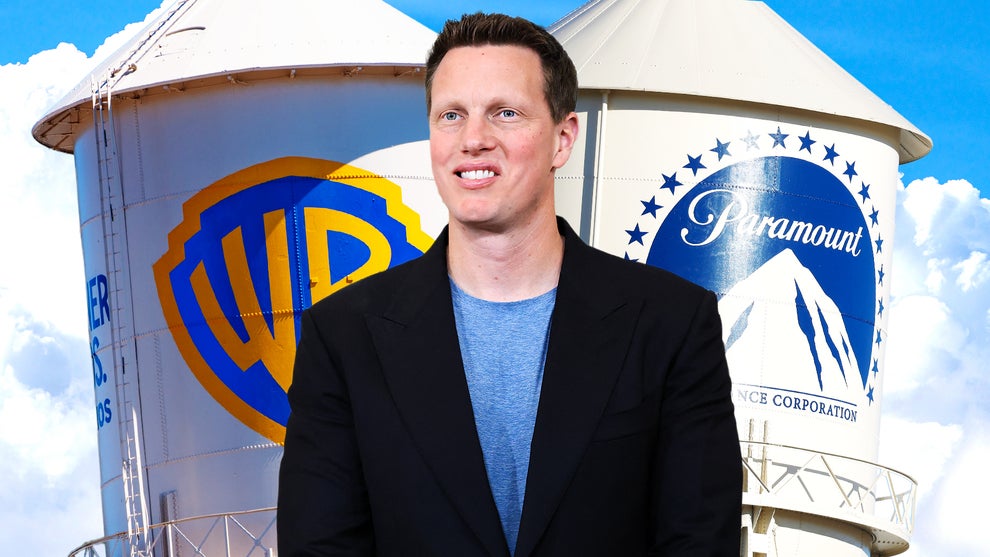
Paramount has asked a California court to toss out a lawsuit seeking to block its $110 billion merger with Warner Bros. Discovery, calling it a “misguided” and “clumsy” attempt to “politicize antitrust law.”
“The merger of Paramount and Warner Bros. Discovery presents an opportunity to revitalize Hollywood and the industry at large by creating greater competition that benefits consumers, theaters, and workers alike,” the company wrote in a motion filed with the U.S. District Court for the Northern District of California in Oakland on Wednesday. “This clumsy attempt to politicize antitrust litigation, untethered to any established antitrust principles or law, has no place in this courthouse and must be rejected.”
The David Ellison-led media giant argued in the motion, obtained by TheWrap, that the transaction will offer a “stronger, better scaled rival” to Netflix, Disney and Amazon and expand investment and content output once completed. It added that delaying or blocking the deal from closing would harm competition rather than help it by imposing “significant economic costs” on the company.
“Netflix and other scaled tech platforms stand to benefit from a weaker Paramount and Warner Bros., but consumers, theater owners and
talent will suffer,” Paramount warned. “Whatever upside Plaintiffs might see in such an outcome, it is not a procompetitive one.”

The lawsuit filed by five streaming subscribers alleges that the merger would strengthen Paramount’s “ability and incentive to raise prices, reduce output, narrow slates, reduce quality and worsen consumer-facing terms, including through control of distribution, exclusivity, windowing and licensing.”
It also claims that Paramount is violating Section 7 of the Clayton Antitrust Act, which bars mergers that substantially reduce competition and the number of top companies in any given marketplace. While box office market share can vary from year to year based on the films released, the lawsuit estimates that with Warner under its ownership, Paramount would control roughly 24% of the theatrical distribution market.
“Skydance’s nontrivial acquisition of Paramount Global and the proposed nontrivial acquisition of Warner Bros. Discovery reflect the same strategy of refusing to compete by building better products, investing, innovating, or winning customers through rivalry on the merits, but instead pursuing scale through consolidation that eliminates independent rivals and weakens the competitive constraints that protect consumers,” the complaint adds.
A hearing for the case has been scheduled for July 16.

The litigation comes as Paramount is on track to close its merger by the end of the third quarter, or Sept. 30, but is hoping to finalize the deal as early as July. It also follows public pushback from federal lawmakers and more than 5,500 filmmakers, actors and other Hollywood professionals.
The merger, which has already received approval from shareholders, is currently under review by the European Commission, who has set a provisional deadline of July 7. Regulators in the U.K. are also reviewing the deal, with a deadline for public comments closing at the end of April.
Paramount has also asked the FCC to approve its foreign investment in the deal, with those investors set to account for 49.5% of the equity of the combined company, and met with U.S. Department of Justice officials to discuss the transaction. The DOJ’s Hart-Scott-Rodino review period expired in February, though the regulator can still get involved at anytime in the process.
In addition to federal and international regulators, a group of U.S. state attorneys general led by California’s Rob Bonta are also reviewing the deal and weighing whether to take legal action against the merger. Bonta previously told TheWrap that “red flags are everywhere when you have a merger of this type” and that the states are prepared to “act timely,” but declined to provide a specific timeline for when a decision could be made.
In a recent regulatory filing, Paramount disclosed that it has received subpoenas, or civil investigative demands, from various state AGs that focus on the investigation by the Department of Justice and the competitive effects of the merger. It does not disclose which or how many state AGs sent subpoenas.
In the event the transaction does not close by Sept. 30, WBD shareholders will receive a 25 cent per share “ticking fee” for each quarter until closing. In the event that the deal does not close at all due to regulatory matters, Paramount will pay WBD a $7 billion termination fee.
