
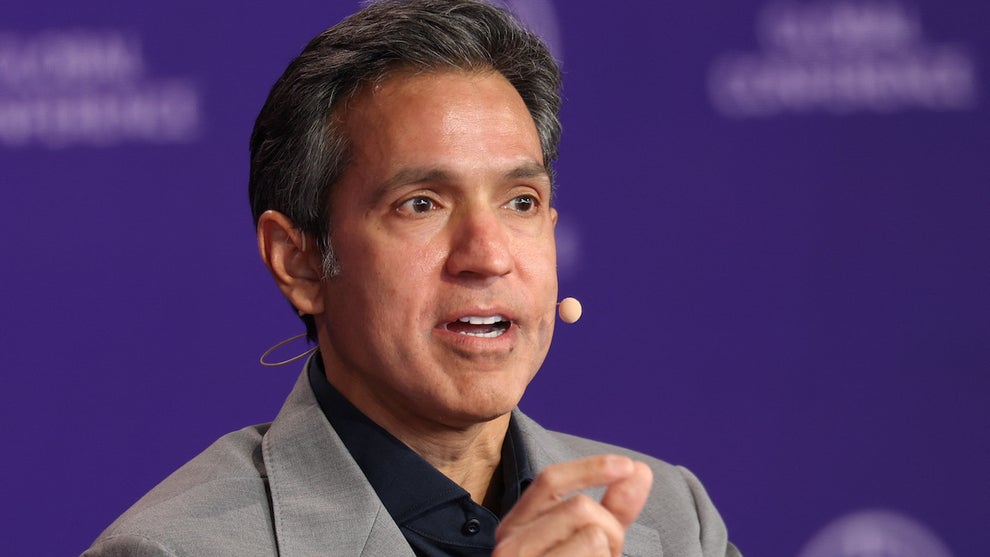
As Paramount continues its quest to acquire Warner Bros. Discovery, Sony Pictures CEO Ravi Ahuja says his studio has no plans to prioritize “large-scale M&A,” warning that it could be “extremely disruptive” to the company’s business.
“It’s extremely disruptive when you end up with a large company that has lots of different businesses. You can spend years on that type of project,” Ahuja told an investor conference hosted by Bank of America on Wednesday. “In the end, you come out having just achieved a lot of cost synergy and I’m not sure the business is necessarily stronger.”
He emphasized that the process of getting a deal approved and the associated integration work “sets you back for years.”
“This industry is dynamic and evolving and you really have to position yourself for how it’s going to evolve over the next five to 10 years and not just drown in M&A, particularly when I am doubtful of having increased scale and content creation making a big difference. These companies are not factories,” Ahuja added. “I don’t think there’s anything in particular that I say ‘we must have this asset that sits out there’.”
At the same time, he touted the benefits of Sony Pictures’ inclusion within the Japanese multinational conglomerate’s larger portfolio and said there’s no plans to spin the studio out into an independent company.

Ahuja’s comments come after Sony teamed up with Apollo Global Management to make a bid for Paramount in 2024, but ultimately lost out to Skydance’s David Ellison. Ahuja clarified that Sony’s bid for Paramount was consistent with its focus on increasing its investment in IP and capabilities in areas like live experiences.
“We’ll always look for IP and put more money into IP as it becomes available. We are redoubling our efforts organically in things like video game adaptations, anime, areas where we lead,” Ahuja said. “And then in terms of capabilities, we’ve got experiences and efforts that we’re making in YouTube and other short form platforms.”
Its recent investments include acquiring a majority stake in “Peanuts” for $457 million and a $100 million minority investment in the immersive entertainment company Cosm. It also has already produced adaptations of “The Last of Us,” “Uncharted” and “Twisted Metal” and has a “God of War” TV series and “Hell Divers” movie both in the works.

Following the Paramount acquisition, Ellison subsequently went after Warner Bros. Discovery, with that $110 billion deal now stuck in limbo due to an ongoing lawsuit from a group of 12 state attorneys general, which is headed to trial in March. In addition, Comcast is set to spin off NBCUniversal over the next 12 months, while Fox is set to acquire Roku in a $22 billion deal expected to close in the first half of 2027.
Despite all those various deals in the works, Ahuja said Sony isn’t too concerned about media consolidation.
“For us as a supplier to different companies, if, for example, hypothetically you went down to two or three companies, yeah, that’s not great. But I think, to me, it’s more about the health than it is about the absolute number,” he said. “I think we’ll have more than four and I think it’s more about the health of the remaining companies that they’re active buyers of us. Our biggest buyers are the biggest streamers, the ones that you’d expect, and I think they’re in great shape. It’s not something I lay awake at night thinking about. I think there’ll be some consolidation, but on the edges. So I don’t think there’ll be a tremendous amount more where we go down to just a couple of companies.”
He added that he expects media companies will see an increase in bundling partnerships over the next three to five years and that YouTube, Roku, Apple and Amazon are “all in a good place” to help rebundle content. He also predicted there would be growth in short-form and user-generated content.
“I don’t think it’s going to be an overnight thing where it takes over the business, but I think over time there’ll be steady growth,” he said.
When asked about AI, Ahuja acknowledged that all new technology is “both opportunity and threat” and that it could take share from studios as UGC content becomes higher quality. But he believes that it’ll take “a lot of time.”
“I don’t think we’re going to see it overnight. I think you could see some low-cost AI movies or other things being developed that may show up on YouTube. I think we’ve already seen that,” he said. “But I think for it to make a meaningful difference, it will play out over a few years. ChatGPT showed up about four years ago now, and it’s very cool, right? Claude is great. All of the the different models are fantastic, but I think for people to use them in a way that’s really productive takes a bit of time.”
