
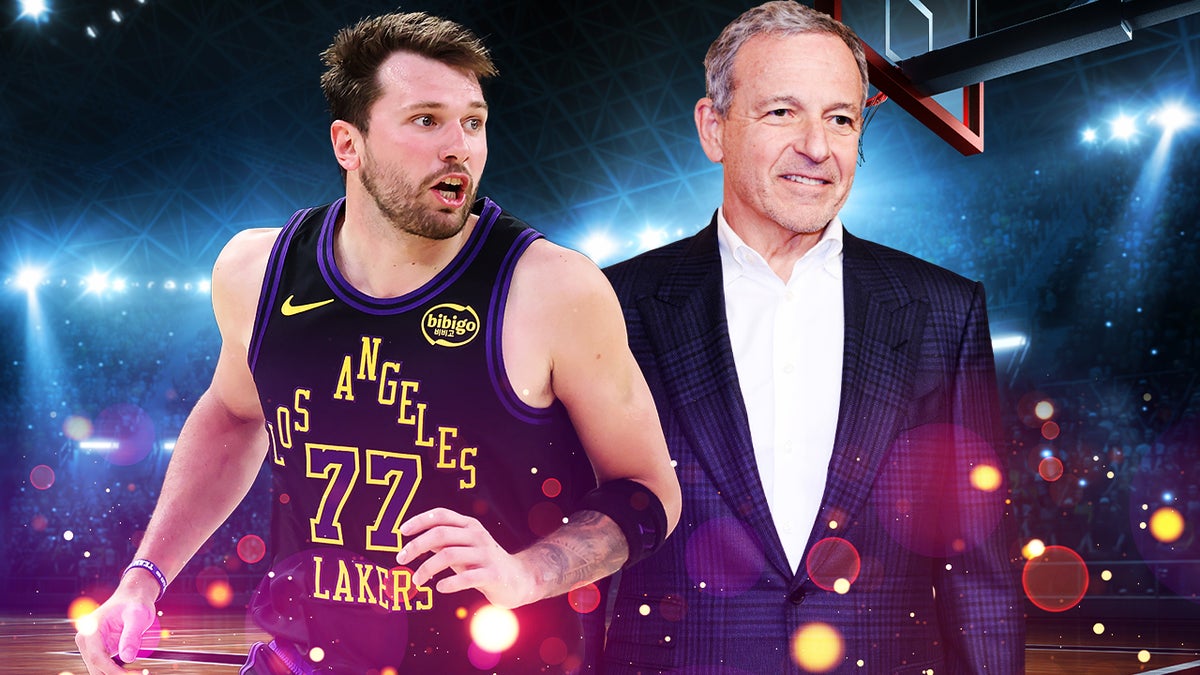
It was a quintessential, headline-making Bob Iger deal. Only this one wasn’t for the Walt Disney Co.
Iger stunned both the sports and entertainment worlds on Wednesday after securing a deal to acquire a majority stake in the Los Angeles Lakers, valuing the franchise at a record-breaking $12.5 billion. Iger and Thrive Capital’s Josh Kushner were already reportedly on the hunt for an NBA team, initially eyeing the planned expansion team in Las Vegas before making their surprise pivot.
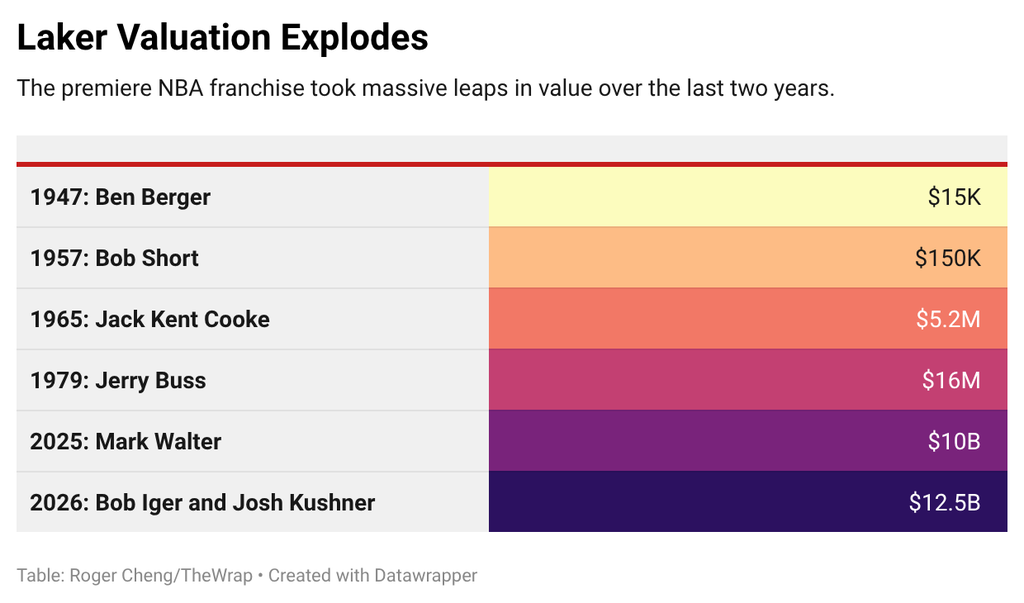
The deal marks the second time in a year that one of the most storied franchises in all of professional sports will be sold, injecting a topsy-turvy twist into what had been 46 years of relative stability under the ownership of the Buss family. The shake-up adds even more chaos to Hollywood’s favorite team, which under current owner Mark Walter was already going through an extensive overhaul around superstar point guard Luka Dončić.
For Iger, who is putting up between $50 million and $100 million of his own money to front the deal, according to a person familiar with similar deals, it’s a role that keeps him at the center of the Los Angeles scene just months after stepping down as CEO and chairman of Disney.
“As lifelong NBA fans, we are deeply honored for the opportunity to become stewards of the Los Angeles Lakers, one of the most iconic sports franchises in the world. We have immense respect for the leadership and vision of Jerry and Jeanie Buss,” Kushner and Iger said in a statement. “Our long-term commitment is to build on that foundation, compete at the highest level, and serve this extraordinary team, its fans, and the city of Los Angeles.”
But it’s a more complicated story than a simple asset sale, with an ongoing investigation into Walter’s business dealings, Kushner’s family ties with President Trump (he’s the younger brother of Jared) and Iger’s history with Disney making this a unique intersection of sports, politics, business and entertainment.
Here’s a timeline of how this all came together:

How we got here
- June 18, 2025: The Buss family announced an agreement to sell the Lakers to Walter, representing new ownership for the first time since Jerry Buss purchased the team in May 1979.
- Oct. 30, 2025: Walter officially took over as majority owner.
- March 18: Iger stepped down from Disney, handing the reins to new CEO Josh D’Amaro.
- April 23: Iger returned to Thrive Capital, the venture capital firm he previously worked at before rejoining Disney. He serves as an advisor and works with the firm’s staff on investments and founders of companies in its portfolio, including OpenAI’s Sam Altman.
- June 6: Iger and Kushner, who is the younger brother of Jared Kushner, hired bankers through his firm’s sports division, Thrive Eternal, to help explore a bid for an NBA expansion franchise, according to Bloomberg.
- July 20: Bloomberg broke the news that Walter’s asset-management firm, Guggenheim Investments, is under a federal investigation for the financial dealings of its insurance company. A week later, Bloomberg Law reported that federal agents had seized the mobile phone and computer of Walter last September as a result of the probe.
- Aug. 9: While exploring the expansion bids, Iger said he received a suggestion that Walter was interested in a sale. He and Kushner contacted Walter, and the owner was intrigued by the higher offer. The talks went on for three business days.
- Aug. 12: The Lakers officially announced the deal with Iger and Kushner agreeing to acquire Walter’s controlling interest.
What’s the deal with Walter’s investigation?
Walter is co-chairman and CEO of TWG Global, a holding company that includes the Lakers, Dodgers, Chelsea FC and the entire Professional Women’s Hockey League.
He is also CEO of Guggenheim Partners, which owns two insurance companies that are at the center of the investigation. Under scrutiny is how those two companies, Delaware Life and Clear Spring, book their revenue and whether the information is properly disclosed.
While those businesses don’t have anything to do with the Lakers, Walter’s role as CEO of both Guggenheim and TWG Global creates a messy situation.
Walter is reportedly facing mounting liquidity needs amid federal investigations and regulatory pressure involving his businesses, the Wall Street Journal reported Thursday. The Lakers sale freed up collateral associated with Walter’s original purchase as he sought to basically stabilize his insurance holdings.
Spokespeople for Guggenheim Partners and the Los Angeles Lakers did not respond to TheWrap’s requests for comment.
Walter said in a statement to ESPN that owning the Lakers had been “one of the great honors of my life,” adding that he has “every confidence the best is still ahead.”

What’s next?
The transaction requires approval from the NBA Board of Governors, with the next board meeting set for September in New York.
Kushner also holds a minority stake in the Miami Heat and Memphis Grizzlies and will need to divest those holdings.
How is the deal funded?
That’s the multi-billion dollar question. While Kusher and Iger will put up their own money, neither have enough to cover the entire acquisition. Kushner’s Thrive could provide some funding, as it has more than $50 billion under management. But the two will likely need to find other institutional investors, private equity firms and even a handful of deep-pocketed celebrities to form an investment group to make the purchase a reality.
Just this week, Apollo Sports Capital gave the New York Yankees a $2.6 billion cash infusion, as sports and other live events have become more attractive investments.
They could also tap foreign investors or sovereign wealth funds, although those wealth funds are restricted to a minority ownership of up to 20% in a single franchise.
How common are these NBA deals?
The Lakers changing hands (again) comes at a time when NBA franchise sales have become a regular occurrence, with valuations propped up by the league’s 11-year, $76 billion media rights deal signed in 2024 and two upcoming expansion teams that carry franchise fees between $7 billion and $10 billion paid out to the other owners.
Beyond the Lakers deal, the Portland Trailblazers sold for $4.25 billion this year, the Boston Celtics sold for $6.1 billion in 2025, and in 2023, Mark Cuban unloaded his majority stake in the Dallas Mavericks for $3.5 billion and the Phoenix Suns and Mercury sold for $4 billion.
But once again, the Lakers show why they’re the premier franchise in the NBA.
“The $12.5 billion valuation reflects the strength of the NBA, the scarcity of high-profile sports assets and the economics of buying the Lakers as opposed to just pursuing an expansion franchise in Las Vegas,” said Marc Ganis, president of sports consulting firm SportsCorp.
He noted that with the expansion fee and cost of building a new arena, buying a new team would’ve ultimately cost as much as buying the majority stake in the Lakers — without the certainty of being awarded a team, the Lakers’ lucrative local television deal or an established franchise and fan base.
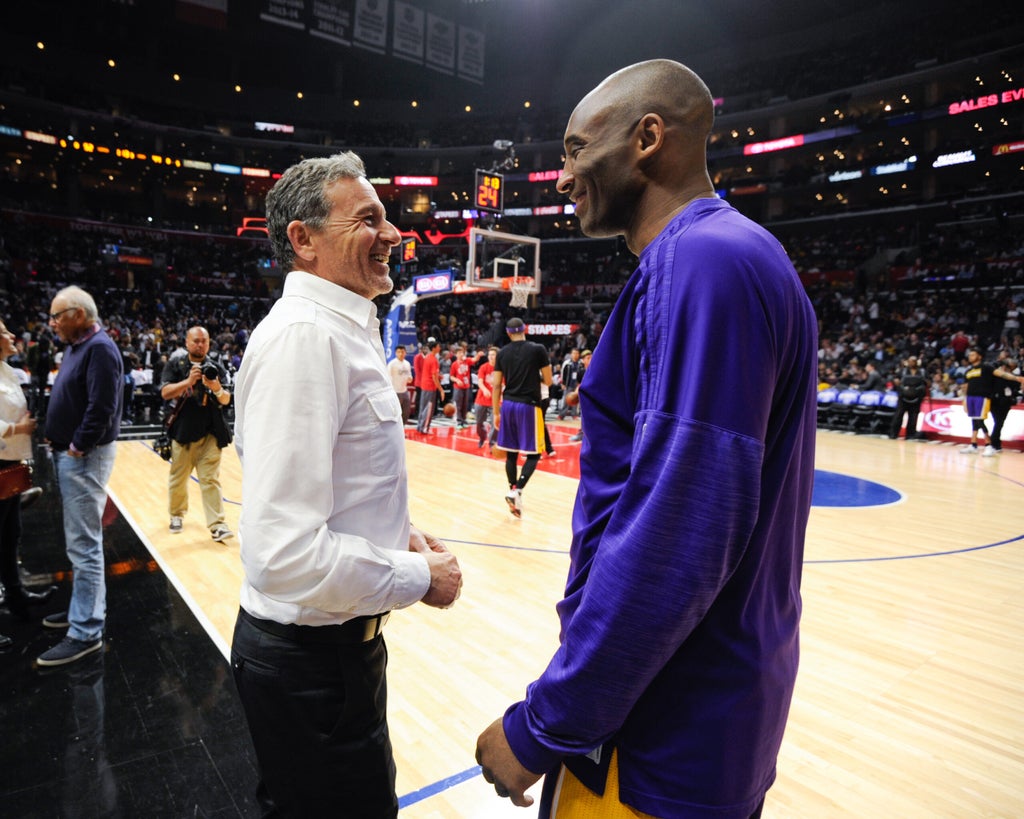
The $12.5 billion price also represents a significant premium over the $10 billion valuation attached to Walter’s acquisition less than a year ago. Ganis said Iger and Kushner likely paid that premium to get Walter to agree to a deal directly rather than open one of professional sports’ most coveted assets to a broader bidding process.
Iger and Kushner “likely had to over bid in order to forestall an auction,” Ganis said.
The NBA’s growth could provide additional upside. Ganis pointed to the potential expansion fees that would flow to existing owners, as well as the league’s efforts to expand its footprint in Europe. But he noted that the NBA’s new national television deal was already factored into the Lakers’ $10 billion valuation, meaning the media rights agreements alone don’t explain the additional $2.5 billion.
Patrick Crakes, a former Fox Sports executive and principal at Crakes Media, said the Lakers occupy an even more exclusive category among top-tier sports franchises, pointing to the team’s championship history, global fan base, television ratings and position in the Los Angeles market.
“The Lakers are a special kinda special,” Crakes told TheWrap. “As such, they get a super special premium.”
But Crakes noted that the underlying economics alone don’t justify valuations at this level. “Cash flow doesn’t support the valuation,” he said, adding that investments in premier franchises are instead bets on long-term appreciation driven in part by the growing value of sports and other live experiences to the global media business.
“For the medium run, it looks like franchise values are headed higher,” Crakes said.
What does this mean for the Lakers?
Following the announcement of the deal, many eyes were on Dončić, the lynchpin of the franchise. Within a few hours, he posted on X: “Being a Laker means everything to me, and I’m excited to get back on the court and bring a championship to LA. I’ve gotten used to big changes over these last few years, but I know that no matter what, there is no limit to the potential of this iconic franchise. I look forward to meeting Josh and Bob so we can get to work building something special in LA together.”
Dončić is no stranger to ownership change. He was the franchise player on the Dallas Mavericks when Cuban sold his majority stake to Miriam Adelson and her son-in-law, Patrick Dumont, of the Las Vegas Sands Corp.
The Lakers also just underwent an extensive retooling in the offseason, losing superstar Lebron James, re-signing offensive threat Austin Reaves and cutting ties with a vast majority of its roster in exchange for new players, led by defensive-minded center Walker Kessler. Notably, the Lakers have locked in several players with expensive long-term contracts, meaning new ownership won’t have much flexibility to make major immediate changes.
Lakers fans were also excited about Walter’s influence on the team’s back office, which would’ve brought upgraded analytics, staff and resources to match how he upgraded the Dodgers. The Boys in Blue have won two straight MLB World Series and are among the favorites to win a third consecutive championship.
But that overhaul was only beginning when Iger and Kushner came calling, leaving the incoming owners to inherit Walter’s vision for modernizing the Lakers rather than starting with a clean slate. One of the biggest questions now is whether they continue that blueprint — and how aggressively they’re willing to invest in the infrastructure around Dončić as the franchise chases its next championship.

Who is Josh Kushner?
Josh Kushner may share a last name with one of President Trump’s more influential advisers and family members, but he has largely kept his distance from the political spotlight occupied by his older brother Jared.
The 41-year-old founded Thrive Capital in 2009 and has since turned the venture capital firm into a major Silicon Valley force, with investments in companies including Instagram, OpenAI and Stripe. Iger joined Thrive as a venture partner after his first retirement from Disney and returned to the firm as a senior adviser after stepping down from the entertainment giant again this year.
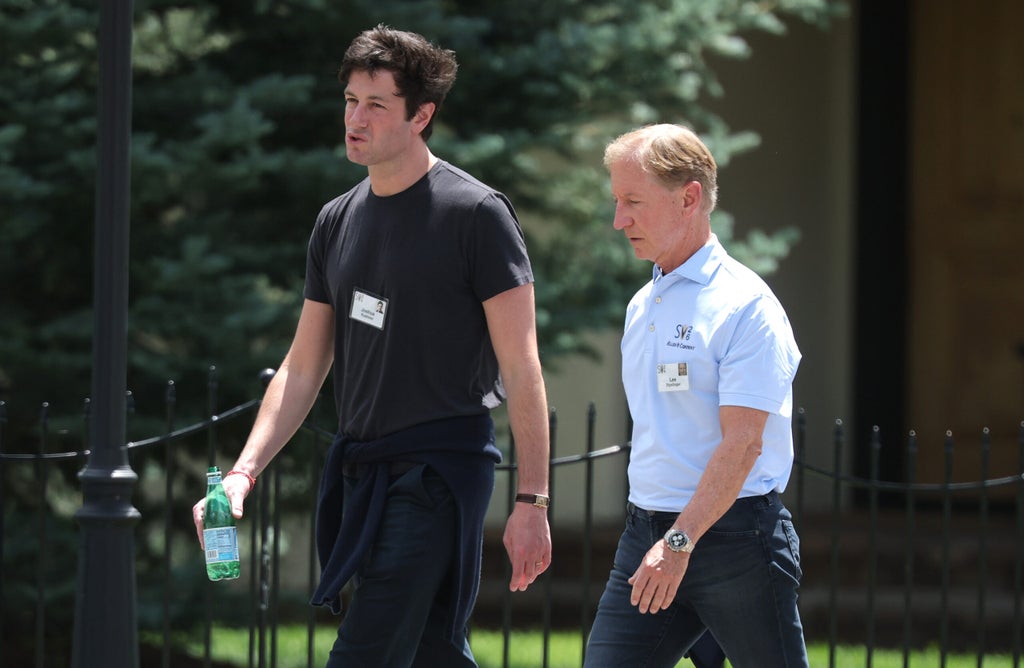
Kushner has also charted a different political course from his older brother. He said through a spokesman in 2016 that he was a lifelong Democrat and would not vote for Trump, and donated $250,000 to the Growth Democrats PAC in 2024. His wife, model and entrepreneur Karlie Kloss, has also publicly supported and donated to Democratic candidates.
The Lakers deal will put the typically low-profile Kushner in a considerably brighter spotlight. Buying one of professional sports’ marquee franchises alongside one of Hollywood’s most high-profile executives puts him at the intersection of tech, entertainment and sports — with a famous political family that’s never far from the picture.
Why would Iger want to buy the Lakers?
There’s obviously the prestige of owning a marquee franchise like the Lakers. Iger is no stranger to the sports scene, as he and wife Willow Bay own the National Women’s Soccer League team Angel FC. He’s also not the first Disney alum to try to buy the team — in the early 1990s, then-CEO Michael Eisner and then-President Mike Ovitz made overtures to have Disney buy the Lakers, but were rebuffed.
Iger also brings decades of experience at the intersection of sports, media and entertainment. During his tenure leading Disney, he oversaw ESPN and developed extensive relationships across the sports industry, including through the network’s longtime partnership with the NBA. That experience could be particularly valuable as media rights, streaming and direct-to-consumer distribution play an increasingly important role in the economics of professional sports.
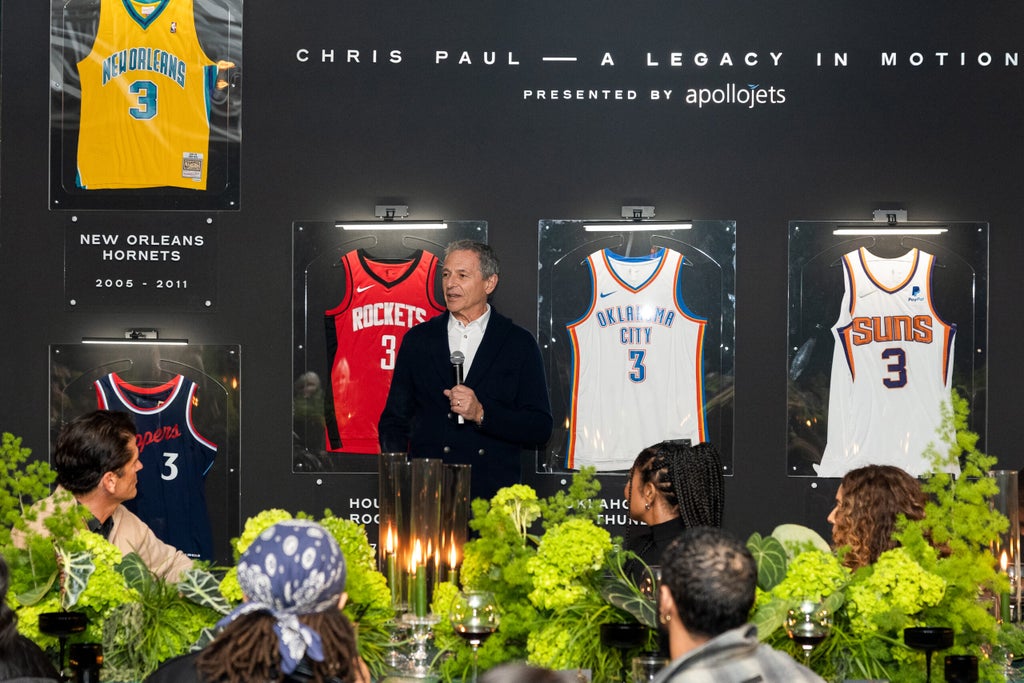
But there’s a financial benefit as well. As Joe Pompliano of the Huddle Up newsletter noted, billionaires like sports franchises because they can amortize the depreciation of assets over 15 years to lower their tax burden. It effectively shields other income from getting taxed.
Iger declined to comment for the story.
What’s the downside?
Jerry Buss enjoyed being at the center of attention during the Lakers Showtime run in the ‘80s, and is a revered figure in this town because of the team’s legacy of success. But basketball fans are fickle, and could quickly blame the new owners for any struggles or missteps (just look at how Dallas turned on Mavericks owners Adelson and Dumont after they traded away Dončić).
“Sports teams are generally asset plays,” Chris Marangi, president and co-CIO of GAMCO Investors told The Ledger’s Jon Lafayette. “Much like gold or fine art. They’re viewed as stores of value and not based on a PE or cash flow basis.”
For Iger, owning the Lakers could be a way to further burnish his legacy, but there remains a risk he could tarnish his reputation if things go poorly. It’ll depend on whether he can keep up with the franchise’s longstanding winning tradition.
